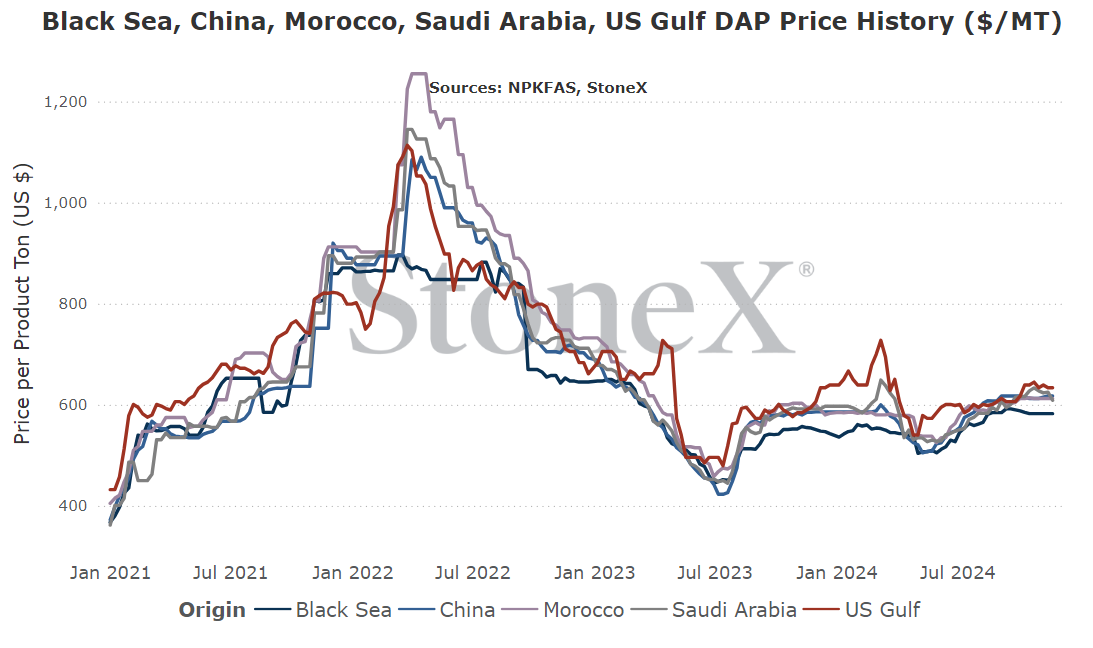
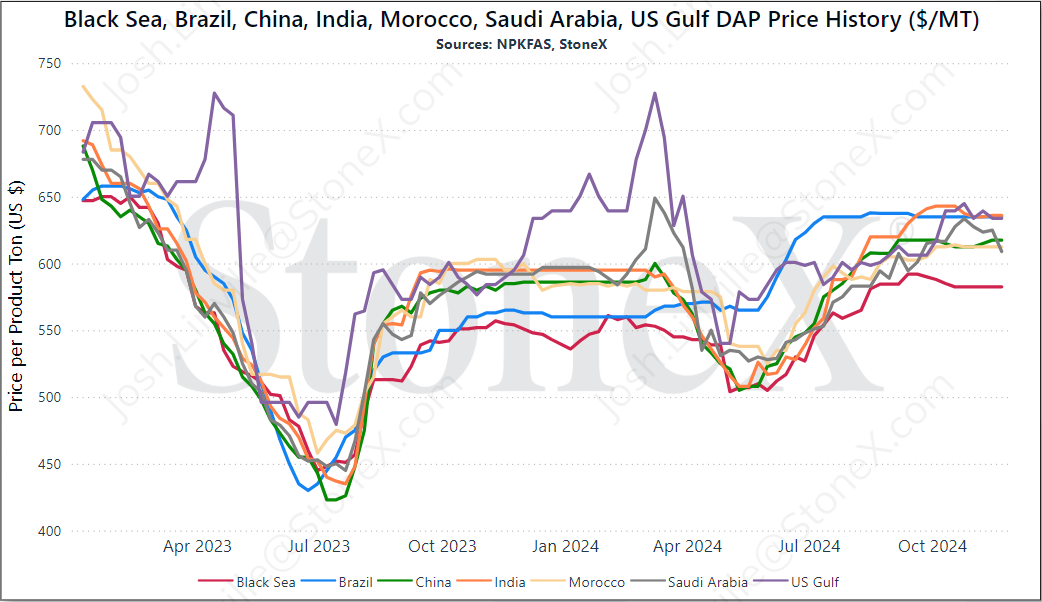
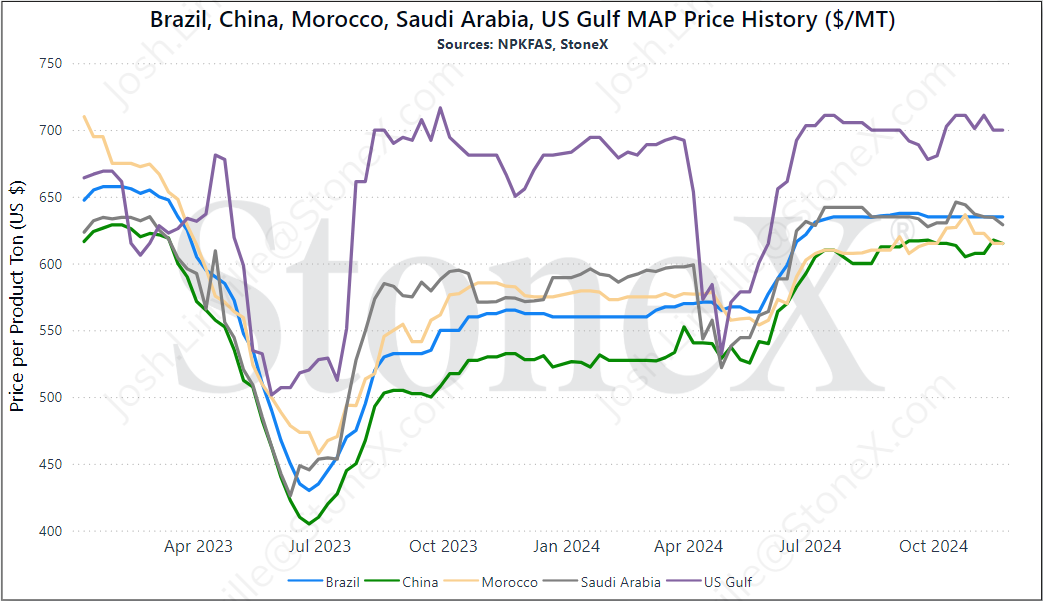
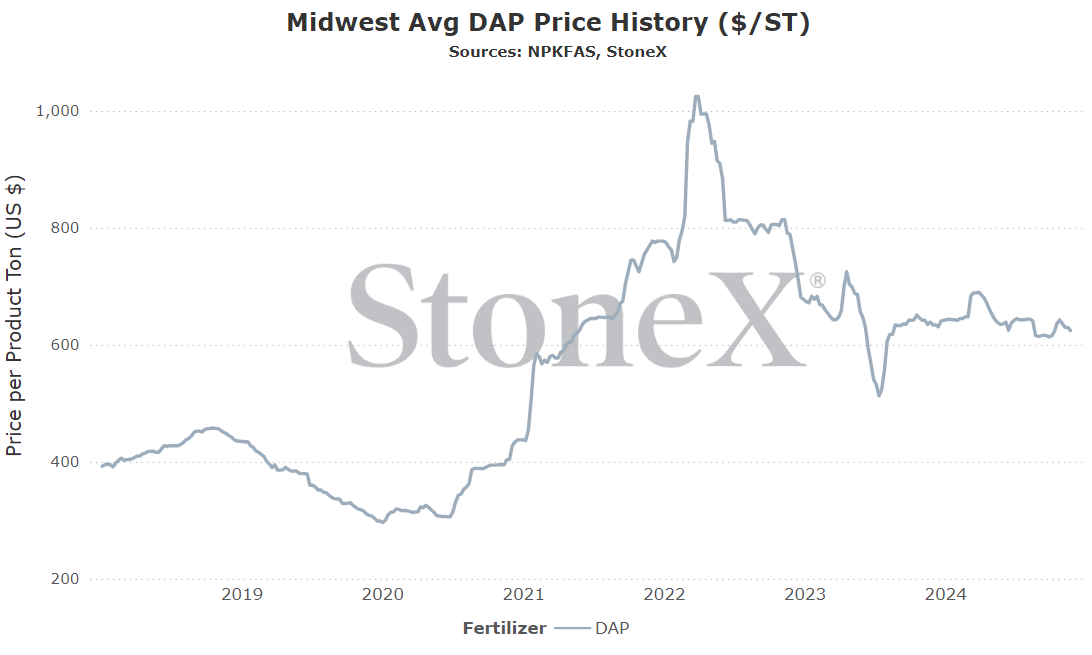
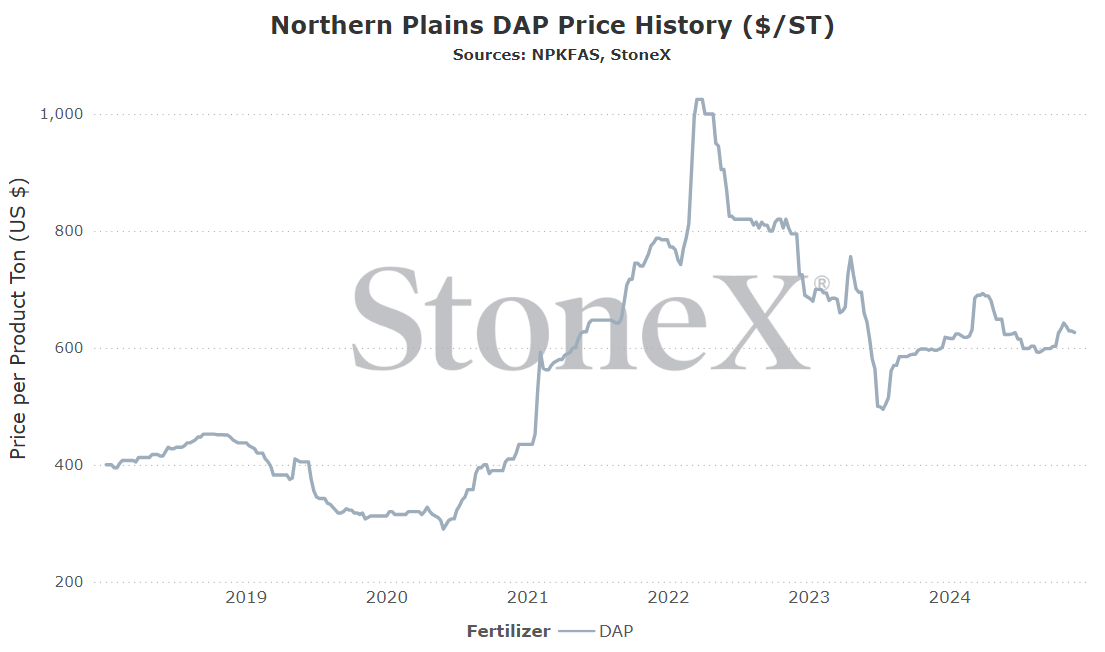
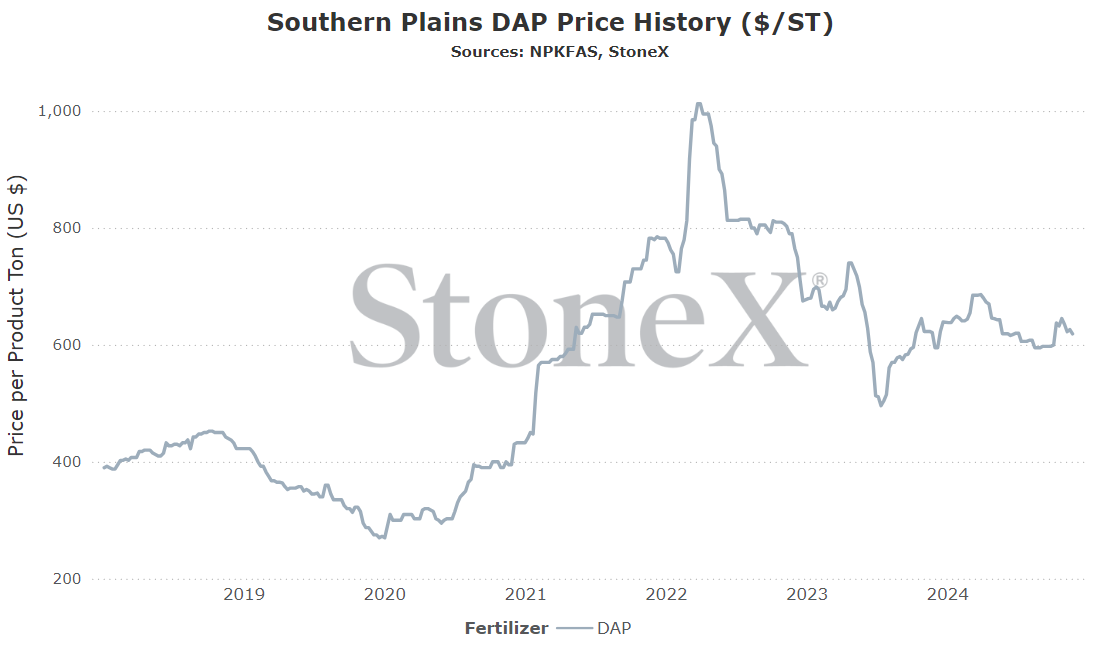
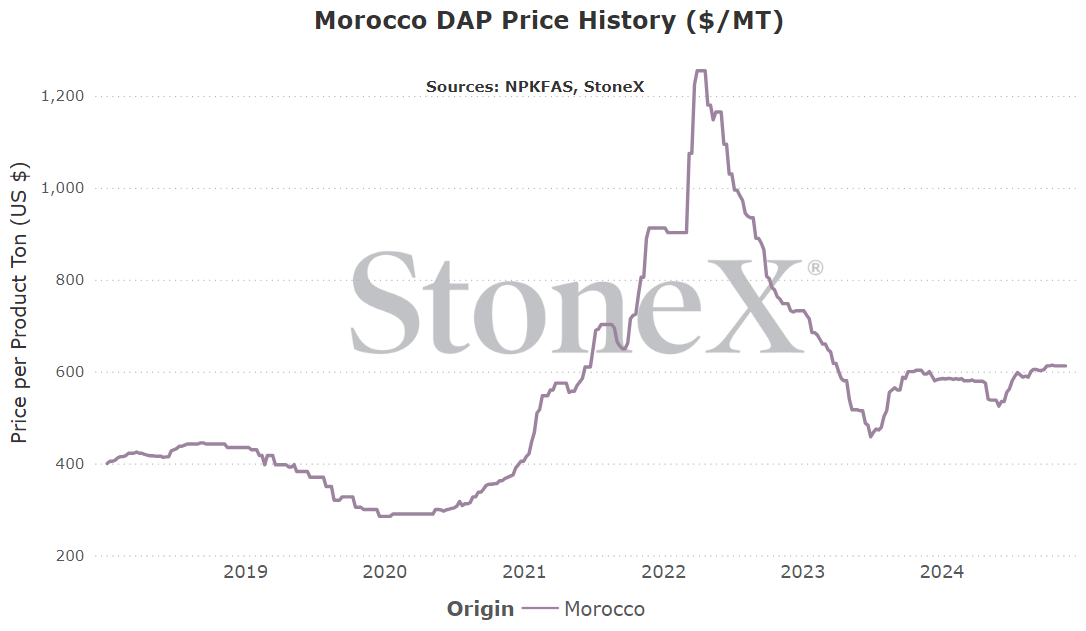
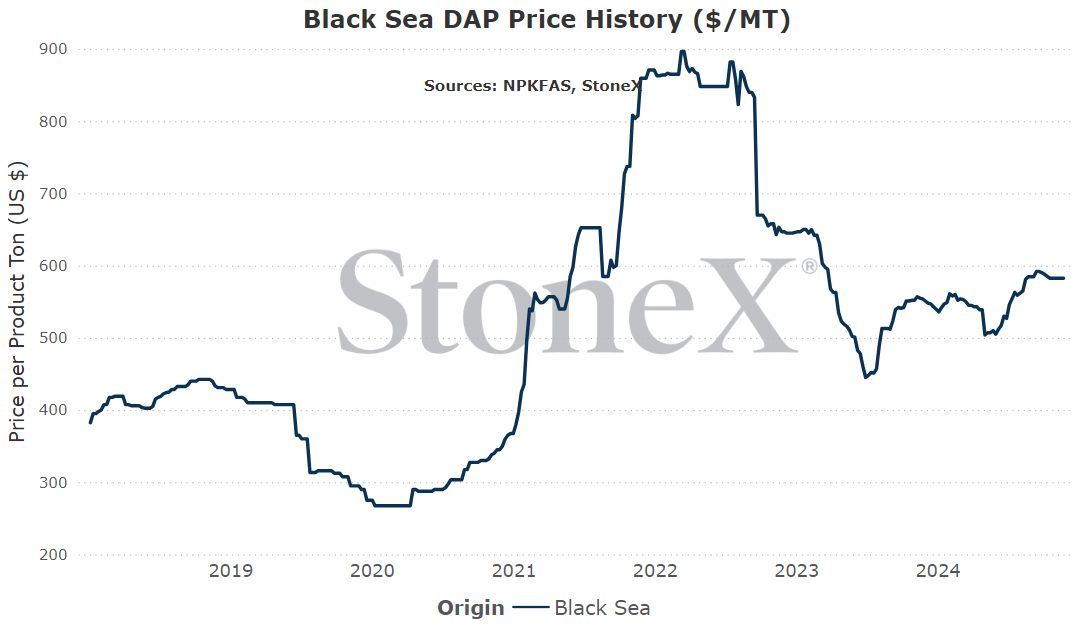
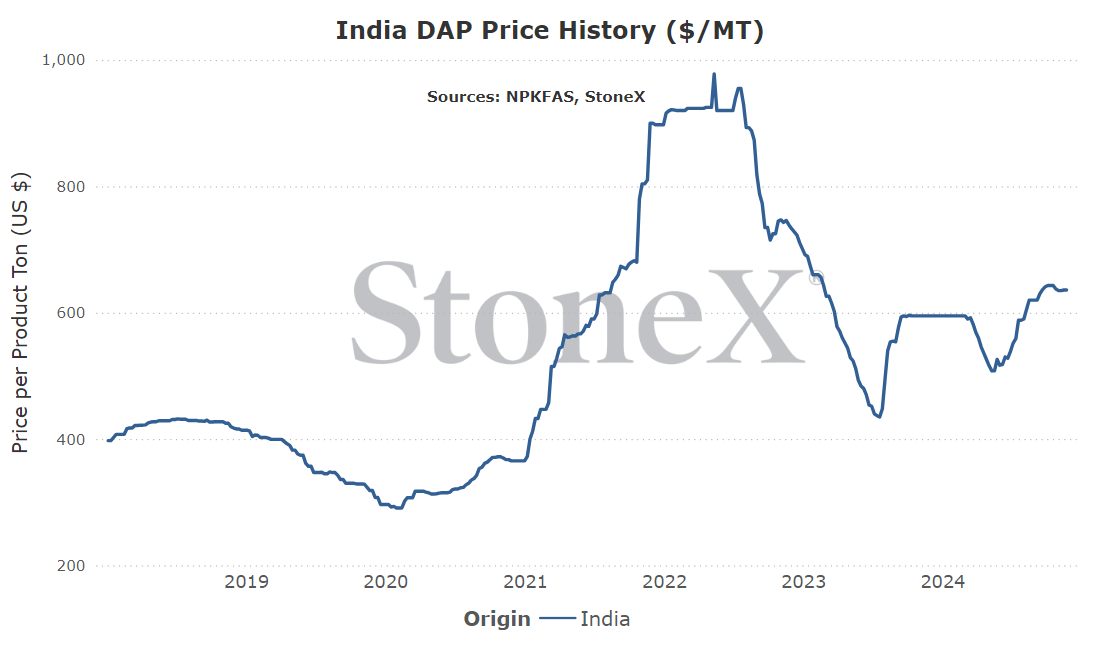
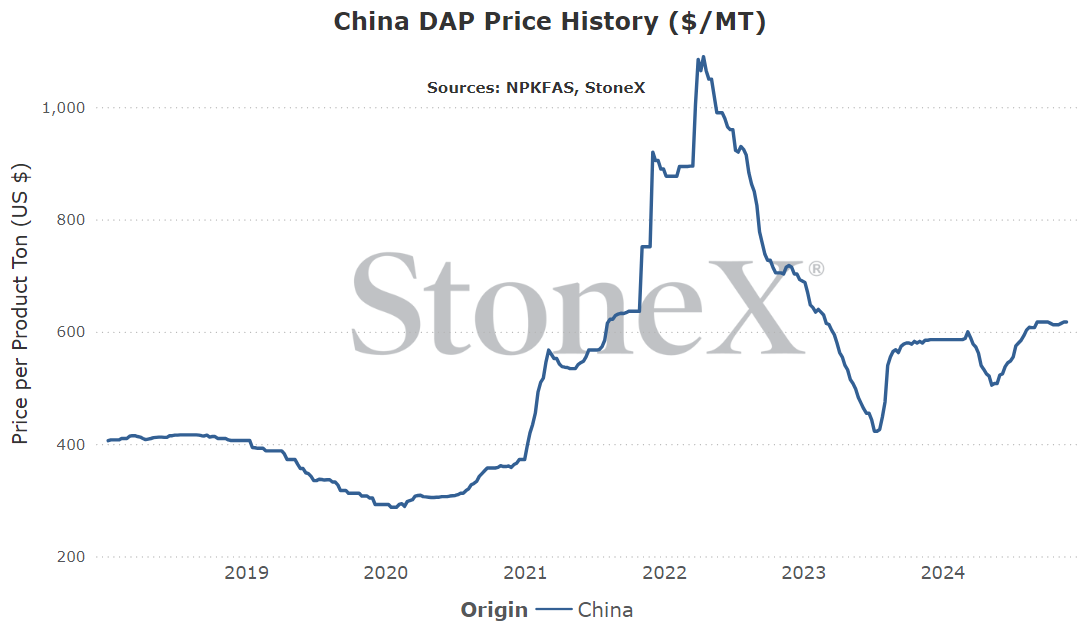
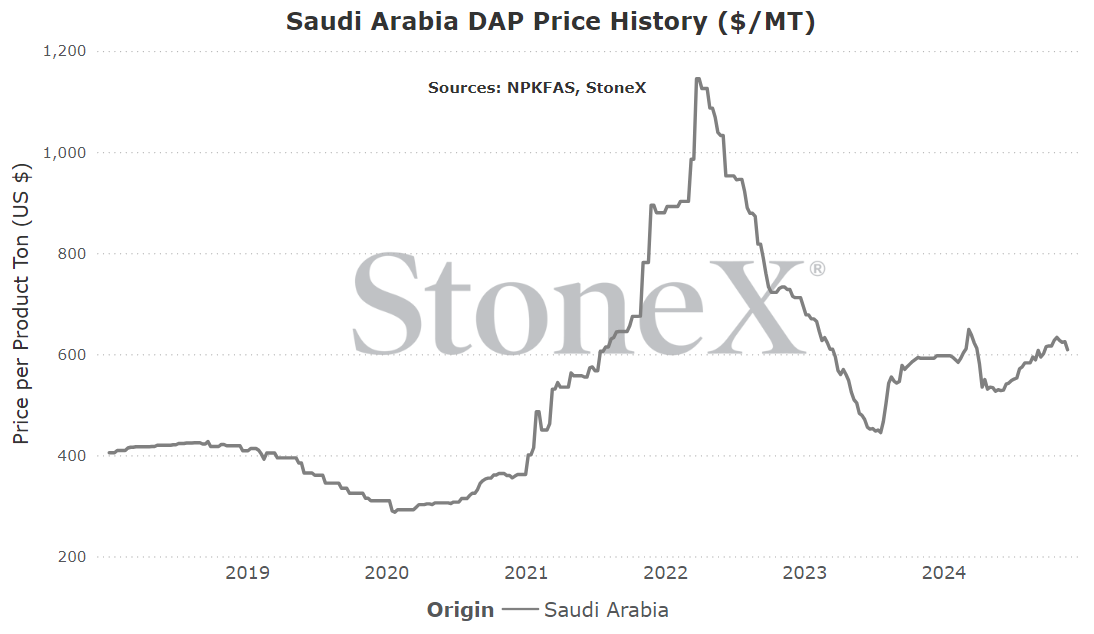
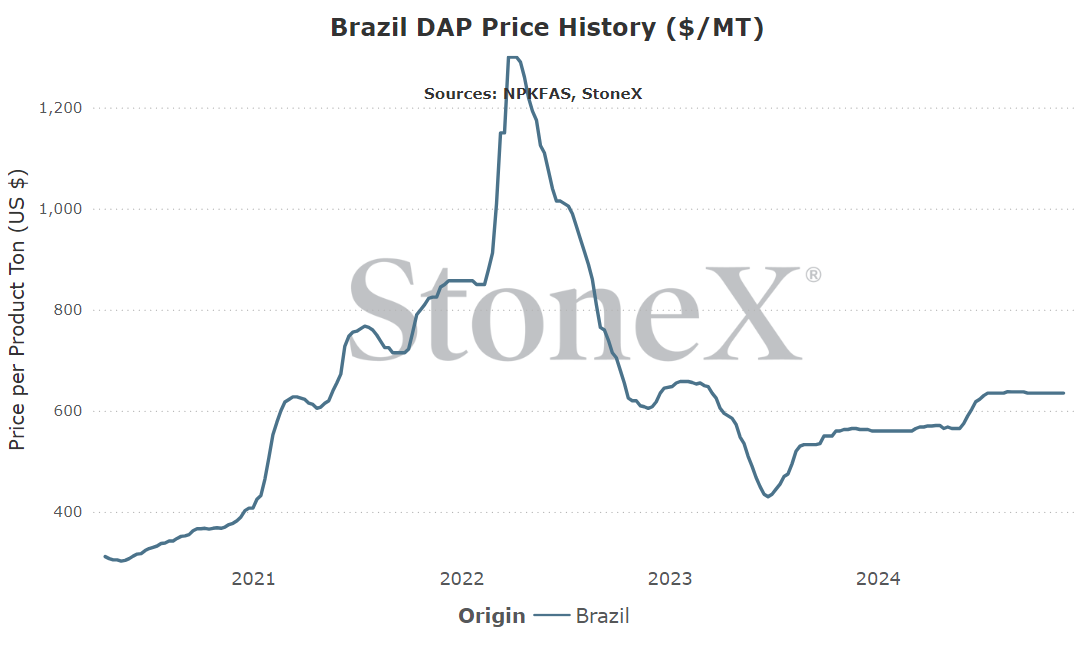
I will say this now and will say it going forward to eternity: these are the flat price graphs for each individual location. Your price where you are is going to be different. There are logistics. There is the cost of storage/interest/insurance/etc. These graphs should not be taken as "it shows the price at $700, why isn't my price $700". These graphs should be used to give an appreciation for price movements.
All values are in metric tones and USD currency.
Global
India purchases of phosphate had slowed down over the last month which had me starting to consider a softer future. India needing to rebuild stockpiles was a big part of my bullish outlook. However, then we got Chinese October trade data which showed their phosphate exports lower than expected. We had been hearing rumors of softer exports but had not seen actual data backing the story...until that happened.
Globally, when we look at all the major export countries, nowhere really shows excess length that "needs" to be sold. On the buy side, there is demand coming. Whether it is enough to drive values even higher than they already remain to be seen but it should be enough to keep at least level.
It is still hard to see global values softer in the short term. If supplies are snug as we believe they are and spring demand is just around the corner, that should keep the bearish side at bay. However, prices are high, and it feels like the market is almost scared to try anymore but if demand starts to come in waves, make no doubt about it they will take advantage.
North America
Fall season has been a bust so far. We are most of the way thru November and so far, it is a struggle to find locations that have had a good run. A struggle...but not impossible.
Those areas that have gone have reported demand being better than they expected. Yields across North America have been better than expected. Not only does that gift farmers more bushels to market, but they have also seen grain prices come off their low's so more income for the overall crop. They may not be the most financially secure they have ever been, but they are better than they were...and they know to get out of these tough times they have to maximize yields. Well, a big crop removes big nutrients that have to be replaced for next year's crop.
We have been seeing MAP values show a bit of weakness with the lack of fall run, but phosphate has been holding steady and in line with other major global buyers like Brazil and India. We could see prices dip very slightly over the next 60-days, more if the fall season doesn't happen. However, if global prices stay steady, any major drop in price would only mean that our limited imports stop...and exports begin. Seems like we should remain fairly rangebound for a bit.
Russia/Ukraine war sees fresh escalations, impacts to Russian exports feared
In the last couple weeks, some major escalations have been observed in the Russia/Ukraine war.
First, Ukraine got approvals from western countries to start using U.S. made missiles against targets in Russia. Putin had always advised against this move, stating that this would be a major escalation in their eyes and would be responded with their own. It seems Putin was not making up stories. Their response was fast and fierce. A new missile not seen on the battleground before was used on Ukrainian soil and the statement made. The world quickly began to reconsider the end game.
Personally, I started to consider fertilizer if it continued.
Fortunately, we have seen no further escalations but given how close to the cliff this war operates, it is worth walking thru.
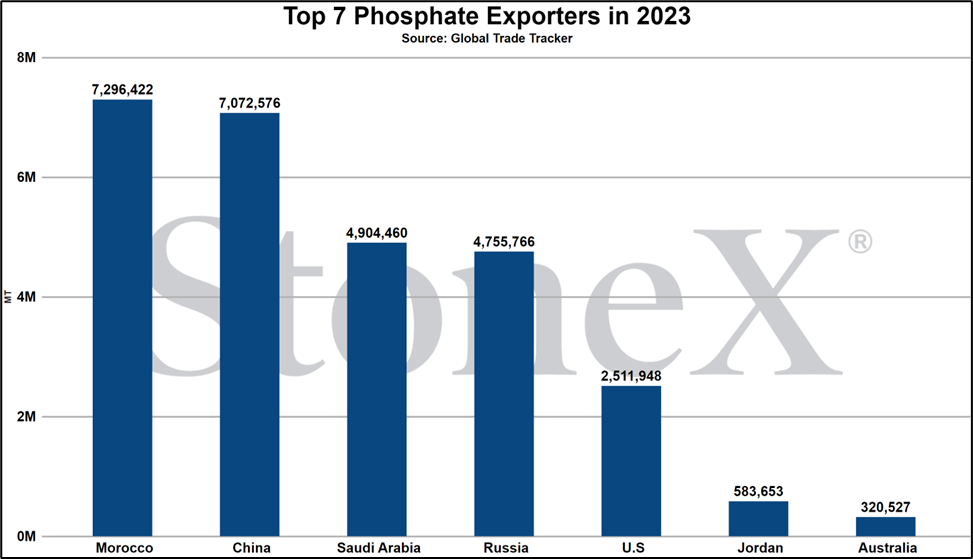
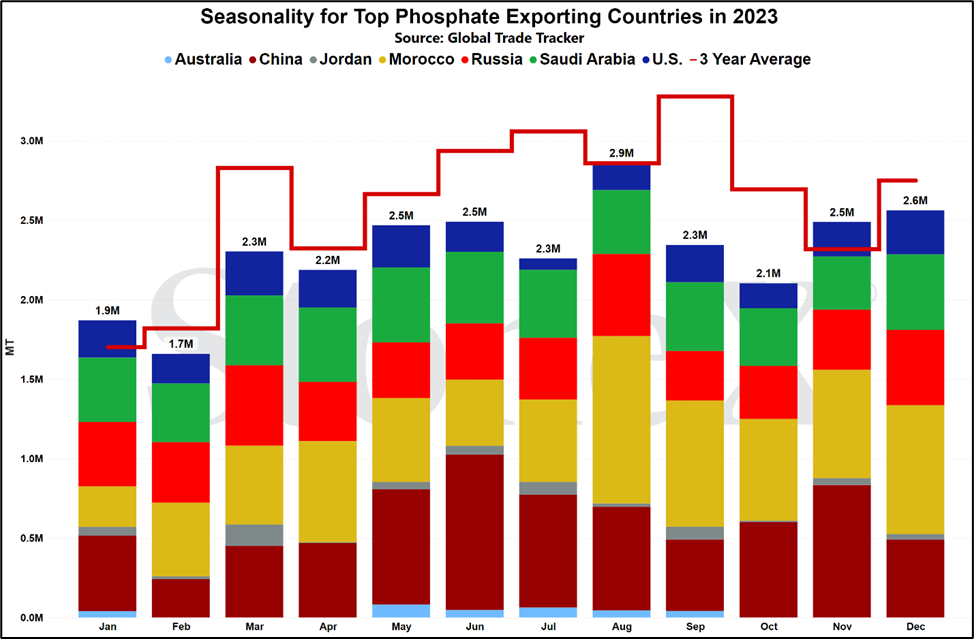
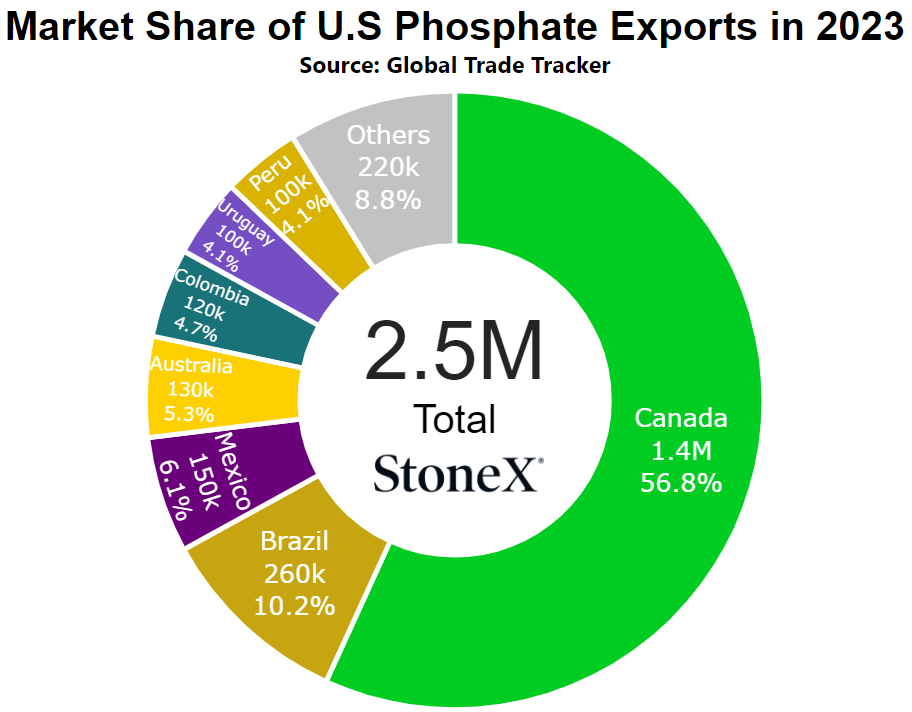
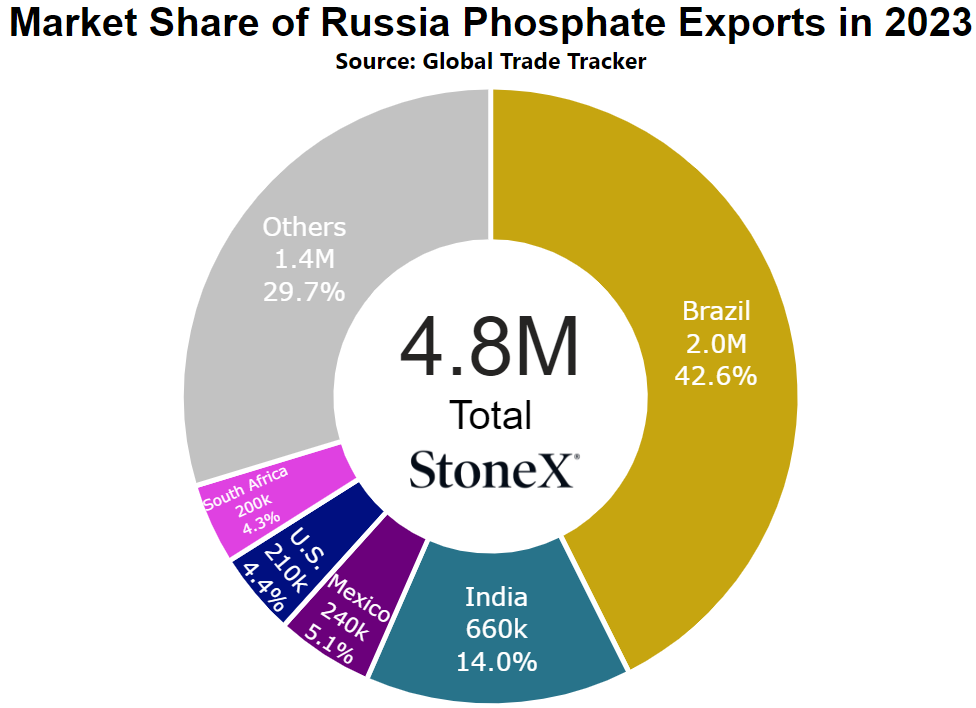
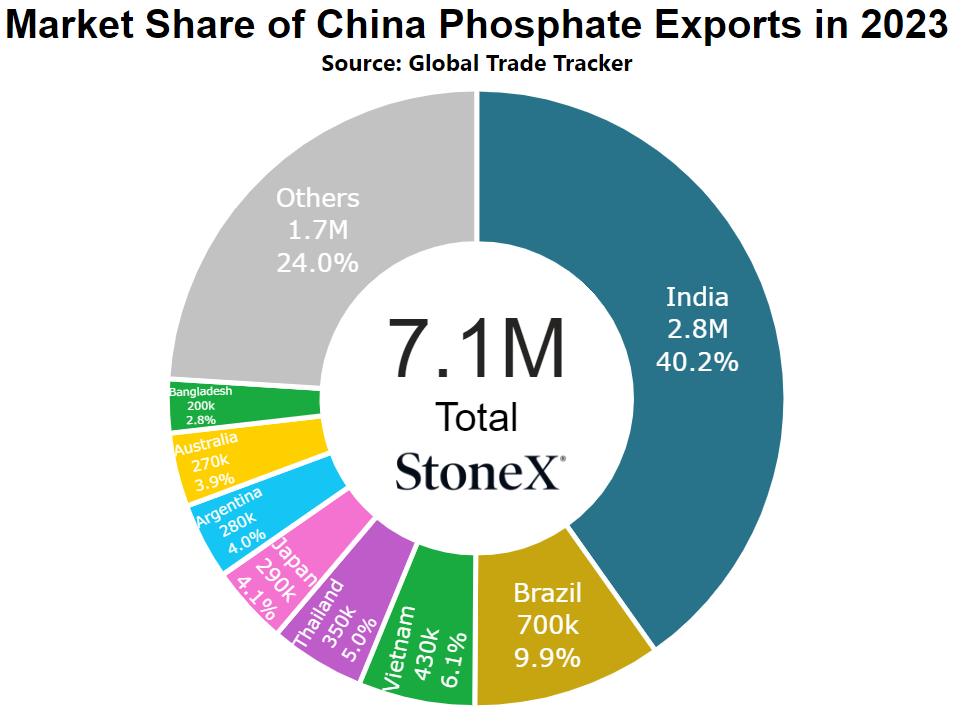
In the phosphate world, Russia is the 4th largest exporter of DAP/MAP. In 2023:
- Morocco @ 7.3M tons exported
- China@ 7.1M tons exported
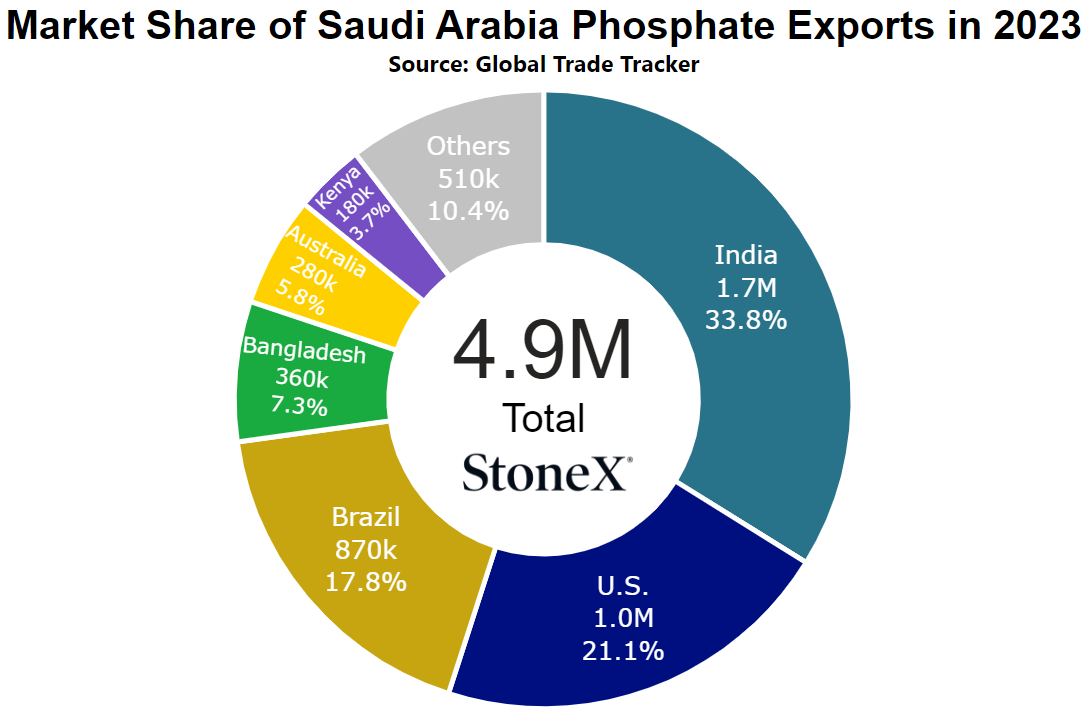
- Saudi Arabia @ 4.9M tons exported
- Russia @ 4.8M tons exported
One keynote on this list to remember is China. They exported a large 7.1M tons in 2023...but that is still well short of their "normal" 10M tons per year that was seen prior to Covid. The phosphate world is already operating and being priced with the largest supplier scaling back. Losing Russia would be devastating.
However, the conversation also needs to consider different layers. What I mean is that by losing Russian supplies completely, almost 5M tons would be removed from the S&D. But what if it was only western countries that blocked their phosphate flows into their countries. Let's say all western aligned countries placed heavy import duties on them. What would happen then?
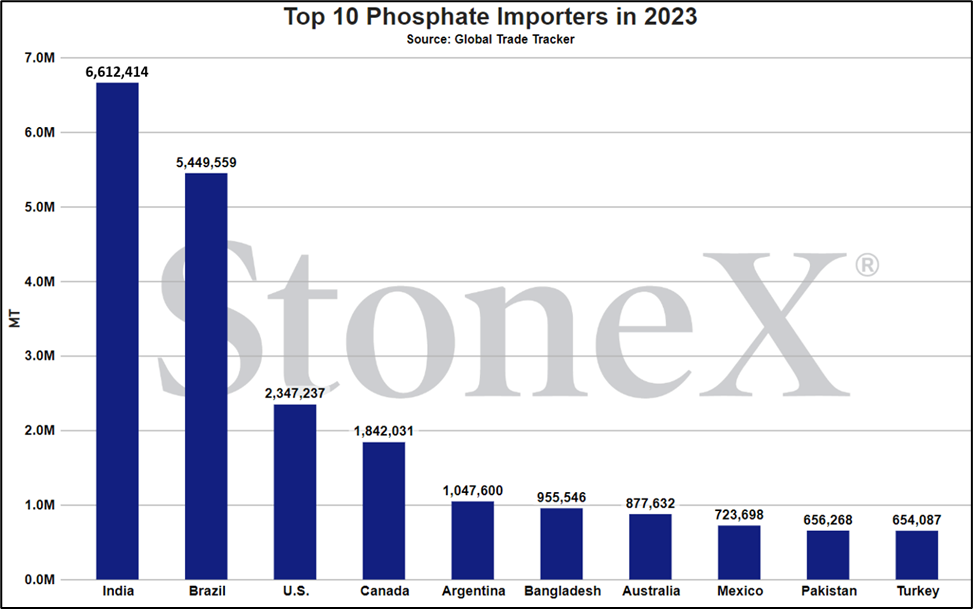
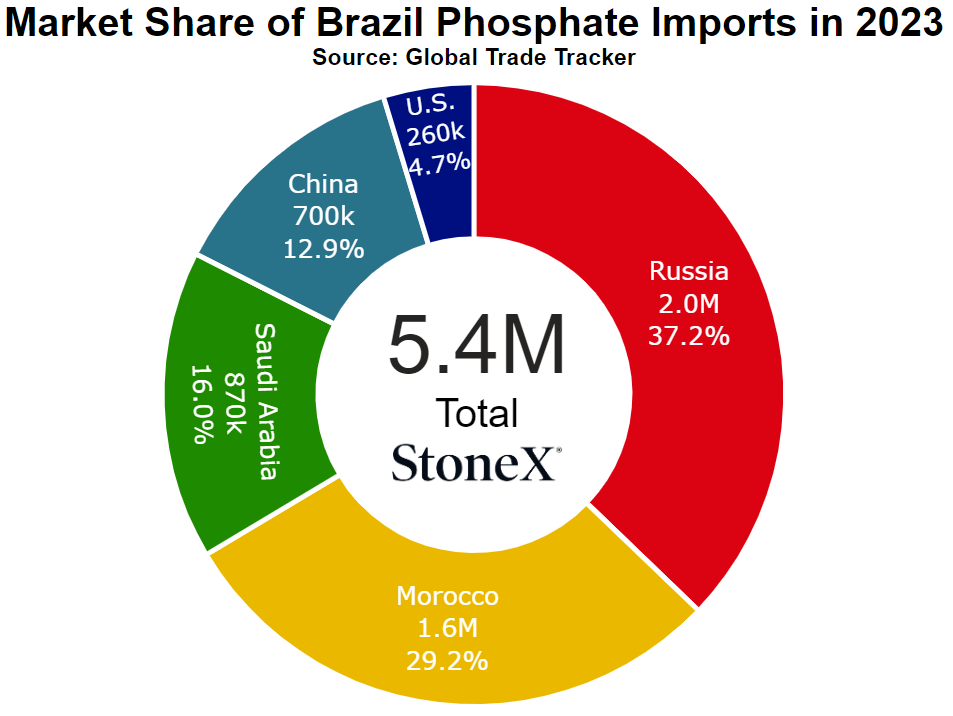
Simply put, I do not think Russia would have troubles finding homes. They have maintained solid supply relationships with major buyers like India (6.6M tons purchased 2023) and Brazil (5.4M tons purchased 2023). If they needed to, they would get aggressive with their price to force their way into these and other friendly countries. Effectively, they would drop their price low enough to force others out. On the flip side, those countries that placed duties on these supplies "should" see higher values in relation as they have cut an efficient product flow.
All said, unless western countries are able to completely block Russian exports, it shouldn't have the effect so many fear (losing their product completely). There are plenty of friendly buyers of Russia that they should be able to keep flows moving. However, never underestimate the emotional response of the market. Even if wrong, if enough people believe something, that becomes real in the market until the fundamentals prove otherwise. Basically, it is worth keeping an eye on this war. It hasn't gone away, and it could have a direct impact on the phosphate market.
What does this mean for farmers
Uncertainty which can breed higher price ideas.
Global phosphate supplies are already tight, hence the current high price. But do not think for a moment that it cannot get worse.
If this continues to escalate (not seeing it right now), the fear is that the phosphate market will begin to move with it. The world is already working with Chinese flows slower. If the market starts to fear losing Russia as well (whether it be a real or made-up fear), prices could be poised to go higher.
October trade data shows slower Chinese export pace, but sales made to Ethiopia
Historically, China was the largest provider of DAP/MAP to the world. However, all of that changed in the late 2021 and early 2022 period. For sense of their export flows:
- 2021 - 10M tons exported
- 2022 - 5.5M tons exported
- 2023 - 7M tons exported
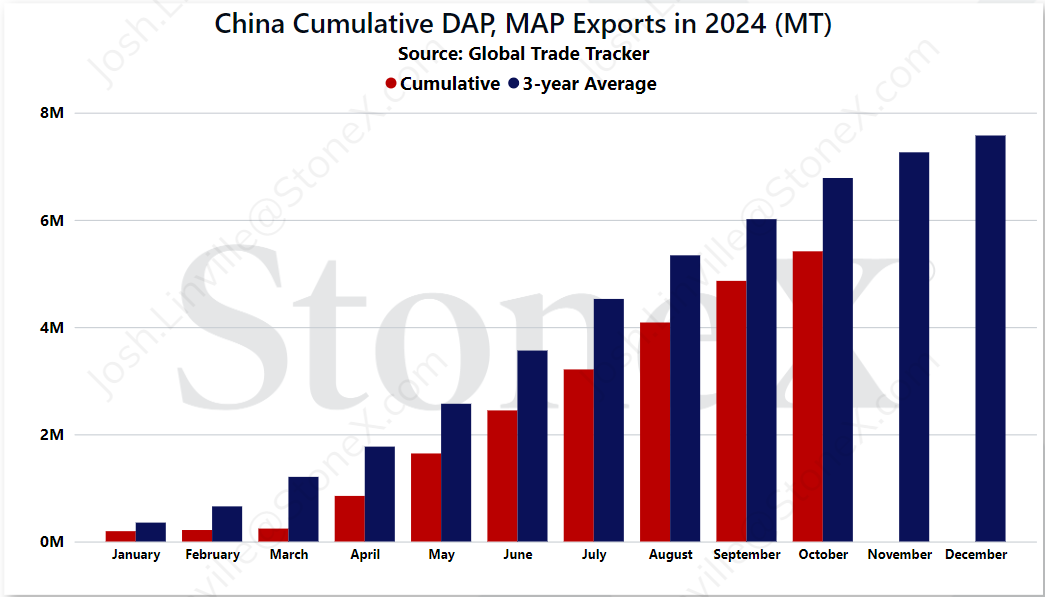
- 2024 cumulative thru October - 5.4M tons exported
Those new to this newsletter may be asking what happened.
After setting historically low values for much of 2020, prices started to surge in 2021. Grain values were climbing rapidly which meant that global values of fertilizer were scrambling to keep up. Then, it seemed the whole world started to fall apart with Covid. Supply chains began to suffer. Production plants were struggling with workers either unable to be at work or if they could be, unable to be in close proximity to get jobs done. The markets suffered...and then overreactions started.
A bit of a freak out was made worse by governments in regard to fertilizer. Global values were skyrocketing to values not seen since the mega surge of 2008. Some governments started to either slow or stop exports of their fertilizers in an attempt to make sure their people had adequate supplies. That beget further overreactions by buyers who jumped on whatever price possible for fear of tomorrow bringing higher prices.
For the phosphate market, the worst was China's reaction. The government was watching the world. Inventories were extremely tight. Prices were extremely high. They decided to intervene. Knowing they were the world's largest exporter of phosphate, they decided to take care of their own. Export restrictions were put into place with the goal of making sure there was adequate supplies for Chinese farmers as well as lower domestic prices (if you cannot export, you are forced to fight other suppliers at home). Fortunately for China, this approach worked. Unfortunately, for the rest of the phosphate world, this approach worked.
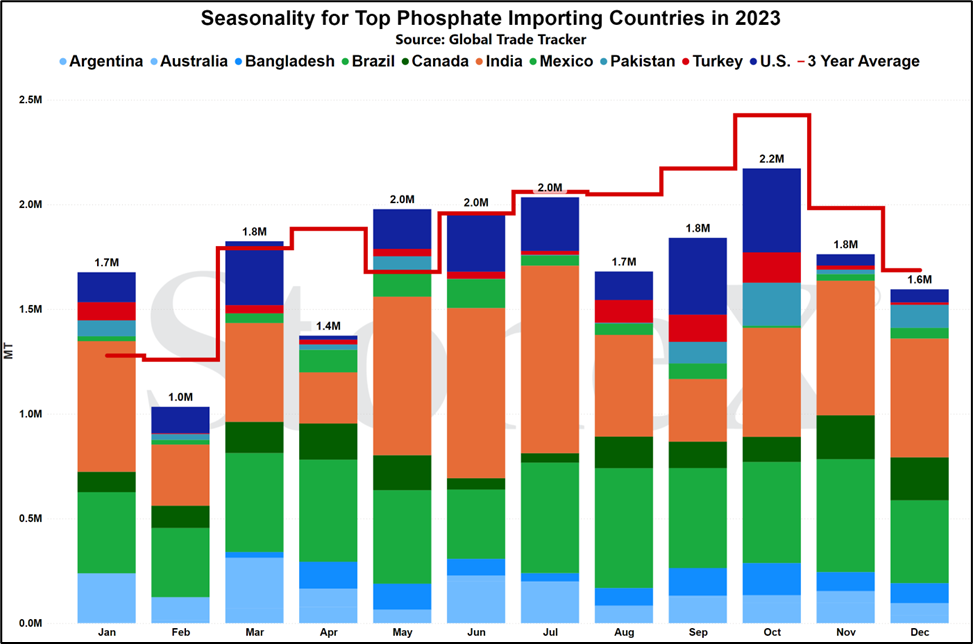
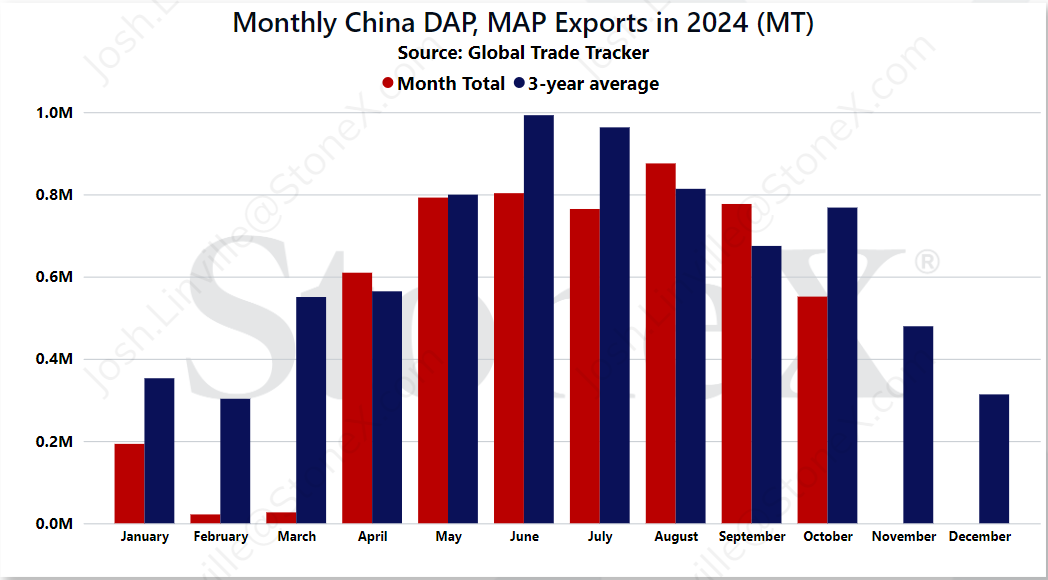
Today, we continue to see the Chinese government playing a role in export flows. Fortunately, we saw 2023 recover from the worst of recent years. About 1.5M more tons were exported which was cause for celebration...unfortunately it was still 3M tons short. However, this last summer saw a lot of global optimism that the Chinese would start allowing full exports which would likely cause values to fall to somewhat normal levels. There were hints of that, with April/May/August/September seeing exports above 3-year averages. However, those were not enough to catch up and the cumulative total thru October is still 1.4M tons short of the 3-year average...of which is still 2.4M tons short of what "normal" export averages are.
In a nutshell, the world's largest producer is still holding back flows and keeping the world S&D much tighter than it would be otherwise. We keep watching/waiting for a day where things get back to normal but until China takes that step, the world is going to struggle.
What does this mean for farmers
Having China reducing phosphate exports hurts every farmer in the world either directly or indirectly. This is a major supply loss to the global S&D. Unlike nitrogen which is produced by tons of companies across tons of countries/regions, when something like this happens, it hurts everywhere.
Phosphate does not have the excess production capacity that markets like nitrogen and potash have. When an even pops up, it hurts worse. The insurance is not there.
I continue to hold out that China will return sooner than later...but I wonder how long I will have to hope that before it happens.
U.S. DOC raises tariff rates, essentially blocks Morocco/Russia
I have bad news for anyone that was hoping the most recent Department of Commerce vote regarding Moroccan/Russian phosphate import duties would end with their ending the tariff's...
A very quick backstory for those that are new.
During the summer of 2020, global and domestic N.A. phosphate values were VERY low. Low enough that U.S. manufacturer Mosaic had to curtail N.A. based phosphate production until markets improved (moved higher). They were losing money with every ton produced and given their limited access to phosphate rock (measure in 10 - 20 years in some circles), it made no sense to produce at a loss. However, in their absence, imports jumped in to fill the gap and values remained under pressure. Eventually, Mosaic had to take action.
They filed paperwork with the U.S. Department of Commerce requesting duties be placed against both Moroccan and Russian produced phosphate. Neither country held their phosphate producers to the same standards as Mosaic was held and so, Mosaic was at a disadvantage. I'll catch a lot of heat for this statement, but Mosaic was right. When Mosaic completes excavations at their mines, they reclaim the land. One of the nicest golf courses in Florida sits over an old phosphate mine. Their gypsum (byproduct of phosphate) is required to be piled and maintained in self-contained dike systems which requires a lot of investment. Their NH3 purchase must be made at free market levels.
By the spring of 2021, the DOC agreed and approved the duties and phosphate imports from both Russia and Morocco effectively ceased to exist.
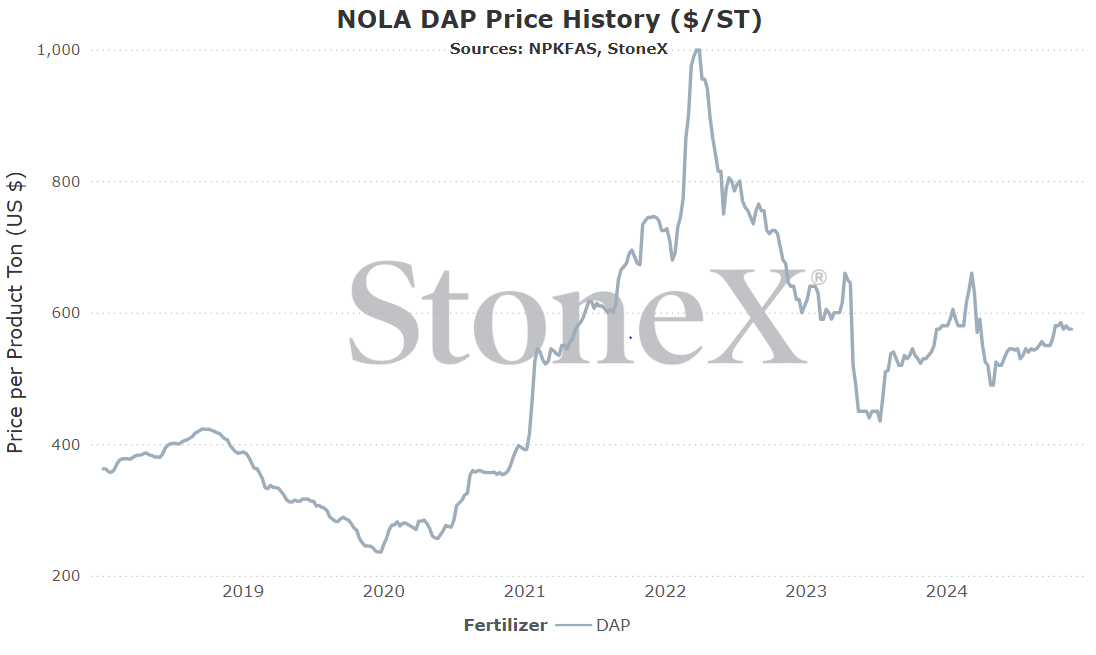
Since that point, the global market has changed. U.S. / N.A. phosphate values have gone tremendously higher than their lows of 2020. A NOLA DAP barge that summer dipped below $250/ton. By early 2022, with China cutting exports and fears the market would lose Russian exports as well, global values shot higher and NOLA multiplied by 4, reaching $1,000/ton. Obviously, there was a price reset, but phosphate never dropped like other fertilizers did. Nitrogen and potash values were slashed by a third, while phosphate barely got below half of its high value.
In the last month, there was a final determination vote by the DOC to conclude a recent review of the case. Many were hopeful that pressure would cause them to reconsider the current market and eventually vote to do away with any duties. That would not be the case. The rate against OCP (Morocco) jumped from 2.12% to nearly 15% while the Russia company Phosagro saw its rate move to the upper 10% range. Both moves effectively mean neither country will be sending product here.
Now, many jump to the conclusion that this makes N.A. values insanely higher than all other global price points...and that simply is not true. If you look at the chart below, while we have had periods in recent years where NOLA DAP values have exceeded the world, they do not last tremendously long...and that is not the case today. Our DAP price is relatively the same as other major markets like India and Brazil. Unfortunately, MAP is a different story. N.A. is highly reliant on imports to match demand and the market has been largely unable to make up the difference. For NOLA, MAP would historically be a $20 premium to DAP but recently, we have seen it be as "cheap" as a $50 premium and as high as $130. With Morocco effectively blocked, it does not look like that will change short term.
It seems the market is going to continue fighting these duty rates with an end goal of doing away with them. Perhaps there is a more favorable review coming with the Trump administration, though I have not seen nor heard anything that truly backs that hope.
Unfortunately, it appears that the markets' best chance of getting back to normal flows of phosphate was voted down last month...
What does this mean for farmers
North American farmers are going to continue to see the phosphate market act "differently".
With few import origins, when we have a major run that empties the system, it takes longer to restock.
Without MAP imports, we should continue to see MAP trade at a much higher premium to DAP than has been normal.
N.A. values WILL continue to ebb and flow with global values. We are not bigger than the world, but we will react differently than in the past.
Phosphate values remain very high, demand continues solid
One of the biggest phosphate points that we have been watching this summer/fall is the market's reaction to the high price. Current phosphate values are high vs historical values. Current phosphate values have a high cost of carry with current interest rates. Current phosphate values are some of the highest in relation to grain values (ratio value). There simply isn't a way that I can look at phosphate and say it is well priced.
Because of that, I spent a lot of this summer and early fall expecting to see some pretty heavy demand destruction cuts. Farmers are already struggling with farm economics. Inputs are high, grain values low, and there doesn't seem to be enough money to go around. When folks start talking about farming to make payments as the best-case scenario, that is not a good range of outcomes. It is easy to expect buyers to be more conservative when this happens. It provides a great time to review input spending and look to make cuts where possible. With a lot of ground able to carry phosphate over from one season to the next, phosphate stood at the front of the line for when cut decisions were made.
So far, this fall run has been wet. Very few areas have had a chance to get a solid run done...but there have been areas that have. What has surprised us is how positive these areas have been.
Folks have been saying thru harvest that yields were better than expected. That does not mean record yields for everyone, but even poor areas yielded better than they thought. That means more bushels to market. Grain prices did recover from some of the lowest values we had seen which meant that farmers selling grain at harvest were getting more dollars to spend. Then, the bigger than expected yield meant higher than expected nutrient removal...and that included phosphate.
By the time the farmer had to make application decisions, they took a harder look at phosphate. Sure, they were still livid at how high priced it was...but the old rule of thumb is that you need to grow your way out of bad times. If all nutrients are healthy in the soil but phosphate is left lacking, likely that 2025 max yield potential is taken off the table. Times are already tough, but that makes it harder.
Ultimately, if Mother Nature continues to stay wet, it may not matter. Farmers/retailers may not apply anything simply because they cannot get into the fields. That said, if windows open and application begins the early feedback is that demand will be much better than expected and we could draw down inventories much lower/faster than previously thought which would be supportive for price ideas.
Again, this is all a story that we should know a lot more about in next month's edition.
What does this mean for farmers
There is still a chance that fall demand will be poor, but it does not look like it will come from demand destruction. It will be more a weather play.
If the fall season was poor and there was plenty of time to get things done, then that could weigh on price ideas as buyers have proven their lack of commitment. However, the areas that have gone have reported solid demand which should be even more true across the Midwest. A poor fall will mean that spring demand is going to be near unbearable from a logistical POV. The markets job is to balance the S&D. If the market supplies cannot be increased, then changes to demand are necessary...which means its price rallies until demand caves.
There is still time for a fall run. I'm not giving up hope. Even a poor fall run could see winter fill values dip a bit, but spring economics should kick it higher.
NOLA/New Orleans, Louisiana DAP price comparison
Number 5 global exporter in 2021
Price comparisons
Vs 30 days ago - -2% or approximately $10 lower
Vs 90 days ago - 6% or approximately $30 higher
Vs 6 months ago - 8% or approximately $45 higher
Vs 1 year ago - 6% or approximately $35 higher
US Midwest Average (using multiple points across Midwest) price comparison
Vs 30 days ago - -3% or approximately $18 lower
Vs 90 days ago - 1% or approximately $8 higher
Vs 6 months ago - 4% or approximately $26 higher
Vs 1 year ago - 7% or approximately $41 higher
US Northern Plains Average price comparison
Vs 30 days ago - -3% or approximately $16 lower
Vs 90 days ago - 6% or approximately $34 higher
Vs 6 months ago - 1% or approximately $4 higher
Vs 1 year ago - 5% or approximately $30 higher
US Southern Plains Average price comparison
Vs 30 days ago - -4% or approximately $26 lower
Vs 90 days ago - 4% or approximately $24 higher
Vs 6 months ago - unchanged vs 6-months earlier
Vs 1 year ago - unchanged vs 1-year earlier
Morocco DAP price comparison
Number 1 global exporter in 2022
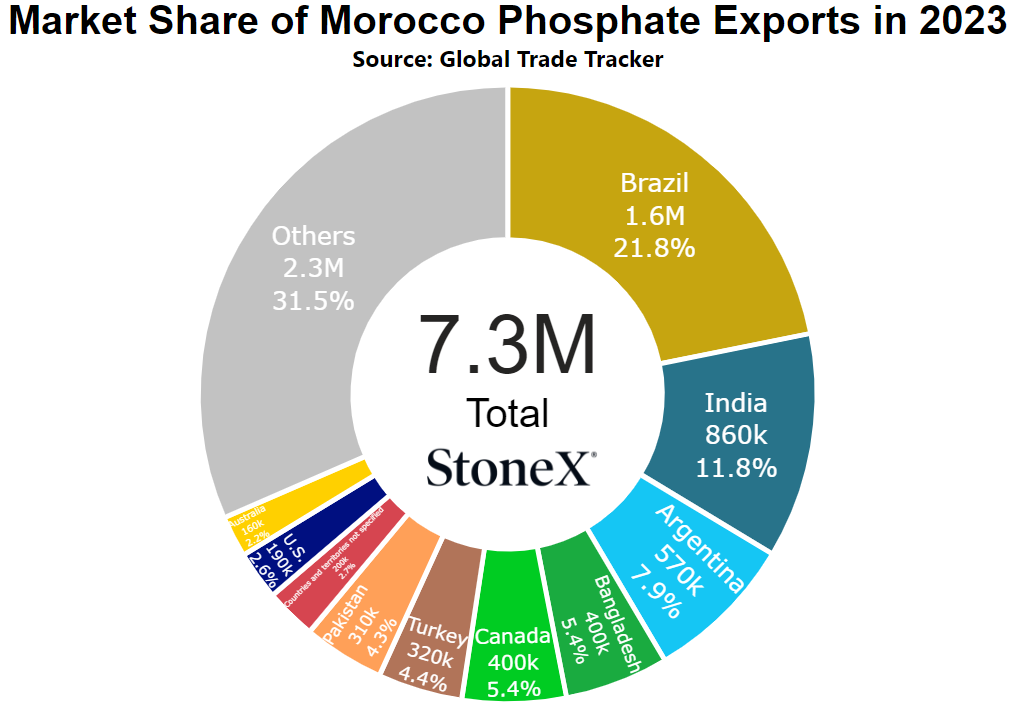
Price comparisons:
Vs 30 days ago - unchanged vs 30-days earlier
Vs 90 days ago - 2% or approximately $13 higher
Vs 6 months ago - 17% or approximately $88 higher
Vs 1 year ago - 3% or approximately $18 higher
Black Sea DAP price comparison
Number 3 exporter of DAP/MAP in 2021
Price comparisons:
Vs 30 days ago - unchanged vs 30-days earlier
Vs 90 days ago - unchanged vs 90-days earlier
Vs 6 months ago - 15% or approximately $78 higher
Vs 1 year ago - 5% or approximately $29 higher
India DAP price comparison
Number 1 global importer in 2022
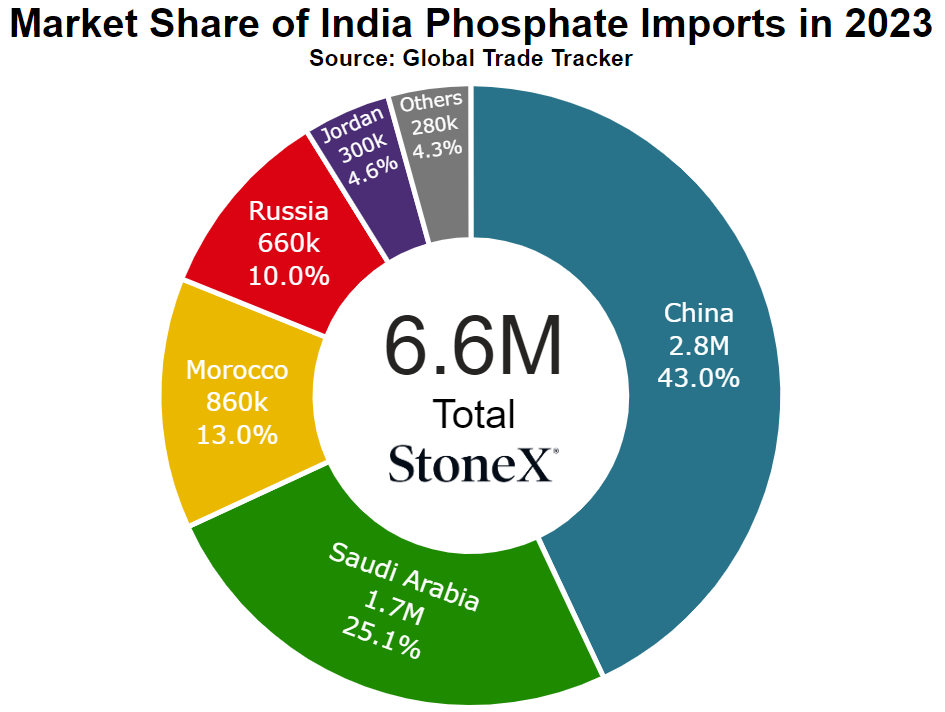
Price comparisons:
Vs 30 days ago - unchanged vs 30-days earlier
Vs 90 days ago - 3% or approximately $16 higher
Vs 6 months ago - 23% or approximately $120 higher
Vs 1 year ago - 7% or approximately $42 higher
China DAP price comparison
Number 2 global exporter in 2021
Price comparisons:
Vs 30 days ago - 1% or approximately $5 higher
Vs 90 days ago - 2% or approximately $10 higher
Vs 6 months ago - 18% or approximately $95 higher
Vs 1 year ago - 6% or approximately $33 higher
Saudi Arabia DAP price comparison
Number 4 global exporter in 2021
Price comparisons:
Vs 30 days ago - -4% or approximately $25 lower
Vs 90 days ago - 2% or approximately $15 higher
Vs 6 months ago - 15% or approximately $81 higher
Vs 1 year ago - 3% or approximately $18 higher
Brazil DAP price comparison
Number 2 global importer in 2022
Price comparisons
Vs 30 days ago - unchanged vs 30-days earlier
Vs 90 days ago - unchanged vs 90-days earlier
Vs 6 months ago - 10% or approximately $60 higher
Vs 1 year ago - 12% or approximately $70 higher
- Major escalations between Ukraine/Russia stop Russia exports – this is a very low probability situation. There will likely be escalations, but not to the extent that I am talking about here. What I am referring to is a complete stop to Russian exports. That would be a massive undertaking/event that would remove the 4th largest exporter. Low probability/high impact.
- Further cuts are made to Chinese exports – there had been rumors that the government was going to put a firm ceiling in the number of tons that could be exported from October until April. We never heard anything definitive which is why it is hard to believe any gossip/news about China until it comes from the central government. Still, with global values high, they could reduce exports and cause global supplies to shrink further.
- Really bad or good N.A. fall run – yes, I wrote that right!!! Let me explain. If we have a really bad fall run, we could/should see winter values dip as long positions weigh on the market. However, if demand hasn't fallen away, then spring demand would be massive, and the market likely reacts positively. On the flip side, a really big fall run ends with the system empty and only with 60 - 90 days to refill before spring applicators begin. Basically, only a "normal" run shouldn't cause values to rise...but even then, we are reliant on global factors.
- China returns to normal – if Chinese exports were to return to their 10M tons per year normal, not only would the global S&D improve but emotions would change as well. China is typically the boogeyman of the fertilizer world. When they are absent, values tend to rise easier. When they return, they tend to fall. This is more important in phosphate where they are the big man on campus.
- Poor N.A. fall run (short term) – while this would likely have spring values higher, the winter months would struggle. A poor fall run means going into winter with storage relatively full. That means very few homes for manufactures. They need to have somewhere to go with the product that they produce every day. When they run out of destinations, they have to be concerned about where to go with it all. The more unsold inventory they have, the more easily they can drop price ideas to bring buyers forward. Again, this would be a short window but a window, nonetheless.
- Grain values continue to fall – today, we do not think phosphate prices are too high to kill a lot of demand...but it also doesn't feel far away. Eventually, inputs become too high priced for the farmer and hard decisions need made. If grains continue to fall and these decisions are looked at, phosphate could be back on the chopping block
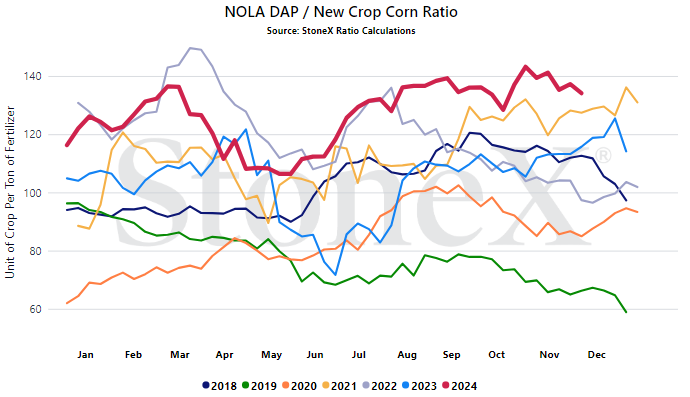
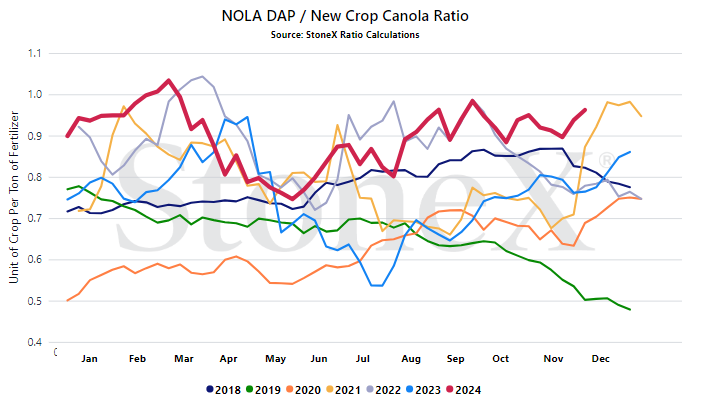
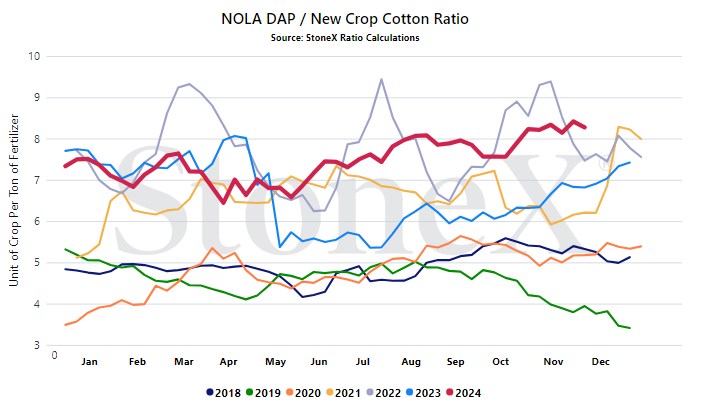
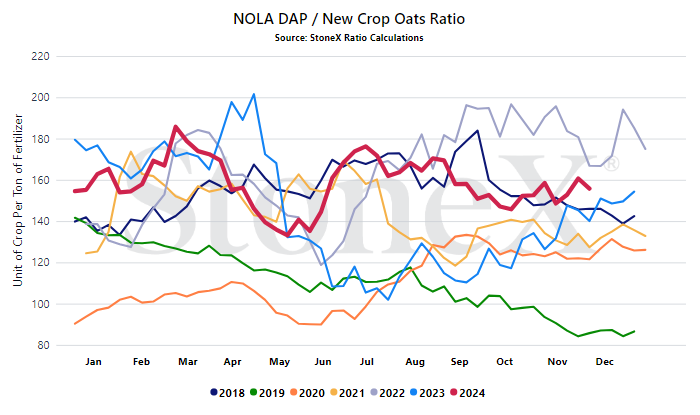
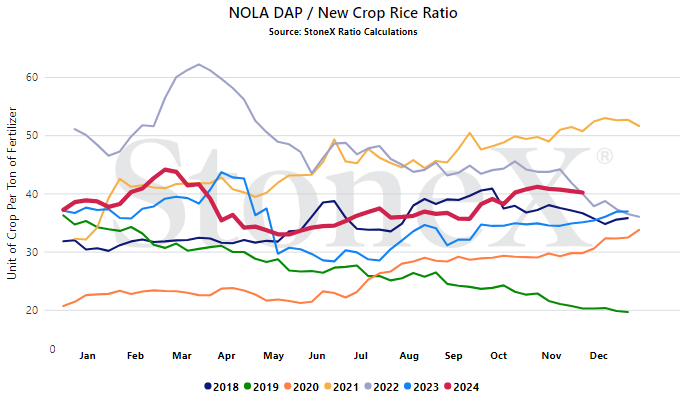
We believe that only looking at the flat price of either grains or fertilizer can be misleading:
-
Only selling grain can hurt you if fertilizer prices rise substantially
-
Only buying fertilizer can hurt you if grain prices fall
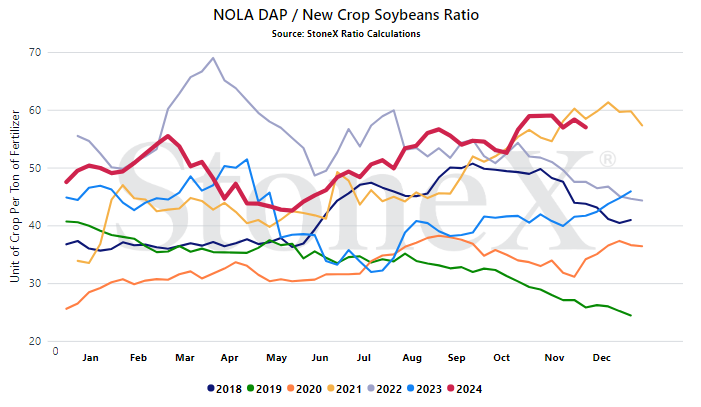
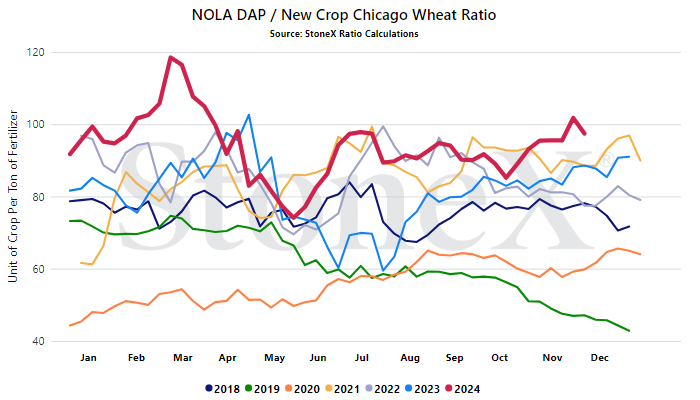
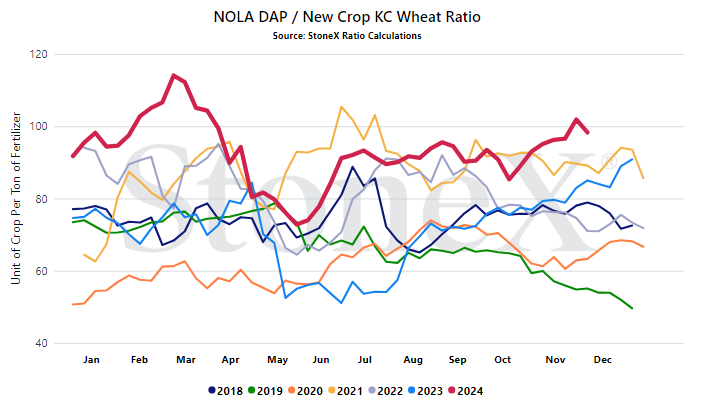
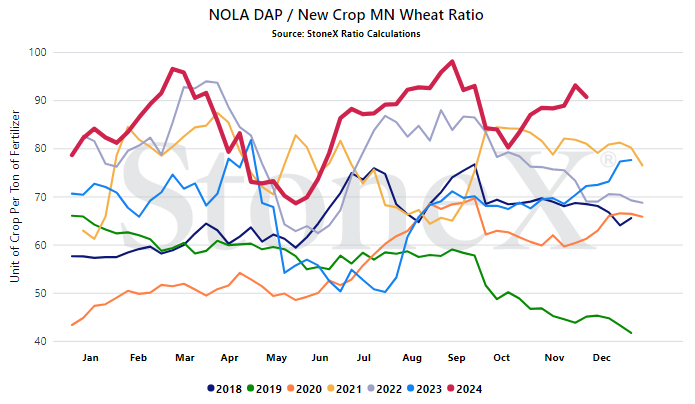
We look at the ratio "value" to get a better indication of where we are or how many bushels of X does it take to pay for 1 ton of fertilizer.
Would you rather:
-
Spend 150 bushels to pay for 1 ton of DAP
-
Spend 80 bushels to pay for 1 ton of DAP
When we compare the current ratio value against recent years, we start to see if we are high or low.
YOUR VALUES MAY LOOK DIFFERENT
This graph looks at the NOLA DAP price vs the flat grain price. There are no logistics on either product. Your location will look different due to fertilizer logistical costs, grain basis, etc.
- Chinese export programs - whichever direction the world's largest exporter goes typically drives global values. If China continues to restrict exports, or worse puts more restrictions in place, the world is likely to suffer from higher values. On the flip side, if they start exporting normally, prices could fall off quickly. China remains my biggest watch point.
- N.A. fall run (or lack of) - it has been a poor run so far, but fall is not lost. How good or bad the fall run is will determine a lot of the spring. Right now, we think there is demand destruction but nothing in the way we thought a month or two earlier. If we had a normal fall run, we think it would be big enough to wipe out inventories heading into winter. However, if this belief is true and we have a bad fall run, then what is coming in the spring is almost unimaginable. There is a reason the market has a fall and spring run...
- Continued Russia/Ukraine escalations - again, this is a low probability/high impact situation. It is not likely that we lose Russian exports. If anything, the west tries to stop flows to their countries but there are enough Russian friendly buyers to take everything they export that it shouldn't hurt the global S&D. The worst-case scenario is if Russian flows completely stopped. We already have Chinese exports down. The world is tight. It doesn't need help.
StoneX Ratio Calculation
The ratio calculation is derived from Bloomberg historical grains values as well as fertilizer values from StoneX, NPKFAS, and Argus.
The calculation is simply dividing the fertilizer price by each grain price.
All data was sourced from StoneX unless otherwise noted.