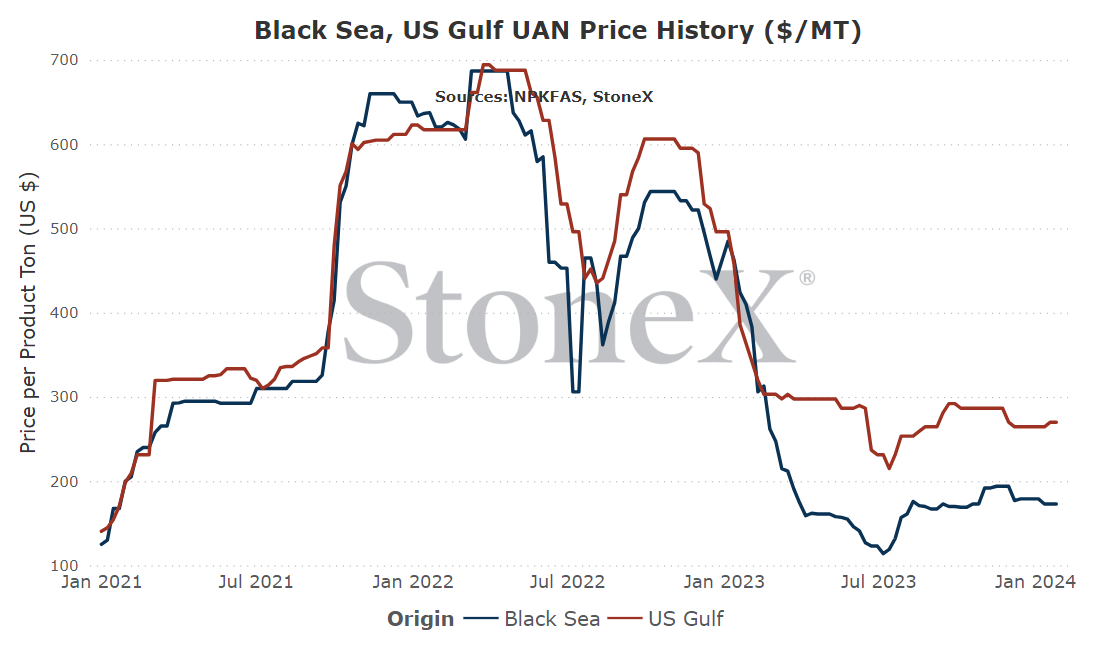
The intention of the below graphs are not to use to say "my price should be X based on this graph". These prices are derived from an FOB price point average. The intent is to show major global price movement trends. Your values will likely have significant basis difference (similar to your local grain price being different than the traded market price).
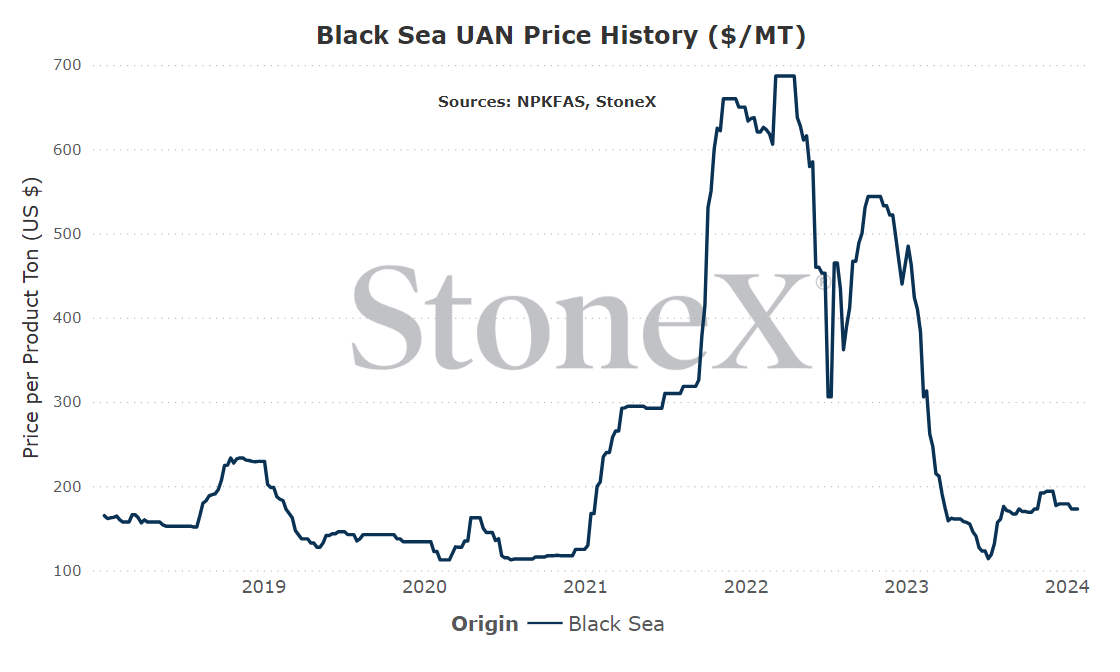
This graph is labeled as MT in USD currency.
|
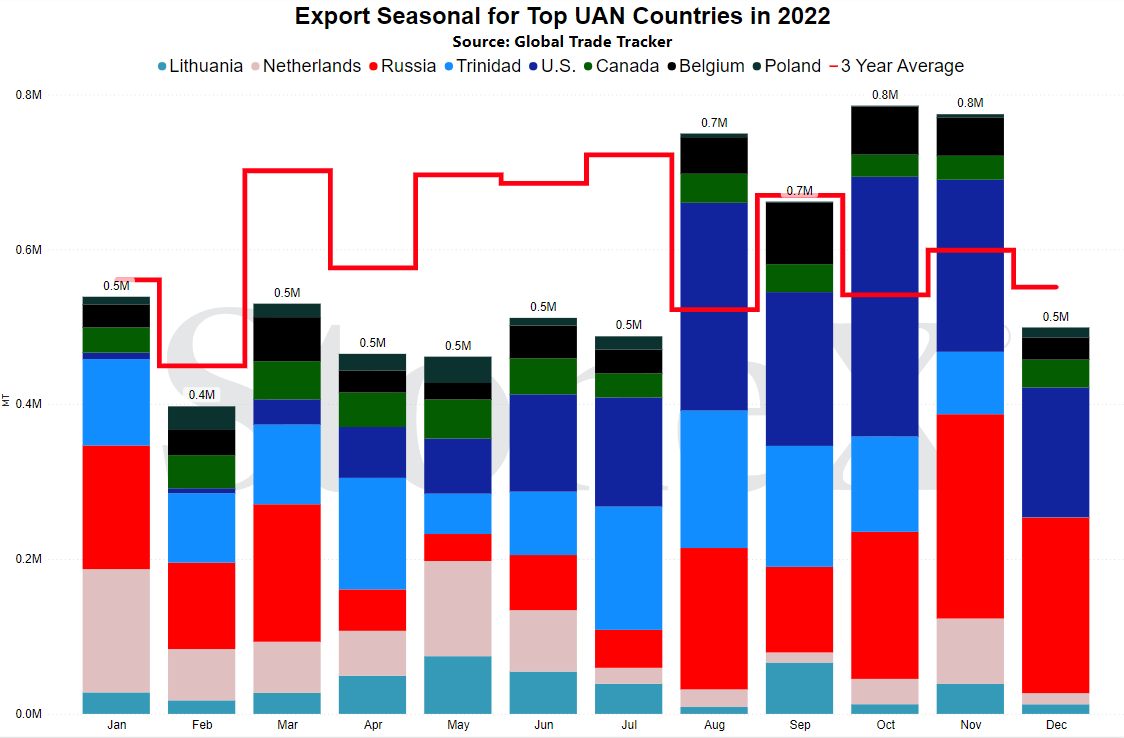
Europe remains in focus
An update on the story that continues!
Dutch TTF values have remained under pressure and have now settled nicely into single digit territory! In recent weeks, winter months have settled in the $8 - $9MMbtu range. Far cry from the $103 that was set August 2022.
So offline nitrogen plants are looking at substantially lower input costs, but there has also been improvements on the output side of the equation. Urea values around the world have been hot with some areas up $50 - $100 from their year end/beginning lows. UAN values have not moved substantially. This is a great combo for the outlook...but we haven't seen definitive restarts.
Will we?
What I mean is that it isn't in the best interest of offline plants to "brag" about being online. Think about if you are a buyer around that facility. All of a sudden, the plant is churning out tons every hour of the day. There is more supply available than what you expected. Are you as willing to pay the higher price that was there before the plant started? Probably not.
Because of this, we expect the majority of plants, if they restart, to stay quiet as possible about it.
Still, there are growing rumors that at least a couple plants are eyeing restarts. Not hard to draw conclusions that others may not be far behind.
Unfortunately for those hoping this craters the market before spring, that likely isn't the case. The window between now and spring is getting closed. If this happens, it is more likely a late spring/summer story.
Still, I'll take the good news where I can get it.
Koch set to purchase Weaver, IA nitrogen production facility
This is a storyline that quickly captured the attention of the North American nitrogen market.
There had been rumors swirling that OCI was open to the sale of their Weaver, IA nitrogen plant. Weaver was, based on my memory, the last new nitrogen production facility to have come online in the U.S. The plant was seen as a welcome change as it helped add new competition and additional tonnage in a demand rich territory. This plant was courted by several states in the Midwest but eventually, packages offered by the state of Iowa won out.
Now, with it being confirmed that Koch will spend $3.6 billion to purchase the facility and many organizations are not pleased.
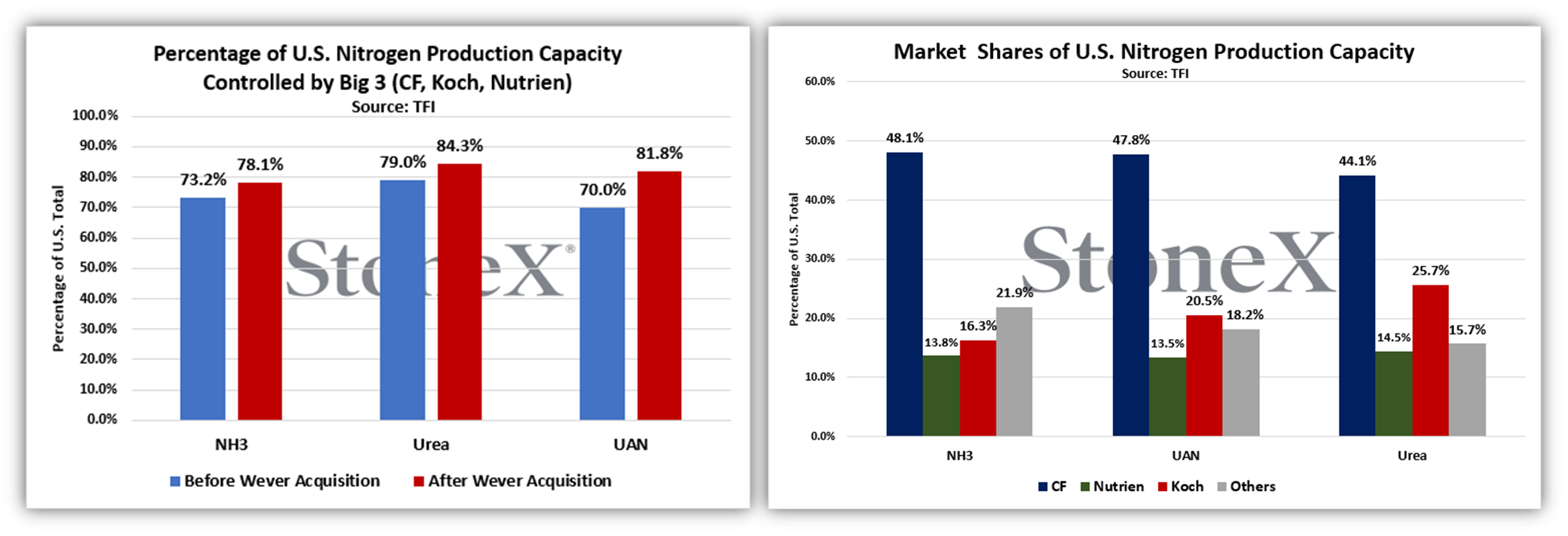
Several groups have come forward in opposition to the sale. While several arguments are being thrown to the industry, it ultimately comes down to further consolidation. If this sale proceeds, U.S. UAN production by the big 3 (CF, Koch, Nutrien) will rise from an approximate 70% to a nearly 82% control. This is another step toward a UAN/nitrogen oligopoly and the market is making it known.
Not that my opinion matters but I continue to believe that the sale will proceed with few issues...but the chance of it being struck down are higher. The market is pushing. D.C. has started to shine a light on the fertilizer market. If I had to put odds on it, I would say 75% approval/25% disapproval odds. Those are not great for those wanting the sale to be stopped but we have seen less likely things happen in recent years.
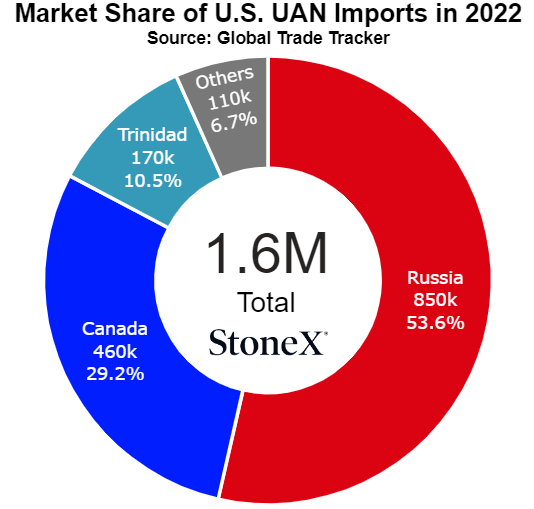
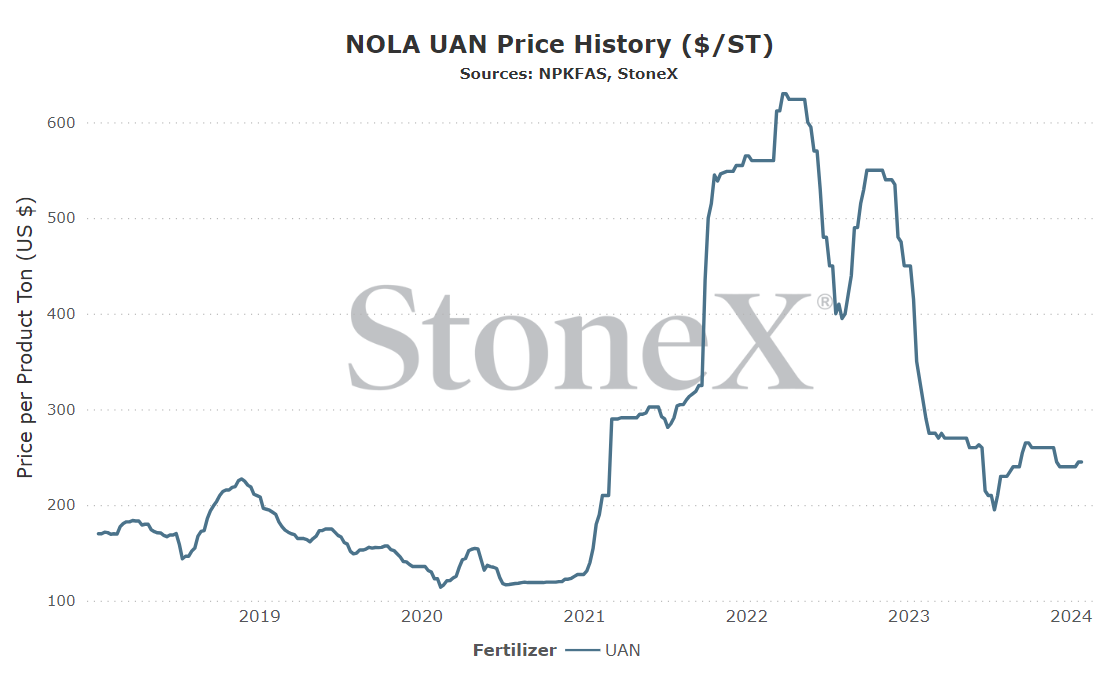
NOLA/New Orleans, Louisiana
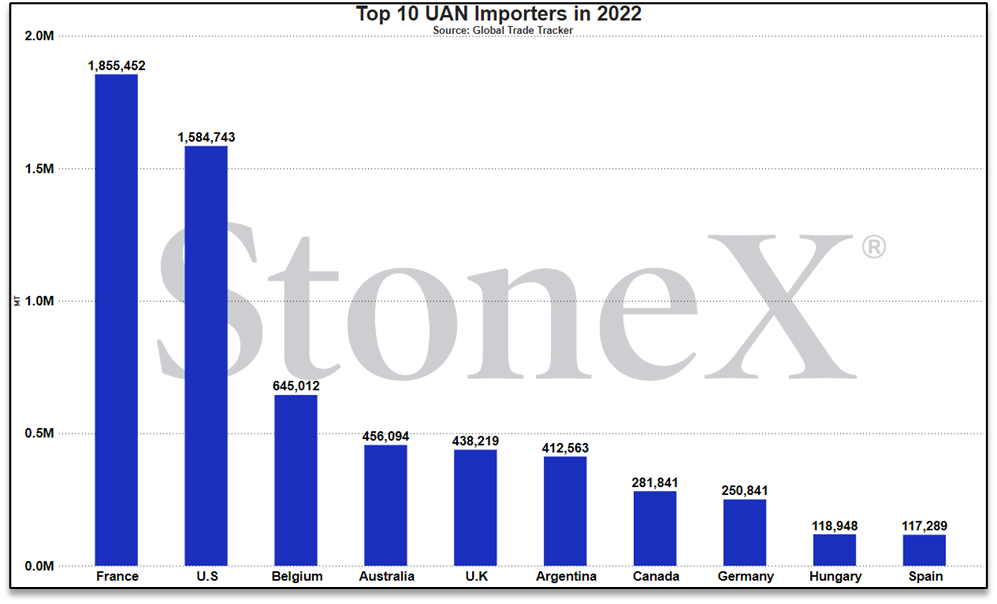
Number 2 global importer in 2022
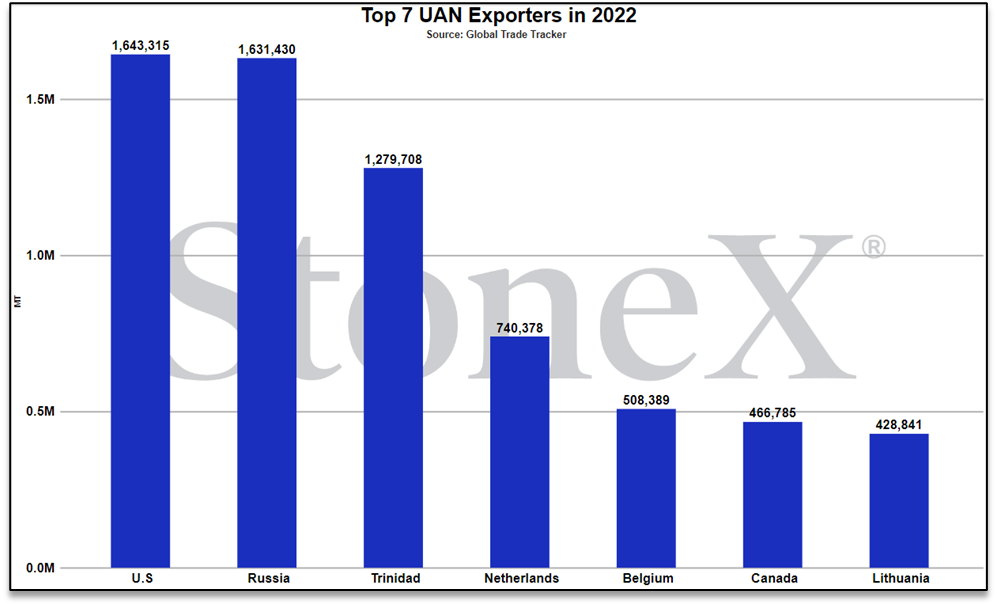
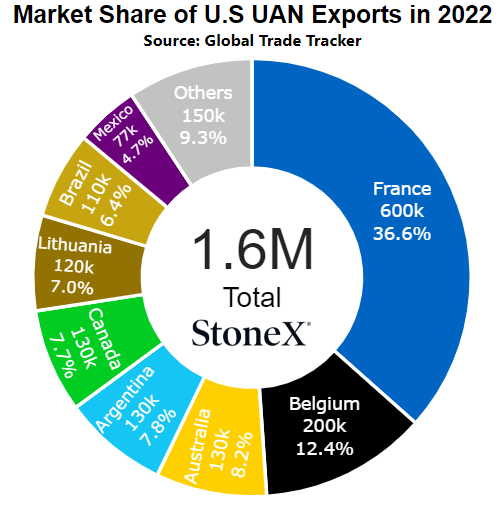
Number 1 global exporter in 2022
Price Comparisons
Vs 30 days ago - +2% or approximately $5 higher
Vs 90 days ago - -6% or approximately $15 lower
Vs 6 months ago - +17% or approximately $35 higher
Vs 1 year ago - -26% or approximately $85 lower
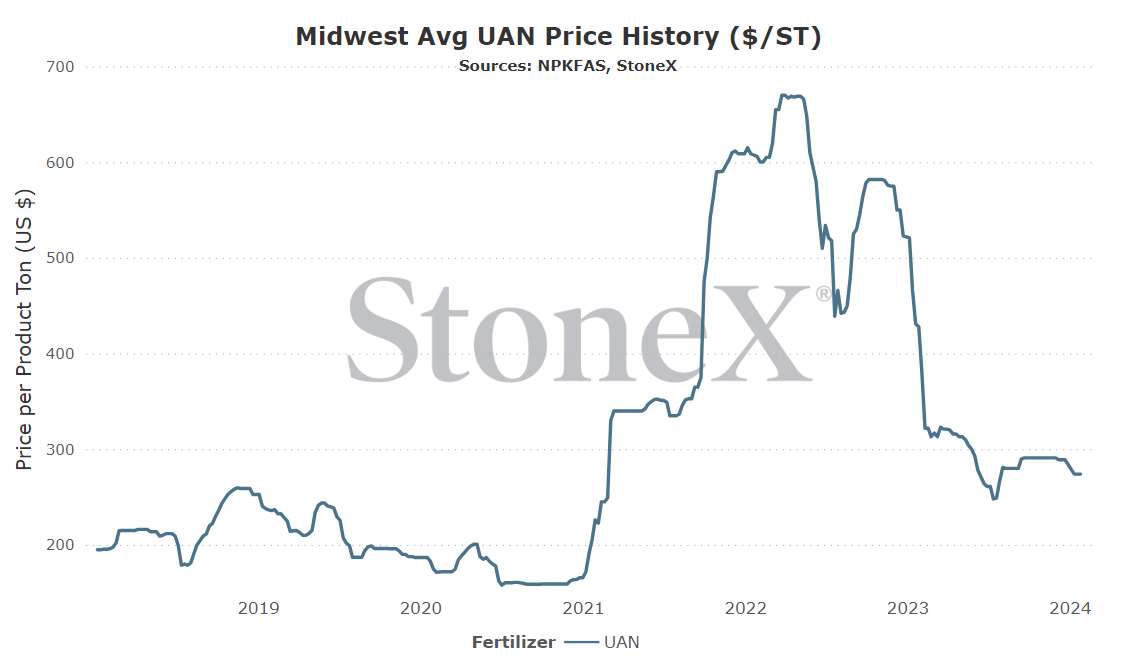
U.S. Midwest Average
Vs 30 days ago - -4% or approximately $10 lower
Vs 90 days ago - -6% or approximately $17 lower
Vs 6 months ago - +10% or approximately $25 higher
Vs 1 year ago - -36% or approximately $154 lower
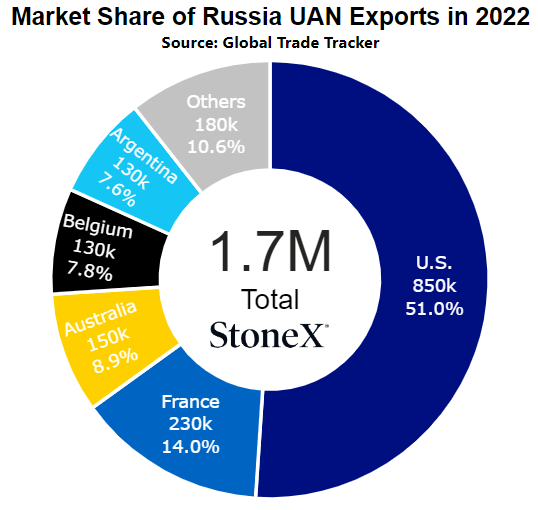
Black Sea (Russia)
Number 2 global exporter in 2022
Price comparisons
Vs 30 days ago - -3% or approximately $6 lower
Vs 90 days ago - unchanged vs 3 months earlier
Vs 6 months ago - +31% or approximately $41 higher
Vs 1 year ago - -58% or approximately $237 lower
- Urea market strength – urea markets around the world have been strong to start 2024. If this continues, UAN is sure to take note and follow to a certain extent.
- Spring ship programs are released which are typically premium priced – for North America, the market continues to wait for spring prepay programs to be released. These are "typically" done at elevated prices given the timeframe, need for off site storage, etc. Effectively, for those that need product shipped in season, the market knows this is an opportunity.
- Poor spring NH3 application run – even though N.A. just had a really big fall NH3 run, there is still a big need for tons to be applied in the spring. If we enter into a cold and/or wet pattern now thru mid-April, farmers will be face with the choice of delaying planting to apply NH3 or go ahead and plant with the expectation of applying urea/UAN after the fact. The later it gets in the calendar, the more pressure there is to plant first. A late surge in UAN demand would weigh on pricing.
- The restart of remaining offline European nitrogen plants – Dutch TTF values continue to fall while nitrogen markets (at least urea) have rallied. That increases the chance of the remaining offline European nitrogen plants to restart. If this starts to happen, tons that have become reliant on shipping to Europe will be pushed back and forced to compete in a new area. Typically, that fight breeds lower pricing. This would likely become a N.A. story.
- N.A. corn acres drop – a large swath of the industry is proceeding with the expectation of 92M acres of corn...and all the nitrogen demand that comes with it. However, that number can and likely will change. Corn values have been under pressure in recent weeks/couple months. Dec '24 values have fallen nearly $0.50/bushel which really digs into farmer income. If that continues and farmers react by switching, nitrogen demand could get cut and force unsold inventories to stay with traders/suppliers/manufacturers. That weighs heavily.
- Urea values fall – the UAN market seems to have learned its lesson from fertilizer year 2023. UAN moved to a huge premium vs urea in the North American space. As a result, many farmers switched to urea and forced the UAN price to plummet. Amazing how demand can have its say!! That said, that lesson is still fresh and the UAN market shows no signs of allowing urea to "get away" this time around. If urea were to fall again heading into spring, high chance that UAN moves to meet the price change to keep its demand.
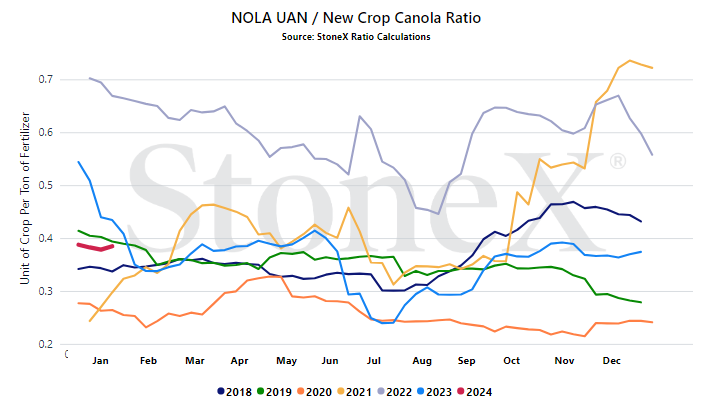
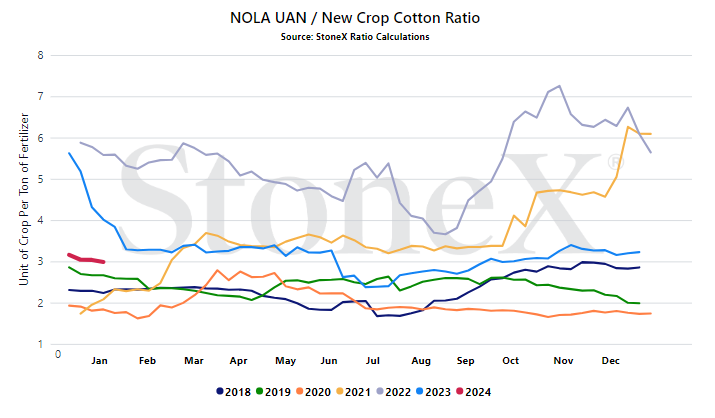
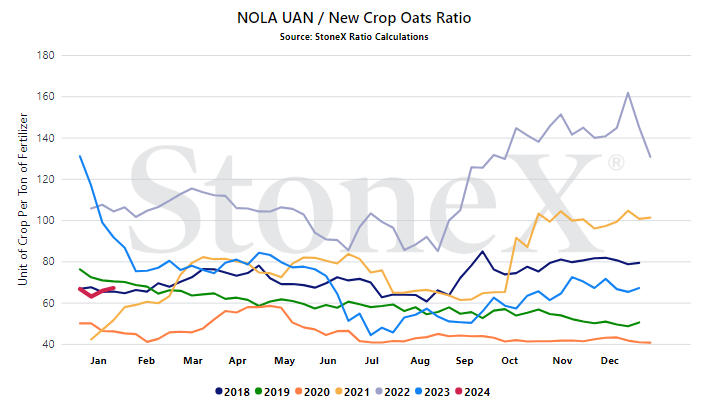
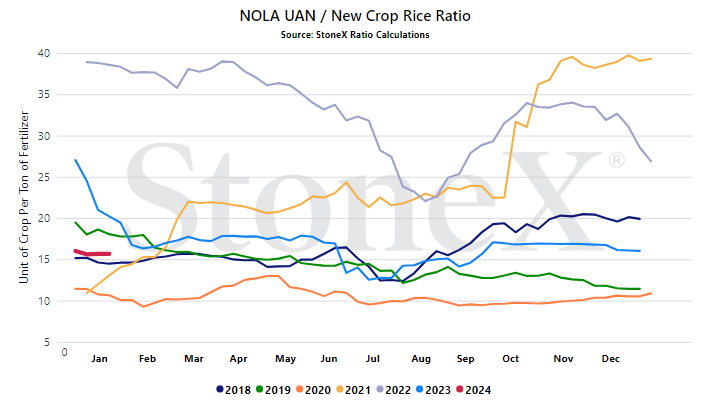
We believe that only looking at the flat price of either grains or fertilizer can be misleading:
-
Only selling grain can hurt you if fertilizer prices rise substantially
-
Only buying fertilizer can hurt you if grain prices fall
We look at the ratio "value" to get a better indication of where we are or how many bushels of X does it take to pay for 1 ton of fertilizer.
Would you rather:
-
Spend 100 bushels to pay for 1 ton of UAN
-
Spend 60 bushels to pay for 1 ton of UAN
When we compare the current ratio value against recent years, we start to see if we are high or low.
YOUR VALUES MAY LOOK DIFFERENT
This graph looks at the NOLA UAN price vs the flat grain price. There are no logistics on either product. Your location will look different due to fertilizer logistical costs, grain basis, etc.
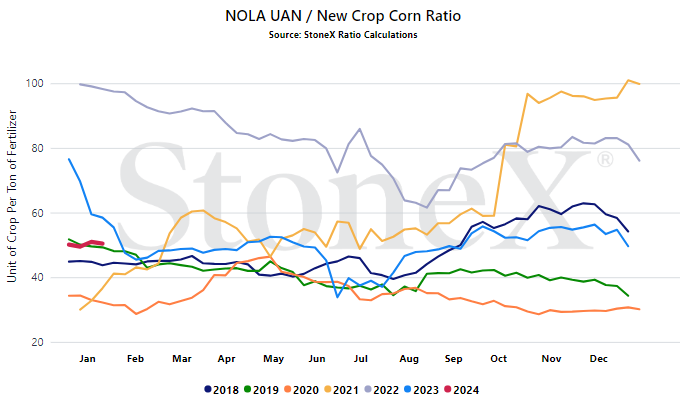
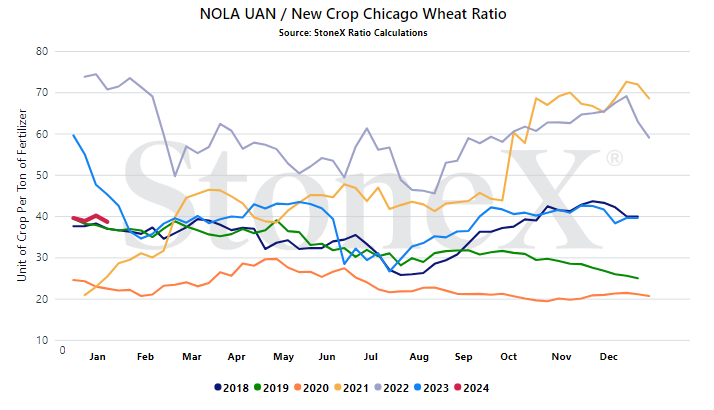
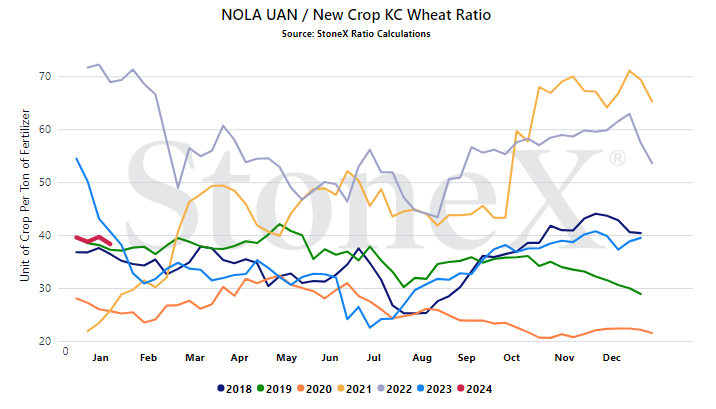
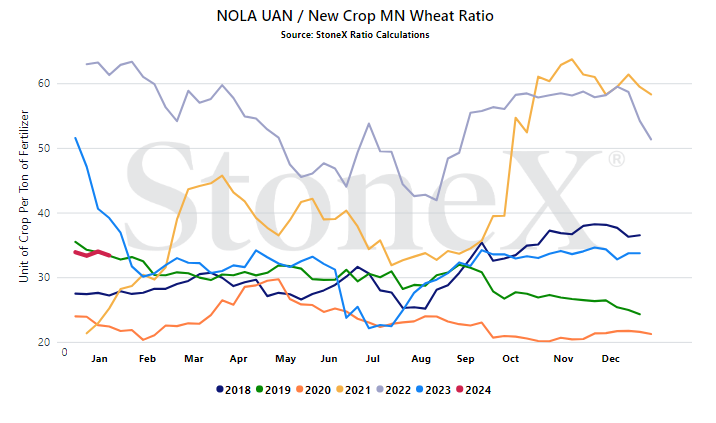
- European production/Dutch TTF values - Europe needs to remain our focal point for UAN markets. We have seen Dutch TTF values far lower than most anyone would have imagined back in 2022. However, nitrogen values are also down from that period. But today, things are changing. Dutch TTF is in single values while urea markets are bullish. Input values down + output values up = higher chance offline plants restart. If those plants do restart, it pushes exports away and makes the market long (i.e. bearish).
- UAN price in relation to urea/NH3 - last winter, UAN moved to huge premiums vs urea values...and UAN demand eventually paid the price. While excess supplies were saved by an unexpected surge in corn acres, those sales were made at much lower prices than could have been had the fall/winter before. That lesson has been learned and UAN is doing a much better job of tracking along with urea so if urea values continue to rise, we need to be weary UAN strength.
- Overall spring demand (i.e. crop acreage mix based on grain pricing) - in spring 2023, we were surprised by the amount of nitrogen demand. We would eventually find out that corn acres had surged from an expected 92M to an eventually 94M+. This season, the market is still discussing 92 - 93M acres...but with corn values falling, we are starting to question if that is too high. If we see a last minute switch away to something like beans, nitrogen demand could crumble...and take UAN values with it.
StoneX Ratio Calculation
The ratio calculation is derived from Bloomberg historical grains values as well as fertilizer values from StoneX, NPKFAS, and Argus.
The calculation is simply dividing the fertilizer price by each grain price.
All data was sourced from StoneX unless otherwise noted.