FX Weekly Overview: The week's main events
- Bearish factors
- Bullish Factors
- Moderate data for the CPI and more conservative projections for interest rates in the US by the FOMC may decrease investors' bets on Fed interest rate cuts and contribute to strengthening the USD.
- Worsening the credibility of Brazilian economic policies increases the risk premium requirement for investors and may deter foreign investments in the country, weakening the real.
- The dissatisfaction of productive sectors and parliamentarians with the Provisional Measure that changed the PIS/COFINS regime could harm the government's economic agenda progress and reduce the expected level of federal revenue.
- CPI and PPI in China may reinforce the perception of a slowdown in domestic demand in the country and harm the performance of risky assets, such as commodities and currencies of countries that export primary products, like the BRL.
The week in review
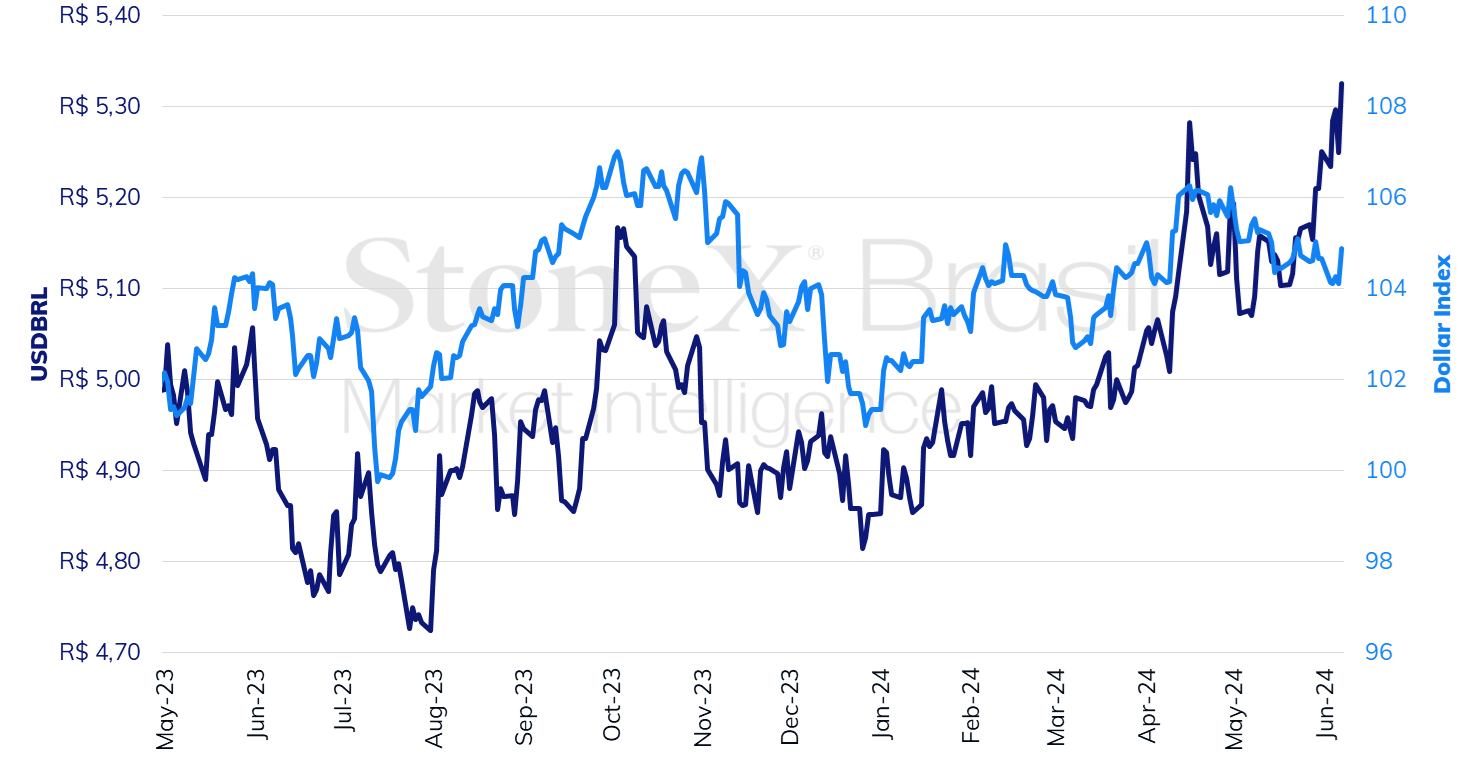
The week was marked by the high volatility of the USDDBRL, amid fluctuations in expectations for interest rate cuts by the Federal Reserve and the increased perception of risks for the conduct of fiscal and monetary policy in Brazil.
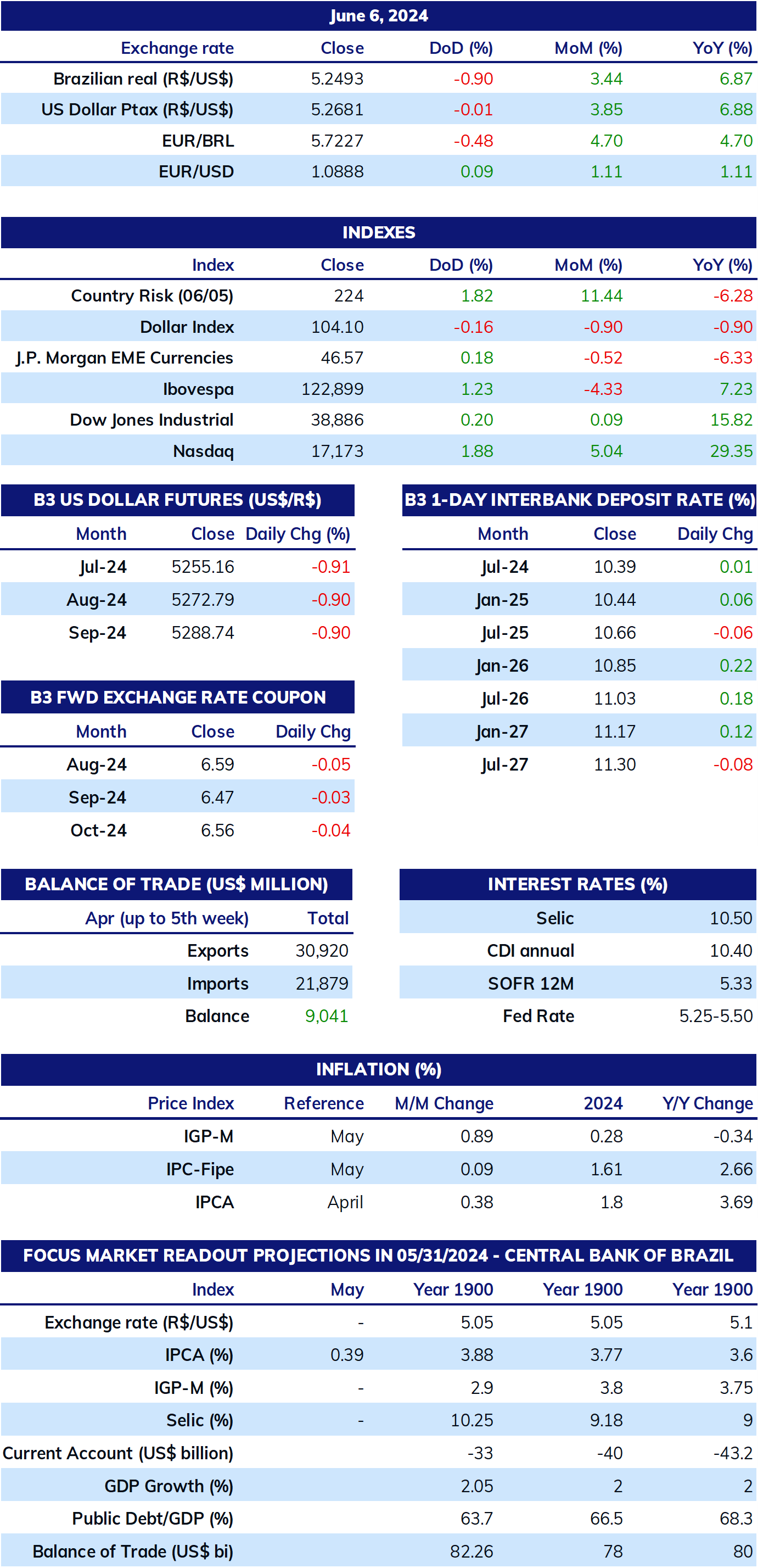
The USDBRL ended the week higher, closing Friday's session (07) at BRL 5.325, a weekly increase of 1.4%, a monthly increase of 1.4%, and an annual increase of 9.7%. The dollar index closed Friday's session at 104.9 points, a change of +0.2% for the week, +0.2% for the month, and +3.5% for the year.
USDBRL and Dollar Index (points
Source: StoneX cmdtyView. Design: StoneX.
THE MOST IMPORTANT EVENT: US CPI and FOMC
Expected impact on USDBRL: bullish
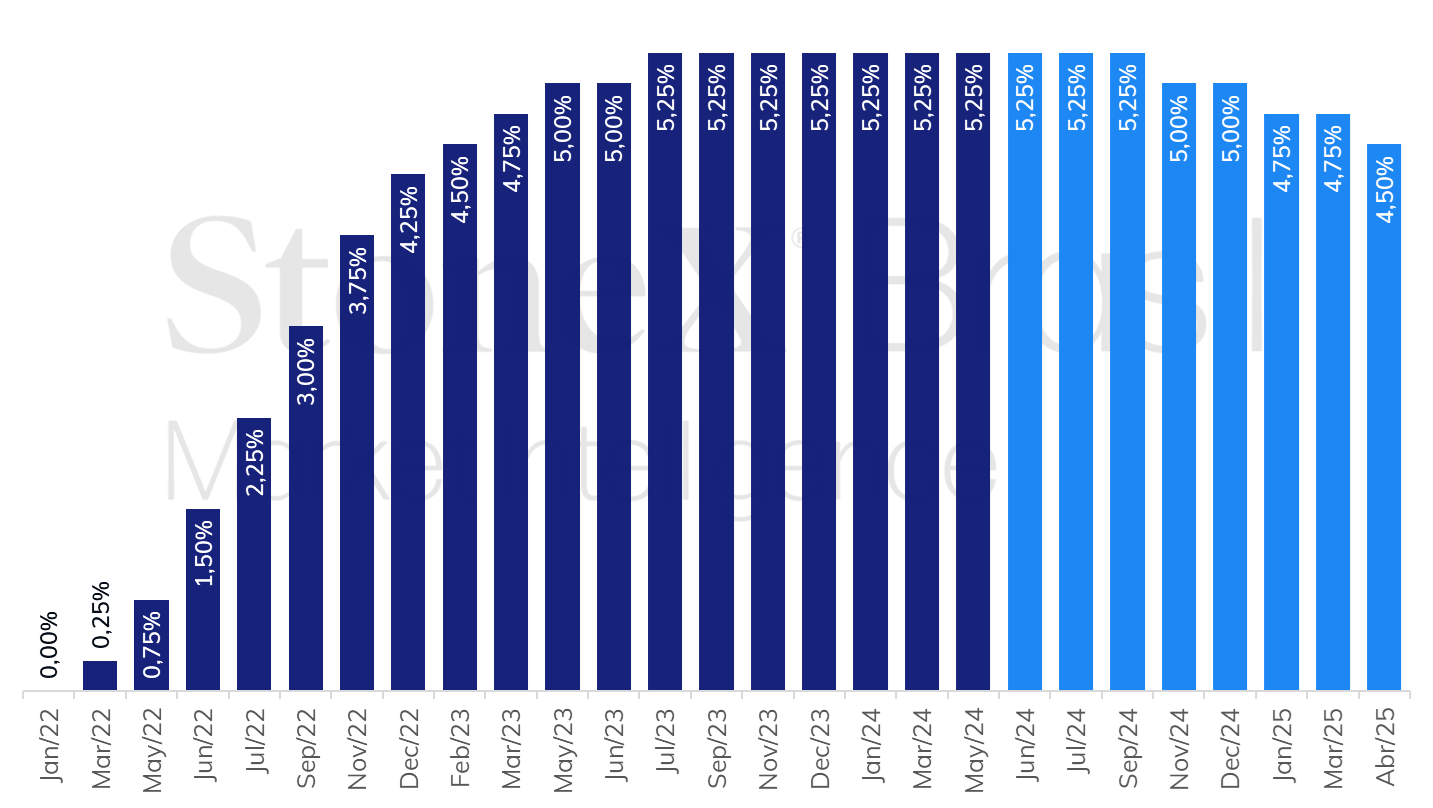
There is a high consensus on the monetary policy decision of the Fed's Federal Open Market Committee (FOMC), which is expected to keep the interest rates unchanged between 5.25% and 5.50% p.a. in June and most likely in July. The economic data for April and May showed some ambiguity, with weaker figures in some areas, such as manufacturing, and sharper in others, such as job creation and service activity, which reinforces the interpretation that it will still take a few more months of positive data before any member of the Committee advocates for a reduction in the basic rate. Therefore, it is imagined that the FOMC will remain on hold longer and the decision statement is expected to remain largely unchanged. However, this week's decision will be followed by the Summary of Economic Projections, which informs the Committee's estimates for growth, unemployment, inflation, and interest rates between 2024 and 2026. The dot plot for interest rates should show, on average among participants, fewer projections of interest rate cuts compared to March, which still predicted a median of three reductions in 2024.
In turn, the American Consumer Price Index (CPI) for May is expected to repeat the figures from April, with a monthly increase of 0.3% in both the headline index and its core, which excludes volatile food and energy components. If the forecast is confirmed, the accumulated increase over 12 months would remain flat at 3.4% for the full indicator and decrease from 3.6% to 3.5% in its core. Although it is a moderate figure, such a reading would still be below the average for the first three months of the year. In addition, the composition of the most recent increases also partially reduces concerns about inflation persistence, as it is influenced by more transitory items, such as hotel tariffs and prices of used cars. Therefore, there is a price moderation process occurring, but at lagging and gradual steps, which is not favorable for achieving a higher level of confidence in the inflation stabilization required by FOMC members before starting a monetary easing process.
US: History and expectation for the interest rate - June 7, 2024
Source: CME FedWatch Tool. Design: StoneX. Refers to the bet with the highest probability in the future interest rate market on the indicated date.
IPCA and Risk Perception in Brazil
Expected impact on USDBRL: bullish
The week begins with the release of the Focus report, which has been showing a gradual worsening in the estimates of financial institutions for inflation, basic interest rate (SELIC), and exchange rate. The expectations of financial market agents will be influenced by the release of the National Consumer Price Index (IPCA) for May, which is expected to accelerate from 0.38% in April to around 0.50% in May, mainly driven by the rise in food prices. However, investors' concerns are based less on the current inflation figures and more on inflation expectations, grounded in lower confidence in the country's fiscal and monetary policy management, which, in turn, results in increased pressure on the exchange rate level and reduced bets on cuts in the SELIC rate by the Central Bank.
Frictions after Provisional Measure
Expected impact on USDBRL: bullish
The Federal Senate approved last Wednesday (05) the Bill 914/2024 (Mover), which establishes financial incentives for the production of less polluting motor vehicles and, among other measures, reinstates the Import Tariff, with a rate of 20%, on international purchases of up to US$ 50. The measure needs to be reevaluated in the plenary of the Chamber of Deputies because it has changed its text by the senators, but it should not encounter resistance. On the other hand, the edition of Provisional Measure (MP) 1,227/2024 this week, restricting the possibility of using PIS/COFINS credits, resulted in widespread resistance from unexpectedly affected productive sectors and is likely to cause greater friction and resistance from the Legislative branch in analyzing Executive branch matters, which may affect the Administration in advancing projects that contribute to increasing federal revenue.
CPI and PPI in China
Expected impact on USDBRL: bullish
Last week, the figures for foreign trade reinforced analysts' perception that the country's domestic demand continues to lose momentum while sales abroad accelerate, showing that exports grew more than expected and imports fell more than anticipated. This week, the data for the Consumer Price Index (CPI) and the Producer Price Index (PPI) is expected to show the same trend, with the CPI maintaining a 12-month accumulated increase of 0.3% and the PPI reducing its 12-month accumulated deflation from -2.5% in April to -1.8% in May. Still, the good performance of industrial segments that drive exports, such as semiconductors and electric vehicles, has not been enough to contain analysts' negative expectations for economic growth in the country, which reduces expectations for the growth of commodity demand by the second-largest global economy and harms the performance of currencies of countries that export primary products, such as the BRL.

INDICATORS