FX Weekly Overview: The week's main events
- Bearish Factors
- A strong GDP reading for Brazil is expected to bolster prospects of a restrictive Selic rate hike cycle, attracting foreign investment and strengthening the Brazilian real.
- Appointments to the Central Bank Board may help alleviate concerns regarding changes in Brazil's monetary policy, enhancing the institution's credibility and partially easing risk perceptions for Brazilian assets.
- Bullish Factors
- Credibility crisis in Brazilian fiscal policy is likely to keep risk premiums demanded by investors elevated, contributing to the weakening of the real.
- Robust US labor market data may reinforce the perception that the Federal Reserve will be cautious in cutting interest rates, boosting the appeal of dollar-denominated assets and supporting global dollar strength.
The week in review
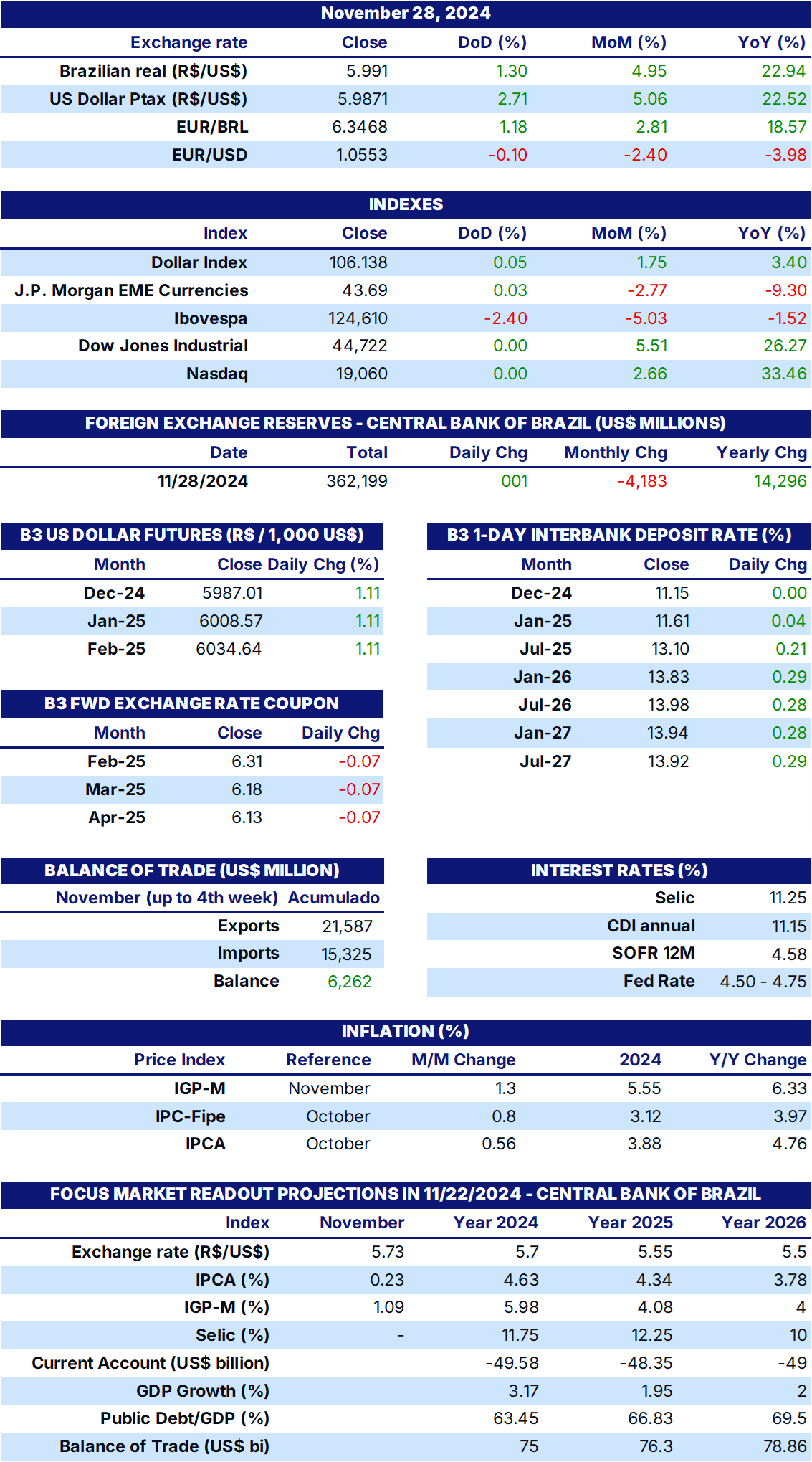
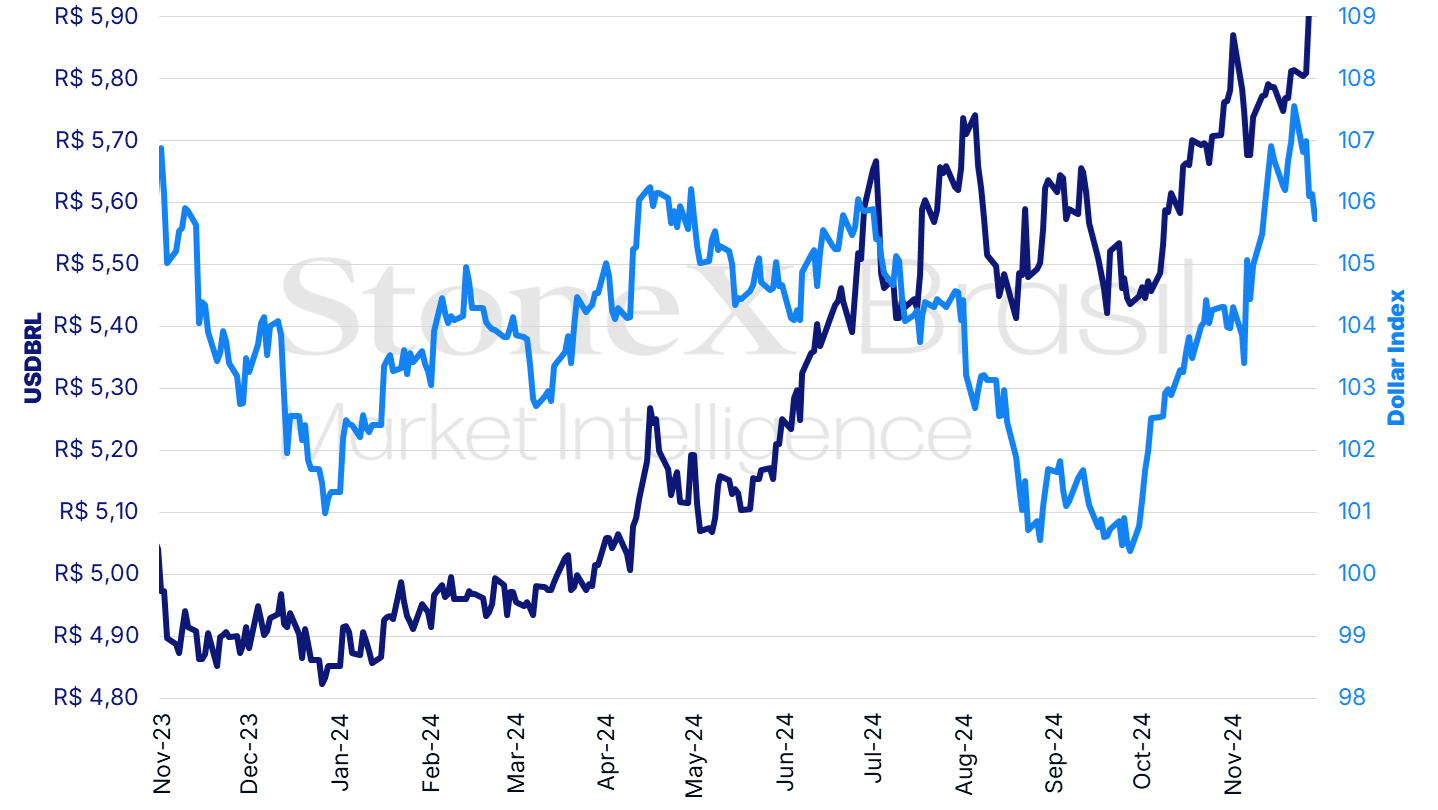
The week was marked by negative investor reactions to the long-awaited economic measures for fiscal adjustment by the Brazilian government, resulting in a sharp devaluation of the real and pushing the exchange rate to historic highs. Meanwhile, the US dollar weakened abroad after eight consecutive weeks of gains, driven by profit-taking by investors.
The USDBRL closed Friday’s session (29) at R$6.001, a weekly gain of 3.2%, monthly gain of 3.8%, and an annual increase of 23.7%. The dollar index ended Friday at 10 points, down 1.7% for the week, up 1.7% for the month, and up 4.3% year-to-date.
USDBRL and Dollar Index (points)
Source: StoneX cmdtyView. Design: StoneX.
KEY EVENT: Deep Credibility Crisis in the Government
Expected Impact on USDBRL: Bullish
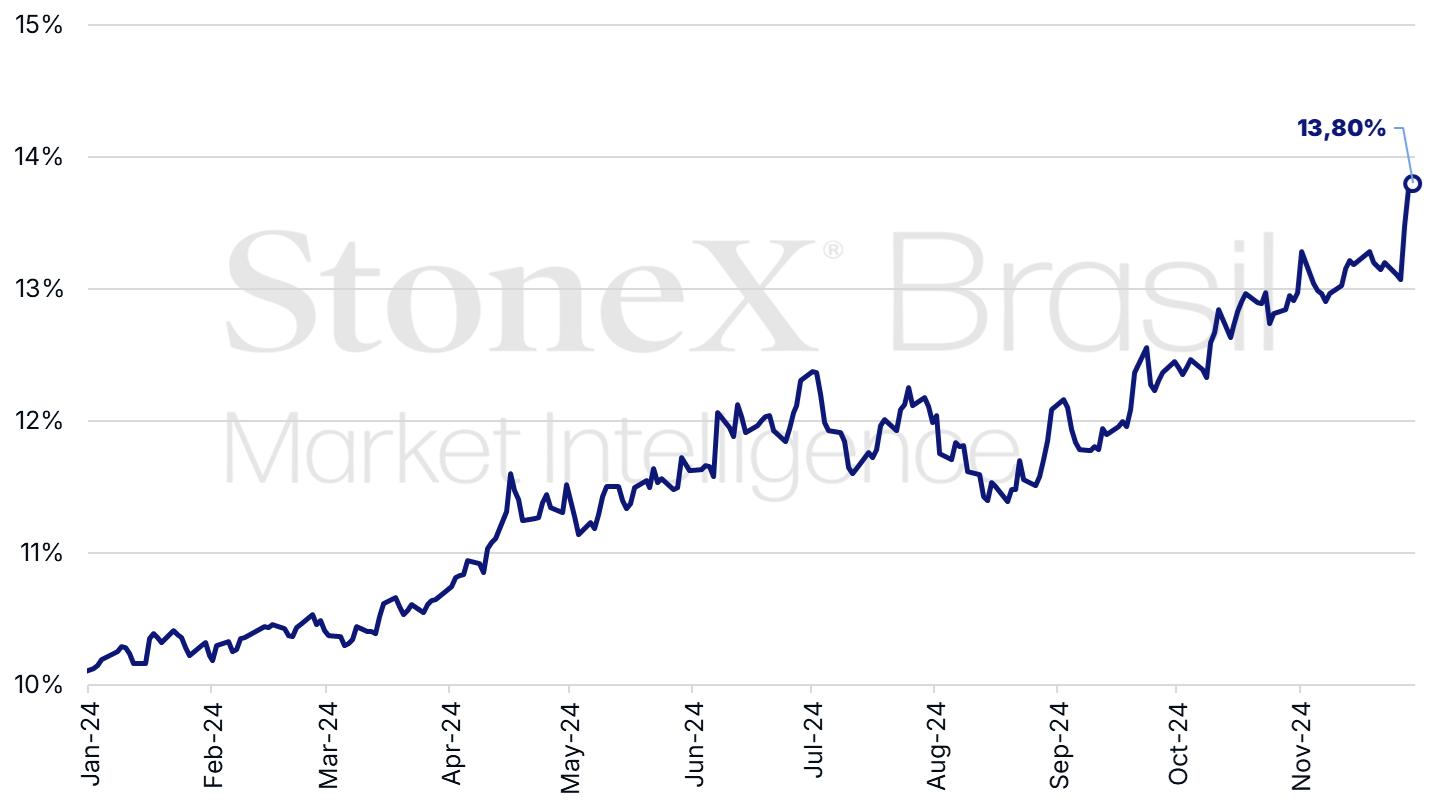
After five weeks of indecision, the announcement of a public spending reduction package deepened the credibility crisis of Brazil’s fiscal policy among investors. It significantly increased risk premiums, pushing the real and interest futures rates (DI) to their worst levels in decades last Friday (29th).
The unexpected inclusion of income tax exemption for individuals earning up to BRL 5,000 left a poor impression, exacerbating concerns over a lack of urgency, significance, and political will from the government to make structural fiscal adjustments. Firstly, it gave the impression that it was unnecessary to mix a fiscal exemption with a package supposedly meant for spending control, as it will be sent to Congress as a separate bill. Furthermore, the project raises fears about worsening public accounts due to potential loss of tax revenue, particularly if Congress modifies or rejects the compensatory measures proposed by the executive, such as a minimum income tax of 10% for individuals earning over BRL 50,000 per month.
Additionally, the income tax reform project further aggravates inflation expectations for Brazil. Even in a more optimistic scenario where the reform is neutral in terms of federal revenue, it is not neutral regarding demand impacts. It increases the disposable income of the population segment with a higher propensity to consume, specifically families earning up to BRL 5,000 per month. Consequently, it tends to boost consumption and may represent an additional inflationary pressure due to higher demand.
There are also concerns that the proposed spending reduction measures will generate lower savings than estimated by the Brazilian government, which projected an impact of BRL 71.9 billion for 2025 and 2026 and BRL 327 billion between 2025 and 2030. Political uncertainties surrounding the measures further complicate their approval. Given that the proposals were sent to Congress less than a month before the parliamentary recess and amidst a packed legislative agenda, their approval in 2024 is unlikely. Additionally, the measures may be modified during the legislative process, where the government does not hold a majority in either the Chamber of Deputies or the Federal Senate.
As a result, fiscal risk perceptions for Brazilian assets and the risk premiums demanded by investors are expected to remain high this week, increasing volatility and adversely affecting the real's exchange rate and interest futures rates (DI).
Brazil: Interbank Deposit Contract (DI) Rate for January 2029 (% p.a.)
Source: Refinitiv. Design: StoneX.
Payroll and US Interest Rate Expectations
Expected impact on USDBRL: bullish
In recent weeks, market bets have increased for the Federal Reserve to maintain its interest rate unchanged in December, although expectations for a 0.25 percentage point cut still hold a slight majority. The Fed’s decision is also expected to consider the release of the November Employment Situation Report this Friday (6th) and the Consumer Price Index (CPI) on December 11. Median estimates point to a net creation of 183,000 jobs in November, consistent with other indicators of a strong economy. Furthermore, October's job creation data is expected to be revised upwards due to an unusually low response rate from businesses in October—47.4%, the lowest since January 1991 (42.6%). If confirmed, this projection would strengthen investor expectations that the Federal Reserve will reduce its interest rates slowly and gradually, boosting US Treasury yields and supporting the dollar's performance.
Market Bets on the Federal Reserve's December 18 Interest Rate Decision
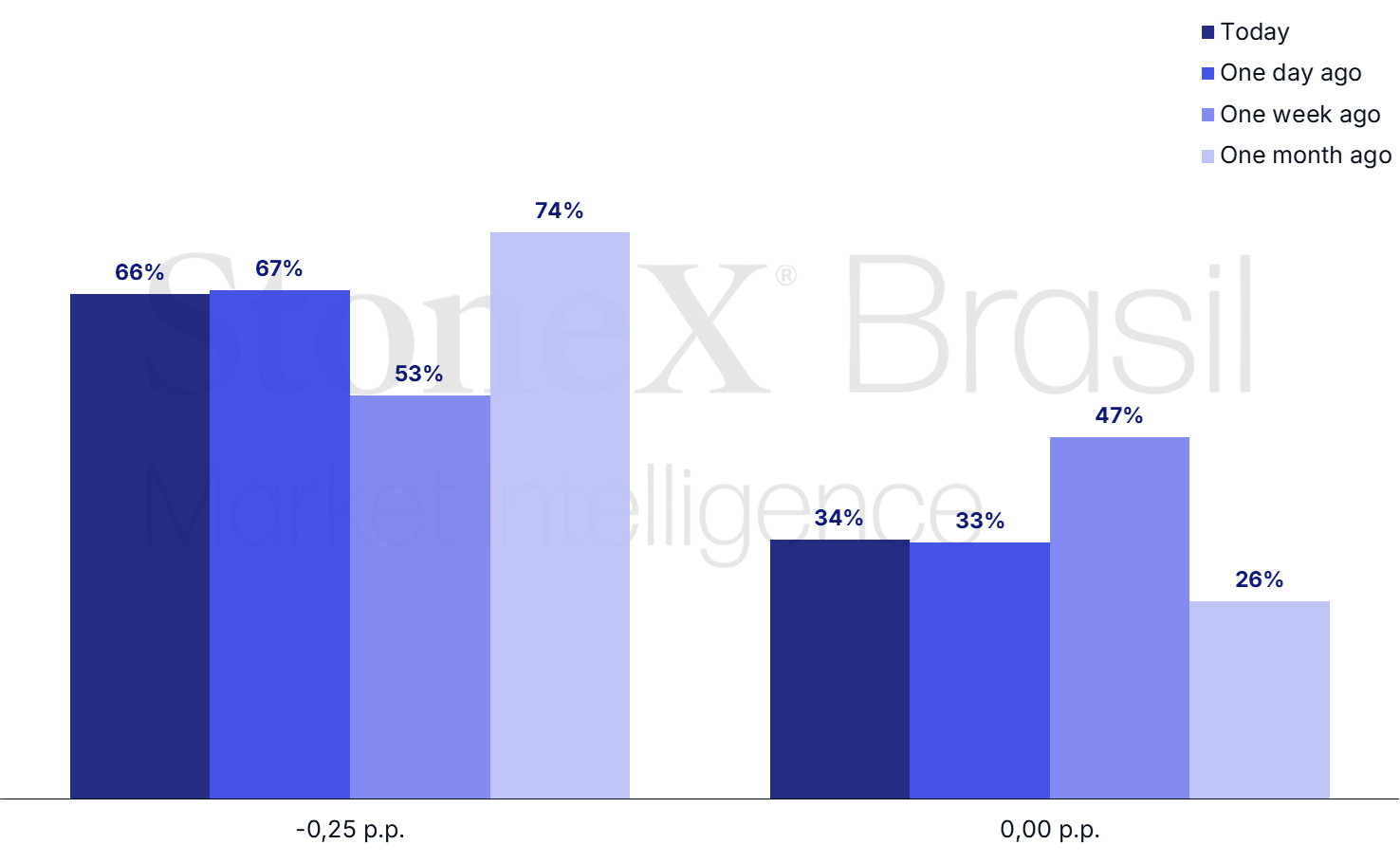
Source: CME FedWatch Tool. Design: StoneX. Futures market probabilities as of November 29, 2024.
US: Interest Rate History and Expectations – November 29, 2024
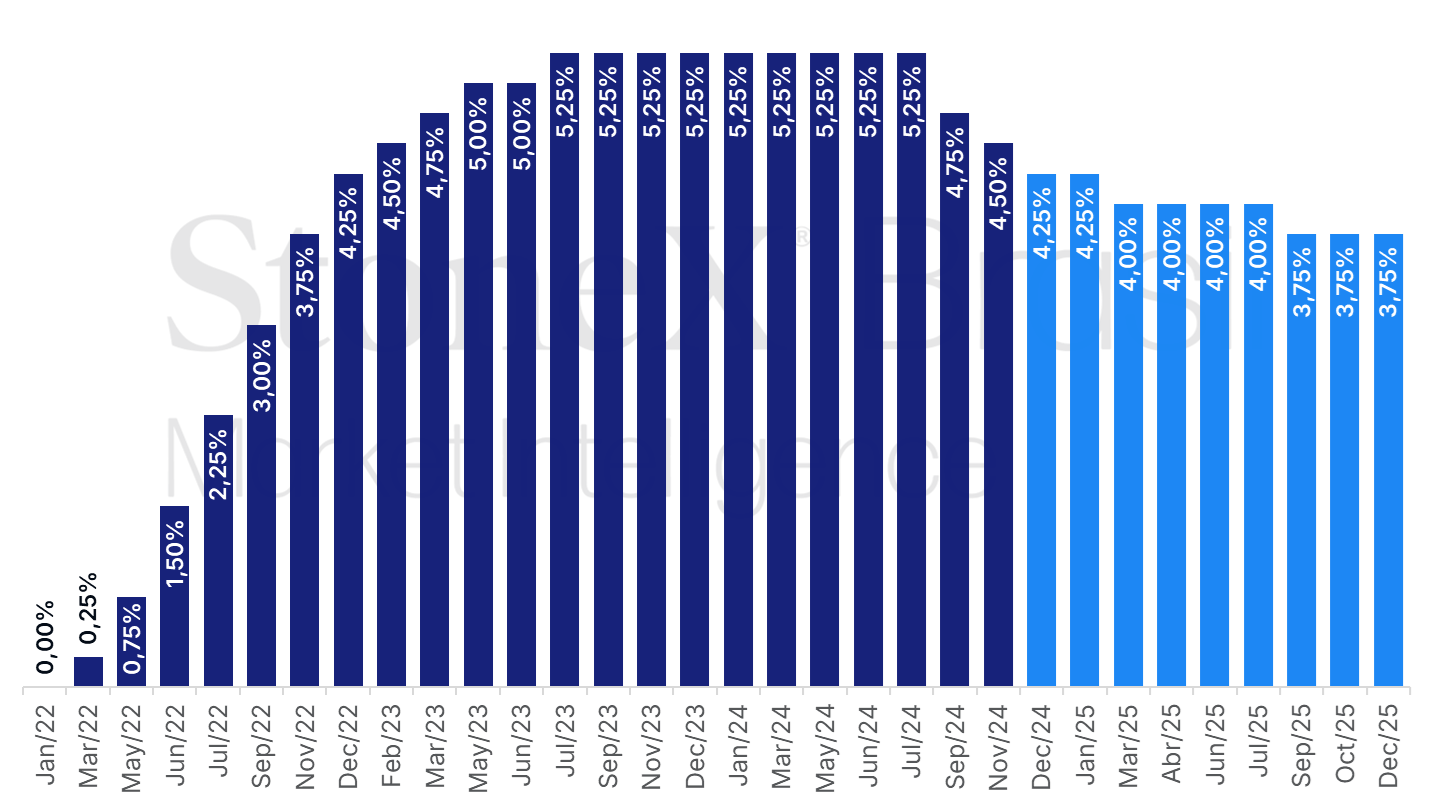
Source: CME FedWatch Tool. Design: StoneX. Refers to the most probable futures market bet on the indicated date.
Brazil's Q3 GDP
Expected impact on USDBRL: bearish
The median estimate for Brazil's Gross Domestic Product (GDP) in the third quarter suggests growth of 0.7% compared to the previous quarter and 3.9% year-over-year. This would mark three consecutive quarters of expansion. If confirmed, the result will reinforce the perception of national economic strength, highlighted by better-than-expected performance in both growth and falling unemployment rates. The productive activity and labor market dynamism raise alerts for the Central Bank due to potential upward price pressures driven by higher demand. This scenario contributes to maintaining elevated inflation expectations in Brazil and solidifies projections of a more aggressive Selic rate hike in the Monetary Policy Committee (Copom) meeting on December 10. This, in turn, supports expectations of domestic bond returns and attracts foreign investment, strengthening the real.
New Brazilian Central Bank Directors
Expected impact on USDBRL: bearish
Last Friday (29th), the Central Bank (BC) announced the names of the individuals appointed by President Luiz Inácio Lula da Silva to fill three directorate vacancies starting next year. Among the appointees is Nilton José Schneider David, head of treasury operations at Bradesco, nominated as Director of Monetary Policy to replace Gabriel Galípolo, who will assume the BC presidency. The nomination is expected to alleviate concerns about potential shifts in the institution's monetary policy starting in 2025, as Nilton has a more orthodox profile, decades of financial market experience, an international career, and good rapport with investors. The previous day (28th), Federal Senate President Rodrigo Pacheco (PSD-MG) stated that the Senate will conduct a focused effort to vote on legislative matters in the final three weeks before the parliamentary recess, including Central Bank appointments, which require a hearing in the Economic Affairs Committee (CAE) followed by a plenary vote.

INDICATORS