FX Weekly Overview: Key Events of the Week
- Bearish Factors
- Better-than-expected Chinese economic activity data at the end of 2024 may improve growth expectations for 2025, favoring emerging market currencies such as the Brazilian real.
- Bullish Factors
- US CPI is expected to remain persistent in December, reinforcing the perception of higher interest rates for longer, strengthening the dollar.
- Higher inflation expectations in Brazil should keep risk premiums high for investors, negatively impacting the real.
The week in review
The week was marked by a general strengthening of the dollar against other currencies due to stronger-than-expected US economic data, cautious Federal Reserve speeches, and concerns about tariff barriers with the beginning of the Trump Administration. In Brazil, the scenario was one of high volatility, with a partial reduction in risk premiums for Brazilian assets.
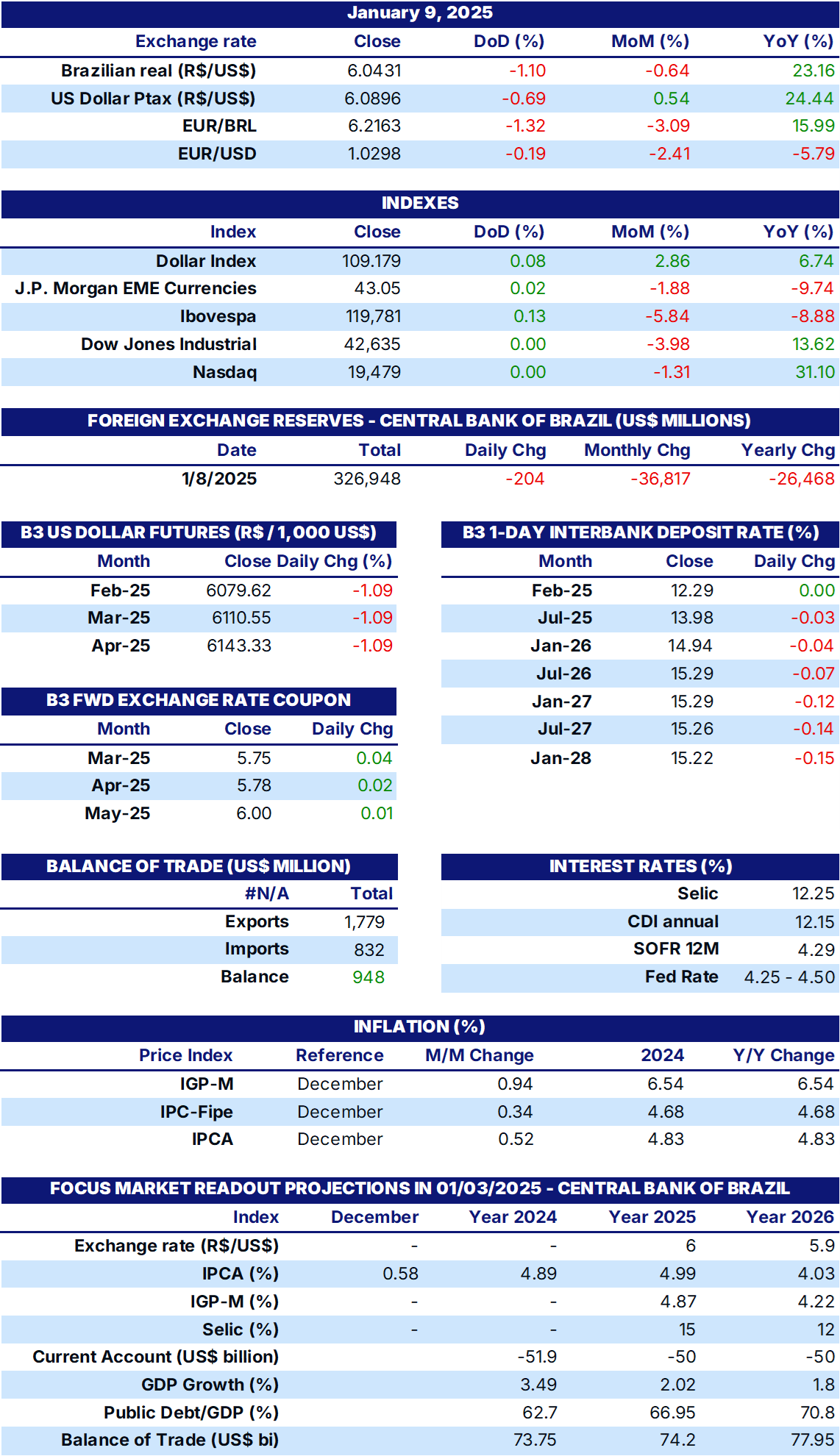
The USDBRL closed last Friday (10) at BRL 6.103, a weekly variation of -1.3%, and a monthly and yearly variation of -1.2%. Meanwhile, the dollar index closed at 109.6 points, with a weekly gain of 0.7%, monthly gain of 1.4%, and yearly gain of 1.4%.
USDBRL and Dollar Index (points)
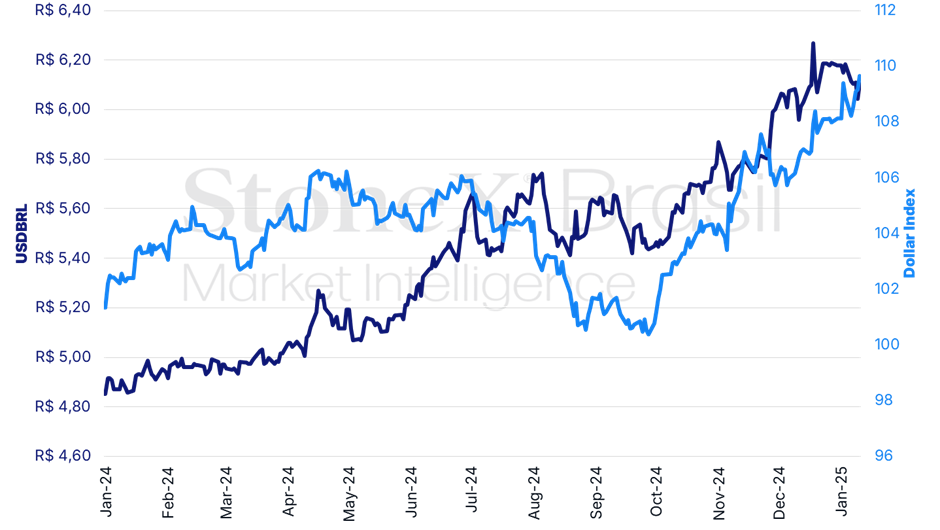
Source: StoneX cmdtyView. Prepared by StoneX.
KEY EVENTS: Expectations for US Interest Rates
Expected Impact on USDBRL: Bullish
This week's economic indicators will be crucial in shaping investors' expectations for the trajectory of US interest rates, particularly the December Consumer Price Index (CPI) reading. The median estimate for the index is 0.3% for the headline figure and 0.2% for its core, which excludes the volatile food and energy components. This would result in a 2.8% increase in the headline figure and 3.3% in the core on an annual basis in 2024. If confirmed, these numbers should reinforce the notion that the process of price stabilization in the US has stalled and inflation has settled at a level far from the Federal Reserve's (Fed) 2.0% annual target. This, in turn, strengthens the perception that the Fed has little room for further interest rate cuts in the US, which tends to favor the profitability of dollar-denominated bonds and contributes to broad strengthening of the US dollar.
This perception of higher rates for a longer period was reinforced by last week's events, which led to a continued rise in US Treasury yields, pushing them to their highest levels since October 2023. First, economic indicators continued to show stronger-than-expected performance, reducing expectations of near-term rate cuts by the Fed. The December Employment Situation Report showed a net creation of 256,000 new jobs, above both the 212,000 added in November and the median projections of 160,000 for the month. Meanwhile, the Services Purchasing Managers' Index (PMI) rose more than expected, from 52.1 points in November to 54.1 points in December, with a noticeable increase in activity levels and prices paid by companies.
Additionally, several Federal Reserve officials, including the regional presidents of Kansas City, Chicago, and Boston, advocated for a cautious approach to monetary policy, emphasizing that the recent US performance presents a “more balanced” risk scenario, with lower risks of a sharp economic slowdown and higher risks of persistent inflation. Finally, reports in the US press and firmer statements from incoming President Donald Trump heightened concerns that Trump would quickly impose new import tariffs on several economies. This could exacerbate inflationary challenges in the country and negatively impact risky assets, such as those in emerging markets.
US: Historical and Expected Interest Rate Trends – January 3, 2025
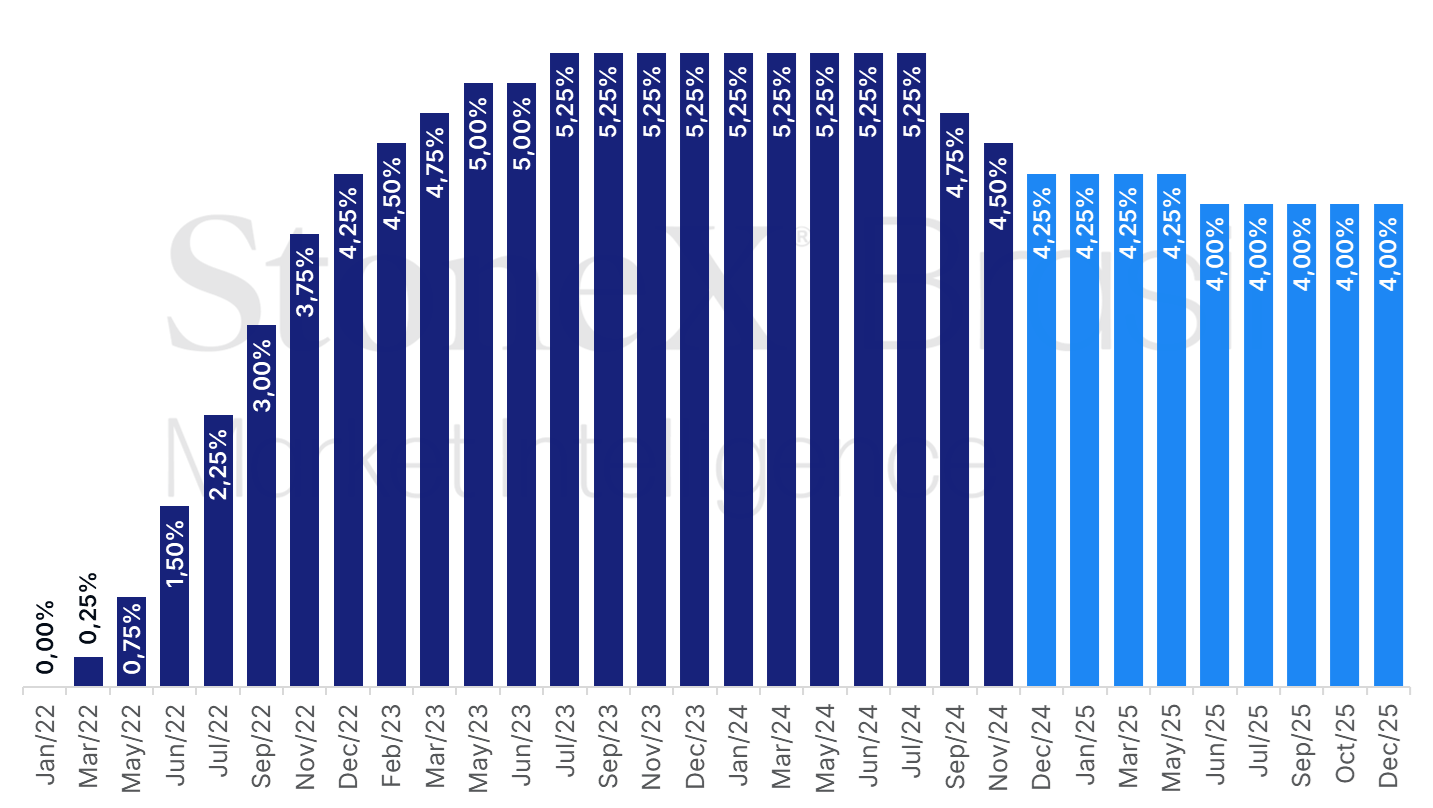
Source: CME FedWatch Tool. Prepared by: StoneX. Refers to the most likely future rate market projection on the indicated date.
Yield on 10-Year US Treasury Bonds (% p.a.)
Source: Refinitiv. Prepared by: StoneX.
Economic Data from China
Expected Impact on USDBRL: Bearish
This week will also see the release of significant economic indicators from China, such as Gross Domestic Product (GDP), unemployment rate, trade balance, industrial production, and retail sales. Throughout 2024, Chinese indicators showed a slowdown in the country's economic growth pace, with robust performance in exports and the industrial sector, but insufficient to offset weakening domestic demand. Concerned with this adverse scenario, the Chinese government intensified its efforts starting in September to stimulate the economy with the largest monetary stimulus package since the Covid-19 pandemic, including rate cuts, incentives for consumer and investment financing, and increased subsidies to companies. As a result of these stimuli, the median GDP estimate is a 5.0% increase in 2024, in line with the official target set by the country's authorities.
In theory, the partial recovery of China's economic growth at the end of the year tends to improve expectations for the country's future performance and, consequently, positively impact the currencies of commodity-exporting countries like Brazil. However, investors remain concerned about the extent of the recent stimulus effects and the potential negative impacts of possible trade disputes with the United States, especially following the inauguration of President-elect Donald Trump on January 20.
Inflation Expectations in Brazil
Expected Impact on USDBRL: Bullish
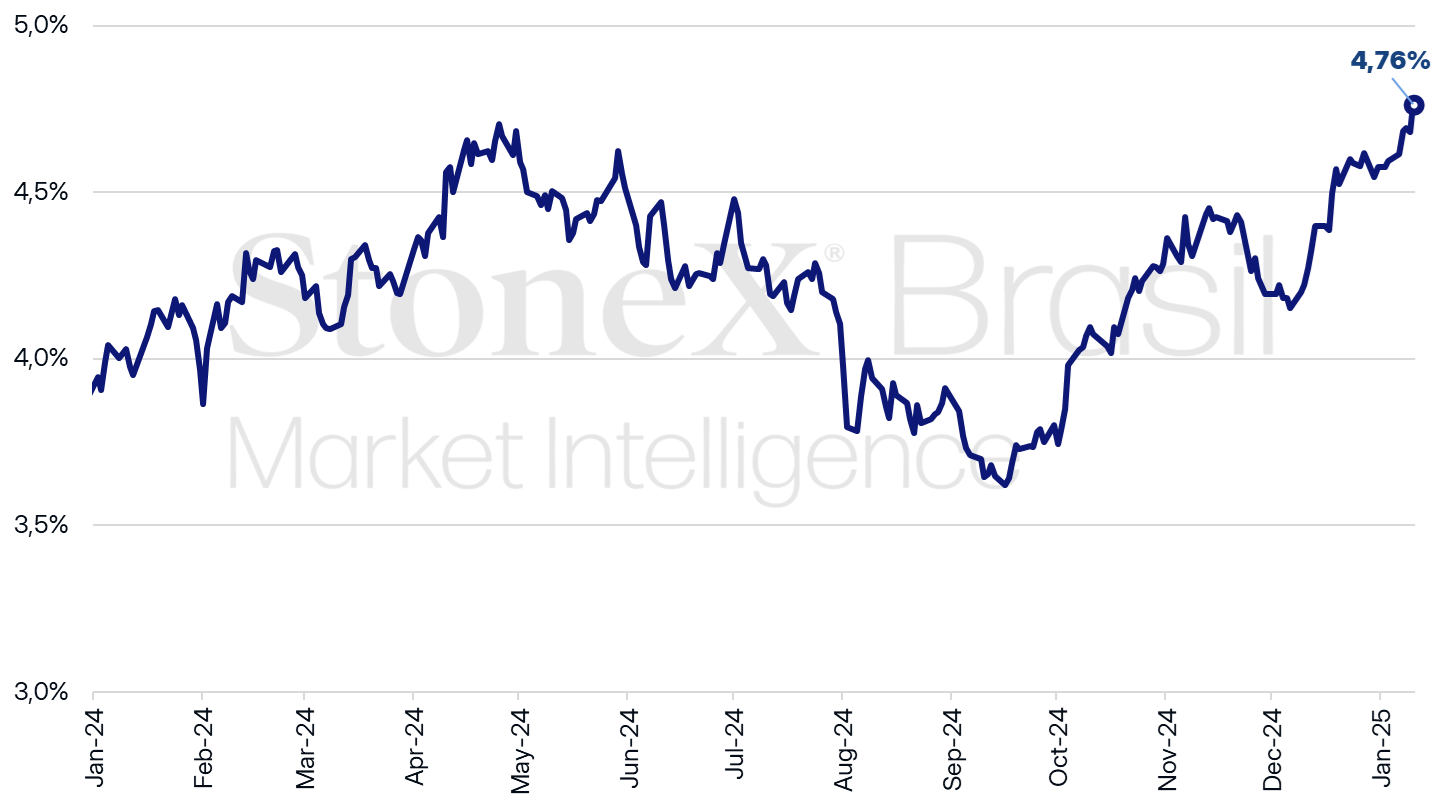
In a week with few items on Brazil's economic indicators agenda, the focus is likely to be on the recent deterioration in investor expectations for inflation, interest rates, and exchange rates, which should keep pressure on the real's performance. As the IPCA closed 2024 with an accumulated increase of 4.83%, above the tolerance limit for the inflation target of 4.50%, the new president of the Central Bank, Gabriel Galípolo, will publish an open letter to the president of the National Monetary Council, Minister Fernando Haddad, explaining the failure to meet the target at 6:00 p.m. on Friday, January 10. Starting in 2025, the inflation target regime will become continuous, and Galípolo will need to justify again if the 12-month accumulated IPCA remains outside the tolerance range for six consecutive months.

INDICATORS