most important: is the text of the tax framework bill
Expected impact on USDBRL: bearish
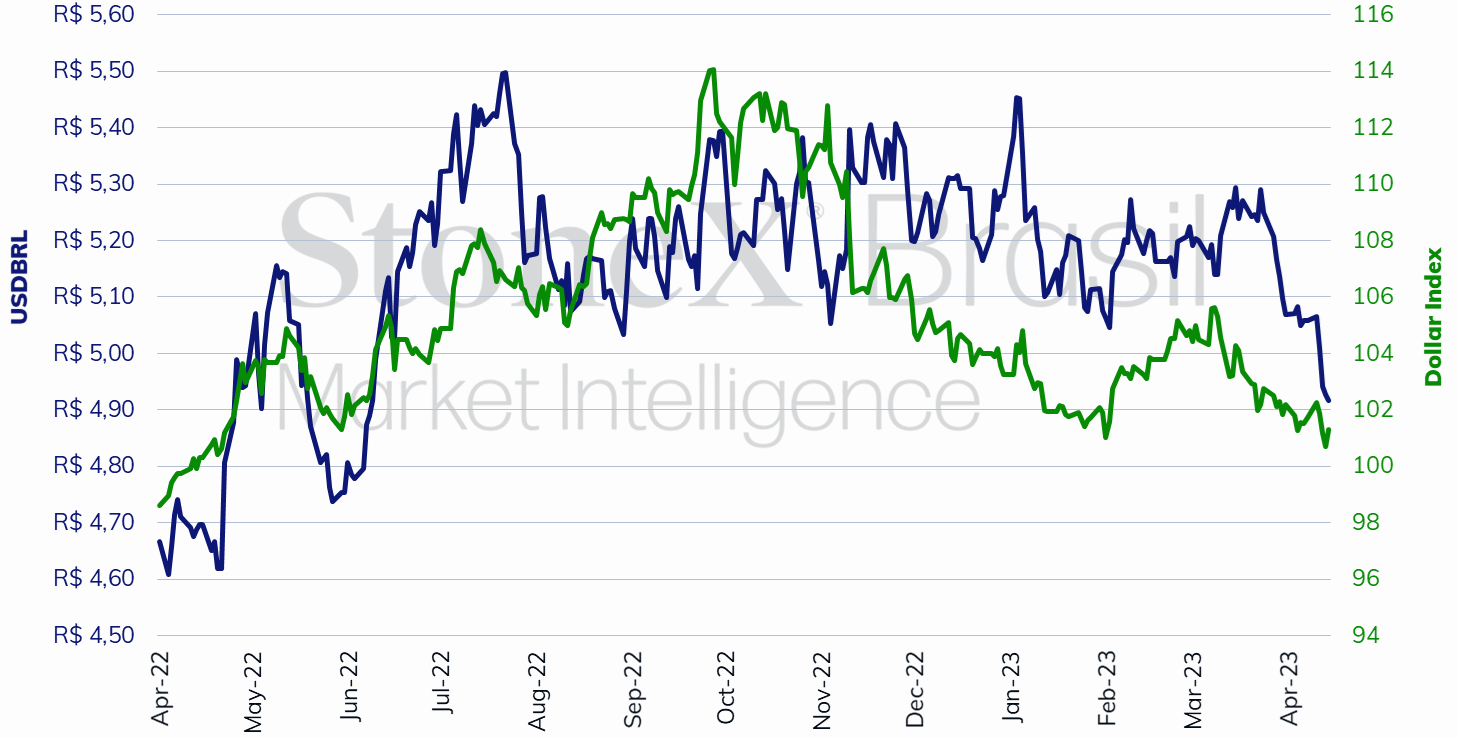
After disclosing the initial guidelines of the new rules that will regulate public accounts in Brazil on April 28, optimism was formed in the Brazilian asset market and contributed to strengthening the BRL. Since then, financial market agents eagerly await the disclosure of the full text of the complementary bill, even to resolve some doubts about more conceptual issues. Initially promised for April 11 and then the 14th, sending the proposal to the Legislature is now supposed to happen "the next Monday or Tuesday." On the other hand, by Saturday (15), the Budget Guidelines Law (PLDO) for 2024 should be sent to the National Congress under the old constitutional spending limit but with an "indicative" suggesting how the budget parameters would be modified in case the new fiscal framework is approved by the Legislature as envisioned by the government.
Throughout this week, new information was again spread by the press, giving the impression that the proposal is still undergoing debates within the economic team in the Administration. In any case, the presentation of the full text is expected to please investors and make it possible to maintain the exchange rate at a more valued level. Although the model can be criticized as more lenient than its predecessor, the effort of the economic team to establish credibility with the financial sectors and even the Central Bank is clear.
Concerns about the TREND of US interest rates
Expected impact on USDBRL: bullish
Economic data for March are generally softer than initially estimated, such as Purchasing Managers ' Indices (PMI), retail sales, weekly applications for unemployment benefits and Consumer Price Indices (CPI) and Producer Price Indices (PPI). Such performance has reinforced an interpretation that the Federal Reserve's interest rate hike cycle is nearing its end. Currently, bets on the futures market point to a last readjustment of 0.25 p.p. in the decision of May 03, to a range between 5.00% and 5.25% p.a., and the beginning of a cycle of interest rate cuts from the September decision. The Federal Reserve officials have been unanimous in stating that, after reaching the maximum point, interest rates should not be reduced in 2023. To justify such disagreement, some analysts argue that weaker economic data points to a higher risk of an economic downturn, which would force the US central bank to ease its monetary tightening. In addition, Fed officials often point to labor supply shortages and inflationary resilience, particularly in the services sector, as indications that there will be no room for easing anytime soon. New York Fed President John Williams, Fed Board of Governors member Christopher Waller, Fed Board of Governors member Michelle Bowman and Fed Board of Governors member Lisa Cook are scheduled to speak this week.
CHINA ECONOMIC DATA
Expected impact on USDBRL: bearish
On the night between Monday (17) and Tuesday (18), a sequence of data will allow a reading of how economic activity is reacting to the end of restrictive measures to combat Covid-19. After the surprising growth of the trade balance in March, released last week, there is a more optimistic expectation for the readings of the Gross Domestic Product of the first quarter, retail sales and especially industrial production. If these expectations are confirmed, there should be an increase in the appetite for risky assets, contributing to the appreciation of countries that export primary products, such as the BRL.