- Economic data in China and the eurozone are expected to reinforce the perception of a slowdown in both economies, which could hurt the performance of risky assets such as stocks, commodities and currencies of emerging countries, such as the BRL.
- Copom should cut the basic interest rate (Selic) and acknowledge a more robust macroeconomic environment, which may reduce the perception of risks associated with Brazilian assets and attract more investments, strengthening the BRL.
- Economic data in the United States may reinforce the perception that economic activity and the labor market in the country remain in a mild slowdown, consolidating expectations that the Fed's cycle of interest rate hikes has already ended, weakening the dollar.
- Return of the Brazilian Congress activities allows the analysis of important economic agendas for the federal government, such as the fiscal framework and the 2024 budget, which can contribute to strengthening the BRL.
The week in review
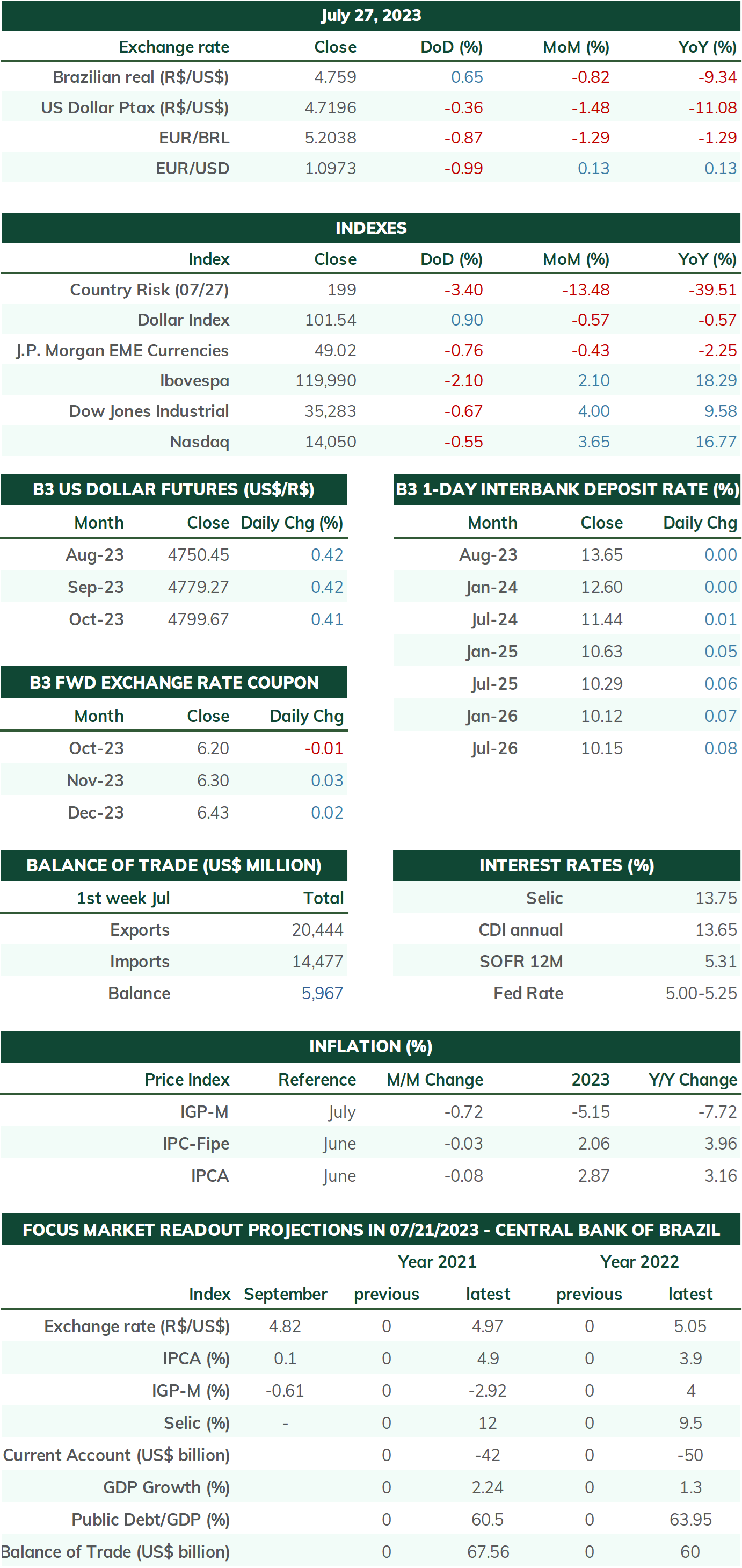
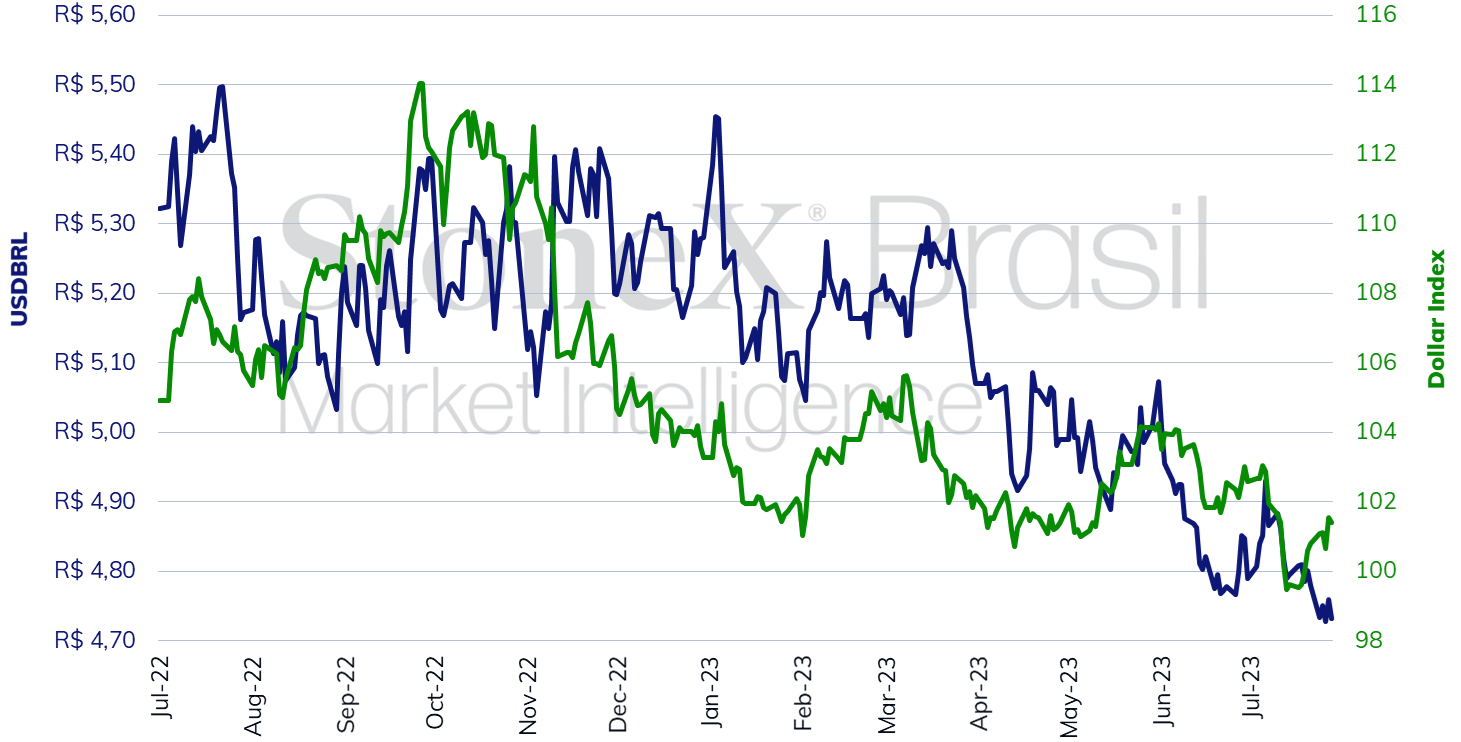
The USDBRL ended the week lower, ending Friday's session (28) at BRL 4.732, a weekly decline of 1.0%, monthly of 1.2% and annual of 10.4%. The dollar index closed this Friday's session quoted at 101.4 points, a variation of +0.6% in the week, -1.2% in the month and -1.8% in the year. The foreign exchange market reflected the monetary policy decision of the central banks of the United States, European Union and Japan, the improvement in the assessment of Brazilian sovereign credit by the Fitch risk rating agency and the higher-than-expected growth for the US Gross Domestic Product (GDP).
Expected impact on USDBRL: bullish
The investors' attention this week should be on the decision of the Central Bank of Brazil's Monetary Policy Committee (Copom). Analysts almost agree that the committee will begin a cycle of cuts to the basic interest rate (Selic) in its decision on Wednesday.
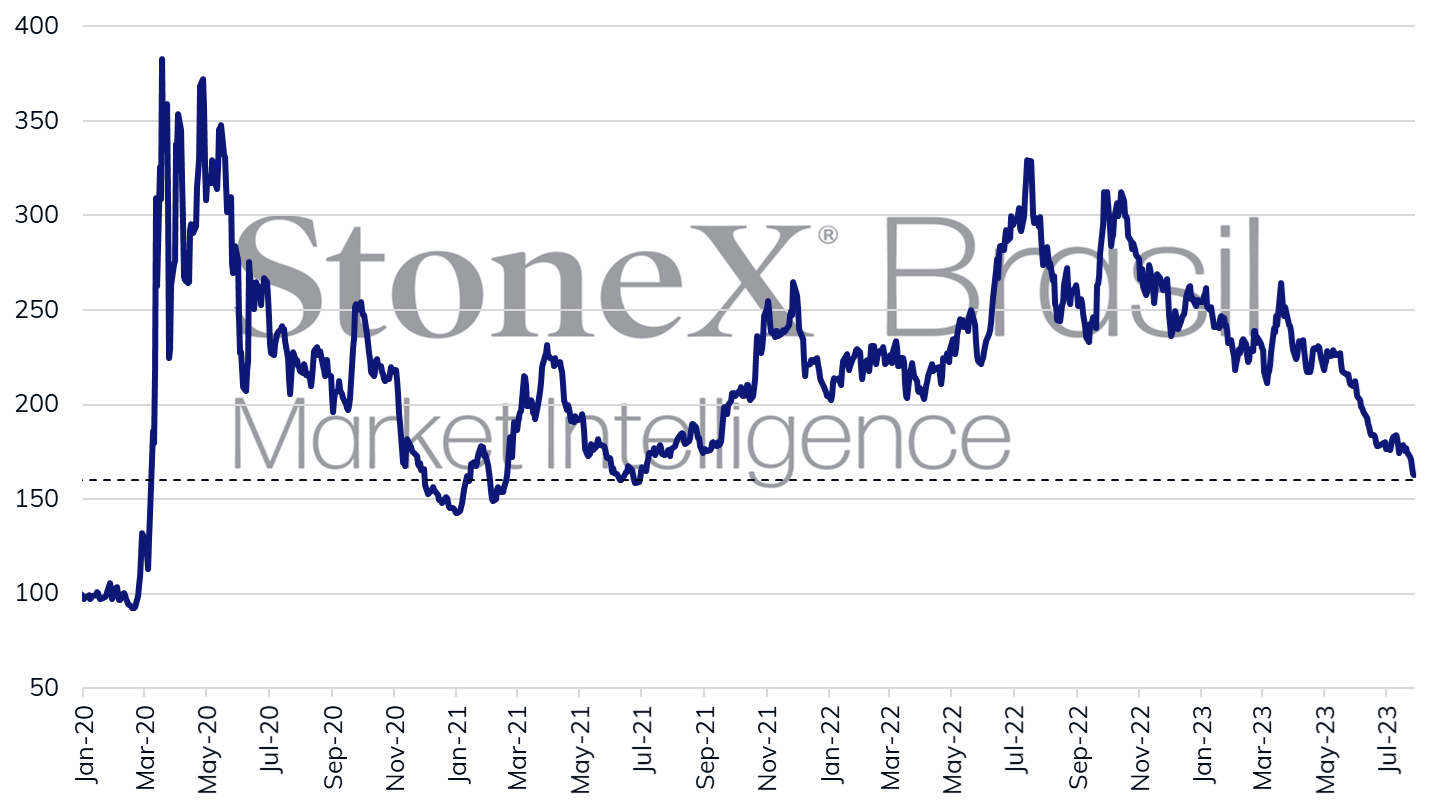
Last week, the elevation of Brazil's sovereign credit rating by credit rating agency Fitch from "BB-" to "BB" raised bets among investors that the Monetary Authority will promote a reduction of -0.50 p.p. to basic interest. In fact, Fitch's decision reinforces the perception that the macroeconomic performance and fiscal outlook for the country exceed the initial forecasts of analysts and support an easing of monetary policy. Indicators of risk perception of Brazilian assets, such as the spread of Credit Default Swaps or the financing rate of federal government bonds, are consistently falling. However, given the harsh tone of the last Copom's decision statement, which did not even mention the possibility of future reductions for Selic, and the mention that the inflection would take place with a “thrifty process” in the minutes of the same decision, it seems more likely that the reduction will be only 0.25 p.p. to remain consistent with the overly cautious stance of the committee until then.
Expected impact on USDBRL: bearish
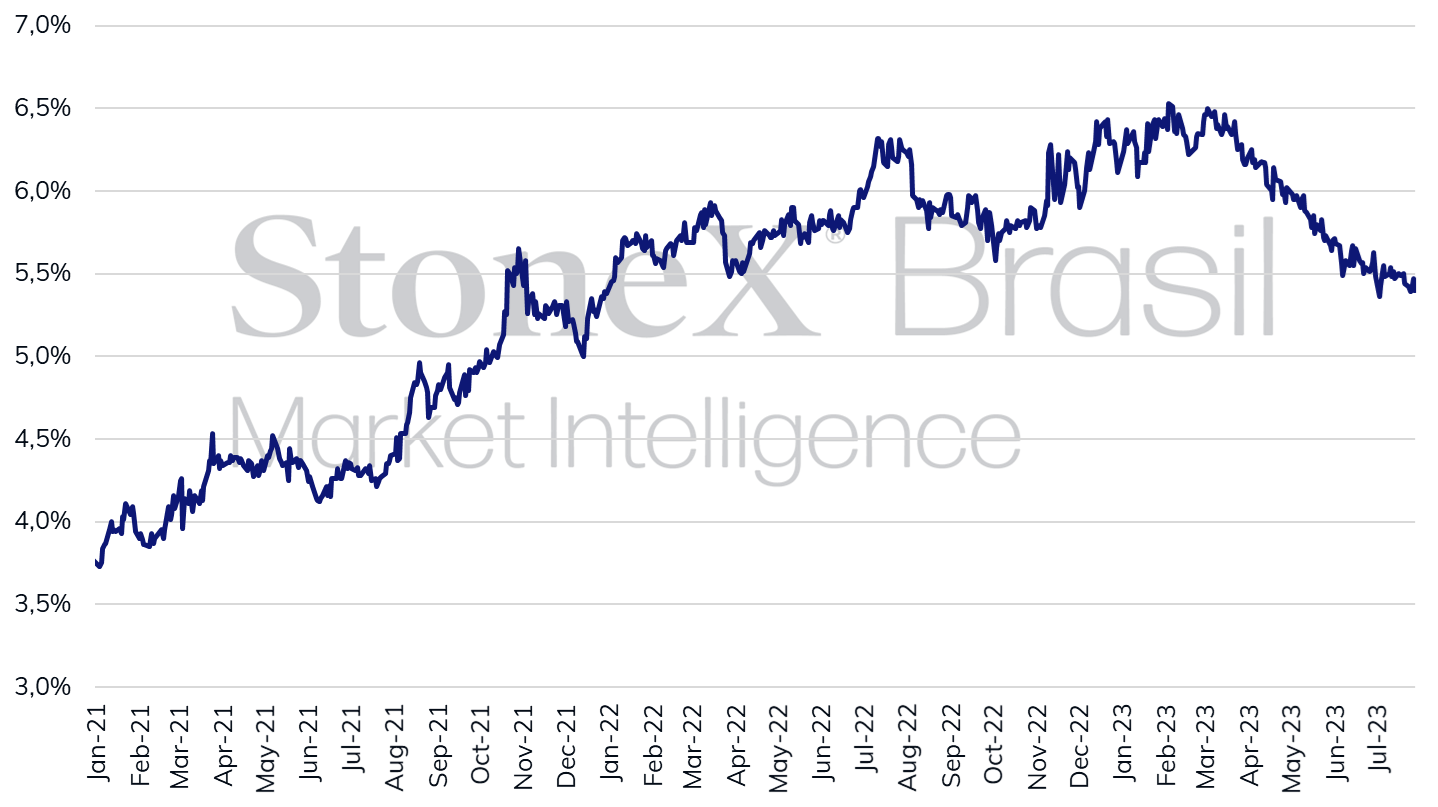
In a week loaded with relevant economic indicators, investors should highlight the Purchasing Managers' Index (PMI), released by the ISM Institute, and the Employment Situation Report for July. The PMI is expected to maintain its trend of contraction in US industrial activity, offset by more favorable readings for the services sector. In the labor market, the creation of new jobs is expected to slow down smoothly, with a lower positive net balance compared to June, reinforcing the interpretation that companies still have a high demand for workers and removing the possibility of a recession in the short term.
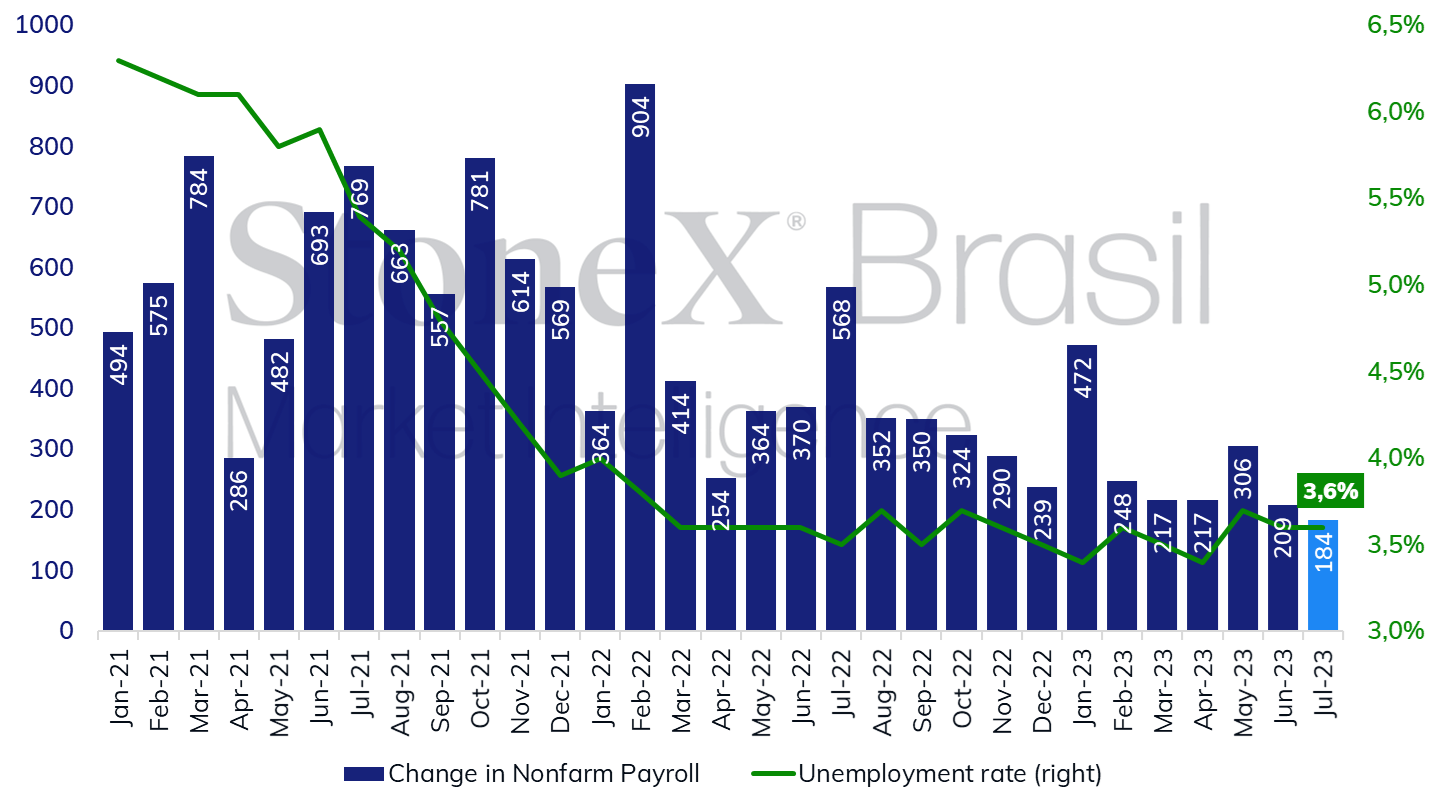
Expected impact on USDBRL: bullish
This week, the release of economic data for China and Europe could hurt the performance of risky assets, such as commodities and currencies of emerging countries. In China, the publication of the industrial and services Purchasing Managers' Index (PMI) is expected to reinforce the perception that the country's economic recovery is below expectations. In the European Union, the first forecast for Gross Domestic Product (GDP) in the second quarter is expected to show modest growth, increasing fears that an economic recession could occur later this year. Finally, the Bank of England is expected to raise its benchmark interest rate on Thursday (03), increasing demand for currencies from advanced economies, particularly the pound.
Expected impact on USDBRL: bearish
In August, the Brazilian Congress returns from its unofficial recess and should put the economic agenda in focus. In the Chamber of Deputies, the priority is the analysis of the highlights made by the Senate to the text of the fiscal framework bill (PLP 93/23), which may proceed to presidential sanction. After the approval of the framework, deputies and senators intend to move forward in voting on the budget guidelines bill (LDO) while discussing the elaboration of the annual budget law (LOA) of 2024. Although the LDO guides the LOA, the absence of a definition regarding the framework prevented its vote until the end of the first legislative semester, on July 17, as determined by the Federal Constitution. Additionally, the Federal Senate will begin processing the proposed amendment to the tax reform Constitution (PEC 45/19) and the draft law of the tie-breaking vote in the Administrative Council of Tax Appeals-Carf (PL 2384/23), with approval expected during the second semester.