Foreign scenario
Amidst widespread price pressures and a strongly recovering labor market, market analysts believe that the FOMC will announce firmer measures against high inflation rates at this meeting. The discourse of Committee participants has shifted significantly since the last meeting in early November so that the Federal Reserve (Fed) appears to be focused on controlling price increases. In addition, to broaden its range of options available for interest rate hikes, the Fed is expected to announce that it will double the reduction speed in its asset purchase program to end it in March instead of June. After the decision, the dot plot with the appropriate interest rate forecast for the medium and long term will be released. The analysts estimate that the median of the Committee members evaluates that the annual interest rates shall go from a minimum of 0.00% to 0.50% in 2022, from 0.50% to 1.25% in 2023 and from 1.25% to 2.00% in 2024, a considerable increase for the American economy.
In his speech accompanying the monetary policy decision, Fed Chairman Jerome Powell is likely to highlight the steps the FOMC will take to prevent inflation from becoming pervasive in the US economy. This may include mentions of an interest rate hike in 2022 - the median of expectations is set for September. Although most forecasts predict that the acceleration in prices will be reduced in the first quarter of 2022, should this not occur, the possibility of this interest rate readjustment occurring in the first half of the year cannot be ruled out.
Finally, it is worth noting that coronavirus cases continue to trend upward in the northern hemisphere as winter approaches. There is still some uncertainty about the impact of the omicron variable globally, both in the number of cases of the disease and fatalities. In South Africa, where the new variant was first detected, weekly cases have risen by more than 88%. This week, World Health Organization Director-General Tedros Adhanom Ghebreyesus told journalists that "it is still difficult to estimate" the exact impact of the new variant, warning that the available data are preliminary and that scientists around the world are struggling to paint a complete picture. "It is premature to conclude," he said.
Domestic scenario
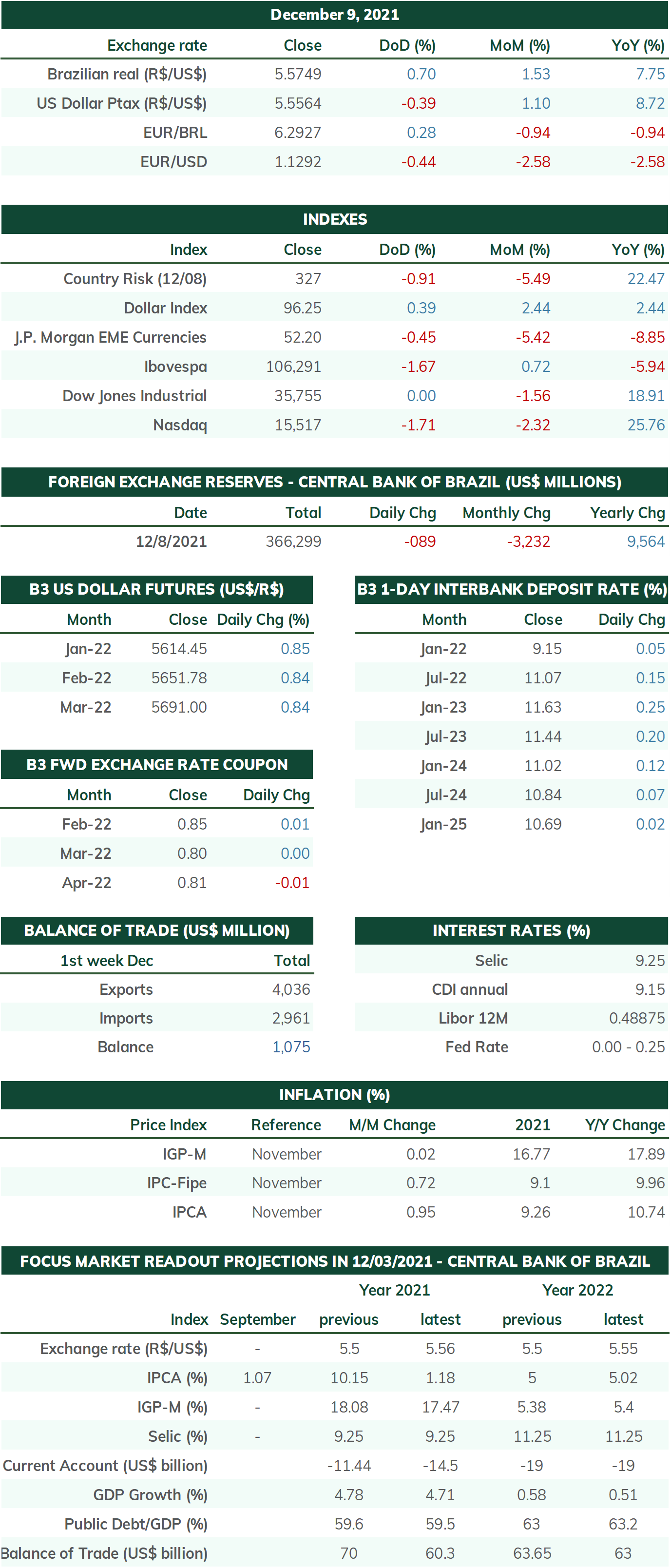
In the domestic scenario, the next week's highlight should be the Monetary Policy Committee (Copom), which last Wednesday decided to raise the basic interest rate (Selic) from 7.75% per year to 9.25% per year. In the communiqué released after the decision, the Central Bank indicated that it foresees another readjustment of the same magnitude for the next meeting, on February 1 and 2, which would take the rate to 10.75% per year. The harsh tone of the communiqué surprised market analysts, who expected a broader description of the balance of risks for the future and, possibly, some caution for the next steps, given the signs of weakness coming from the country's economic activity. However, the Committee showed its commitment to price stability, describing that "given the increase in its projections and the risk of unanchoring longer-term expectations, it is appropriate that the monetary tightening cycle moves significantly into contractionary territory." Thus, it is believed that the minutes of the monetary authority may bring more details regarding the context and decision-making process of the Committee and the future scenarios visualized for the Central Bank for the coming months.
The publication of the Central Bank's Quarterly Inflation Report for the last quarter of the year, next Thursday (16), will draw this picture. Last Friday (10), after the Brazilian Institute of Geography and Statistics (IBGE), released that the National Broad Consumer Price Index (IPCA) recorded an increase of 0.95% in November, there is a high probability that the indicator will end 2021 with a double-digit rate. Between January and November, the IPCA has accumulated an acceleration of 9.26%, which means that a rate of 10.0% will be reached if it registers an increase of 0.68% or more. In December, the IPCA stood at 1.35%.
The acceleration of prices in Brazil is high, persistent and disseminated, with multiple sources of pressure. First, there is a global component arising from imbalances in the post-pandemic economic recovery, with demand for industrial goods booming while supply faces logistical difficulties, high freight costs, production delays, low inventories and shortages of inputs.
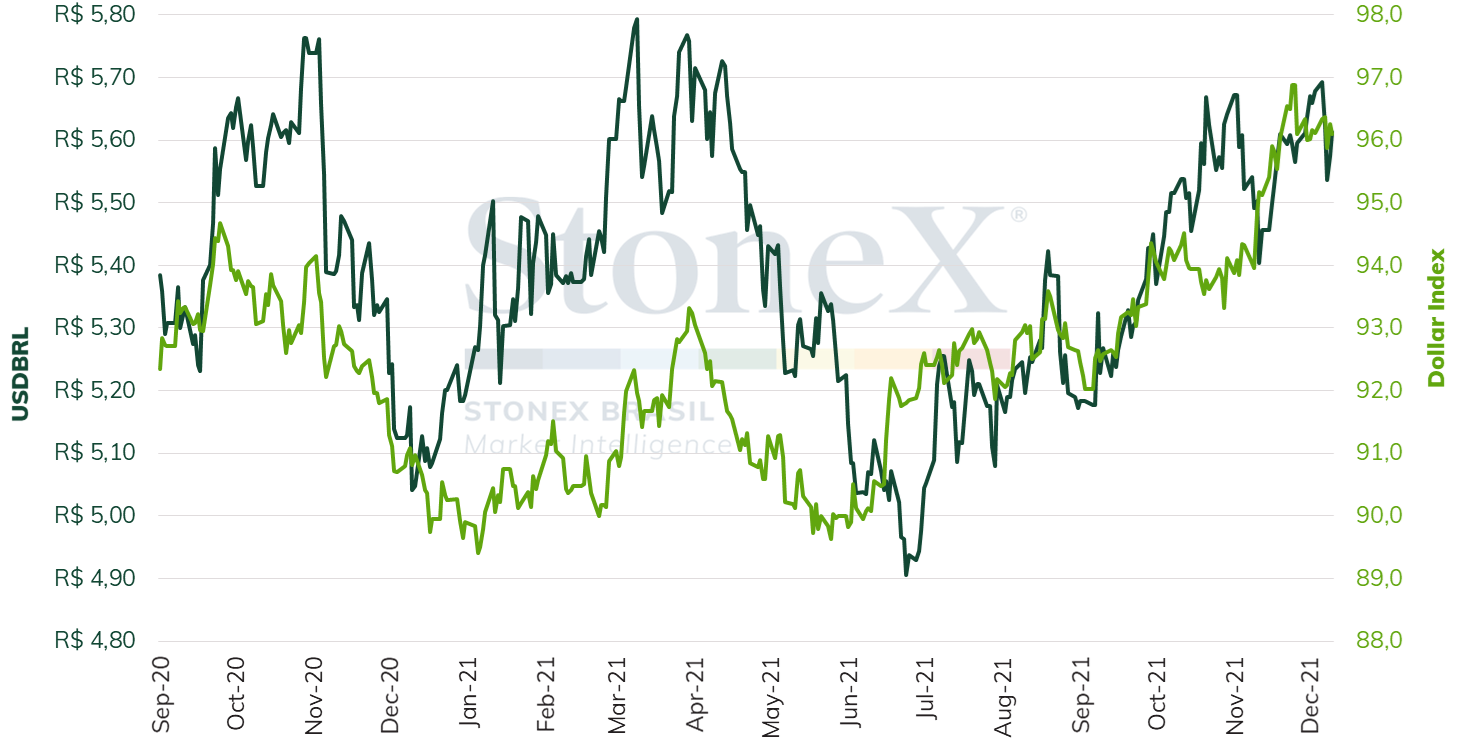
In addition, fossil fuel-related prices have increased rapidly due to the rising price of oil and natural gas commodities and the devaluation of the exchange rate. Thus, automotive fuels have been a major contributor to recent inflation. There are also impacts from the strong water shortage, which has raised the prices of food products by reducing their productivity, and from the production of electricity, by impacting the reservoirs of hydroelectric plants. Finally, the exchange rate devaluation itself, which has several explanations, increases the costs of imported inputs and makes domestic goods more expensive.
It is worth noting the expected vote in Congress on the second part of the proposed constitutional amendment (PEC) of judicial bonds. This week, the presidents of the Senate and the House immediately enacted the consensual parts of the basic text voted in the two Houses, while the deputies need to make a new consideration in the plenary of the points changed by the senators next week. Thus, the PEC of judicial bonds was enacted containing only the change in the inflation adjustment period on the constitutional spending limit and without the change in the constitutional text on judicial bonds, which should occur as a new PEC. Although there is already enough budgetary room for the new adjustment of the Auxílio Brasil basic income program, there is still BRL 43.5 billion in budget increase to be voted by the Chamber.