Foreign Scenario
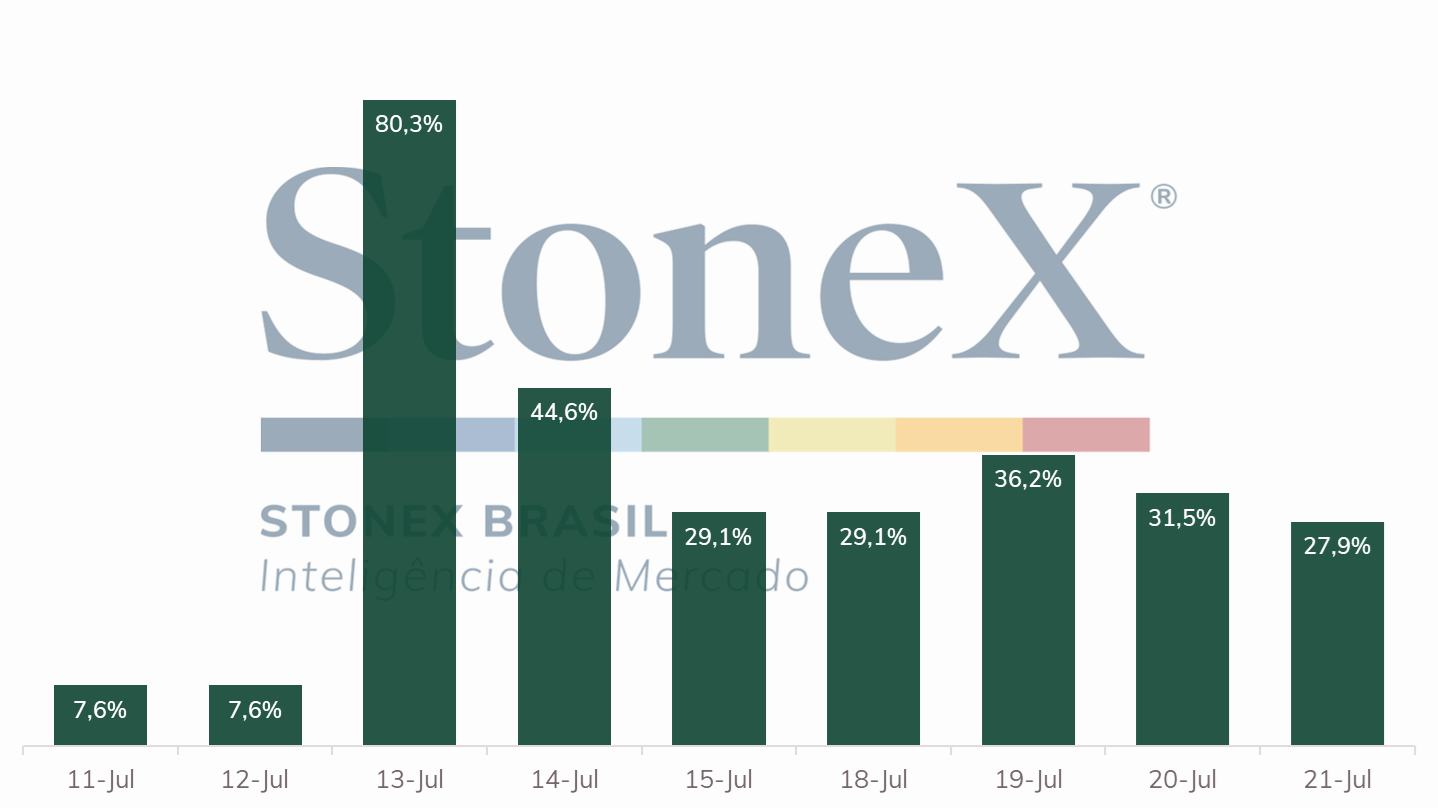
This week, the focus will be on the monetary policy decision of the Federal Reserve’s (Fed) Federal Open Market Committee (FOMC). After the announcement on July 13 that the US consumer price index (CPI) for June grew more than expected and reached 9.1% in twelve months, the futures interest market started betting mostly on a 1.0 percentage point readjustment in the American federal interest rate - an increase that has not occurred since the beginning of the 1980s. However, some Fed officials mentioned that they maintained their forecast of a 0.75 percentage point increase. There is divergence as to whether the Federal Reserve would carry out this 100-basis points hike. On the one hand, there are concerns of weakening demand and that an uncalibrated increase could anticipate and exacerbate an economic crisis. On the other hand, the Fed has already expressed that it wants to carry out as many interest rate hikes as possible as soon as possible so that inflationary rates are reduced.
In addition, the preliminary reading of the Purchasing Managers' Index (PMI) released today (22) by S&P Global amplified fears that an economic recession may soon occur in the United States and Europe, even before central banks can restore price stability. The preliminary reading of US services PMI for July declined to 47.0 from 52.7 points, down from a median estimate of 52.3 points, and the first contraction in nearly two years. In Europe, manufacturing activity fell for the first time in 17 months. There are signs that tightening financial conditions and rapid and widespread price increases hamper companies' productive capacity and dampen consumer demand.
Fed’s 100 basis point hike probability on July 27
Source: CME FedWatch Tool. Design: StoneX.
The Personal Consumption Expenditure Price Index (PCE), the inflation indicator most commonly used by the Fed to track consumer prices, will also be released this week. Given the higher-than-expected publications of both the Consumer Price Index (CPI) and the Producer Price Index (PPI) for June, the PCE is forecasted to accelerate by 0.9% in the period, accumulating a 6.7% rise in 12 months. It is also important to note the publication of the first preview of the Gross Domestic Product (GDP) for the second quarter in the US, with expectations of a small growth of 0.4% in annual terms (or approximately 0.1% in quarterly terms). A negative surprise could greatly affect the financial markets.
In Europe on Friday, Moscow and Kyiv signed an agreement to allow grain exports through three Ukrainian ports, Odesa, Chornomorsk and Yuzhny. The "de facto ceasefire" states that both sides agree not to attack merchant marine vessels, civilian ships or port infrastructure involved in grain exports. In addition, a joint checkpoint will be established in Istanbul and manned simultaneously by representatives of Russia, Ukraine, Turkey, and the United Nations to conduct checks on the vessels and ensure that they are not carrying weapons. Identifying safe routes free of sea mines will be the responsibility of Kiyv, who can accompany the boats to assist in the maneuvers. Finally, a parallel agreement ("memorandum of understanding") has been signed between the United Nations and Russia. The Organization pledges to assist in the unimpeded flow of Russian fertilizer exports to global markets, an informal quid pro quo required by the Russians to sign the agreement.
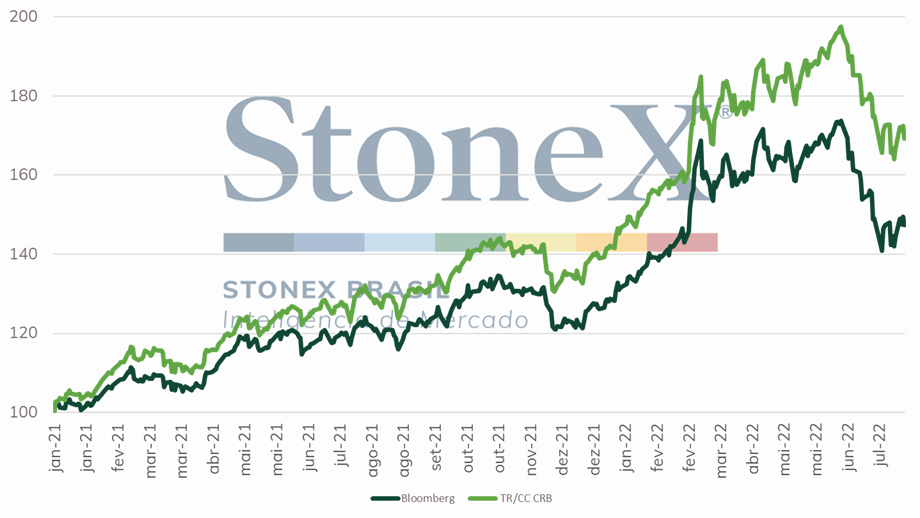
It will be important to watch the behavior of the commodities market, particularly the grain market, over the coming week. Since mid-June, expectations of economic slowdown and falling global demand have put negative pressure on the price of food, metal, and energy commodities in general, erasing most of the gains seen after the start of the Russian-Ukrainian conflict. Meanwhile, the Federal Reserve's process of strong monetary tightening attracts investments to the US bond market and promotes a search for safe-haven assets.
Evolution of commodities indexes between January 2021 and July 2022 (Jan/2021 = 100)
Sources: Refinitiv/CoreCommodity e Bloomberg. Design: StoneX.
In the conflict between Russia and Ukraine, on July 22, its 149th day, the pace of ground attacks by Russian troops has slowed significantly after the conquest of the cities of Severodonetsk and Lysychansk, and Moscow seems more focused on consolidating control of the consolidated territories of the southern and eastern Ukrainian regions. Meanwhile, the virtually indiscriminate artillery bombardment against the Ukrainians remains accelerated. Military analysts note that there are indications that the Kremlin intends to "make official" the annexation of the territories with a "referendum" on the same date as Russia's regional elections on September 11. In these territories, the use of the Russian ruble is being forced, Russian alternatives are replacing telecommunications infrastructure, and their inhabitants are being charged to issue Russian documentation to carry out simple bureaucratic demands.
Finally, the Politburo of the Chinese Communist Party will hold a working meeting on the economic area, from which new stimulus proposals are expected for the second half of this year after the largest economy posted a 2.6% contraction in the second quarter of the year and agencies reported the threat of a new housing crisis. A "boycott" movement has gained prominence in the international media, with tens of thousands dropping mortgages on "pre-purchased" properties facing delays or interruptions in construction in at least 50 cities. The Covid-19 situation in China is also getting worse. An analysis by Nomura bank on July 18 estimated that 41 Chinese cities are in partial or total lockdown, affecting a total of 264.0 million people, a weekly drop of almost 6.9% in the number of people in lockdown. This still corresponds to approximately 18.7% of the Chinese population and 22.8% of China's Gross Domestic Product.
Domestic Scenario
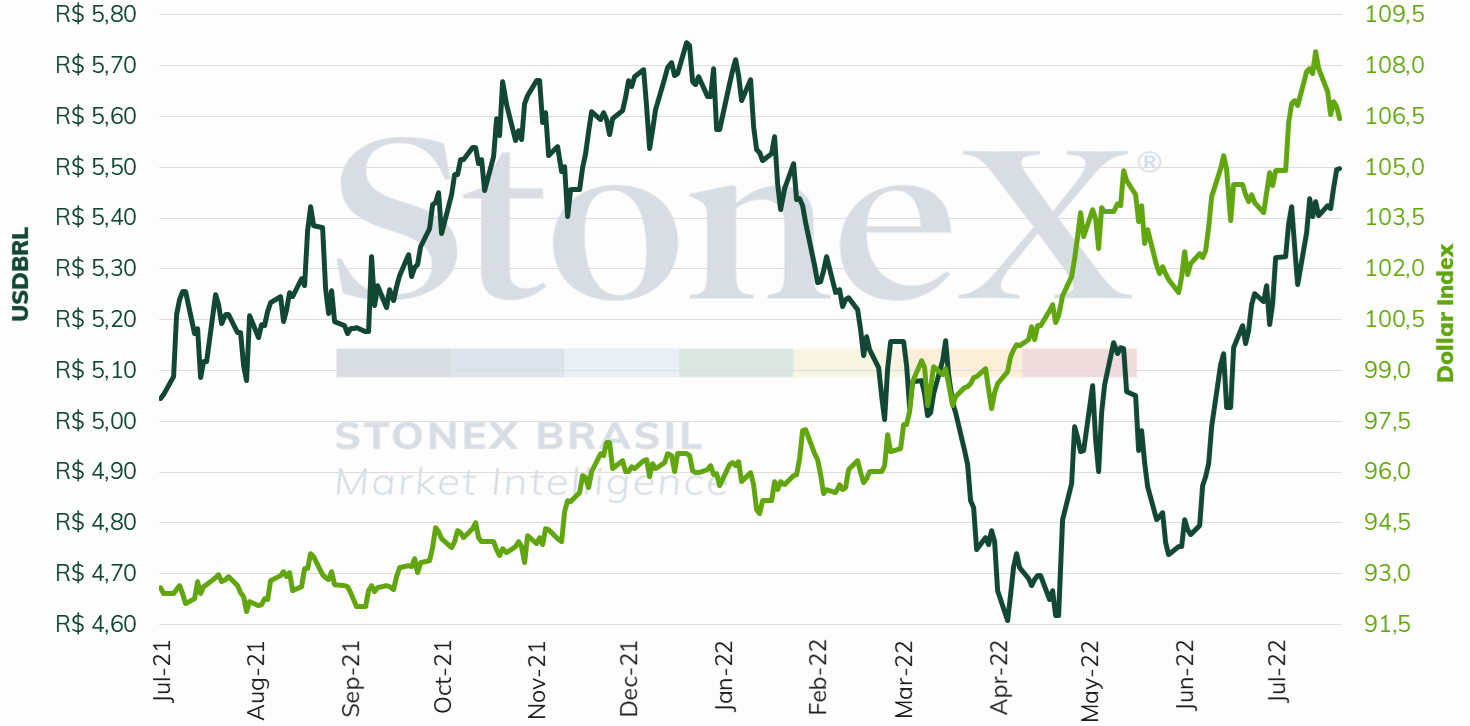
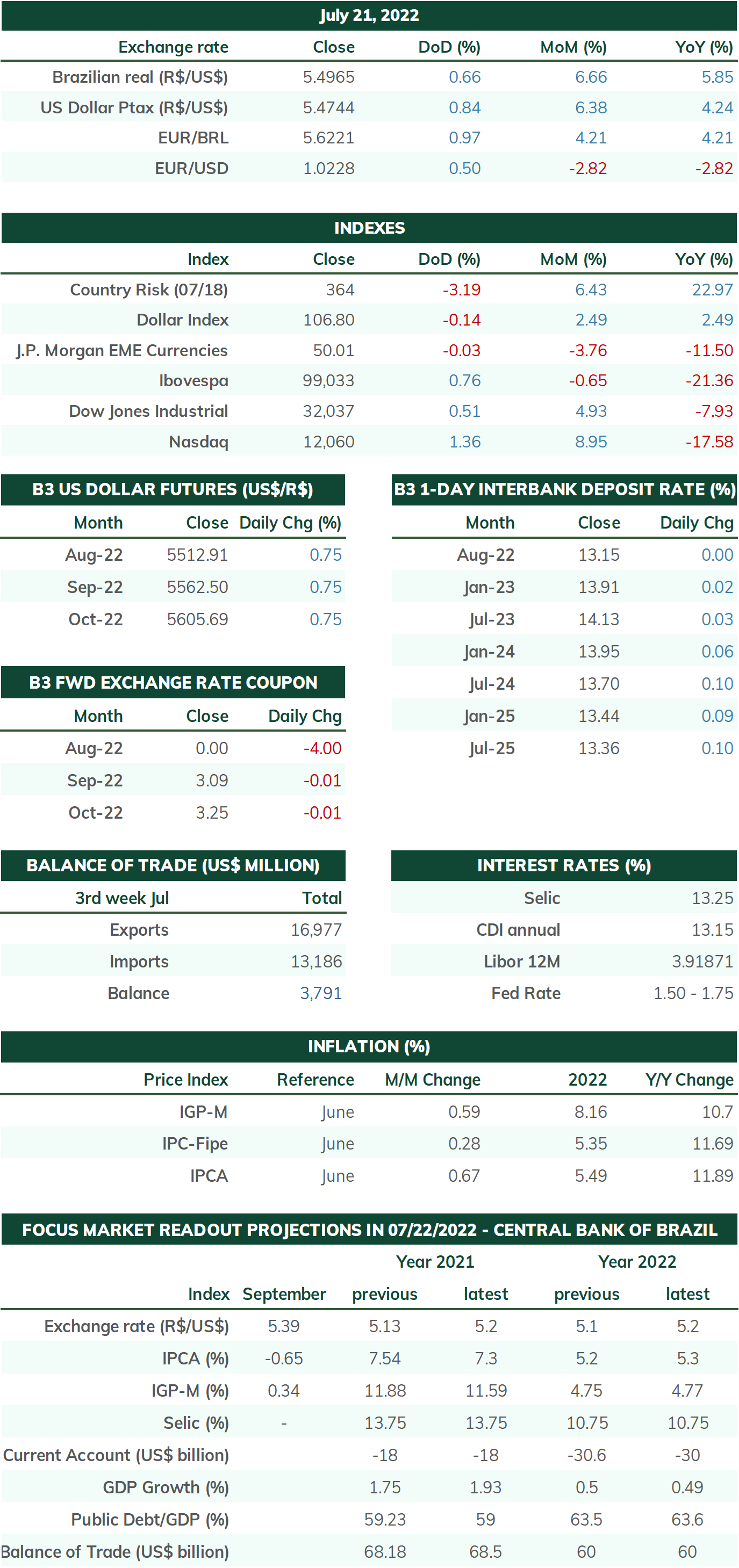
Despite an empty week of indicators, the BRL remained weakened above the average of its peers and reached the highest value in six months, testing the psychological threshold of BRL 5.50. Among the factors contributing to this drop is the heightened perception of fiscal and political risks related to Brazil, partly due to the approaching presidential elections in October but mainly due to the budget improvisations of the last few months and the continuous attacks by pre-candidate and President of the Republic Jair Bolsonaro on other branches of government, judges and the electoral system. In recent months, the federal government has altered the Constitution text to pay fewer court-ordered debt payments, expand the constitutional limit on expenses, finance expenses beyond this limit, to decree "a state of emergency due to the extraordinary and unpredictable rise in prices of oil, fuel, and their derivatives and the resulting social impacts," in addition to granting various subsidies and expanding public spending with new social aid just a few months before elections. When added together, the estimated costs of these measures exceed tens of billions of BRL in additional impact to that foreseen in the 2022 Budget.
Last week, Bolsonaro gathered foreign ambassadors and diplomatic representatives at the Alvorada Palace to make attacks, without evidence and with arguments already refuted, on electronic ballot boxes, the Brazilian voting system, the Superior Electoral Court (TSE), and the Supreme Court (STF). The Executive leader based himself on a secret inquiry by the Federal Police about an attempted hacker invasion of the electronic ballot box in 2018, months before the election of that year and without any consequence on the vote of any voter. The head of the Executive attacked nominally the STF ministers Roberto Barroso, Edson Fachin and Alexandre de Moraes, respectively, the previous, current and future presidents of the TSE. Again, the president emphasized that he is head of the Armed Forces and televised his speech on the public television broadcaster TV Brasil.
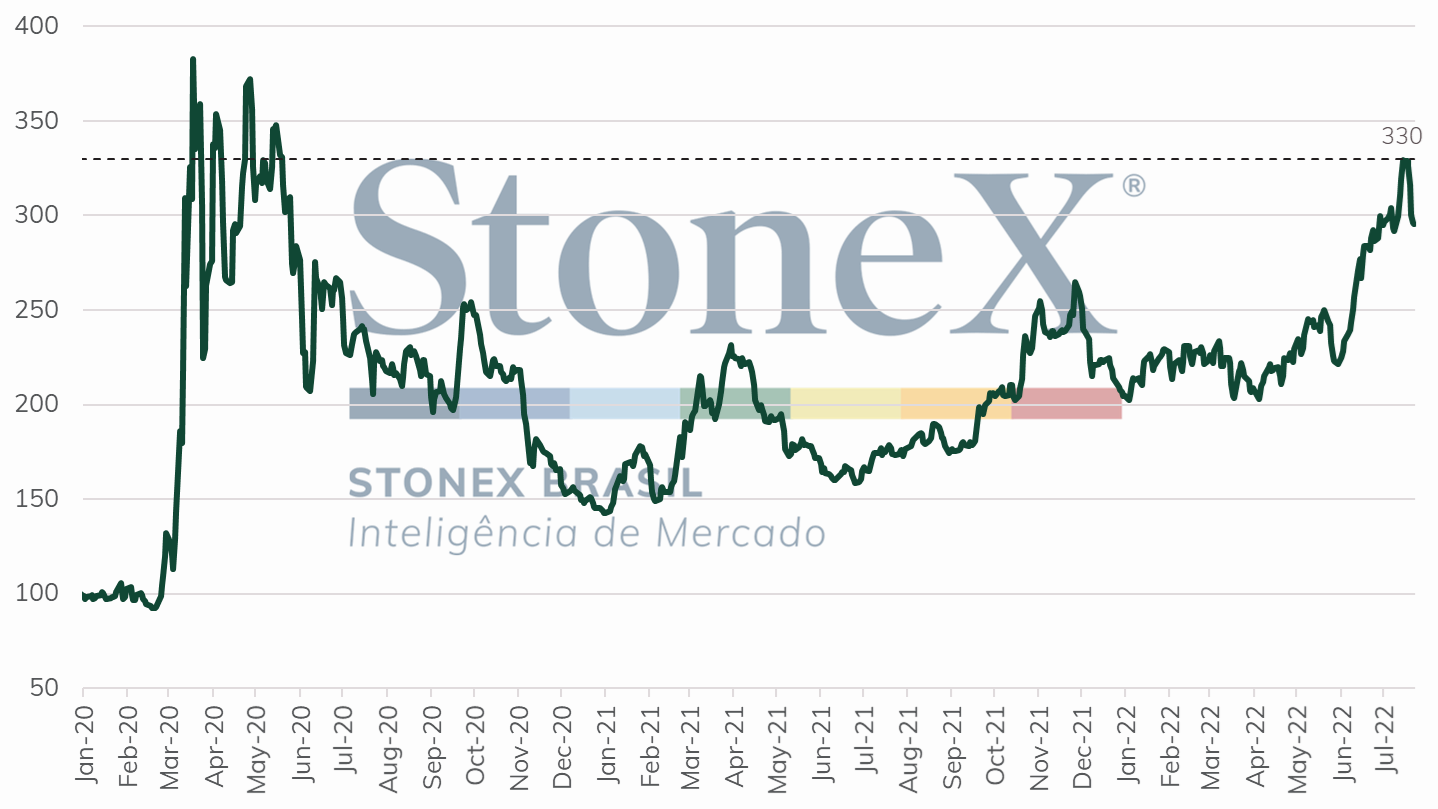
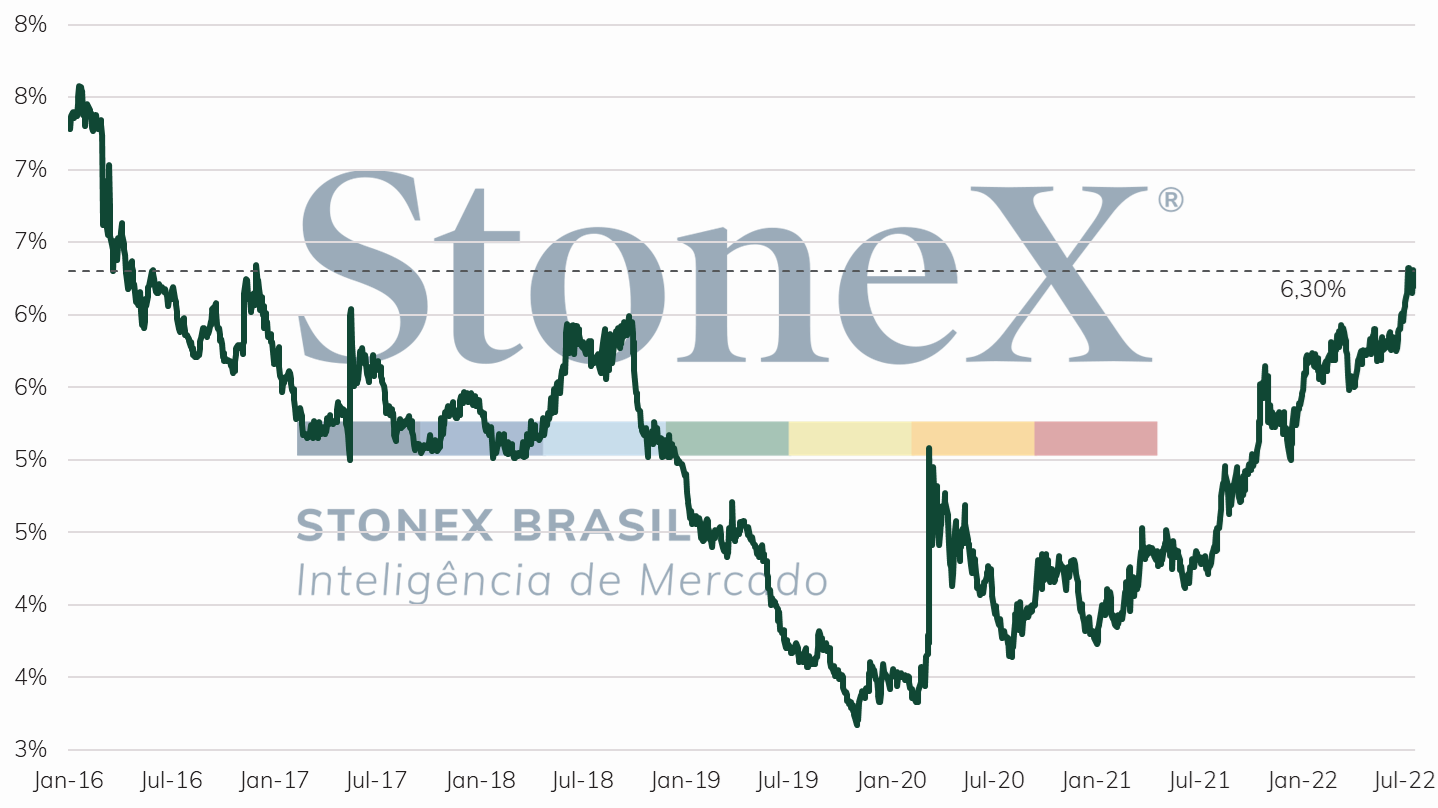
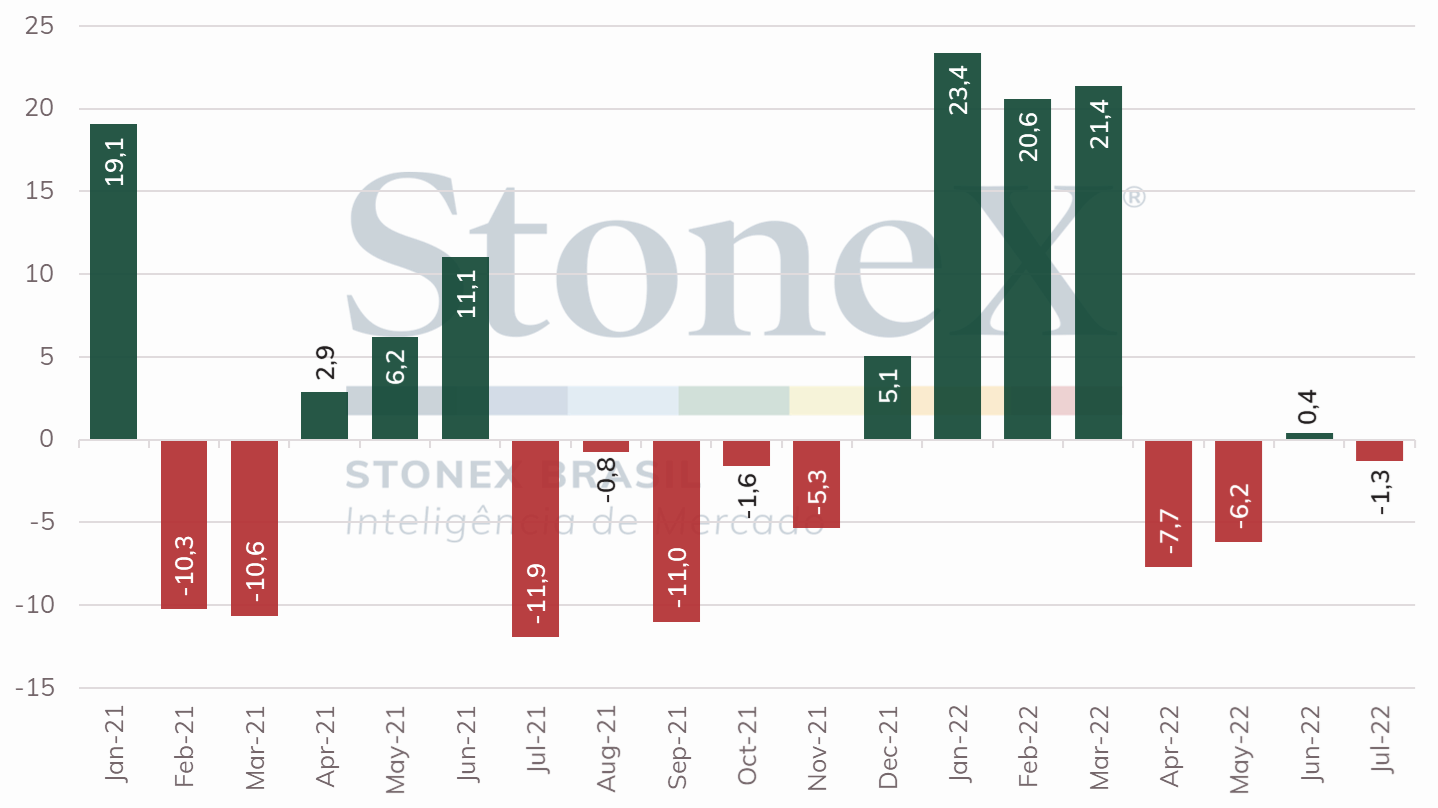
The day after the attacks, one of the main measures of the country's risk, the spread of Brazil's 5-year Credit Default Swap contracts, reached 330 points, its highest value since May 2020; that is, it required payment of 3.30% of the value of Brazilian public bonds each year as a premium for the CDS. In addition, interest rates for financing government bonds are also rising. The long-term NTN-B, which pays real interest (already compensated for the IPCA), reached its highest mark since December 2016. This implies that investors demand a higher remuneration to provide resources to the Brazilian government, indicating perceived higher risks. Another indication of a lower appetite for Brazilian assets is the net inflow of foreign capital on the B3, which, until July 20, remained very close to stability.
Spread of the Brazilian 5-year Credit Default Swap (CDS) contracts (basis points)
Source: Bloomberg. Design: StoneX.
NTN-B purchase rate due on 05/15/2045 (% p.a.)
Source: Tesouro Direto. Design: StoneX.
Balance of foreign capital flow on the B3 AS OF June 29, 2022 (BRL billion):
Source: B3. Design: StoneX.
The decree of a state of emergency and the improvisations and changes in the public budget to the tune of tens of billions of BRL almost three months before an election, evading the spending cap may raise the perception of fiscal risk associated with Brazil. Both risks could result in higher risk premium demands by investors, which could reduce the flow of foreign funds into the country and weaken the real.