Foreign scenario
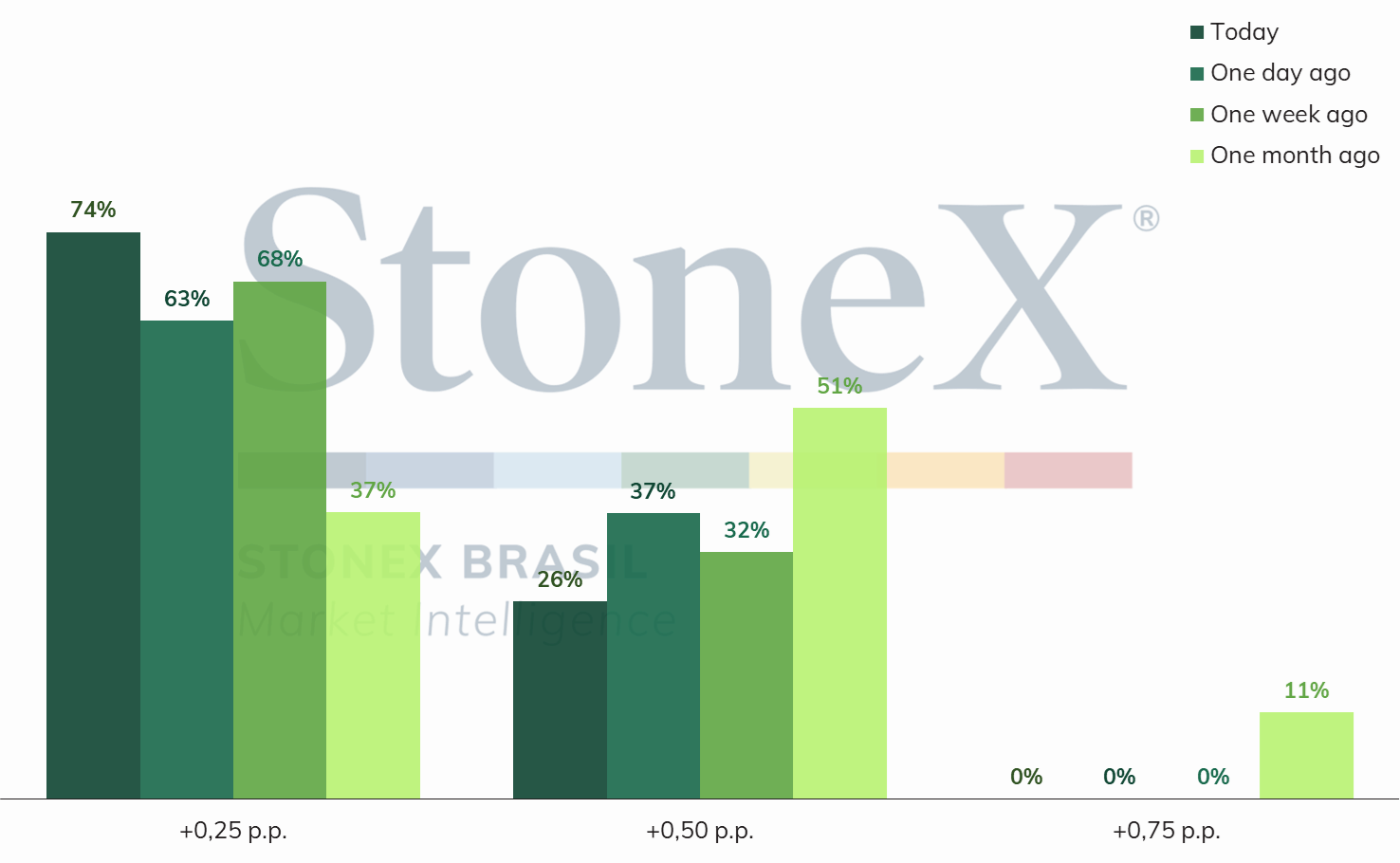
This week, attention will be on December's US Consumer Price Index (CPI). Analysts expect inflation to again show modest growth in December, both in the full indicator and in its core, which excludes food and energy items. This expectation was reinforced this week after economic indicators for the country showed a below-expected performance. For example, data for the American labor market showed that, although the unemployment rate remains extremely low (3.5%), the creation of new vacancies and jobs is gradually losing pace. In addition, the increase in the average labor income accumulated over twelve months also decreased from 4.8% in November to 4.6% in December. In addition, the December Services Purchasing Managers' Index (PMI), released by the ISM Institute, fell sharply from 56.5 points in November to 49.6 points in December, indicating economic contraction for the most resilient sector so far. Still, the biggest source of inflationary relief is likely to come from industrial goods, which have been showing productive weakness for some time. With signs of progressive weakening of productive activity, the labor market and moderation in inflationary momentum, analysts point out that the Federal Reserve should reduce the pace of raising its interest rate and that its final level may be below what was estimated a few months ago.
Bets for the Federal Reserve interest decision of February 01
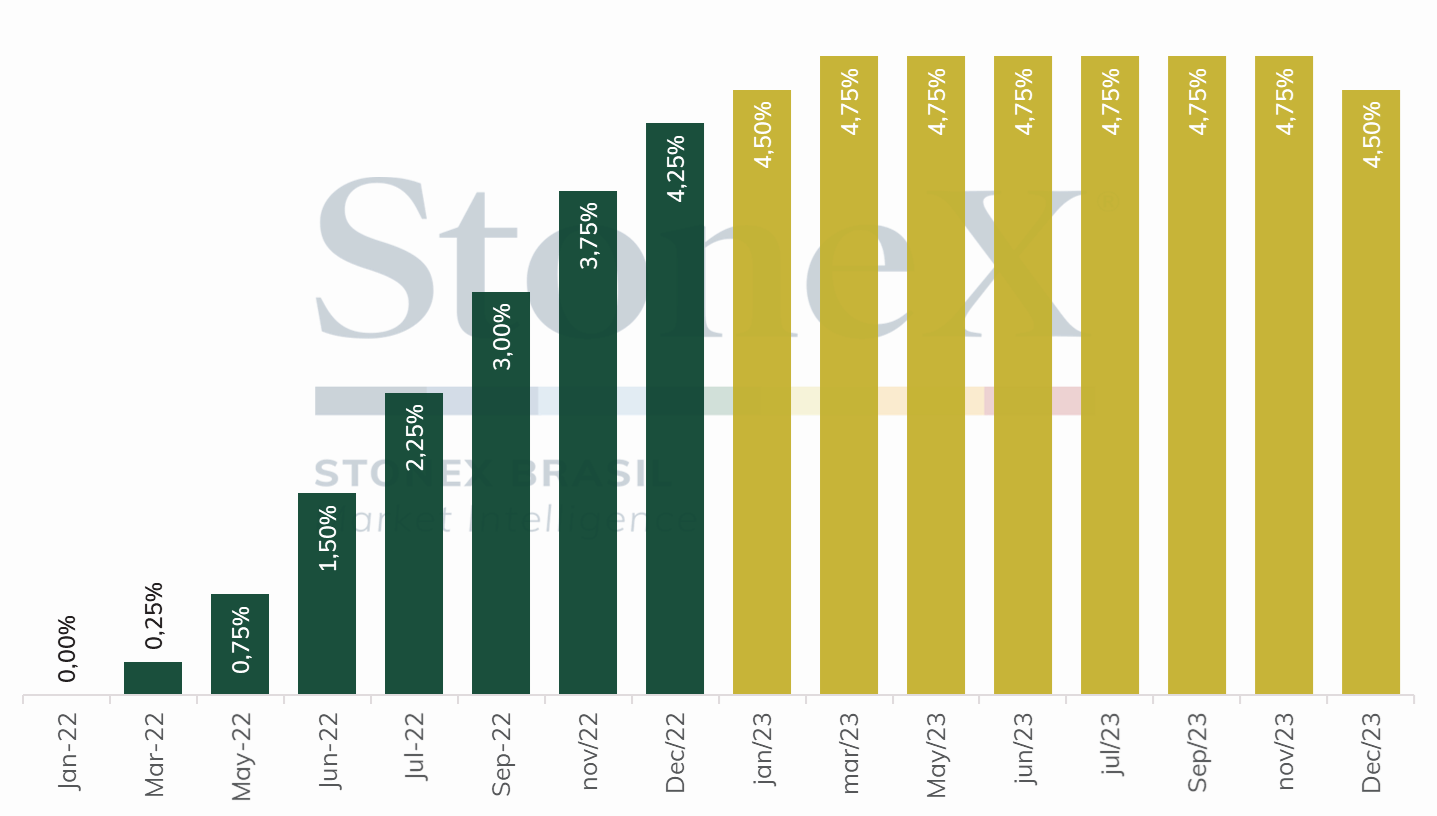
American interest rate history and most likely bet on the future interest market
Source: CME FedWatch Tool. Design: StoneX. Probabilities in the interest futures market concerning January 06, 2023
Another point of attention is the disorganized attempt by the Republican Party to elect a new speaker to the House of Representatives. After regaining a slim majority in the House after the November midterm elections (222 deputies against 213 Democrats), Republicans cannot reach an agreement for a new leader, who needs to receive a simple majority of votes. An ultraconservative wing of 20 deputies rebelled and prevented the election of the majority candidate, Kevin McCarthy, demanding a series of changes in internal rules and nominations in committees that increase the power of this group. On Friday (06), 13 votes had been cast at the time of writing, and no president had been elected. Regardless of who becomes leader, everything points to a new House less willing to work with Democrats, which can block the passage of budgets, causing asset volatility. One of those blocking the vote, Representative Ralph Norman, said this week that causing the closure of the American executive "is a non-negotiable item" for him.
Finally, it is noteworthy the progressive measures adopted by China raising the degree of tolerance to Covid-19 and seeking to live with the virus. Last week, disease management was reduced from "Class A," the highest level of control for infectious disease, to "Class B." This bureaucratic demotion eliminates most measures restricting mobility, including between provinces. This was one of the most significant changes since the wave of protests in late November and marks a tacit admission that living with the virus has become necessary, inevitable and a prerequisite for economic recovery in 2023. Although the number of cases is rising rapidly, as well as hospitalizations and deaths, the number proportional to the population is still relatively low. Still, the human cost will inevitably be high as the country has yet to face major infections.
Domestic scenario
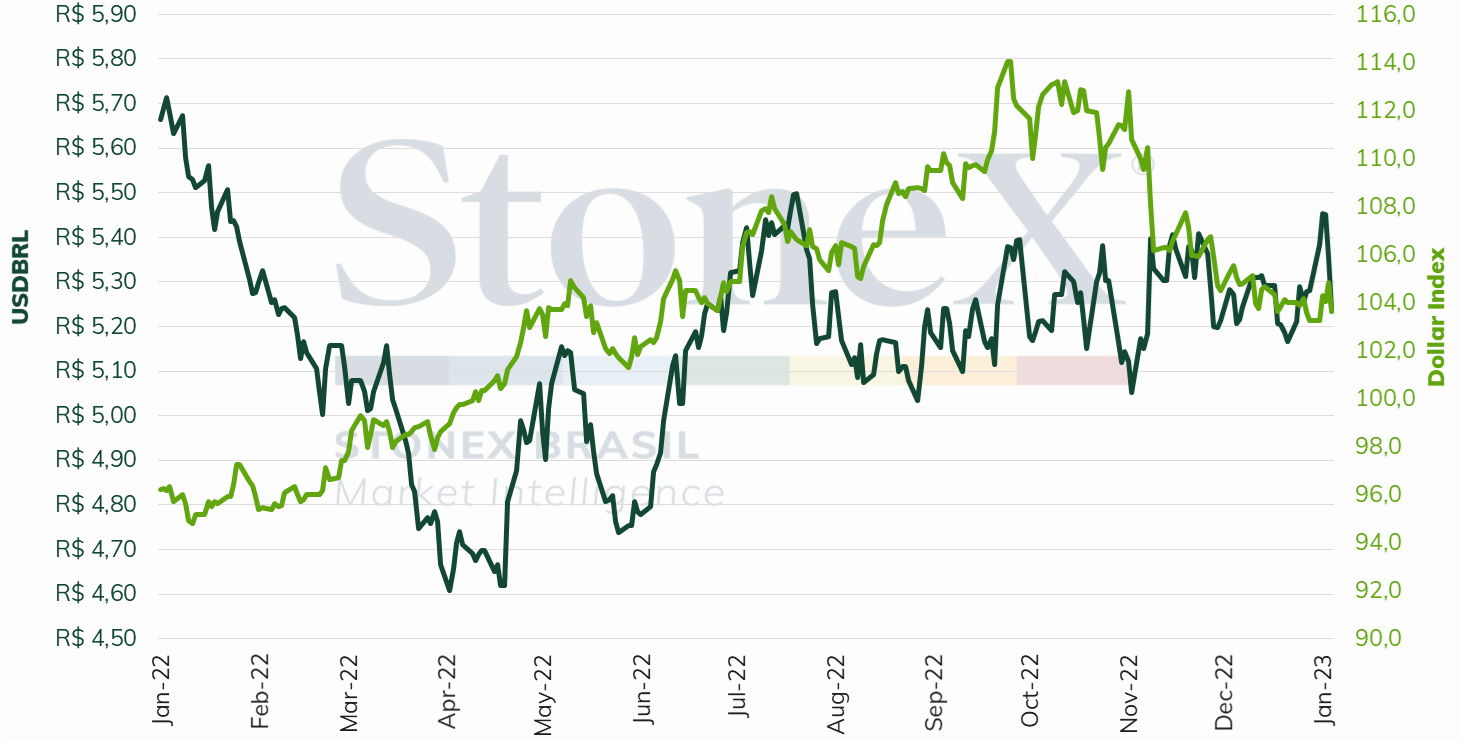
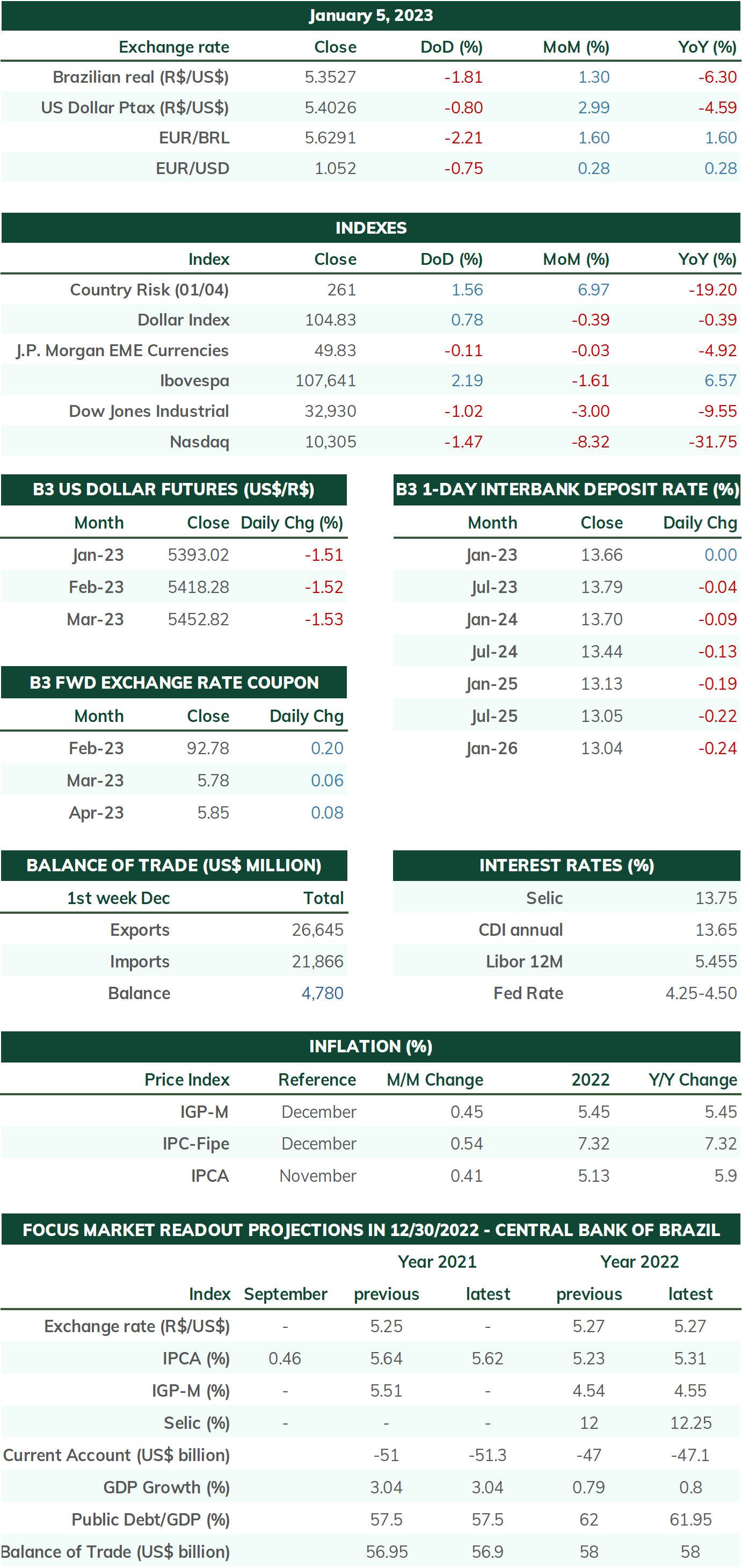
In Brazil, investors' attention should be divided between the beginning of the Luis Inacio Lula da Silva government and the December inflation. In the week that ended, the exchange rate fluctuated between a low of BRL 5.2181 and a high of BRL 5.4787, fluctuating widely before the speech of authorities in the Economic Area and the first decisions of the Executive. Thus, this week the announcement of new measures and comments by ministers and secretaries should receive a lot of scrutiny from analysts, who are trying to deepen their forecast of what this government's economic policy will be.
Additionally, investors should follow the release of the National broad Consumer Price Index (IPCA) for December. After reaching a 12-month cumulative peak of 12.1% in April, consumer prices have steadily moderated, and this trend is expected to repeat, rising from 5.90% in November to 5.59% in December. Even so, the Central Bank has repeatedly warned that a fiscal expansion approved in the new 2023 Budget, which will likely result in higher public indebtedness, could put pressure on inflationary expectations and require an extension of the monetary tightening. Finally, it is worth noting the publication of economic activity indicators this week, with retail and services data for November and the Central Bank's Economic Activity Index (IBC-Br) for the same month.