The most important: data on the labor market in the United States
Impact on USDBRL: bullish
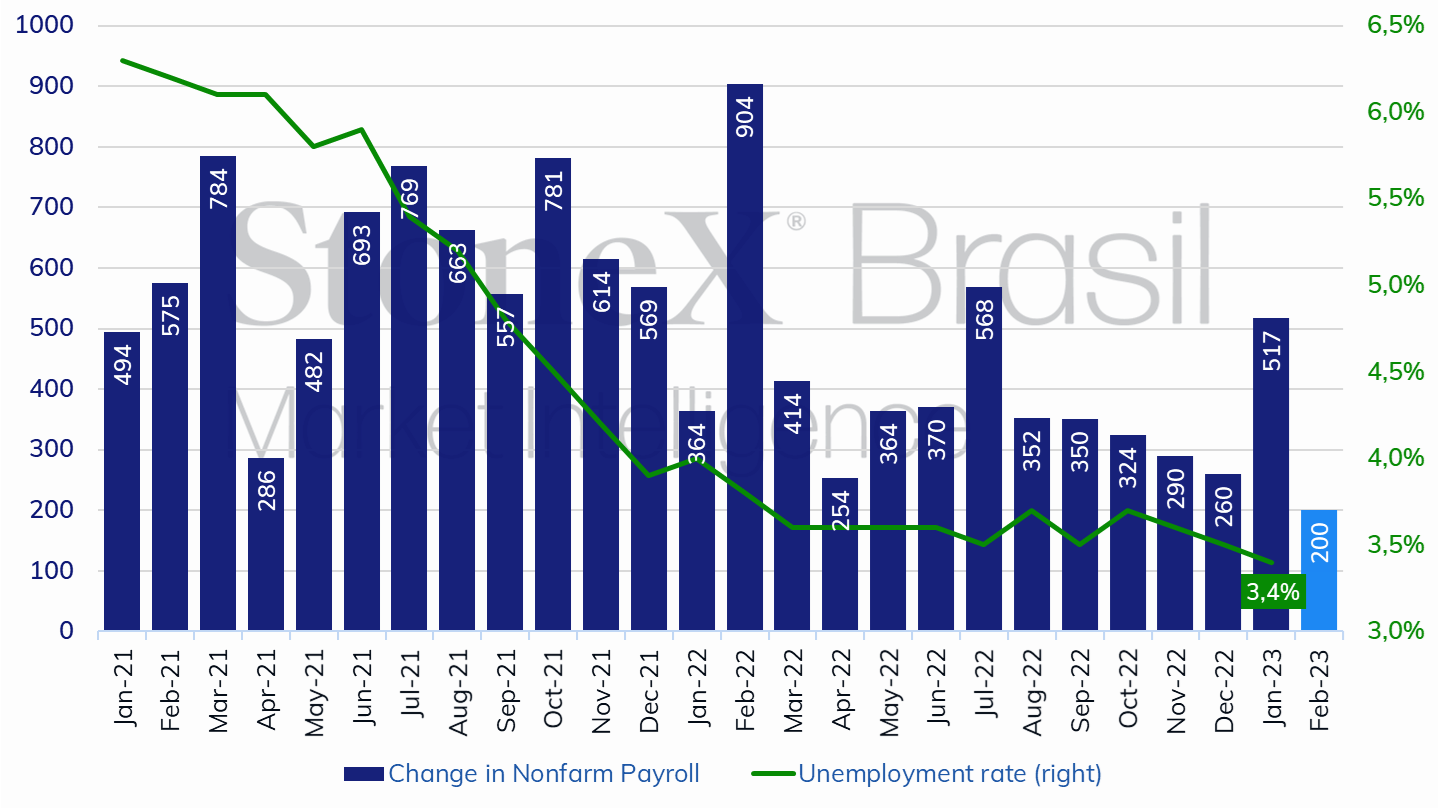
This week, attention should be on the wave of indicators on the labor market for the United States in February, with emphasis on the Employment Situation Report, on Friday (10). In January, the report surprised analysts by reversing the trend of decelerating new job creation, with a positive balance of 517 thousand new jobs and a reduction in the unemployment rate to 3.4%, the lowest figure since May 1969. It was the first in a string of January economic indicators that were expected to beat experts' estimates and cast doubt on the state of the US economy. Until that moment, an interpretation that the economy, little by little, slowed down and, consequently, there was a process of disinflation underway prevailed. Now there is a lot of doubt and uncertainty about whether January was just a point off the curve or marked the beginning of a reheating of the country's activity.
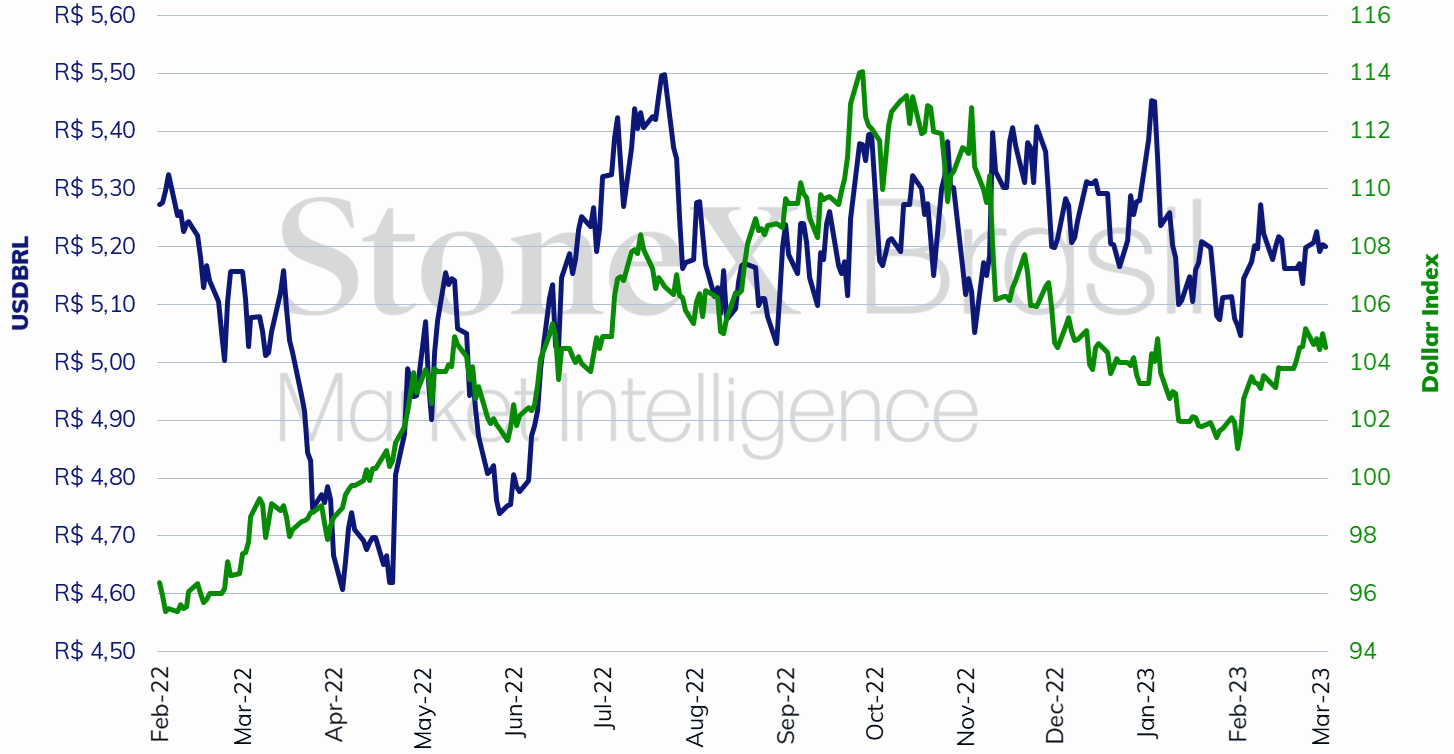
In any case, labor market data are being analyzed in detail by the Federal Reserve (Fed) in all its monetary policy decisions since most of the current price acceleration is linked to wage-related services. Therefore, maintaining a scenario of labor shortages and moderate wage gains contributes to supporting future inflation at a widespread and persistent level. As a result, it may force the Fed to sustain a tight monetary tightening to regain price stability. Therefore, if February repeats January's performance and generates many new jobs, the US currency should strengthen and pressure the real/dollar pair upward.
Change in total urban jobs in the United States (thousand people)
Source: Federal Reserve Bank of St. Louis. Design: StoneX.
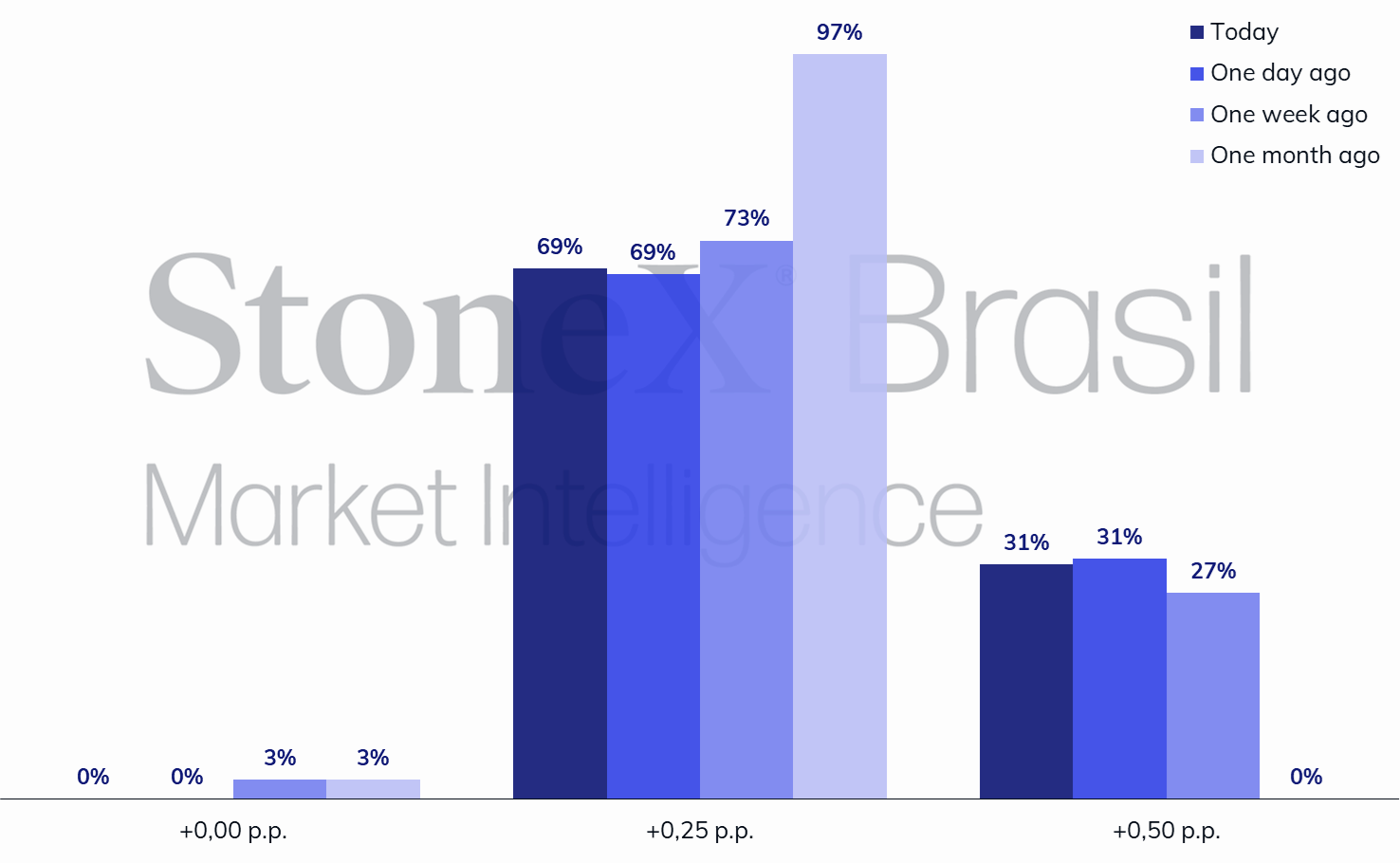
Bets on the Federal Reserve's March 22 interest rate decision
Source: CME FedWatch Tool. Design: StoneX. Probabilities in the future interest market regarding March 03, 2023
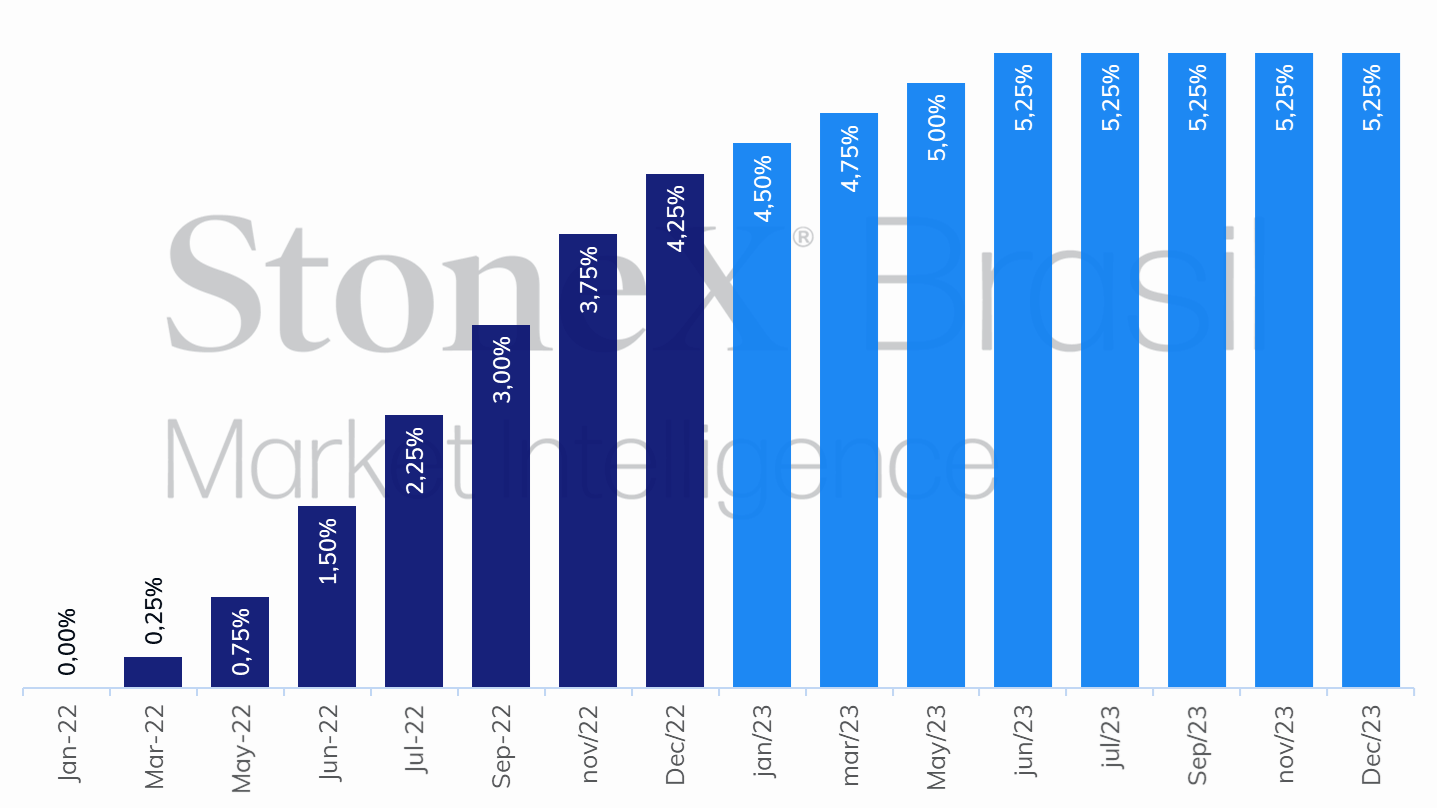
US interest rate history and higher probability bets on the futures market
Source: CME FedWatch Tool. Design: StoneX. Probabilities in the future interest market regarding March 03, 2023
Balanced speech by members of the Federal Reserve
Balanced speech by members of the Federal Reserve
Last week, several members of the Federal Reserve commented publicly on the decision of the Federal Open Market Committee (FOMC) to reduce the pace of interest rate hikes on February 01, going from a readjustment of 0.50 p.p. in December to one of 0.25 p.p.and on the above-expected economic data for January, and there was a plurality of opinions. In general, the authorities warned of the risks that inflation in the United States will prove very high and persistent due to a warmer-than-anticipated activity level. However, several of them mentioned a delay between monetary policy decisions and their effects on the economy, drawing attention to the fact that the Fed has already made the largest interest rate increase in four decades and that not all the effects have been transmitted through the chain. Thus, the readjustment process would be closer to its end; the adjustments of 0.25 p.p. would be more appropriate. Fed Board of Governors member Michael Barr is scheduled to speak this week.
New fiscal framework proposal
Impact on USDBRL: bearish
According to finance minister Fernando Haddad, the Ministry should finish the design of the new fiscal framework this week and, from there, discuss it "with the entire economic team." Constitutional Amendment 126, derived from the so-called Transition PEC (proposed constitutional amendment), annulled the constitutional limit of expenses and authorized the government to issue public debts to finance expenses (the so-called "golden rule"), establishing the obligation to create a new fiscal rule, through a complementary law, until August of this year. Haddad reinforced that the goal is to send the proposal together with the 2024 Budget Guidelines Law, whose deadline for submission to the National Congress is April 15. It is not known if some details of the measure will be presented in advance to the press, but the expectation is that investors will well receive the new anchor as a sign of Haddad's commitment to fiscal responsibility.
Friction with the Central Bank and inflation in Brazil
Impact on USDBRL: bullish
Investors remain attentive to the necessary nomination of the President of Brazil, Luis Inácio Lula da Silva, for new directors of monetary policy and supervision of the Central Bank since the mandate of the current leaders ended last Tuesday (28). Last week, Lula, Haddad and the minister of Planning and Budget, Simone Tebet, criticized the level of the basic interest rate (Selic) and were blunt in stating that they expect more from the president of the institution, Roberto Campos Neto. However, this week the National Broad Consumer Price Index (IPCA) for February will be reported with the expectation of an increase compared to the January reading, contributing to the defense of the prolongation of monetary tightening by the Central Bank.