The most important: global concerns about the banking sector
Expected impact on USDBRL: bullish
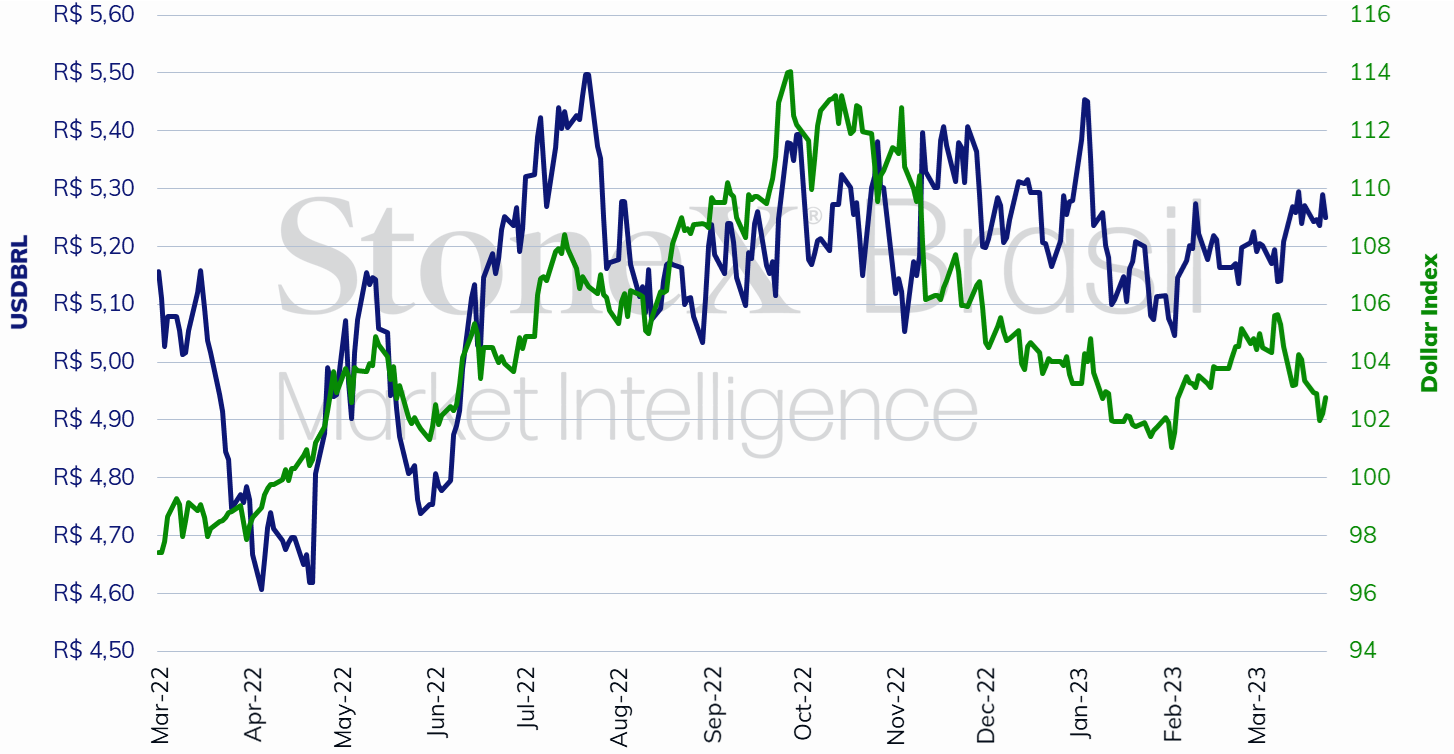
An environment of heightened risk perception has significantly hampered the reading of economic data over the past two weeks, with volatility and turbulence triggered after the bankruptcy of US banks Silvergate, SVB and Signature in a short period and the de facto collapse of Credit Suisse in Switzerland, which was acquired by competitor UBS for below market value in a deal structured by local regulators. Since then, investors and analysts have sought, with difficulty, to assess the real condition of the global banking and financial systems, with a particular interest in the US system, where there is a greater presence of regional and smaller banks.
The top global authorities – heads of state, ministers of economic portfolios, central bankers – sought to reinforce that the global financial system is solid, resilient, and well-capitalized, strove to individualize the problems as risk management errors by a few banks, and that the agencies responsible for supervising the system are alert to any problems and willing to act if a new institution runs into trouble.
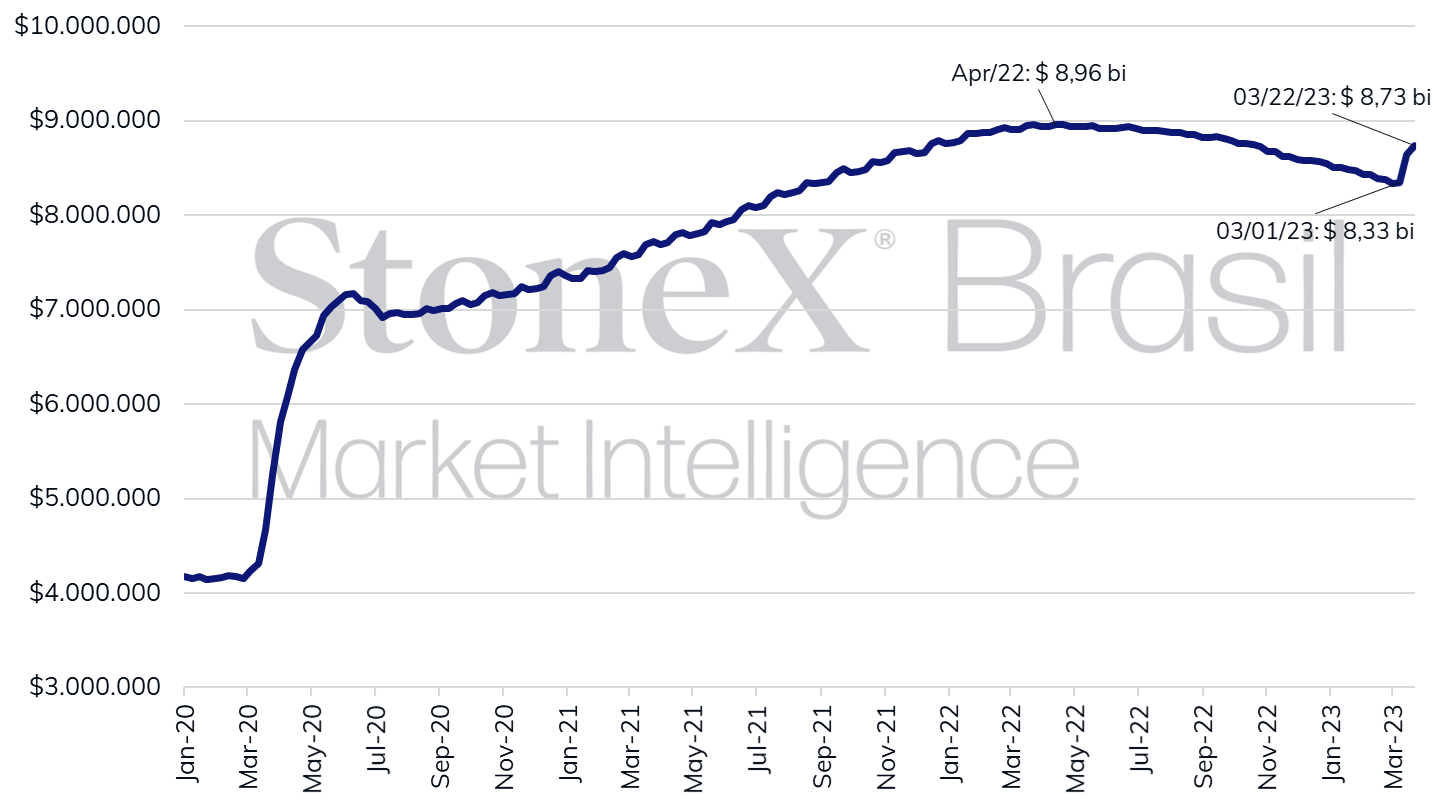
However, it is important to point out that, despite the assurances from the authorities, nobody knows when the scenario of distrust from the financial agents will prevail, and there are fears that new institutions may experience difficulties. Businesses and consumers have also raised their withdrawals from deposits and investments over fears that their bank could be struggling, starting a bank run that could cause a liquidity difficulty and cause its bankruptcy, in a self-fulfilling prophecy. In the last three weeks, American banks have had to resort to a high volume of loans from the Federal Reserve to rebuild their liquidity (transactions known as borrowing at the "discount window."), in turn, increasing the Federal Reserve's asset balance sheet by approximately USD 400 million, evidencing an urgent need for cash by financial institutions. As long as an environment of doubt and uncertainty remains, investors should favor safer and more liquid options, such as fixed-income assets denominated in "safe havens" such as the dollar, yen, Swiss franc and euro.
Total assets on the Federal Reserve's balance sheet
Source: Federal Reserve Bank of St. Louis. Design: StoneX.
Copom Minutes and Quarterly Inflation Report
Expected impact on USDBRL: bearish
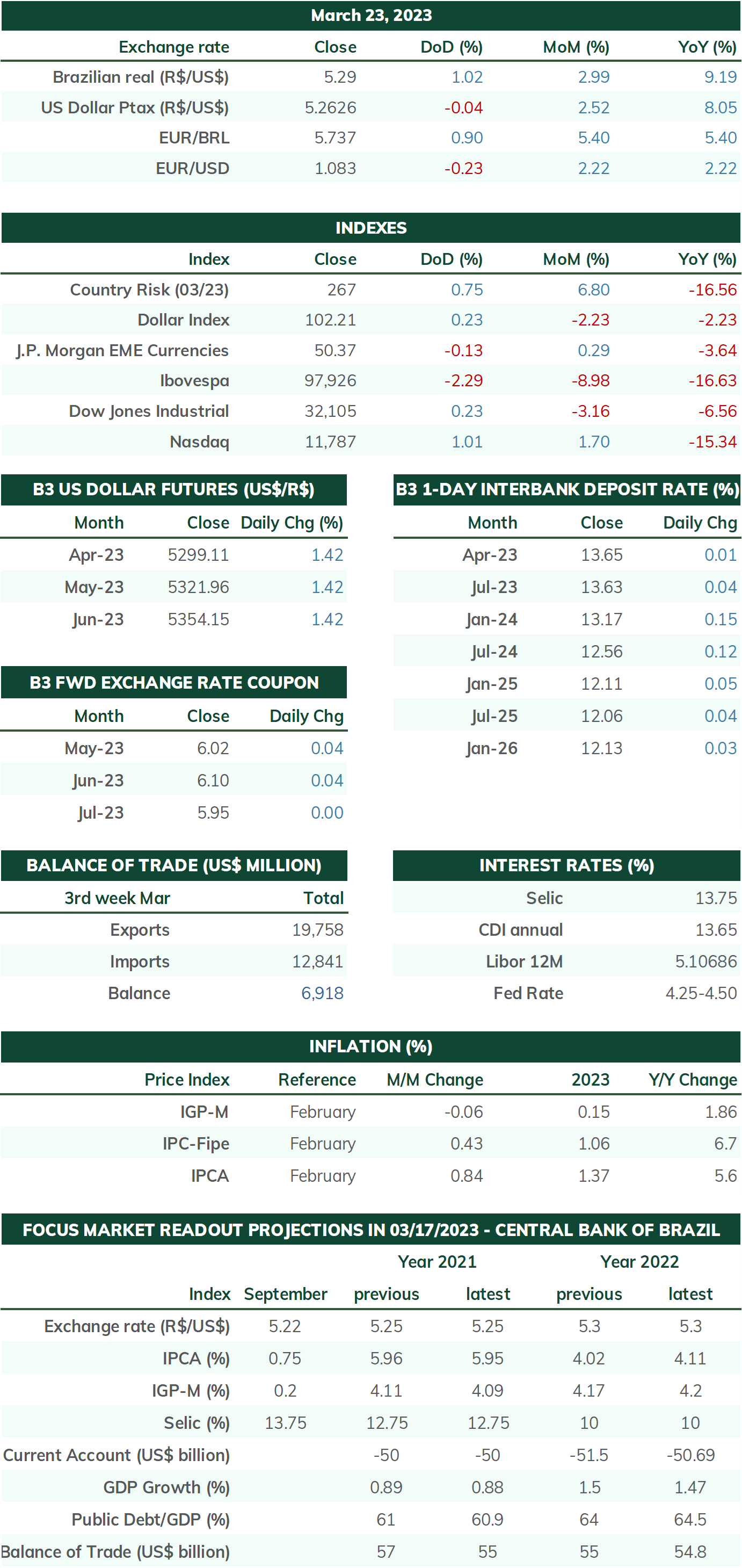
This Wednesday (29), the minutes of the Monetary Policy Committee's (Copom) last decision will be released, which decided to keep the basic interest rate (Selic) at 13.75% p.a. To justify its decision, the Committee warned about the inflationary challenges that Brazil faces, in particular a resilience of the so-called "core" inflation (which excludes the volatile food and energy components) and an unanchoring (or widening) of longer-term inflation expectations. In this sense, publishing the March Quarterly Inflation Report on Thursday (30) will be particularly important. This work brings an in-depth domestic and foreign analysis of the Central Bank's view. For exchange rate flows, the persistence of a higher interest differential in Brazil relative to other advanced and emerging economies contributes to the attraction of financial investments in fixed income and the BRL strengthening.
Brazil's Presidential friction with the Central Bank
Expected impact on USDBRL: bullish
The Copom statement last Wednesday (22), considered to be harsh in tone and which ruled out the possibility of interest rate cuts in the short term, promptly resulted in the federal government criticizing the Central Bank, its president, Roberto Campos Neto, and the country's monetary policy management. The Minister of Finance, Fernando Haddad, said that the Committee's decision was "very worrying" and that keeping interest rates at high levels, which result in higher spending on public debt, "can compromise the fiscal result." The Minister of the Civil House, Rui Costa, declared that the "decision is not what the government expected" and that "there is no reason that explains" the decision. The government leader in the National Congress, Randolfe Rodrigues, classified the decision as "frustrating, unjustifiable, and incompatible with the fiscal efforts" of the government. And the President of Brazil, Luis Inácio Lula da Silva, increasing the tone of his criticism, said that "there is no explanation for any human being on planet Earth that Brazil's interest rate is 13.75%", that "history will judge" Roberto Campos Neto for the consequences of his actions, and suggested that the president of the Central Bank is not complying with the law of the Central Bank's autonomy by neglecting the level of employment and economic growth.
It is important to mention that the federal government's public criticism of the Central Bank, made frequently and vehemently, usually raises the perception of risks to Brazilian assets and generates fears of political interference in the management of economic instruments, which in turn increases the volatility of these assets and worsens inflation and even interest rate expectations for longer terms. In other words, how the Administration approaches the issue has been counterproductive since it produces results contrary to what it manifestly seeks.
Economic data in the US
Expected impact on USDBRL: bearish
This week will see the release of the February Personal Consumption Expenditure (PCE) Price Index, the metric used by the Federal Reserve to track consumer prices. After much higher-than-expected economic data for January, February's indicators remained within analysts' estimates, suggesting a slowing economic activity and price trend. The average expectation for the PCE is a monthly growth of 0.5%, resulting in a 12-month accumulated drop from 5.4% in January to 5.1% in February. The Fed has maintained its warning about the need to regain price stability, and any slowdown in the index will be welcome.
Postponement of the disclosure of the fiscal framework
Expected impact on USDBRL: bullish
Although there is great expectation for the disclosure of the new fiscal rules regulating government spending, President Lula postponed its disclosure only after returning from his trip to China in early April. The postponement discouraged investors, who bet it would indicate a greater commitment to fiscal responsibility and possibly allow a reduction in inflationary forecasts. Although no official explanation has been given for the postponement, political analysts speculate that Lula may have demanded some modification to allow a higher level of public investment and that congressional leaders may be negotiating the text with the Executive.