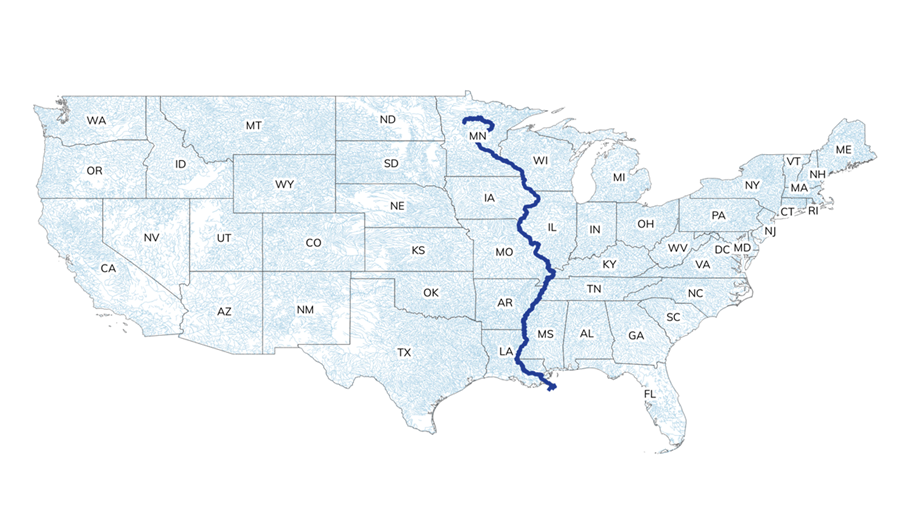
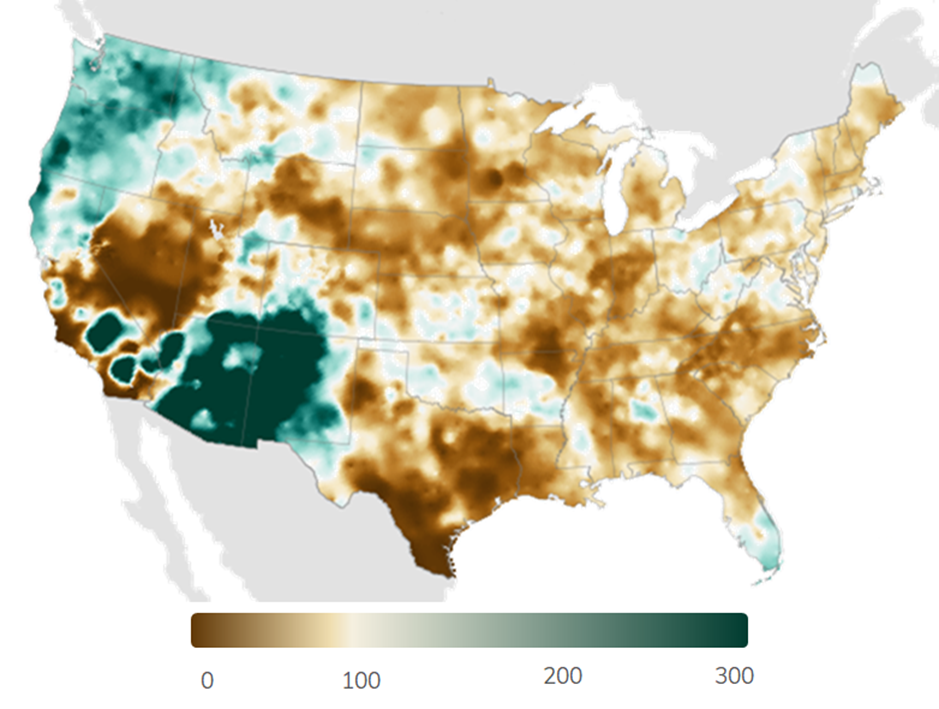
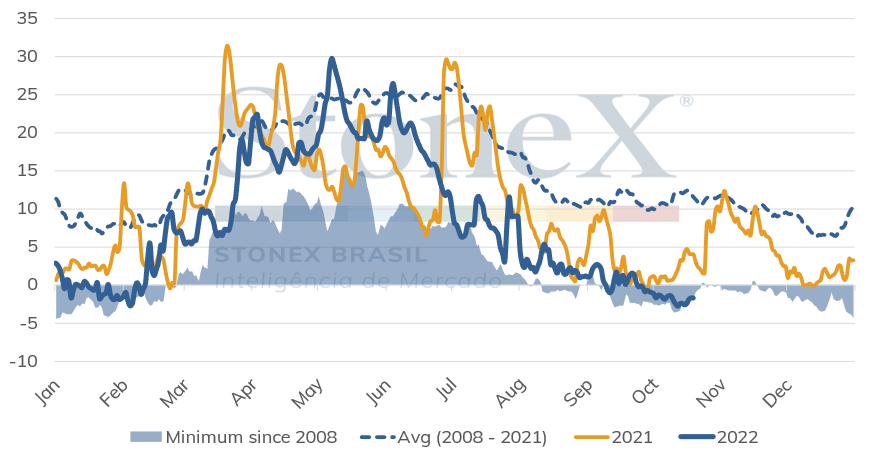
In the last months of the year, the weather in the US is naturally drier, and the river level tends to be lower than in other periods. However, in 2022, September was significantly drier-than-normal where the Mississippi flows, contributing to its level being well below average for the period and one of the lowest levels of the last few years.
Mississippi River level at St Louis (feet)
Source: NOAA. Design: StoneX.
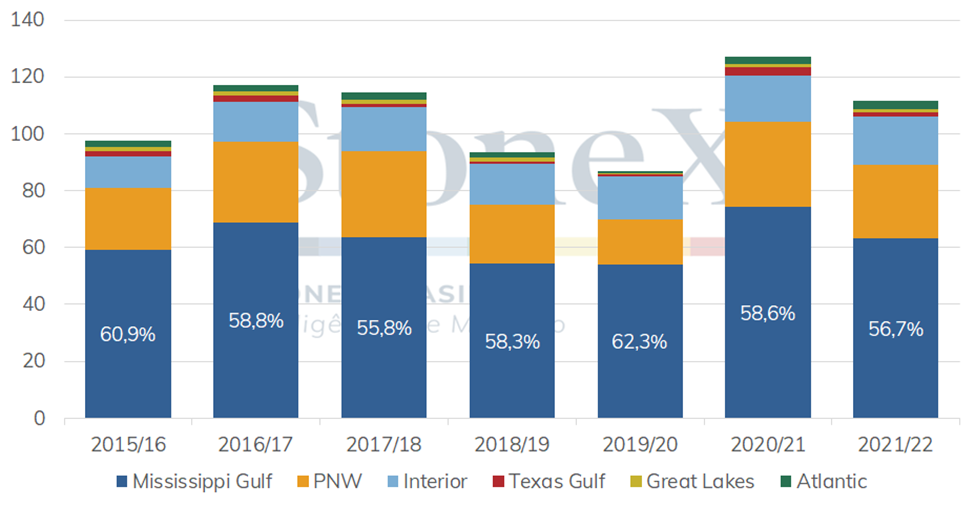
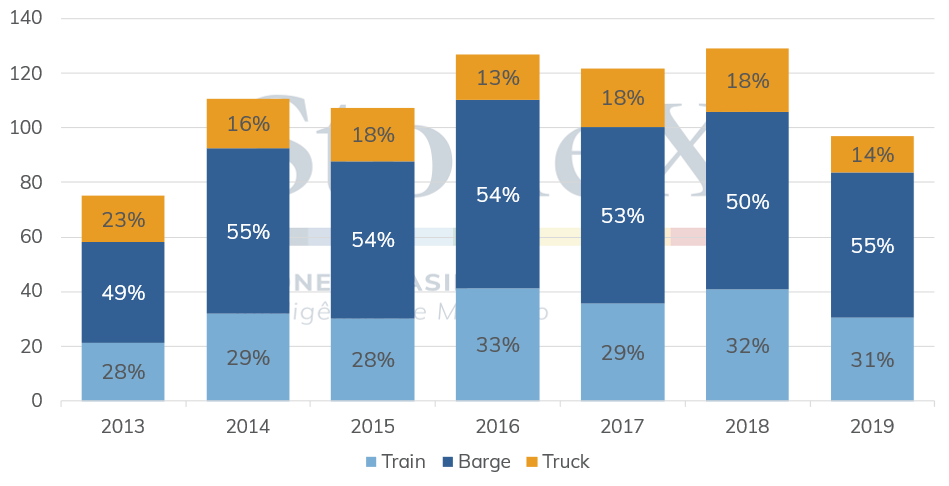
As already mentioned, the barge freight over the Mississippi River is essential for US grain exports. In recent years, this type of transport has been used to bring to the shipping points more than half of the soybeans and corn exported by the country.
US | Soybean and corn exports by modal (MMT)
Source: USDA. Design: StoneX.
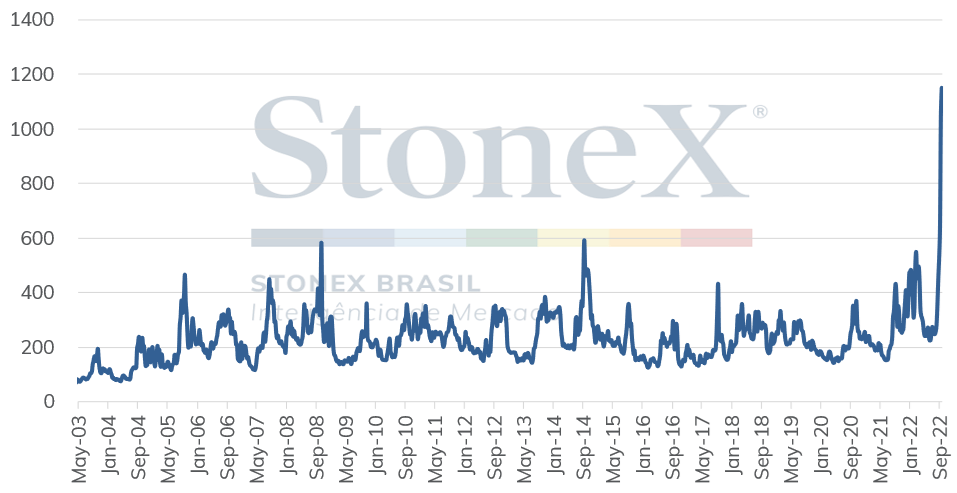
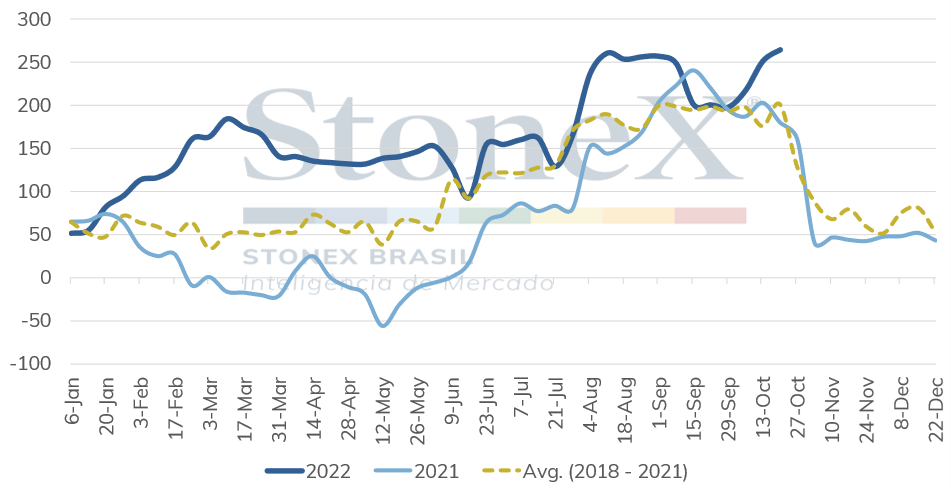
Given the low level of the river, several shipments are transporting a low volume of grains to flow through it, but some are unable to move. With this modal affected, barge freight took off in the US to even 380% higher than the same level in 2021.
Weekly Illinois River barge freight index (% of rate)
Source: USDA. Design: StoneX.
With the uncertainties related to river transportation, the search for barge recently dropped, with grain deliveries being delayed. Accordingly, barge freight continues well above normal.
In addition, other options, such as the Pacific Northwest (PNW) ports, are faced with the threat of strikes by the country’s rail sector. Furthermore, with the increase in demand for rail and road transport, in an attempt to compensate for the decline in the use of barges, there is also an increase in freight costs in these other modes. It should be noted that the Pacific Northwest ports have the advantage of lower sea freight rates to Asian countries, while internal logistics to access this route are generally more expensive for Midwestern states than using the Mississippi River to carry grain to the Gulf. Thus, the reduced use of barges further increases the cost of getting to Pacific ports.
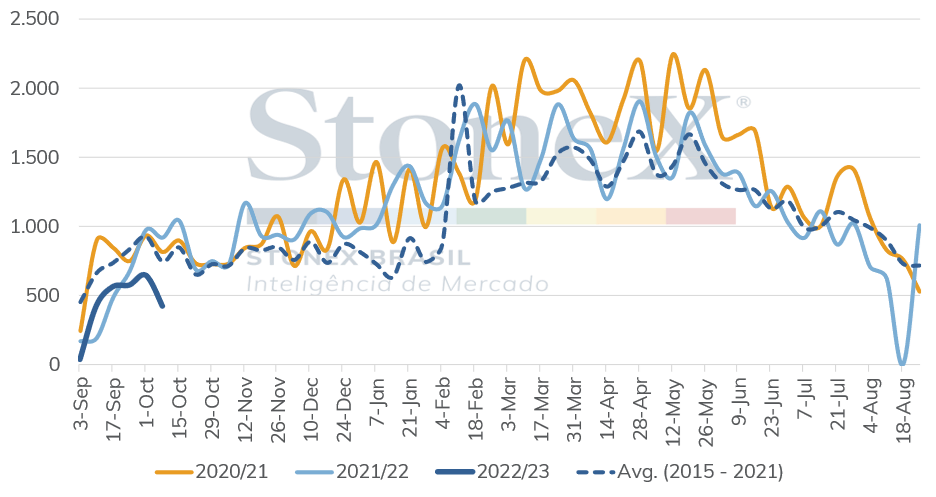
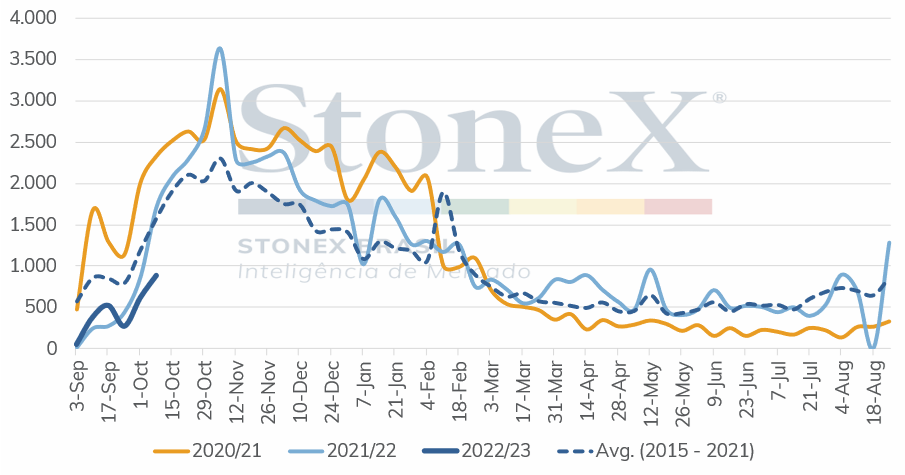
This scenario has been affecting US soybean and corn shipments as they are below the average for the time of the year, which ends up impacting the Brazilian market.
US | Corn weekly shipments (TMT)
Source: USDA. Design: StoneX.
US | Soybean weekly shipments (TMT)
Source: USDA. Design: StoneX.
With the US's difficulty in shipping grains, importers end up looking for alternatives, and Brazil is one of their main competitors regarding soybean and corn exports. With this, the country's basis has been strengthening.
Soybean basis at Paranaguá - PR (FOB) - CBOT (US¢/bu)
Source: StoneX. Design: StoneX.
On the weather side, the models indicate that the rainfall in the coming weeks will not be enough to reverse the scenario, and the level of the Mississippi River may even continue to fall, which tends to stimulate Brazilian exports and sustain premiums. However, it is important to ponder that, despite fears related to a possible strike in the North American railway system, the use of this modal to send a larger volume of grains to the PNW ports is not ruled out.
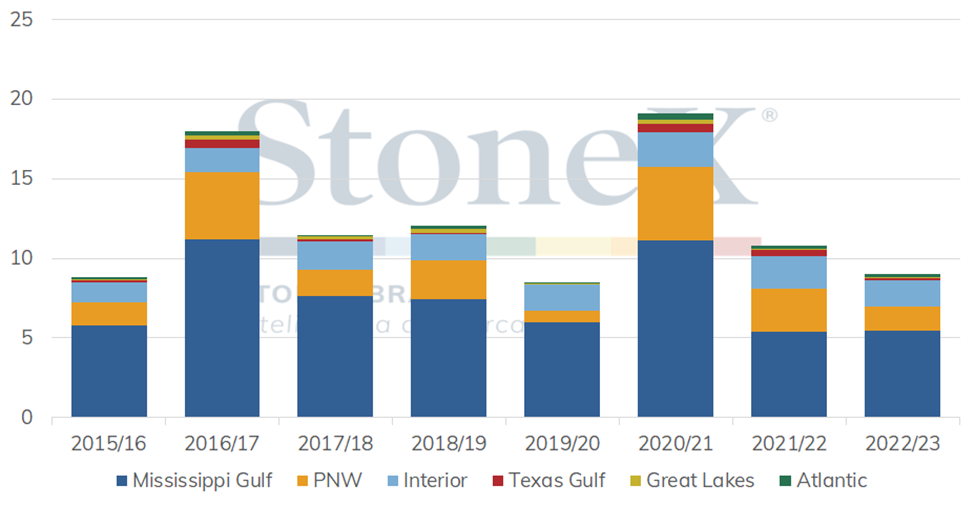
According to USDA follow-up, shipments in the first six weeks of the 2022/23 season did not assume a profile very different from that recorded in this same period of previous cycles. However, as already addressed, we may see a sharper flow of soybeans and corn through the Pacific Northwest ports, and, should this occur, the pressure caused by North American logistics issues would be reduced. Thus, with one of the main factors currently supporting the basis in Brazil losing strength, we may see a pullback in the indicator.
US | Soybean and corn exports* by region (MMT)
Source: USDA. Design: StoneX. *In the first six weeks of the crop year.