The severe drought affecting the northern region of Brazil has triggered a series of logistical challenges, bringing concerns to the grain market. The combination of scarcer rainfall and elevated temperatures has been exacerbated by the El Niño phenomenon, resulting in significant impacts on river levels in the region.
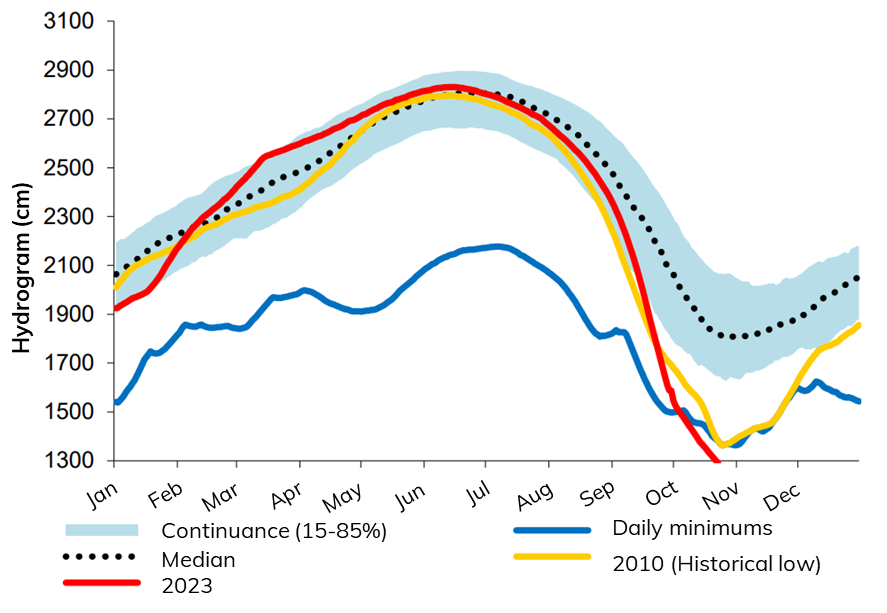
According to data released by the port of Manaus, the level of the Rio Negro reached the mark of 12.89 meters on Monday (23), setting an all-time low record. The worst droughts in the Rio Negro occurred in 2010 (13.63m), 1963 (13.64m) and 1906 (14.2m).
The Rio Negro plays a crucial role in transporting cargo and passengers, joining the Solimões River to form the Amazon River. The Amazon River basin covers a vast area of 7 million km², stretching from the Andes mountain range in Peru to the region of Marajó Island in the north of Pará state, making it the longest river in the world.
According to the National Agency for Waterway Transportation (ANTAQ), in 2022, the Amazon hydrographic region was responsible for transporting more than 71 million tonnes of cargo, with the Amazon River being the main route used. However, the severe drought brings significant logistical challenges to the country's North. Data from the ANA (National Water and Sanitation Agency) indicate that the Amazon River in Itacoatiara is at the lowest level in the last 25 years, with the low depth of the rivers restricting the draft and hindering the navigation of large vessels and their maneuverability.
With the sustained growth of grain production, the ports of the North have been gaining more and more participation in national shipments with the combination of river and road transport. An increasing share of corn and soybeans leave the country through the ports of the Arco Norte (Northern Arc) and reach the terminals by river.
In 2022, the ports of the Arco Norte (located above the 16th parallel) accounted for 29.9 million tonnes of soybean exports and 19.6 million tonnes of corn exports from Brazil, representing 38% and 46% of the national total. The waterways that reach the ports of Barcarena (PA), Santarém (PA) and Manaus (AM) were the most affected by the drought, and these ports together accounted for 5.6 million tonnes of oilseed and 4.6 million tonnes of cereal, representing respectively, 7% and 11% of the national movement last year.
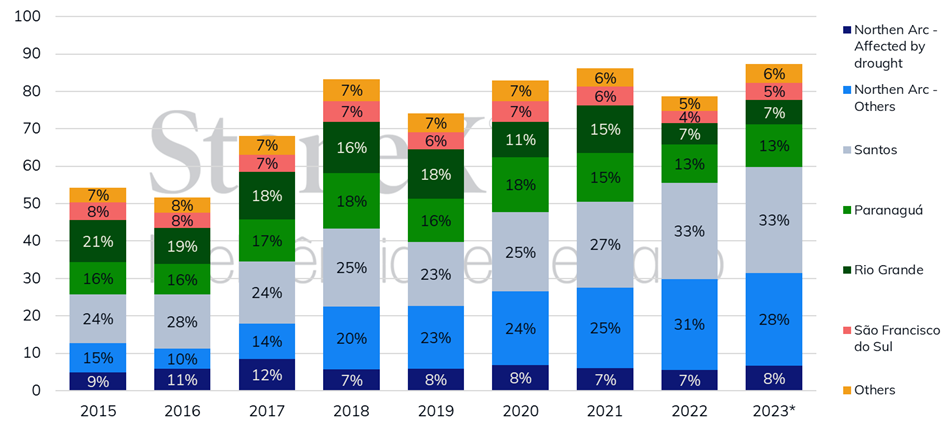
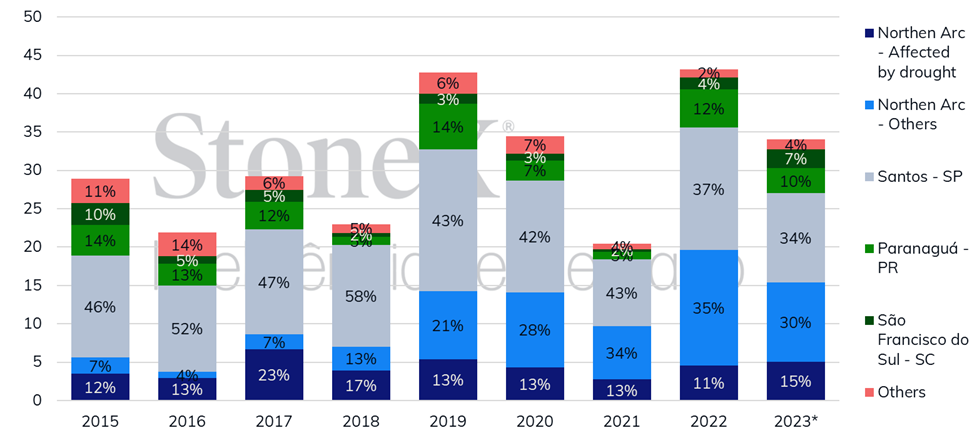
Amid the large export surplus provided by Brazil's record soybean and corn production, the country's port capacity has been the subject of questions. Faced with estimates of record shipments of soybeans and corn in the 2022/23 crop, the reduction in river logistics capacity is problematic, as it makes freight more expensive, raises costs and harms the competitiveness of Brazilian products abroad. There are reports of convoys carrying reduced loads and pushers being used to cross the shallower points, with the ports of Itacoatiara, Santarém and Barcarena having their operation affected, with the diversion of a small number of cargoes to port terminals in the South and Southeast.
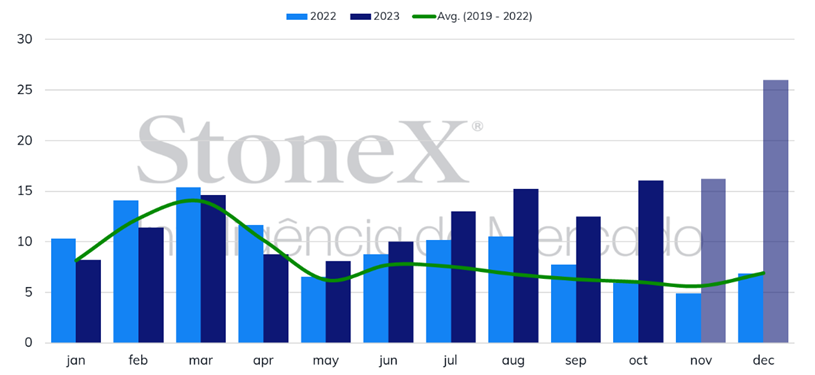
As a result, there tends to be an even greater burden on the region's export routes, especially Santos and Paranaguá, due to the direction of a new cargo volume, which has faced difficulties in reaching the ports of the North. Since May, grain ships leaving the port of Santos have been registering an above-average waiting time, given the high demand after record crops. This difference has become more expressive, evidencing the greater flow. The lineups already indicate that the average waiting time should increase in the coming months at the port of Santos.
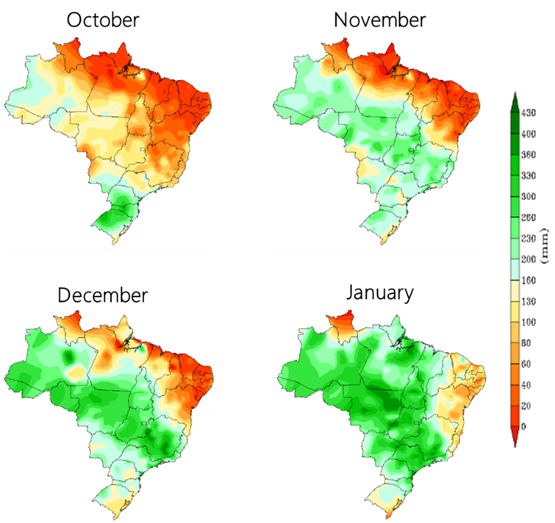
At the same time, meteorological data have recorded negative precipitation anomalies in the country's northern region since June 2023. The maps below highlight the precipitation anomalies for June, July, August and September, highlighting the lack of rain and the severe drought conditions in the region.
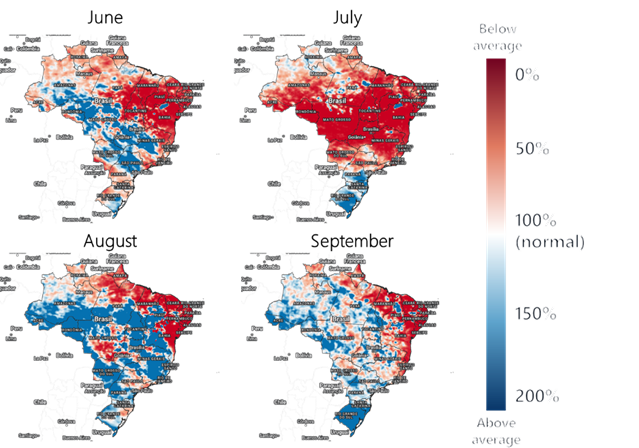
These challenging weather conditions have directly affected the level of rivers in the Amazon basin, contributing to the reduction of the draft and the consequent greater difficulty in transporting grains through the main ports of Arco Norte.
Forecasts indicate a gradual recovery of precipitation levels between December and January, which may alleviate the problem, favoring the flow of the northern regions of Mato Grosso, Pará and Maranhão. However, it is crucial to continue closely monitoring the situation, as the next few months are very important for Brazilian corn exports, and the weather and hydrological conditions may be unpredictable, especially with the El Niño phenomenon, which tends to bring drier weather in parts of the North and Northeast regions of Brazil.