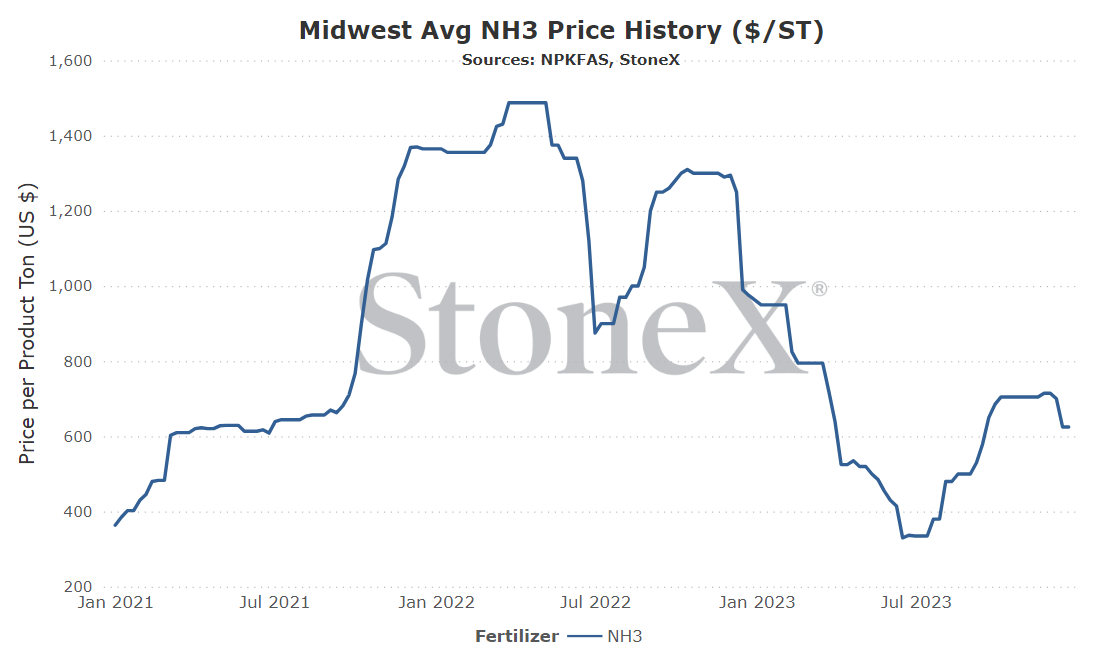
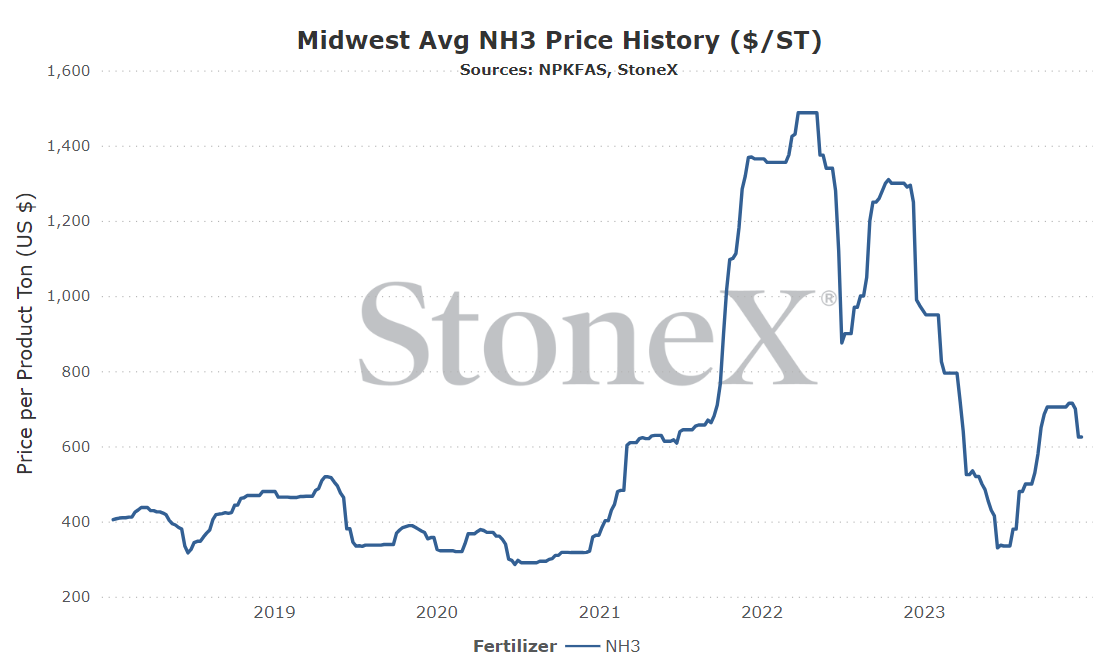
The first graph is the AVERAGE of the entire Midwest U.S. region. That means your local value WILL be different than what the graph reflects. Please do not take this into your retailer and say "why isn't my price the same as here". That is comparing apples to oranges. You might be on the cheaper or more expensive side of this graph. This doesn't take into account logistics/storage/interest/insurance/shrink/etc.
This graph looks at the price from a short ton and USD currency POV.
This second graph looks at the price set for Tampa NH3. This value does not have a high correlation to Midwest values. It is a talking point used when prices are rallying...yet somehow gets skipped on the way down. This price is more an indication of the global price. This price is set by two parties (purchaser - phosphate producer in Florida / seller - international producer providing NH3 to FL phosphate production).
This graph CAN be used as an indication of global market price direction/trends. This graph SHOULD NOT be used to determine a Midwest value. Tonnage is listed in short ton and currency in USD.
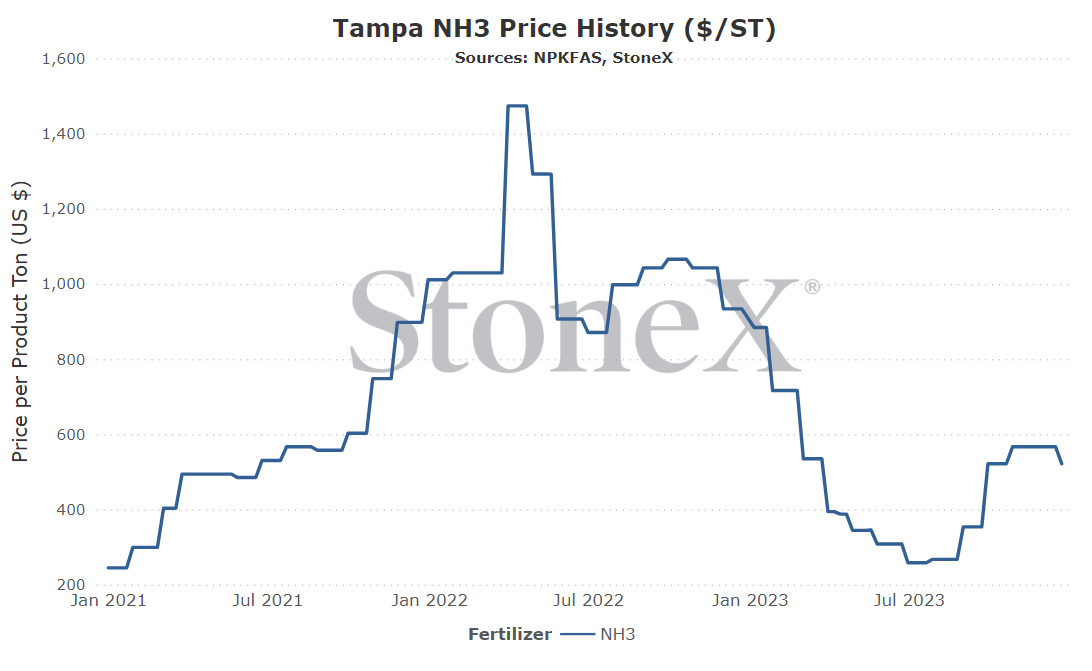
When the Tampa December NH3 price was set at even money to November, I smelled a bit of blood in the water and was looking for a correction in January. It was ultimately a correct assumption, but if I am being truthful, I did not expect it to correct $100MT. That was surprising. So what are we looking for going forward?
Leaning bearish as we move into 2024 on the back of current price direction, possible industrial demand destruction, and the anticipated return of Russian exports.
The Russia piece is still a bit of speculation and not something we expect to have happen until April (give or take a couple months) but the anticipation that they will return is going to weigh on the markets. I still cannot get past my belief that an economic correction is coming which will hurt industrial demand. At the very least, I see more downside potential than upside.
North America
That was one heck of a fall run. 3rd largest since 2000 according to our forecast. That means the system is empty and there is only 3 months between the end of the fall run and the anticipated start of the spring run. That paints a pretty bullish storyline...so why can't I say I'm bullish?
Winter fill and spring prepay values were announced at the absolute top end of our expected range. I think the market is going to struggle with the pricing and could cause demand to drag its feet...which could drag price ideas with it.
The fact that the system is empty is a BIG win for manufacturers when it comes to negotiating pricing. However, NH3 is high priced vs historical values, vs grain prices, vs urea, vs UAN, etc. It is hard for me to get overly excited about these values. If the price was lowered $50 - $100st USD, I would be banging the gong to step in for spring needs but at these levels...I'm not in love with them.
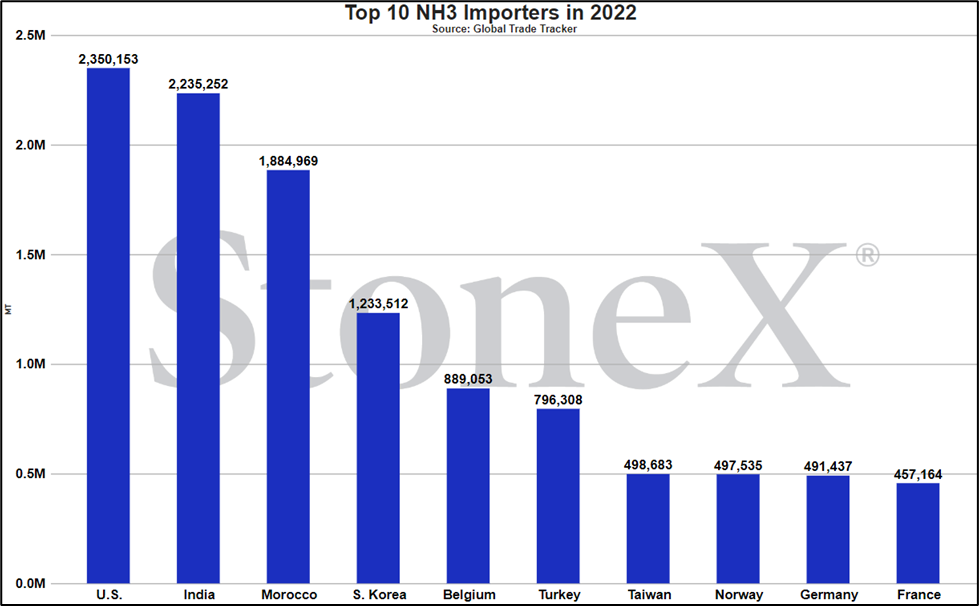
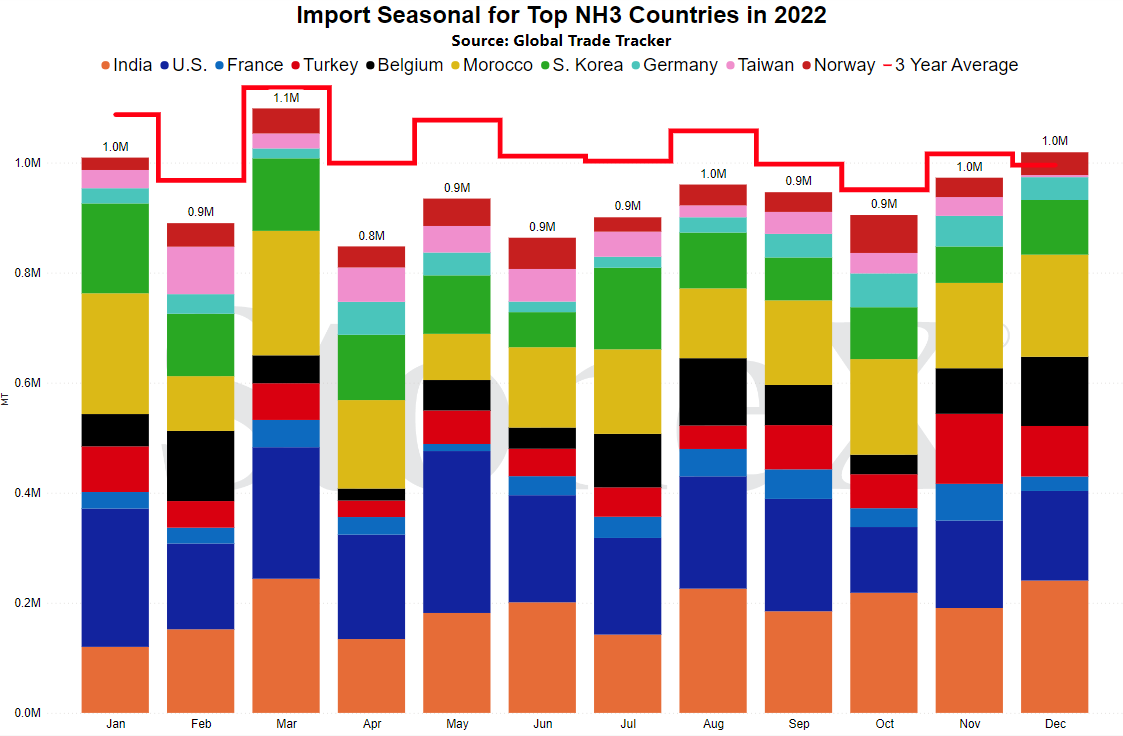
Tampa price falling $100 from December to January reflects the bearish market
Back in late November, the Tampa December month pricing was announced to be flat to November. After several months of values rising, this was a surprise...and honestly felt weak. That feeling came true recently with the January price dropping. So we were right on the call that values were going to dip lower, but wrong on how much! I originally thought we would see the price down somewhere around $50. I was shocked when it was announced $100 lower!
There are a few things that likely went into this correction.
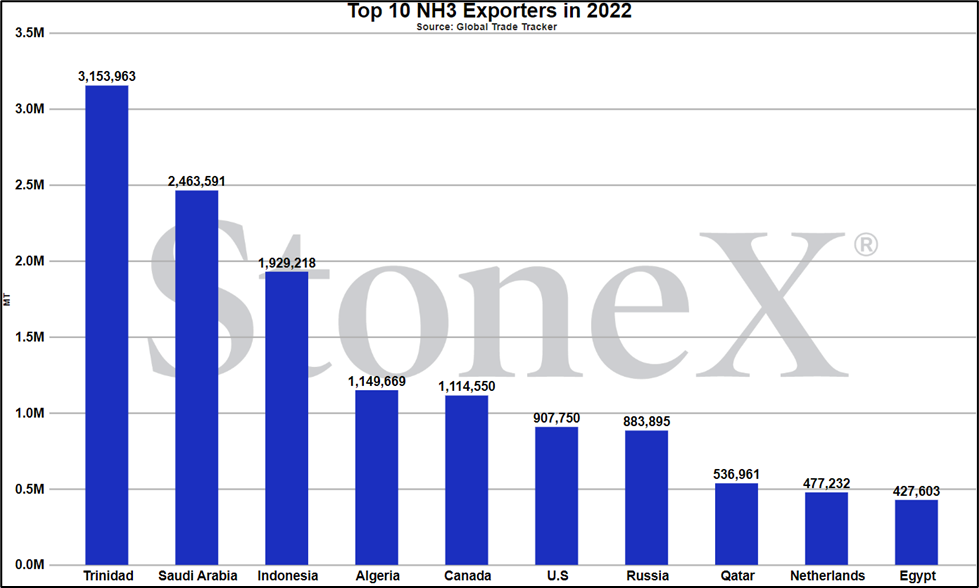
- We are getting closer and closer to the world's largest exporter, Russia, returning to the market.
- Seems some production issues seen around the world have been mostly corrected.
- European Dutch TTF values continue to fall, raising hopes of further restart announcements.
- Economic fears continue to swell.
- NH3 values are relatively high vs "normal"
As dumb as this may sound, now we need to see what happens with February. If prices hold or push higher, the market can say this was a one off event and the market will stay peaked. However, the Russian return is looming and should be spooking long positions. I will not be surprised that I am talking about prices down again when I write up the February edition.
Hopes rising of Russian exports returning
For those new to the newsletter, a quick recap:
- Russia was the world's largest exporter
- They dropped way off after invading Ukraine
- They produce NH3 in Russia, but utilize a pipeline that runs thru Ukraine and loads vessels around Odessa
- Russia has been working on new export options with Russian ports
I think that gets most of it!
Developing new channels takes time. In this case, rail capacity has to be worked on (as well as rail car availability). New deep sea ports need to be built. That is hard enough with "simple" products like grains or dry fertilizers. Much harder when dealing with something like NH3. Many have anticipated that these routes would be mostly complete sometime in 2024. Recently, speculation has risen that we could see them as early as Q2 '24.
So what will it mean if/when they return.
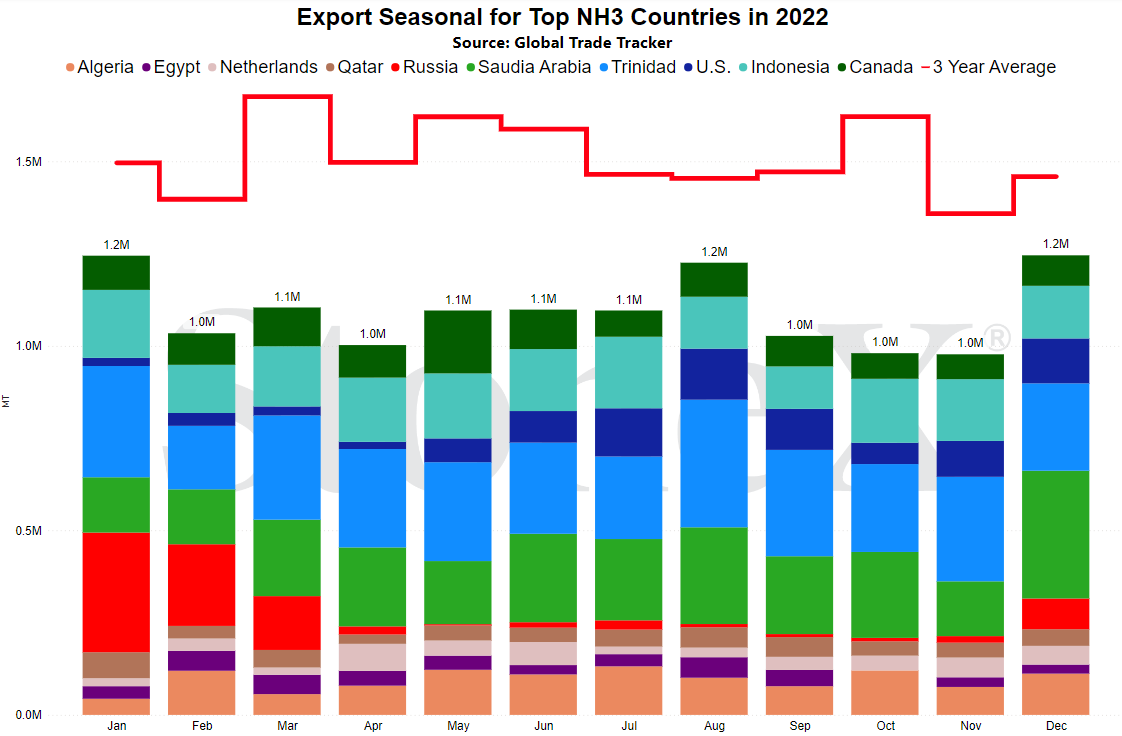
Russia has historically exported around 5MMT per year. That is what we are dealing with. That is a huge influx of product that wasn't there before and is sure to make a lot of S&D's much more comfortable than where they have been the last couple years.
The flip side is not to get too excited early. My guess is they will not be at full capacity day one. There are usually a lot of bugs and gremlins to work thru. Then, once they are at capacity, it isn't as though 5MMT is suddenly available. That is an annual number. So, from a fundamental standpoint, it is a game changer but not as many are thinking.
That brings us to the emotional POV. This is going to be a huge event when they return and long positions will get nervous and want to sell any length before prices fall. Even the threat that exports are returning will likely be enough to weigh on the market.
We are not there yet, but it is getting closer. Need to watch this one closely.
European production remains unchanged
On the bright side, Dutch TTF values have remained under pressure the last several week. At their lowest, all nearby months were settling sub $11MMbtu. It had been a LONG time since we had seen that.
On the less bright side, no production restarts were heard. Not only are input values still much higher than considered "normal", but nitrogen prices were much lower than they were at their high's. Couple that with the fact that international NH3 is flashing more bear signs than bull (especially with the anticipated return of Russia) and you end up with an approach that has offline plants being very cautious to step forward.
Given how Europe restarting production could change the world, we need to continue to watch this sector but today, there is no change.
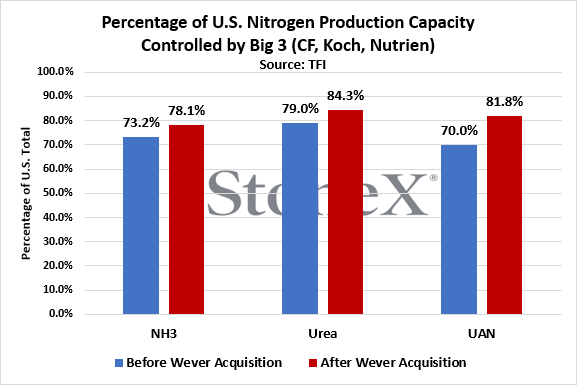
Announced that Koch will buy Weaver, IA, nitrogen facility
The big surprise in the market was the report that Koch has moved ahead to purchase the nitrogen production facility located in Weaver, IA, for $3.6M USD. Yes, that is a B as in boy. Weaver was the most recent greenfield nitrogen facility to be built in the U.S. and was completed back in 2018 (if memory serves correct). At the time, it was applauded as it meant another competitor had entered the frey. Now, Koch buying this facility has raised a few eyebrows...
Earlier this year, it was reported that CF Industries was moving ahead with plans to buy a nitrogen production facility based in Waggaman, LA. While not the biggest plant out there, it was seen as another step toward a nitrogen monopoly. Now, with Koch proceeding to purchase Weaver, it gets even more condensed.
The definition of a monopoly is: "the exclusive possession or control of the supply of or trade in a commodity or service." (Google search of "monopoly definition").
However, the definition of an oligopoly is: "a state of limited competition, in which a market is shared by a small number of producers or sellers." (Google search of "oligopoly definition").
The U.S. nitrogen production sector fits the bill for an oligopoly and has more and more of the market upset by the situation. Does that mean anything will change? Not likely. Not from my vantage point. However, I would by lying if I said recent statements and bills by some U.S. Senator's didn't have my attention. While I ultimately doubt anything substantial will come from it, I would say this attention raises the chance...slightly.
Ultimately, this does nothing to change the S&D for North America. Whether Koch or OCI owns the facility, the production rate remains the same. The only different is whether the market has more or less manufacturers in the field.
North America finished HUGE fall application run
That was a big fall application run.
"How big was it?!?!"
3rd biggest since 2000, according to our forecast/records.
Seriously, this is the type of fall a lot of North America will look back on fondly as the example of what fall seasons should look like. Not to say everyone's was stellar, but more than not were.
Now we have to look forward and figure out what that means going forward...long story short, it's a win for the supplier/manufacturer.
This big of a fall means the system is empty. Retailers are ran out of product. Storage locations should be at very low levels. Manufacturing sites sitting mostly empty. This, and we only have 3 months between the end of fall and the start of spring.
One of the first things people usually bring up is that if they got it done in the fall, there is nothing left for the spring. To a certain extent, that is right...but not for everyone. There are still a lot of fields that got skipped because of uncertainty of what they were planting next year. Some areas are not allowed or it makes no agronomic sense to apply in the fall and are forced to do everything in the spring. Believe me when I say that there is still demand out there.
So now the conversation turns to resupply efforts...and that will be the struggle. I can tell you first hand that the system struggles to refill in such a short amount of time. There are only so many tons that can be shipped/refrigerated/etc. per day. The biggest fear for manufacturers today is an early spring. Likely they will be making sales based on volumes available by late March/early April. If the system starts rolling first half March, it will be a game of constant catch up.
Moral of the story, do not underestimate the spring after this type of fall. The short inventory story is going to linger for a bit. Which is why...
North American winter fill/spring prepay values set at lofty levels
Before spring prepay programs were announced by manufacturers, our anticipation was that values would be set $50 - $150 lower than the ending fall number. The lowest end of the range was extremely hopeful but would put NH3 in a good place vs grains/urea/UAN/etc. The highest end of the range was going to be a tough one to get excited about but wasn't going to be a surprise given how empty the complex was following fall.
It appears manufacturers decided to go with the "system is empty" approach.
Now, the attention turns to demand. How is it going to react?
Honestly, I'm not sure what the answer is. I struggle with the pricing. Given a lot of the stuff out there, if I am a farmer, I'm probably dragging my feet in hopes of lower prices coming. Maybe the economy tanks, killing industrial NH3 demand and shoving tons into the ag side that were not expected. Maybe global values continue to fall and take Midwest values with them. Maybe other demand agrees and waits which places a lot of pressure on manufacturers to find a price that works. Sure, there is upside potential, but to what end?
I'm guessing we will be a lot smarter by the February edition.
U.S. Midwest Wholesale price average
Vs 30 days ago - -13% or approximately $90 lower
Vs 90 days ago - -4% or approximately $25 lower
Vs 6 months ago - +85% or approximately $288 higher
Vs 1 year ago - -36% or approximately $350 lower
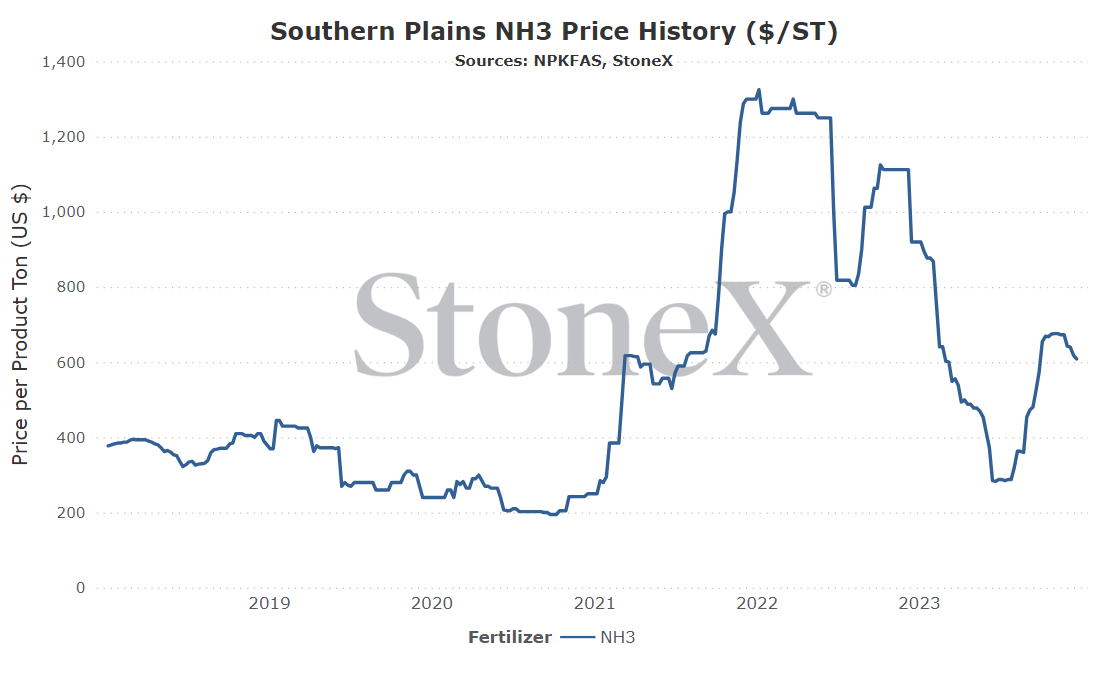
U.S. Southern Plains price average
Vs 30 days ago - -9% or approximately $64 lower
Vs 90 days ago - +16% or approximately $83 higher
Vs 6 months ago - +116% or approximately $327 higher
Vs 1 year ago - -34% or approximately $311 lower
- Big N.A. fall run means empty storage - if our forecast in regards to this fall run is directionally correct, it will be the 3rd largest since 2000. It was about as perfect as it gets. That means the system is drained and I can tell you first hand that the system will struggle to refill. NH3 logistics are obviously specialized. There are only so many tons that can be moved and refrigerated in a day. With only 90 days typically between the end of fall and the start of spring, it just doesn't leave a lot of time to operate. That puts the seller in control.
- Global supply issues continue to compound - Russian exports continue to be mostly sidelined (since they invaded the Ukraine). European production remains reduced due to high natural gas costs. Trinidad still isn't "perfect". Does this mean that the world is going to get out of hand and see values going hundreds of dollars higher per month? No, but it certainly helps to lean price ideas that direction.
- Open spring weather window will boost N.A. demand - many of you might be reading that headline and thinking "horsecrap, if the price is too high I'll just wait and put on urea or UAN". That is something I would normally agree with...but historics say otherwise. There is a fair share of the market that if mother nature presents a chance to run NH3 in the spring, farmers respond by applying NH3 in the spring. That does not mean that the price can be outrageously higher than the alternatives, but I wouldn't say today's values are outrageously higher...just higher.
- Russian export "fears" come true - when I say fears, I mean this from the perspective of long/bullish positions. We continue to hear rumors that Russia's new export lanes are nearing completion. From a fundamental POV, I'm not overly worried. It doesn't sound as though this will happen until late Q1/Q2. Even if it becomes operational, we do not know how many tons it can export and all of those exports will not arrive day one. However, the emotional impact will be enormous. The market will be scrambling to offload positions across the industry.
- Industrial demand waning... - we recently did our quarterly webinar series and one of the things that shocked me was U.S. industrial NH3 demand being lower than expected. For those that are new, there is nearly as much industrial demand as there is agricultural direct application demand (4M vs 4M). If industrial demand continues to struggle, those tons will start looking for a home as production is not likely to slow/stop as a result. Where is an easy home? Ag side. Lot of tons can suddenly get dumped into the market.
- Tampa dropped the price $100 from December to January...sign of more to come? - the fact that the Tampa price dropped is not overly surprising. When we saw the December price set at even money to November, we figured something was "wrong". That said, I would be lying to you if I said I expected a $100 drop. I was in the ballpark of $50. So what did they see...or what do they see coming?
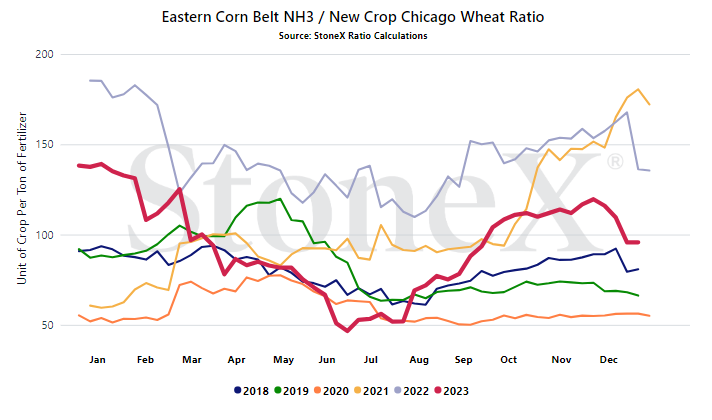
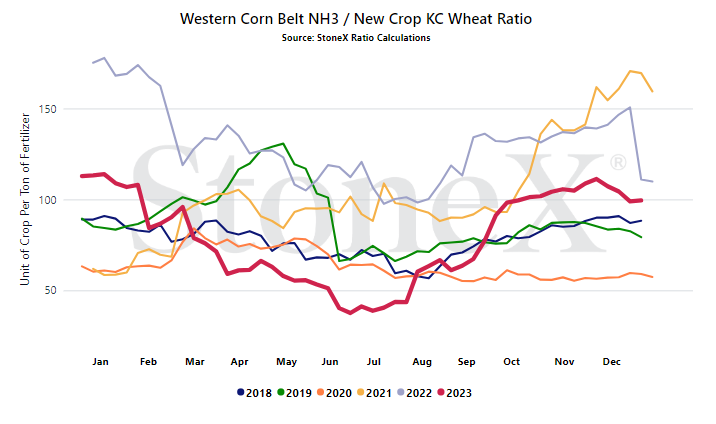
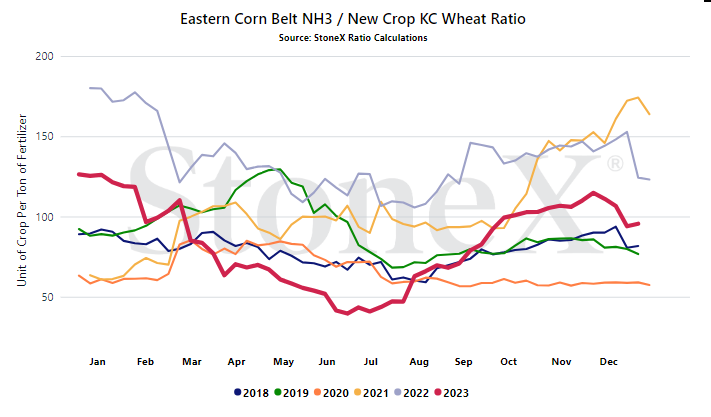
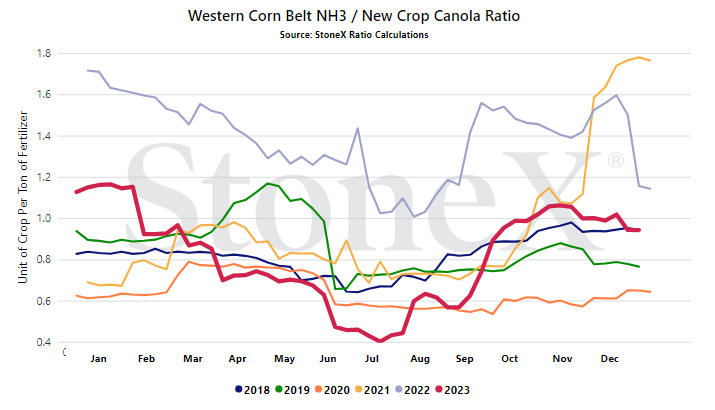
We believe that only looking at the flat price of either grains or fertilizer can be misleading:
-
Only selling grain can hurt you if fertilizer prices rise substantially
-
Only buying fertilizer can hurt you if grain prices fall
We look at the ratio "value" to get a better indication of where we are or how many bushels of X does it take to pay for 1 ton of fertilizer.
Would you rather:
-
Spend 150 bushels to pay for 1 ton of potash
-
Spend 100 bushels to pay for 1 ton of NH3
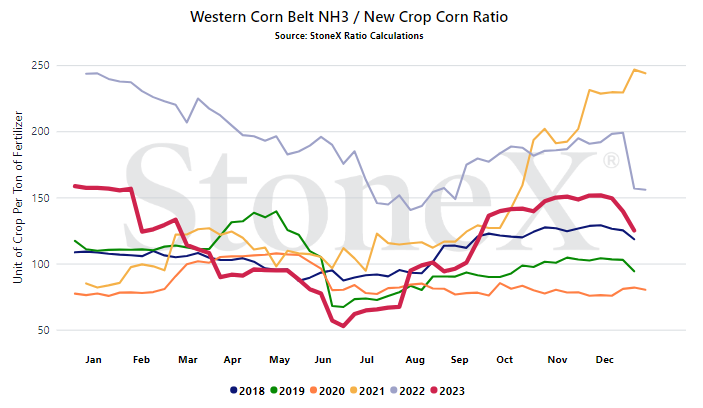
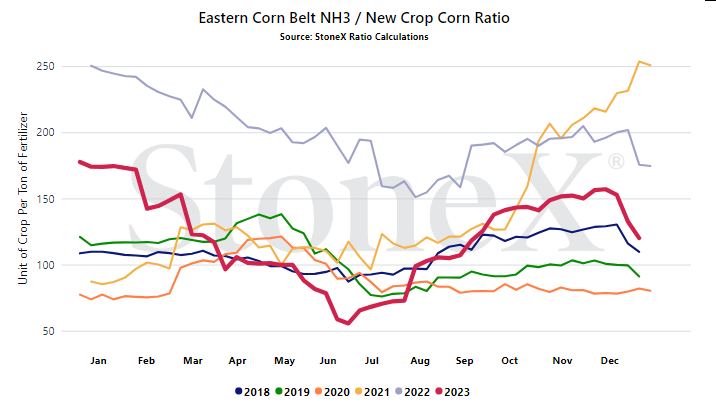
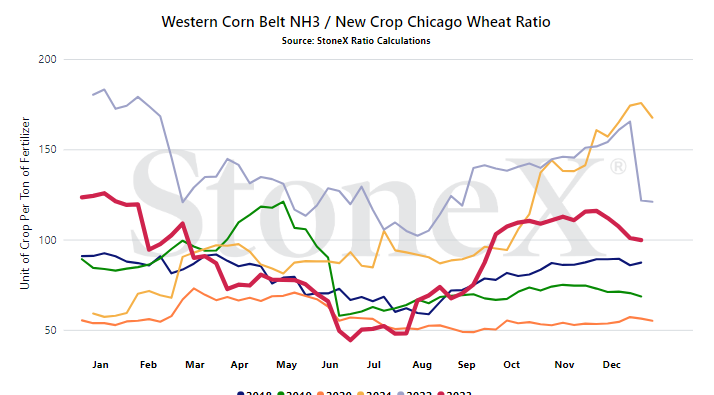
When we compare the current ratio value against recent years, we start to see if we are high or low.
YOUR VALUES WILL LOOK DIFFERENT
This graph looks at the NOLA NH3 price vs the flat grain price. There are no logistics on either product. Your location will look different due to fertilizer logistical costs, grain basis, etc.
- Russian export participation - while I do not expect this in the next month or two (more likely April or beyond), this has the biggest chance of completely undermining the current NH3 marketplace. Russia is typically the world's largest exporter of NH3, but that title was quickly lost with their invasion of Ukraine. The fundamental impact on the market upon their return will be big. The emotional impact could be bigger.
- European production rates - if we were to see Dutch TTF values continue to fall and in turn, European offline nitrogen production facilities restart, global demand would fall as they are taking care of themselves once again while global supplies rise at the loss of buyers. That's a bearish one-two punch. Chances still seem on the lower side that this happens...but a lot of people said there was no chance Dutch TTF would threaten single digits again but here we are.
- Battle between N.A. manufacturers and buyers - this may not win me a lot of friends in the supply side of the fertilizer marketplace but whatever, I have enough friends. The spring NH3 program prices were set on the absolute high side of our expectations and I think buyers are going to revolt to a certain point. If the price had come out another $50 - $100 lower, I would be jumping up and down to go ahead and lock it up. I'm not a fan of this program price. It is high vs grains. It is high vs urea. It is high vs UAN. Tampa price fell hard for January. Industrial demand surprised us being lower than expected. Ultimately, I think we are set up for a bit of a stalemate between buyers and sellers...now to see who blinks first.
StoneX Ratio Calculation
The ratio calculation is derived from Bloomberg historical grains values as well as fertilizer values from StoneX, NPKFAS, and Argus.
The calculation is simply dividing the fertilizer price by each grain price.
All data was sourced from StoneX unless otherwise noted.
This material should be construed as market commentary, merely observing economic, political and/or market conditions, and not intended to refer to any particular trading strategy, promotional element or quality of service provided by the FCM Division of StoneX Financial Inc. (“SFI”), StoneX Financial (Canada) Inc. (“SFFC”) or StoneX Markets LLC (“SXM”). SFI, SFFC and SXM are not responsible for any redistribution of this material by third parties, or any trading decisions taken by persons not intended to view this material. Information contained herein was obtained from sources believed to be reliable, but is not guaranteed as to its accuracy. Contact designated personnel from SFI, SFFC or SXM for specific trading advice to meet your trading preferences. These materials represent the opinions and viewpoints of the author, and do not necessarily reflect the viewpoints and trading strategies employed by SFI, SFFC or SXM. The FCM Division of StoneX Financial Inc., a subsidiary of StoneX Group Inc., is a member of the National Futures Association (“NFA”) and registered with the U.S. Commodity Futures Trading Commission (“CFTC”) as a futures commission merchant and commodity trading advisor. StoneX Financial (Canada) Inc. is currently registered as a Futures Commission Merchant or equivalent in all provinces of Canada and is a member of the Investment Industry Regulatory Organization of Canada.