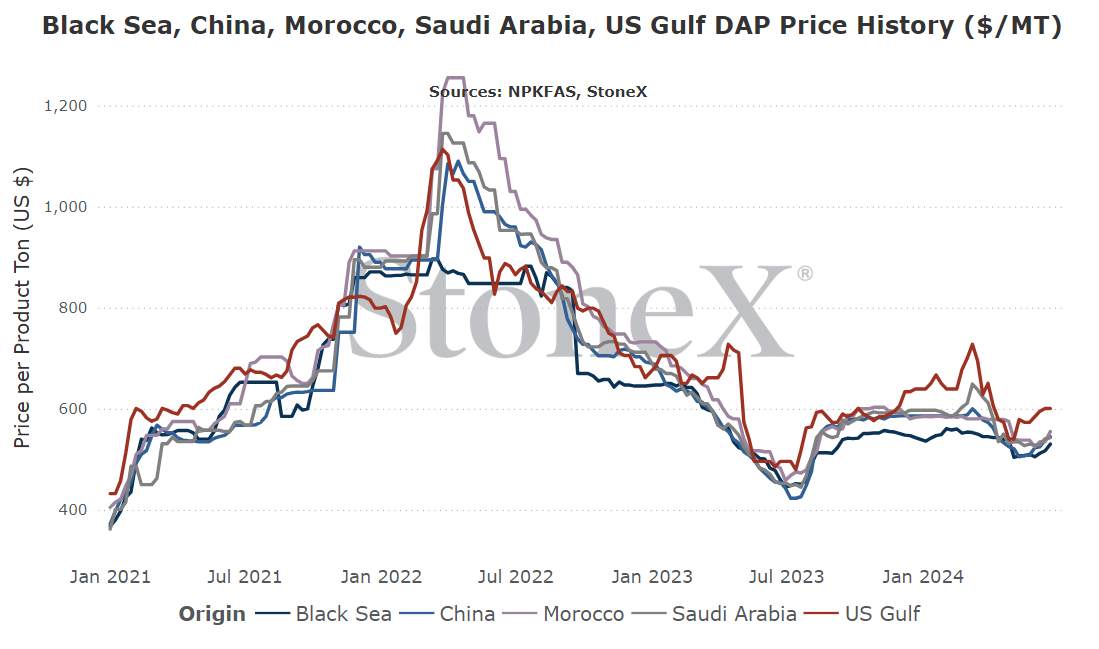
Phosphate looks like it should remain supported. Brazil and the U.S. have been in competition for tonnage. India needs to start buying. Chinese exports are back into question.
Do I like this POV? No.
Do I like writing this POV? No.
Do I have a choice? No.
With the way the world of phosphate is currently set up, it is hard to argue with the bulls. Inventories are suddenly feeling much more tight following reports that Chinese exports are slowing dramatically. They were one of our biggest saving graces. India has been struggling to purchase because of their subsidy program but I think that gets fixed soon and has them back to the table. Brazil and N.A. still has work to do.
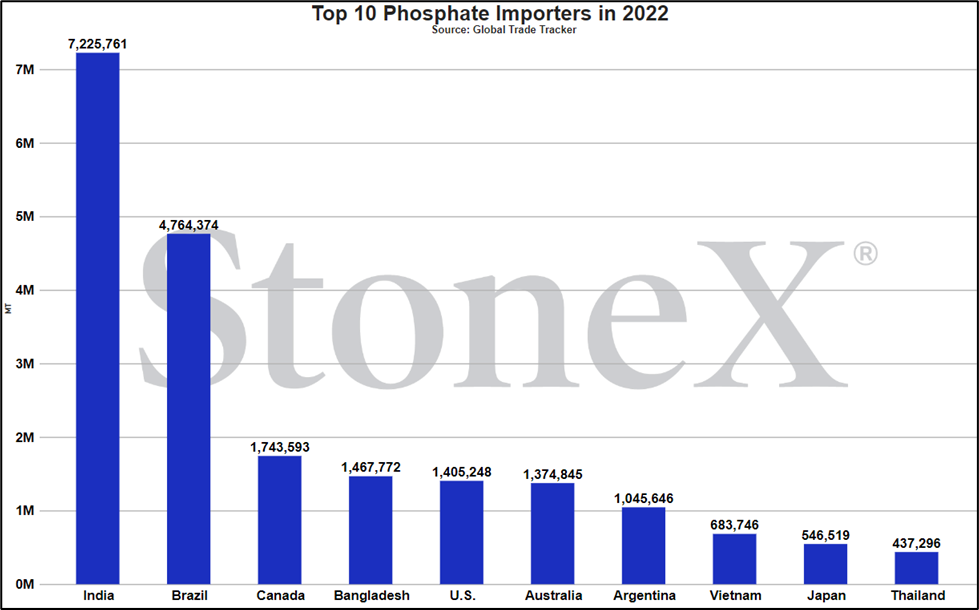
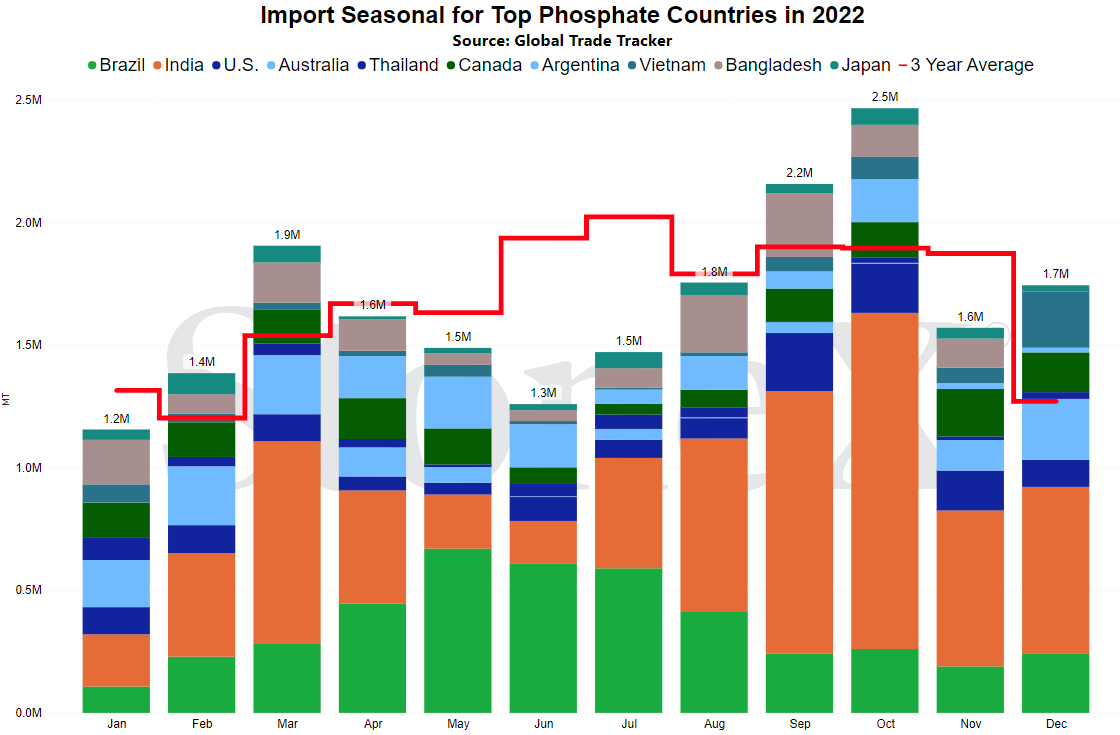

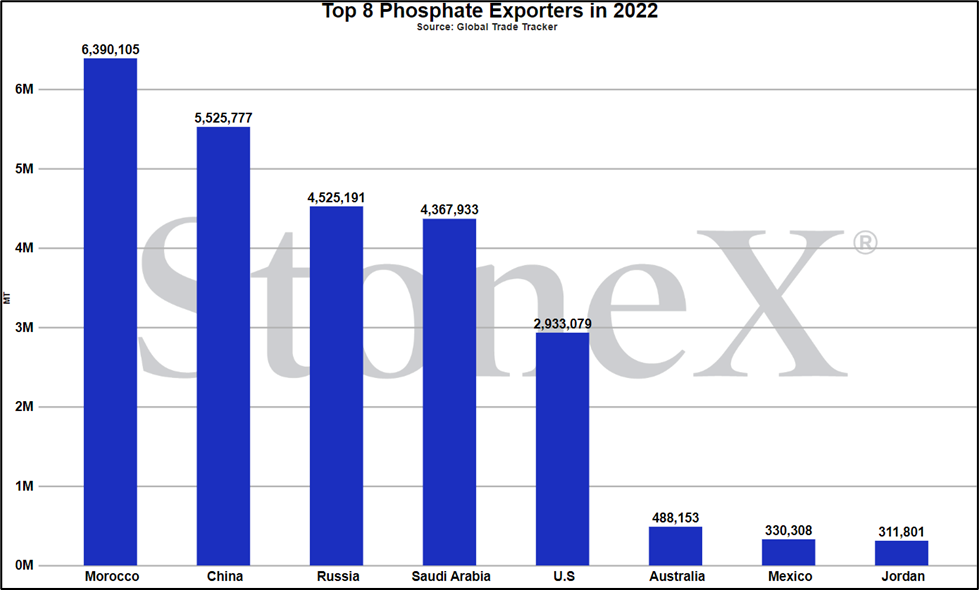
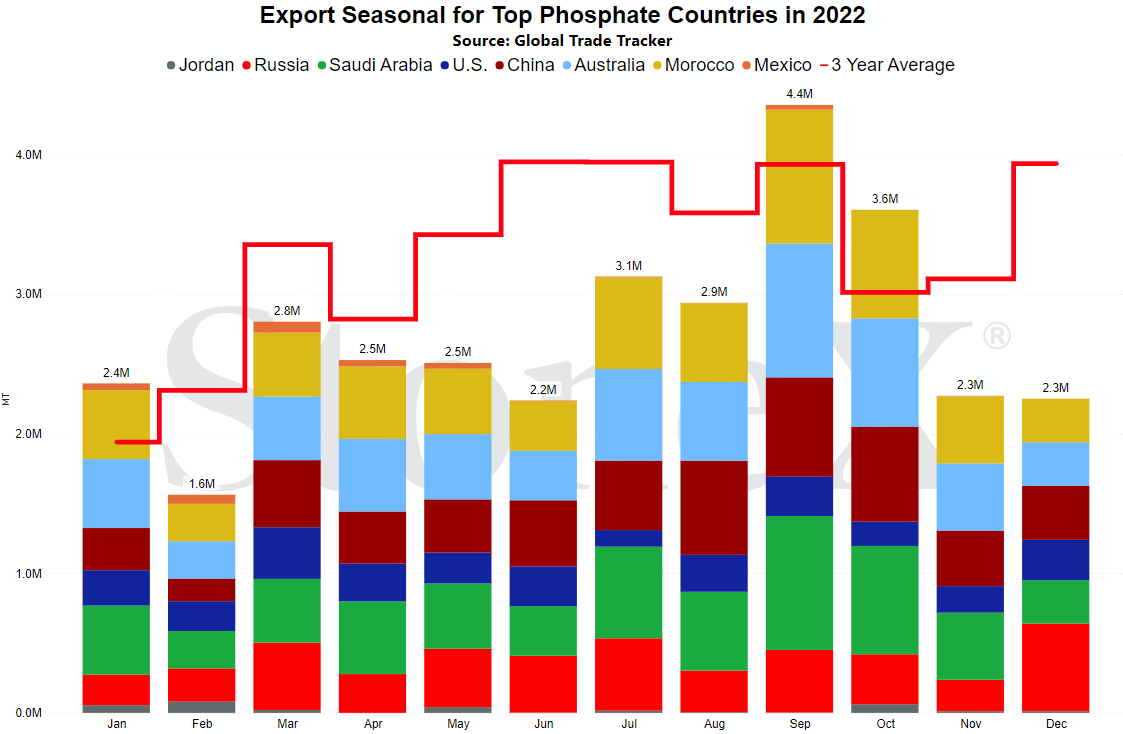
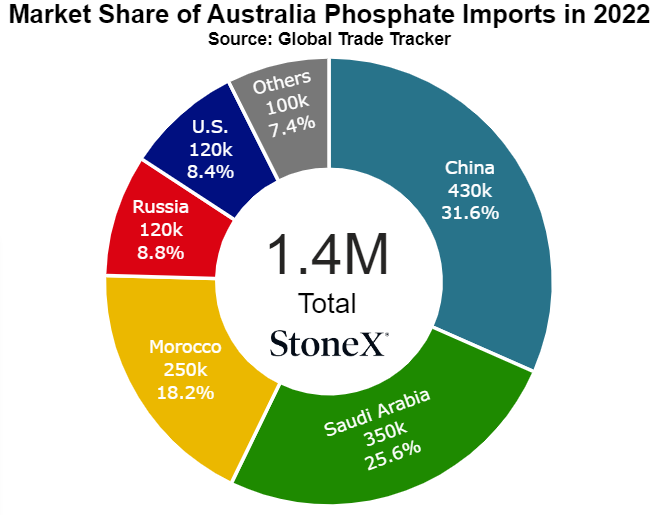
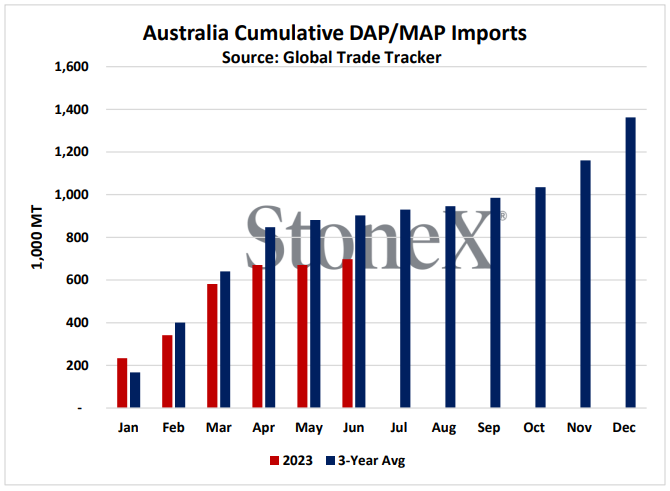
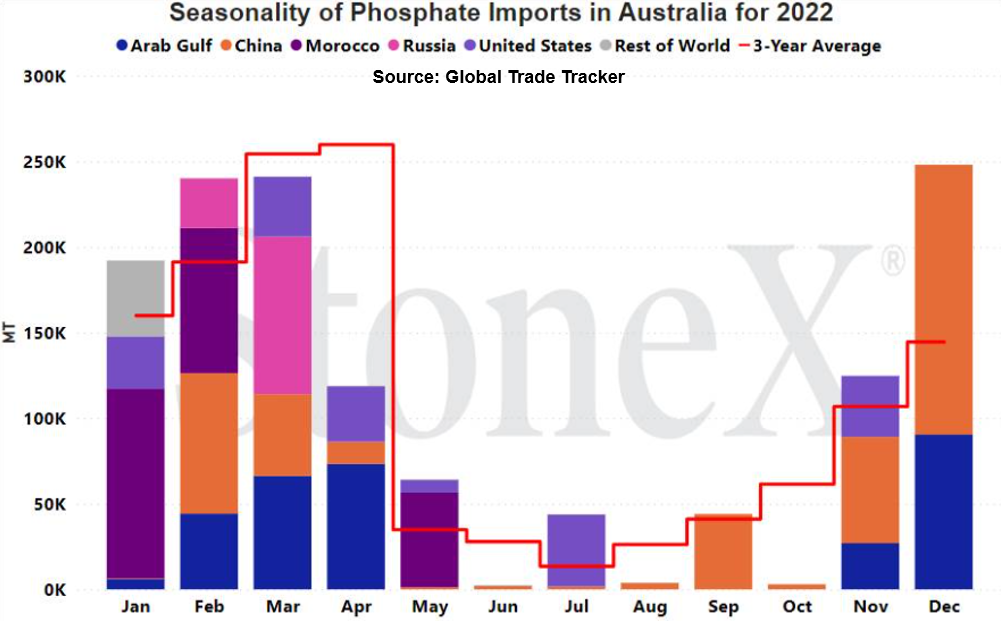
Chinese exports return to normal for April/May, June/July not looking good
A quick backstory.
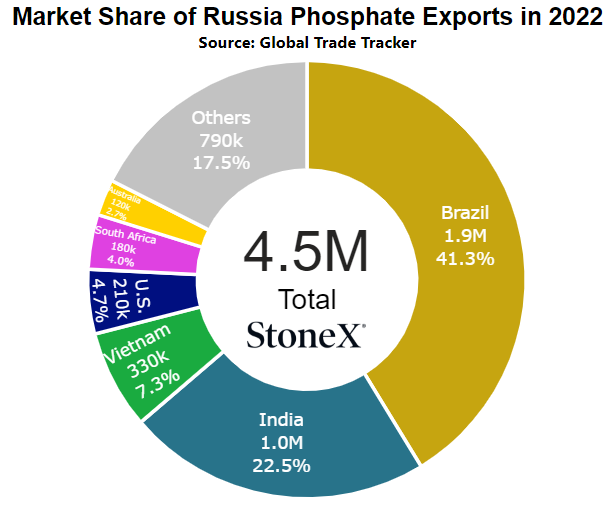
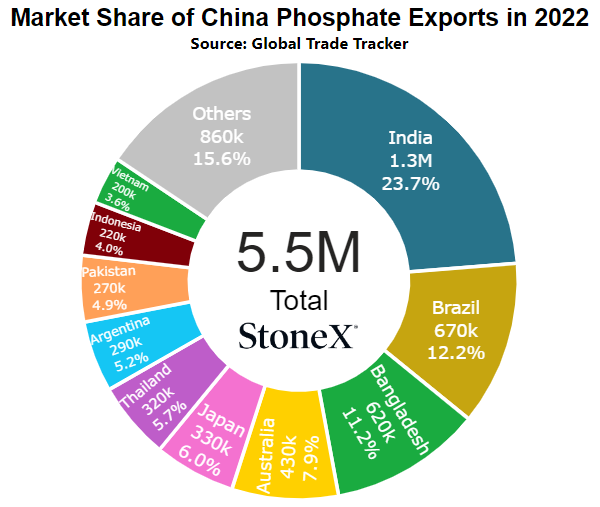
China has historically been the largest global manufacturer and exporter of DAP/MAP and it really wasn't a close 2nd place. However, when global values skyrocketed in 2021/22 and inventories got extremely tight, the Chinese government started to intervene to slow/stop exports. The concept was to keep more than enough tons at home for Chinese farmers as well as keep domestic values low. Unfortunately, both concepts worked as expected...and now they really like the play.
Recently, global inventories have normalized for the most part and global values have corrected...but the government of China continues to keep their fingers on the market which has global impacts.
There was cause for excitement. April/May trade data showed that Chinese exports were improving back to what has been considered normal. The hope was that if their exports normalized and the rest of the major 5 countries were normal, so to would global values normalize. To an extent, they did...until they didn't.
Now, there is a growing conversation that Chinese exports have slowed significantly in June and may do the same in July. As a result, global values have been showing strength once again. Buyers had been sitting on the sidelines, hoping for prices to continue to fall but now with a little turnaround, they are stepping forward. As is usually the case, manufacturers have been more than happy to capitalize on the situation.
Just as quick as China removed themselves, they could return and impact global price ideas once again. It wouldn't be the first time and it almost certainly wouldn't be the last.
The biggest issue in my book on this whole thing is that is shows just how unreliable China is in terms of a global partner/supplier. Many of their decisions are being made at the government level so trying to figure out what they are going to do from a logical POV is a wasted effort.
As we have been doing, we continue to look at phosphate from a reactive rather than an active approach...
Why does this matter for Australian farmers?
With China so close, what they do or do not do has very direct impacts on the Australian phosphate markets. Now today, it isn't likely to cause much of a difference. Phosphate application is all but done and Q1 '25 stands a very long way away. So much can happen between now and then but the tone of China will be watched by the world. If China cuts their exports and remains out of the market for several months, even if they come back before Q1, the world may remain in catch up mode which helps support values.
Solid global demand helping boost price ideas
One of the things that has shifted over the last few weeks is demand has returned. Now, some of that demand might be returning for fear of losing Chinese exports...which is fair. Some of that might have been just from the standpoint that one cannot wait forever.
There has been a battle brewing between Brazil and the U.S. for vessels. It is to be expected that NOLA values are significantly higher than the rest of the world. With import duties against 3 of the 5 largest global producers/exporters, U.S. import options are limited which creates tight inventories and bumped up values. While it doesn't happen constantly, it has become much more normal. What isn't expected is to see Brazil moving in kind. No such import duties exist for Brazil so global trade patterns remain normal...if not a bit better because of China/Russia/Morocco not being able to access the U.S. marketplace. Even still, Brazilian values have jumped to a premium with the U.S. and has created some competition.
Waiting in the wings is India. I'll save that story/outlook for the next section but effectively, they represent another buyer who should be coming soon.
All in all, global supplies have suffered due to Chinese exports being restricted and demand has climbed. That is a recipe that has resulted in a stronger than expected marketplace.
Why does this matter for Australian farmers?
Again, this only really matters if more phosphate was needed to be purchased to finish out the application season. By this point of the calendar, I assume most everything is here and priced. That should mean that those with any tons left unsold will want to stay aggressive to get them cleared. However, if there is enough of a boost to global price ideas, then that could drag domestic prices higher with it.
India struggling with need to purchase vs lack of subsidy support
The Indian fertilizer market operates a little differently than the rest of the world.
The government has a subsidy program in place that keeps domestic fertilizer prices low while also helping importers offset the high cost of purchases to bring in product. When it works, importers purchase fertilizer, bring it in, sell it to the system at a loss but make their money from the subsidy payment. It has worked for years...until it hasn't.
Earlier this year, the government (sensing weakness in the phosphate markets) slashed that subsidy rate. As a result, if importers were forced to bring in product, they would do so at a loss. It does not incentivize their purchasing, no doubt with the hope that if India (world's largest buyer) disappeared it would cause global values to plummet.
...the best laid plans...
The world has effectively moved on without them and put India in a tough spot. Domestic stockpiles are on the lower side. However, importers hands are tied with no changes to the subsidy. In fact, just recently one of the importers cancelled a 100K ton DAP purchase tender and literally stated it was due to inability to make money.
So what happens going forward?
One option is that the subsidy remains in place in the hopes that global values drop. With China removed, that does not look likely.
The other option is the government cries uncle and changes the program. In that case, there should be a surge of demand that very well may influence price ideas higher.
Either way, this will continue to be atop the heap of things I/we are watching for global phosphate.
Why does this matter for Australian farmers?
The question here is if India waits long enough to change their subsidy programs, will they still be in "catch up mode" by the time we need to start importing product? India is a beast that cannot refill in a short period. It takes a while for them to rebuild stockpiles. If they were to drag their feet 2 - 3 months, we could have a situation where they are "competition" with our importers. That gives manufacturers sales options which they really like...they really, really like.
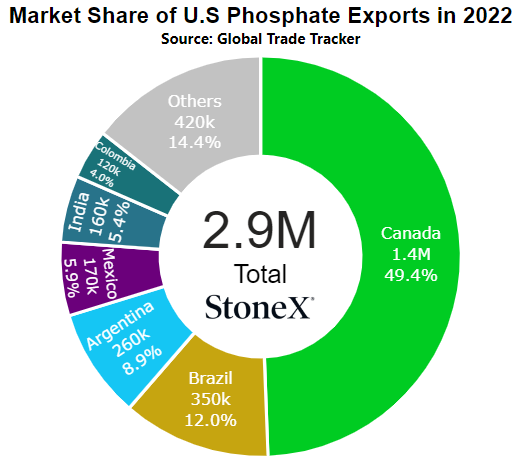
Price comparisons
Vs 30 days ago - 5% or approximately $25 higher
Vs 90 days ago - -4% or approximately $25 lower
Vs 6 months ago - -6% or approximately $35 lower
Vs 1 year ago - 21% or approximately $95 higher
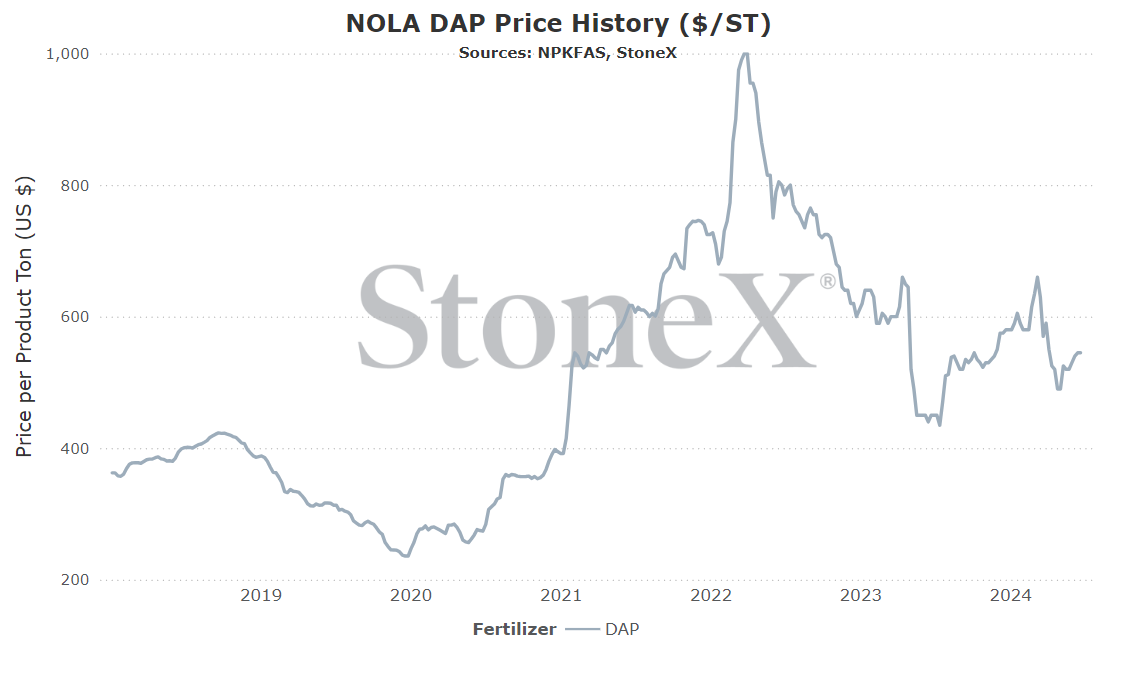
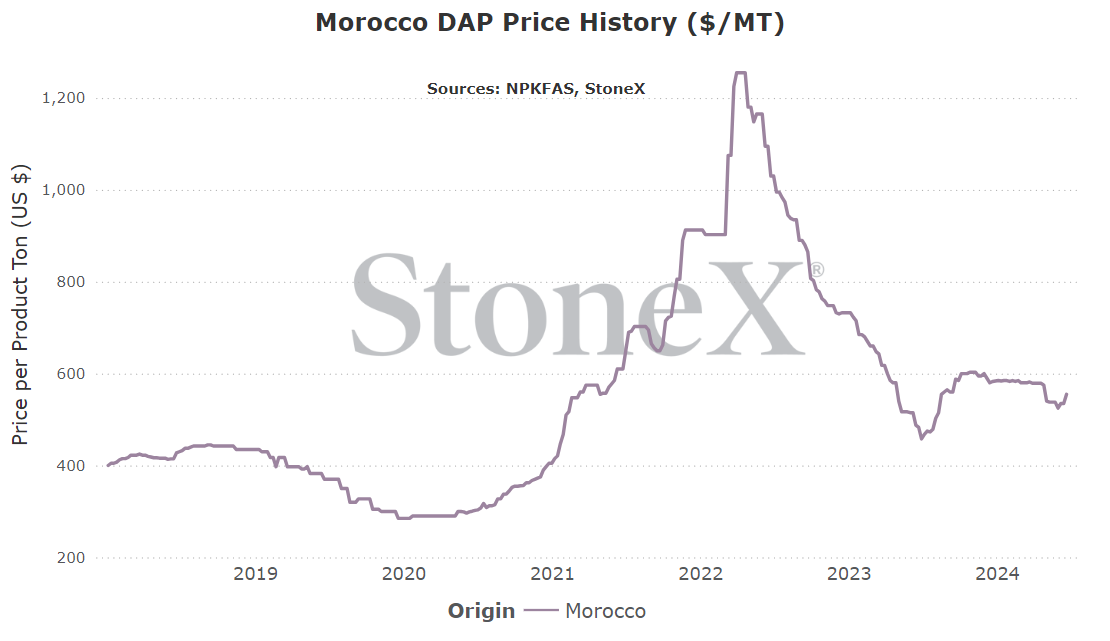
Morocco DAP price comparison
Number 1 global exporter in 2022
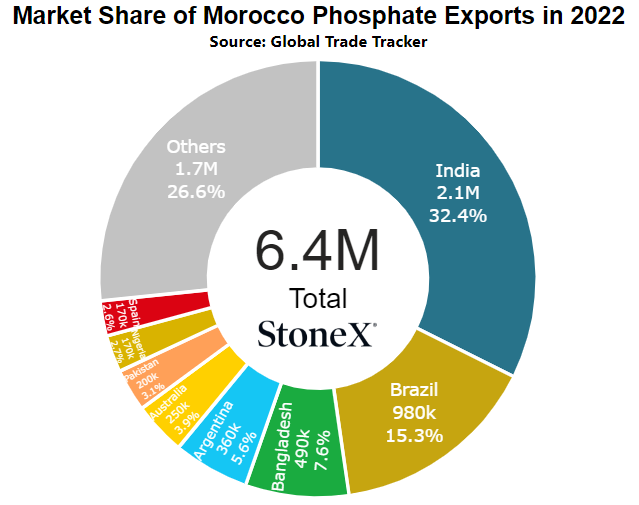
Price comparisons:
Vs 30 days ago - 3% or approximately $18 higher
Vs 90 days ago - -5% or approximately $27 lower
Vs 6 months ago - -5% or approximately $28 lower
Vs 1 year ago - 15% or approximately $73 higher
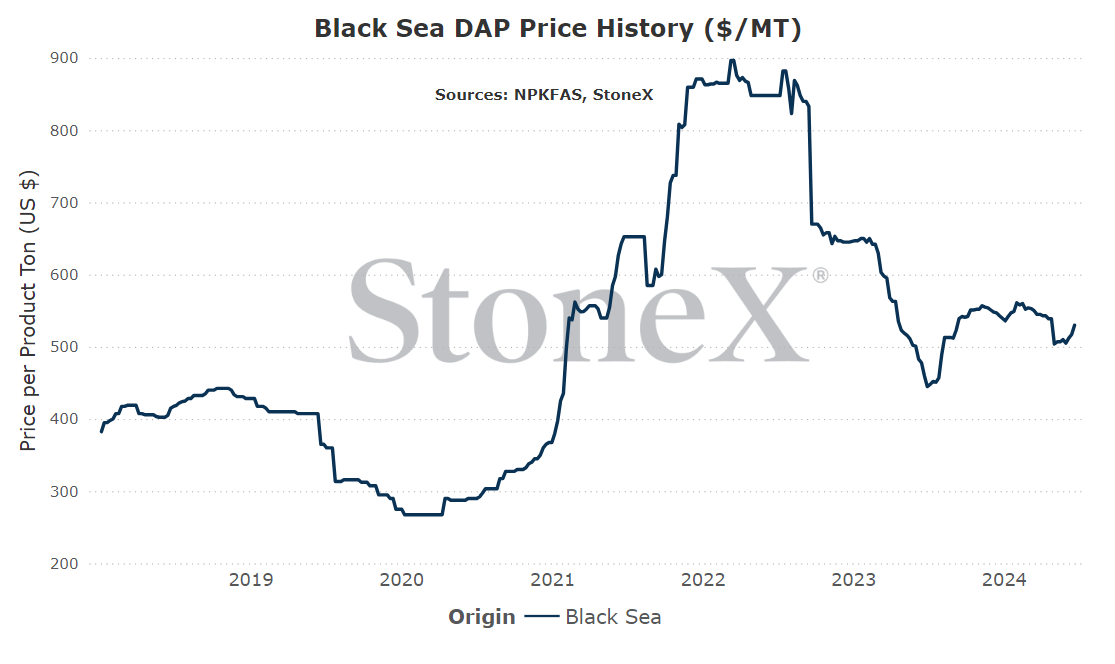
Black Sea DAP price comparison
Number 3 exporter of DAP/MAP in 2022
Price comparisons
Vs 30 days ago - 4% or approximately $20 higher
Vs 90 days ago - -3% or approximately $15 lower
Vs 6 months ago - -2% or approximately $13 lower
Vs 1 year ago - 15% or approximately $70 higher
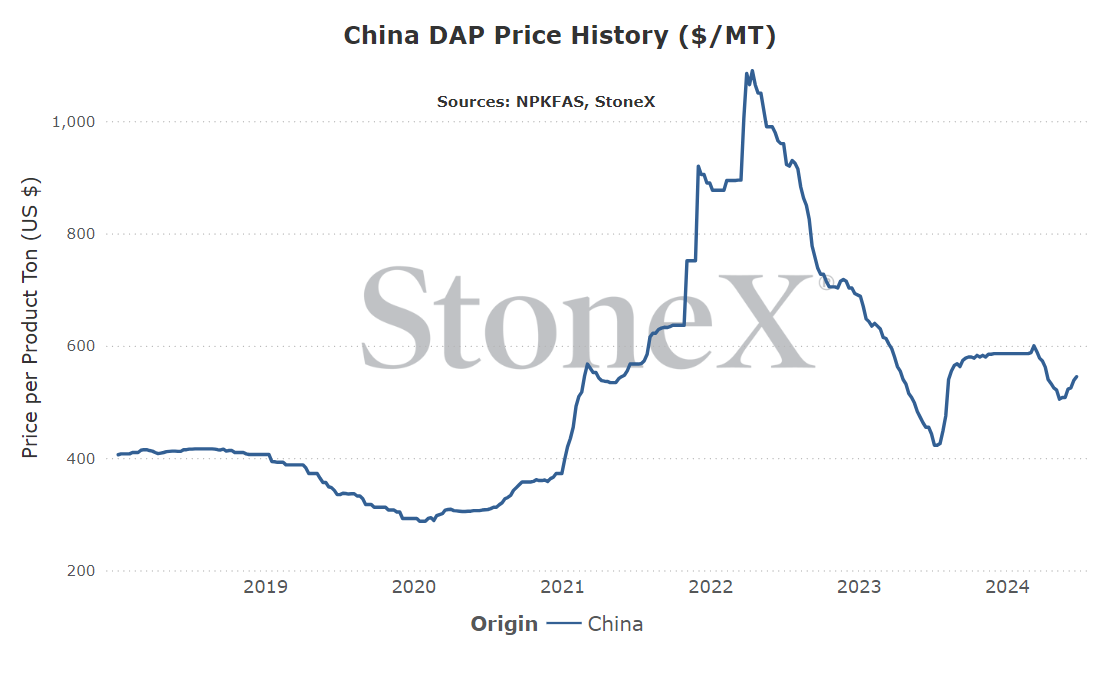
China DAP price comparison
Number 2 global exporter in 2022
Price comparisons
Vs 30 days ago - 7% or approximately $38 higher
Vs 90 days ago - -6% or approximately $33 lower
Vs 6 months ago - -7% or approximately $41 lower
Vs 1 year ago - 20% or approximately $90 higher
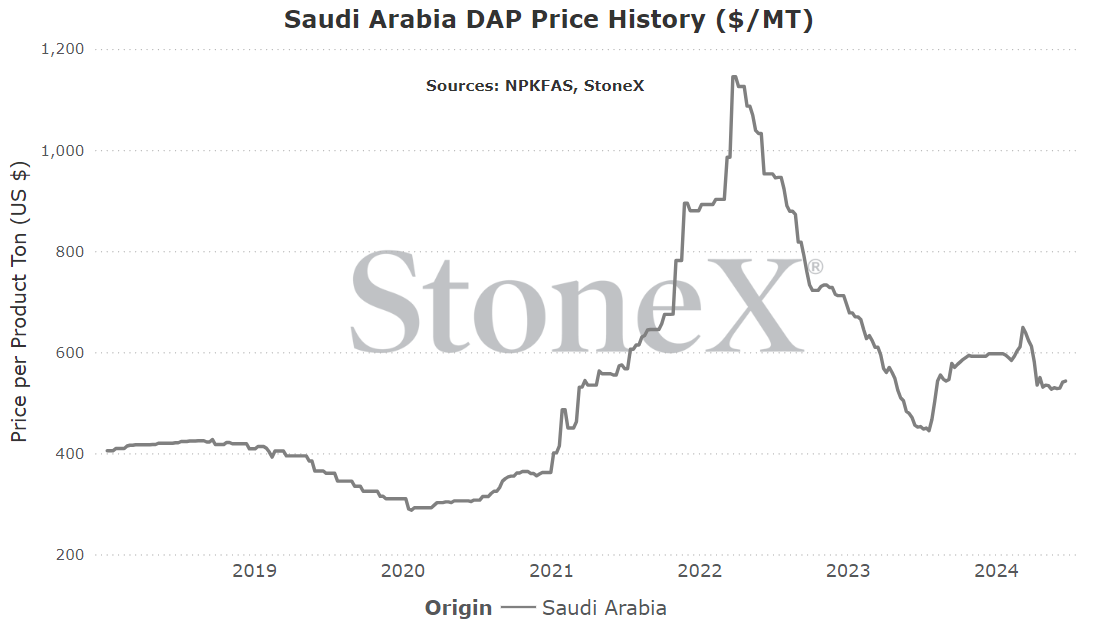
Saudi Arabia DAP price comparison
Number 4 global exporter in 2022
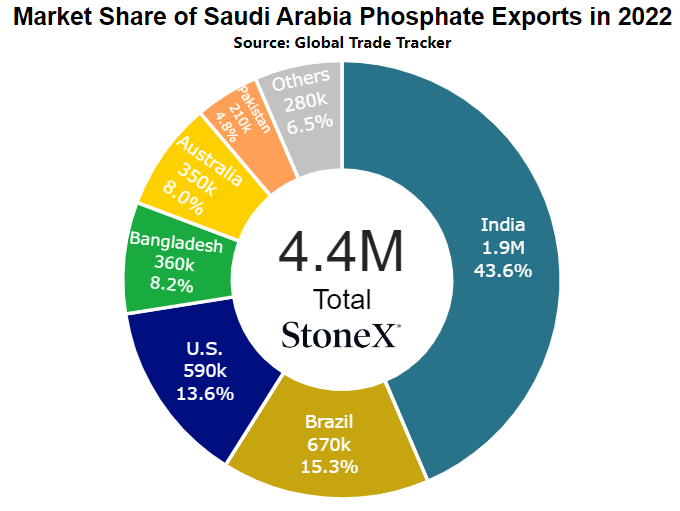
Price comparisons
Vs 30 days ago - 2% or approximately $13 higher
Vs 90 days ago - -13% or approximately $81 lower
Vs 6 months ago - -9% or approximately $55 lower
Vs 1 year ago - 20% or approximately $91 higher
- China has pulled back on exports – this is easily the biggest bull factor out there, in my opinion. They have historically been the largest producer and exporter of DAP/MAP in the world. Their export slowdown has affected phosphate values around the world. As they unexpectedly pulled back in June (after a couple very good months), the world saw values firm. If China continues to pull back on exports going forward, it will keep the world market firm.
- India returns to being a buyer - this could have a big impact on global prices, especially if it happens at the same time that China is removed from the market. If their inventory levels are as low as we understand them to be, they have a lot of work to do...and manufacturers around the world will squeal with delight.
- China can resume exports in a hurry – we have seen it before. China can go from all to nothing to all once again in nothing flat. The biggest problem is that we never know. Right now, the world is reeling from their export slow down. If later July/August we started to see them return, perhaps that could cause global values to fall.
- Global grain values fall further, killing some demand along the way - while there is an argument to be made that phosphate demand cannot fall significantly for fear of hurting yields, those folks have never been around a scorned farmer. Farmers around the world are struggling with lower grain prices. Typically, that means having to cut input costs where possible. Phosphate is very much on that list today for many. If enough join in, the demand cut could be large enough to impact the markets.
We believe that only looking at the flat price of either grains or fertilizer can be misleading:
-
Only selling grain can hurt you if fertilizer prices rise substantially
-
Only buying fertilizer can hurt you if grain prices fall
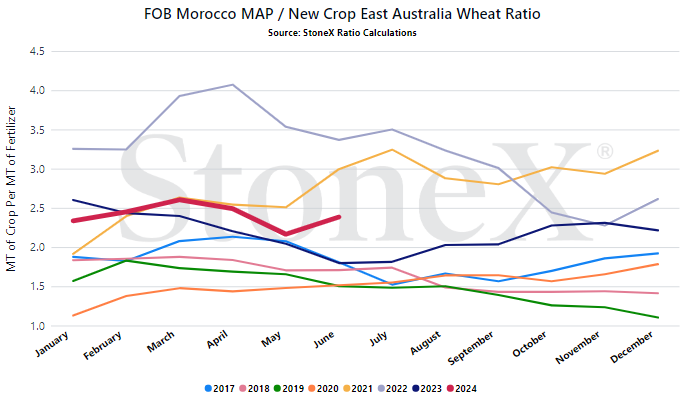
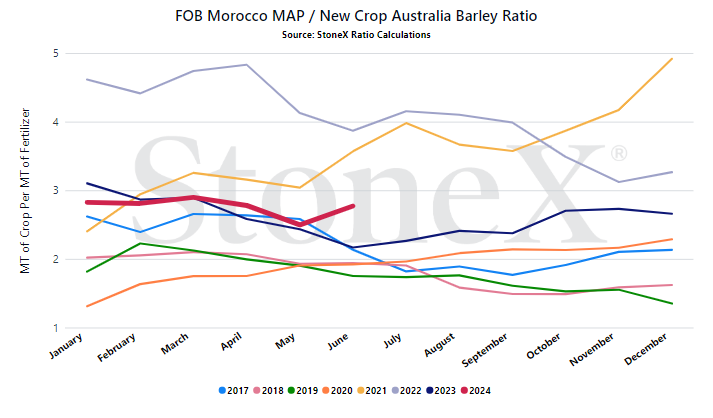
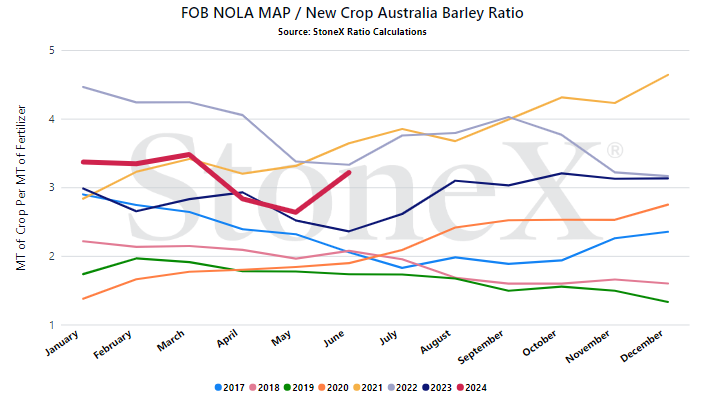
We look at the ratio "value" to get a better indication of where we are or how many bushels of X does it take to pay for 1 ton of fertilizer.
Would you rather:
-
Spend 4 ton of grain to pay for 1 ton of MAP
-
Spend 1.5 ton of grain to pay for 1 ton of MAP
When we compare the current ratio value against recent years, we start to see if we are high or low.
YOUR VALUES MAY LOOK DIFFERENT
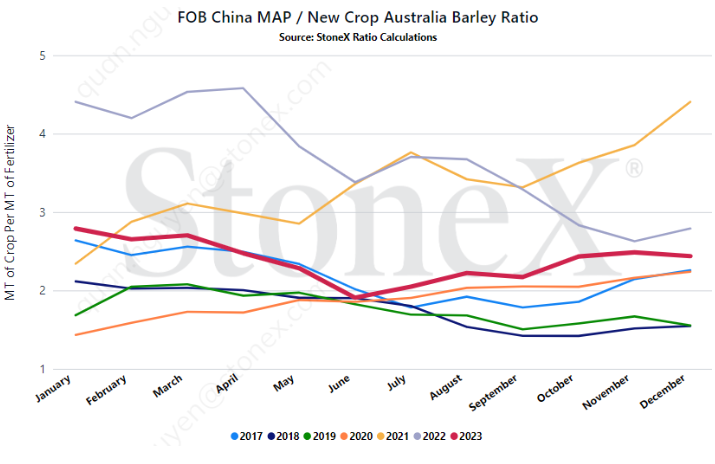
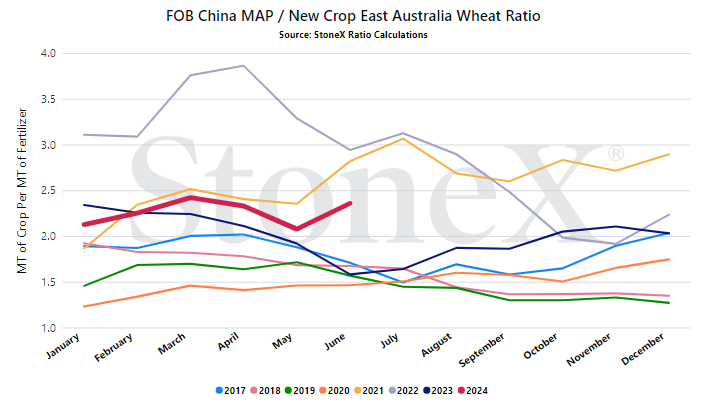
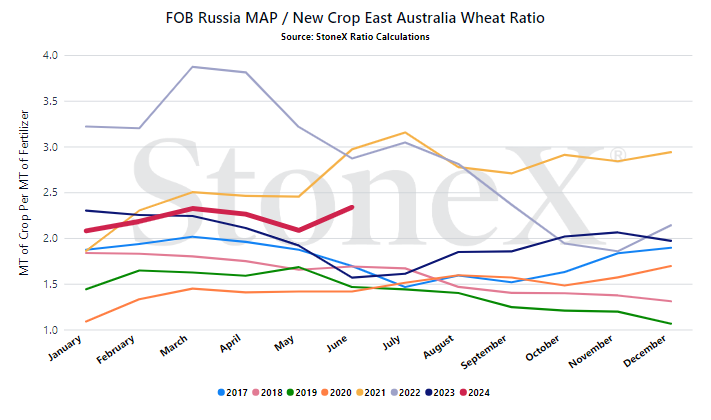
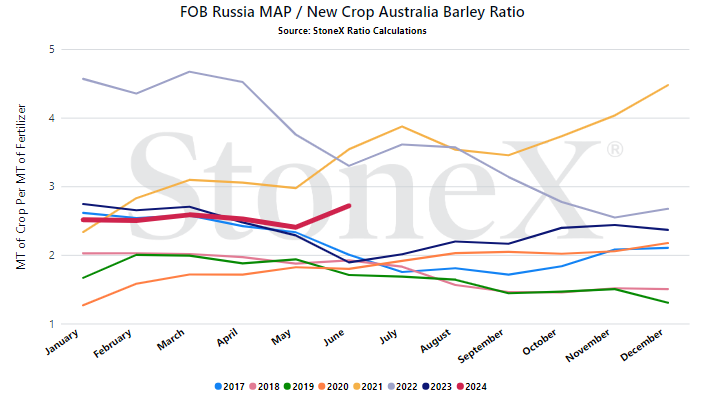
- Chinese exports - EASILY number 1 on this list. Their return/removal from the export marketplace can and usually does cause the the market to turn bullish/bearish. Right now, they have mostly exited the export space and values are firm. If they return in a big way, we could see the market turn...if it is early enough.
- India purchasing patterns - India is the world's largest buyer and is in a bad spot. It sounds as though domestic stockpiles are lower than normal and current government subsidy programs are not allowing importers to bring in product. Eventually something has to give. Either global values fall so they can import or the government changes their program. My money is on the government changing. If India suddenly becomes a hot buyer, watch out.
- Looming demand/demand destruction - again, not a huge percentage move but sometimes small percentages cause big changes in the market. Farmers are likely going to be looking for places to cut inputs this year/next year. If looking at some of the worst relationships, phosphate should be at the very front of the line with a lot of space between it and the next in line.
StoneX Ratio Calculation
The ratio calculation is derived from Bloomberg historical grains values as well as fertilizer values from StoneX, NPKFAS, and Argus.
The calculation is simply dividing the fertilizer price by each grain price.
All data was sourced from StoneX unless otherwise noted.