Global
The world continues to sit and watch for news of the India and China annual contract announcement as it should give better insight into manufacturers willingness to negotiate.
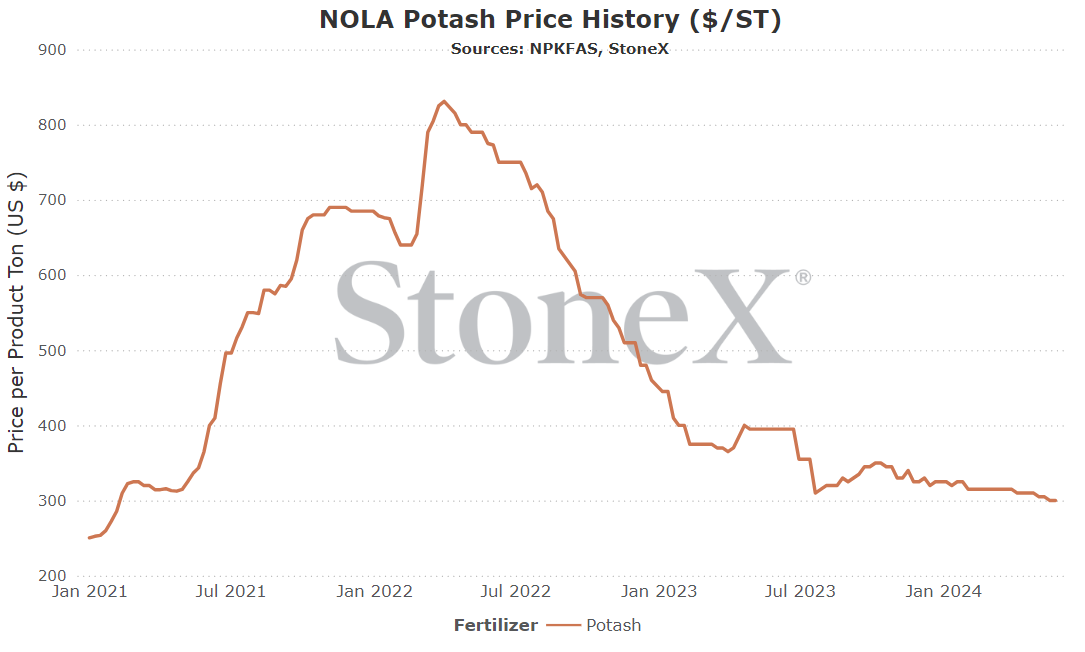
That said, while I remain bearish going forward, my POV is not hugely bearish. Potash manufacturers/market has remained relatively flat since dropping from their 2022 high's (unlike most other fertilizers). Because potash never saw prices rebound, there really isn't much need to drop substantially...
...however, seeing a bit more of a dip to get in line with grain prices and to help bring summer fill buyers forward wouldn't hurt!!!
North America
Like the global outlook, we are watching North American markets with an eye on India and China.
Ultimately, we are still expecting to see a slight price slide as manufacturers roll out summer fill programs. Current values are decent vs grains, but not great. In addition, high interest rates do add an expense line that most have not had to consider for a while. To get buyers off high center, a slight drop in price ($25 - $40) would help alleviate costs/fears and get the market moving again.
Possible Canadian rail strike being watched closely by potash
Unfortunately, a possible Canadian rail strike continues to make its way into the news.
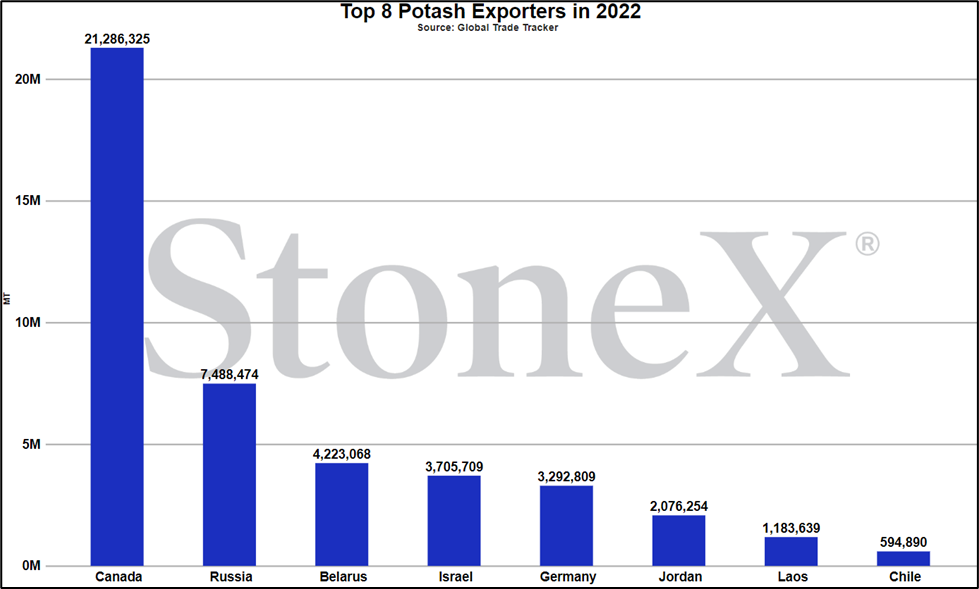
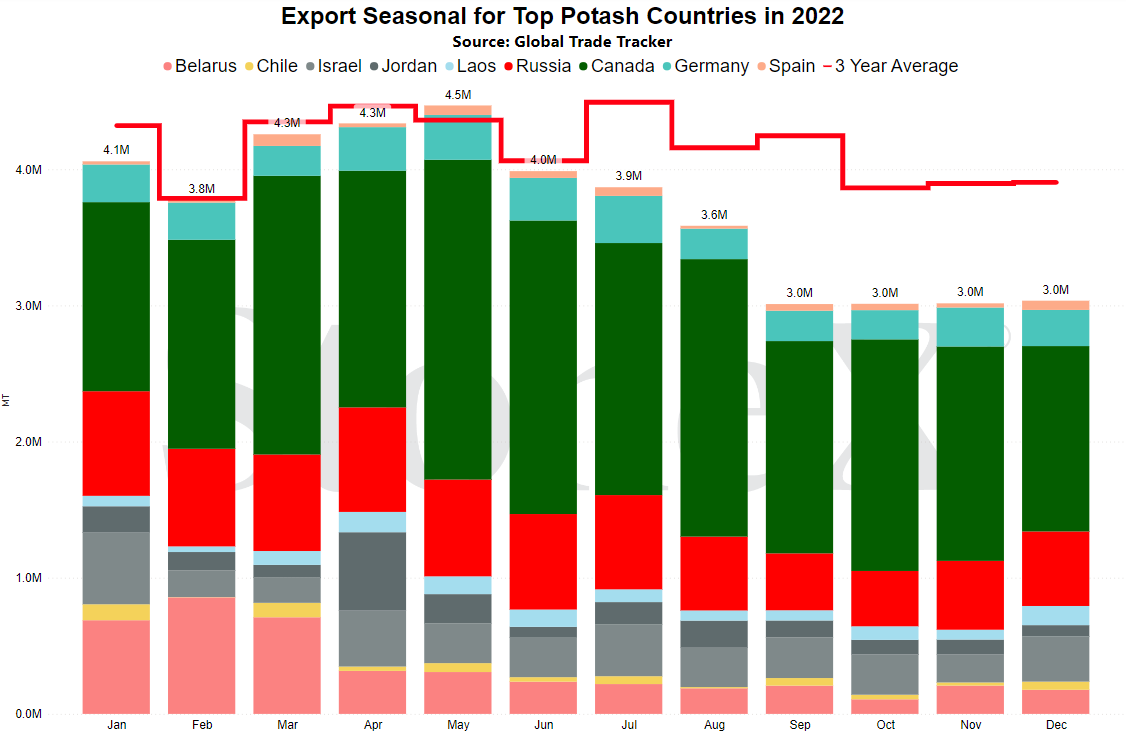
For those unaware, Canadian potash production is HIGHLY dependent on rail to move its product either across North America or to ports which ship around the world.
Now, to be fair, I am not expecting to see an actual long term strike. From the outside looking in, it appears that both sides are fully aware of how important rail is to Canada as a whole. I think that alone is enough to keep both sides from using the nuclear option. Hopefully that will mean that both sides are able to find an agreement that works for all involved.
Even if it does suddenly start to fall apart and take a step toward an actual work stoppage, it would be interesting to see if the Canadian government would "allow" it. Have to believe that the government would step in to find a solution and keep rail cars moving.
Now, what happens if the strike happens and shipments stop?
Fortunately, we are in about the perfect time of year for that to happen. There is still 5 months before we get to fall application so the market does have some wiggle room on shipments. If this was happening over winter or in September/October, it is a different story with time to season running out. However, even though today would be the optimal time of the year for it to happen, it would still have an impact. N.A. just had a solid fall/spring application season that should have left inventories relatively low. That means more work to get refilled for fall.
Again, I want to leave with this point. I do not think this is a story that plays out, but want to point it out just in case that it does.
No word on N.A. summer fill programs for now
With phosphate summer fill programs starting to get announced last Friday (before Memorial Day), some have been speculating that potash will be very close behind. I cannot argue that logic, but we have not seen nor heard anything today.
In terms of what I expect to see, I would say we see prices flat to maybe a little cheaper than today.
"Why would prices be flat? That is crap. It is almost always discounted."
If that is going thru your head, you are absolutely right...but to me, this year is different.
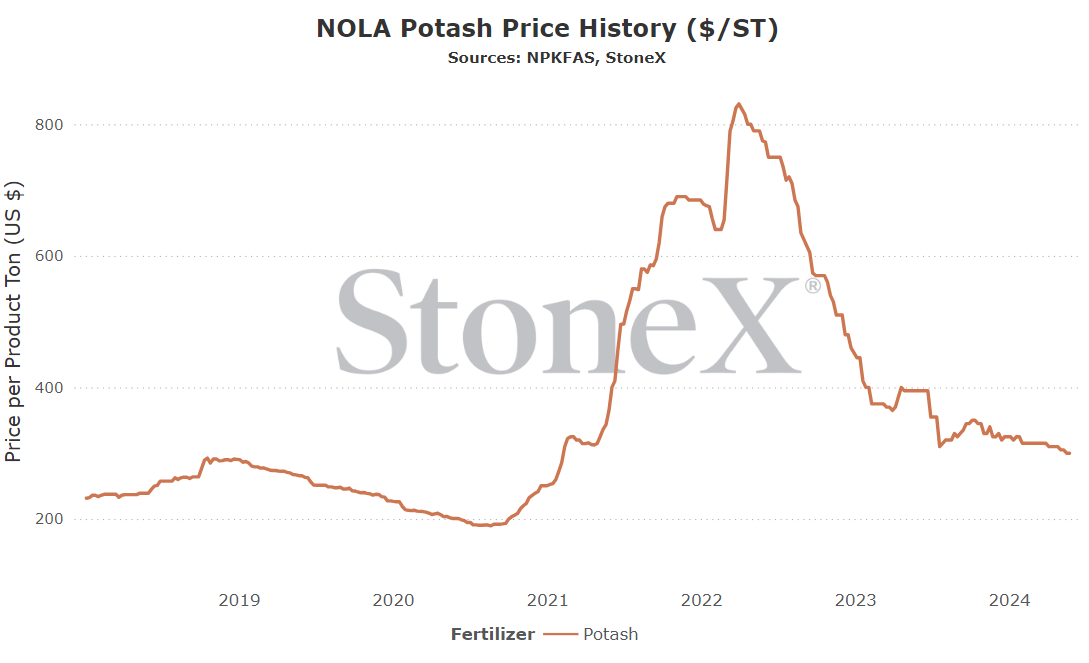
Once the fall from 2022 high's were complete, many other fertilizer prices started to rebound, but potash didn't. When N.A. had a huge fall run that emptied the system, potash prices remained flat. When N.A. had a short winter and then a very good spring run, potash prices remained flat. All during this time, the price stayed flat and relatively well priced vs grains. Because of that, from this POV, there just isn't much of a need to drop prices further.
Now, on the flip side, manufacturers will need to convince buyers to step forward. First, the conversation about interest will need to be had. With rates up, this is a real cost that hasn't needed discussion in recent years. Buyers will want a discount to offset that cost. Then, the lackadaisical nature of potash will likely mean a lackadaisical buyer. "Why should I purchase now when prices have done relatively nothing. I can sit back and wait with little fear of things changing." If this becomes a discussion point, then it is another reason to drop prices slightly. Just enough to make the buyer feel like they are getting something worthwhile.
Again, all of this will have to wait and see what actually gets offered to the market.
NOLA/New Orleans Louisiana
Vs 30 days ago - -3% or approximately $10 lower
Vs 90 days ago - -5% or approximately $15 lower
Vs 6 months ago - -8% or approximately $25 lower
Vs 1 year ago - -24% or approximately $95 lower
U.S. Midwest Average (average of several points across the Midwest)
Vs 30 days ago - unchanged vs last month
Vs 90 days ago - -4% or approximately $16 lower
Vs 6 months ago - -12% or approximately $51 lower
Vs 1 year ago - -17% or approximately $78 lower
- Potash prices never rallied like other fertilizers – unlike literally every other fertilizer out there, when potash values dropped from their 2022 high's, they didn't bounce higher. They dropped to an attractive value and since then have stayed very quiet. Buyers seem to be content with the pricing so it does paint a picture where any downside price potential is rough, leaving more upside.
- Canadian rail strike could impact logistics - again, I am not expecting to see the strike threats actually impacting rail logistics. In the end, I am hopeful that both sides will come together with a contract that keeps both sides healthy. However, if negotiations fall apart and the government does not step in to block work stoppages, then potash shipments would be hugely impacted. In that scenario, if it has any length at all, it could easily impact the potash market.
- Manufacturers could start curtailing production further – right now, I know of only one manufacturer who has curtailed production at one mine facility. However, it is not outside the realm of possibilities to think that other manufacturers might do the same. Especially if they roll out fill programs and demand is lackluster. If this happens, it will tighten supplies enough to impact price ideas.
- Buyers will not be motivated if prices stay flat – "potash prices have been relatively flat for months. Interest rates are high so the earlier I buy the higher the cost. Why would I buy it today?" This is likely going to go thru the head of almost every buyer out there if summer fill programs remain flat priced. In my opinion, the best option for manufacturers is to drop the price slightly ($25 - $40) to "get the ball rolling". Whether they do or not remains to be seen.
- Current and coming production more than sufficient for demand - our outlook for global potash is one that stretches from well supplied to almost over supplied if expanded and new production comes online in the coming years. That outlook is likely to continue to weigh on the market. If the market feels well supplied today and there is a lot more coming, it doesn't put you in a mood to want to buy.
- Belarus likely still working to resume exports – global values have remain well priced and flat for the last several months...and the last several months have continued without Belarus playing as big a role as usual. If they are continuing to work on new logistical routes thru Russia and they are eventually successful, the world is going to see a big influx of supply.
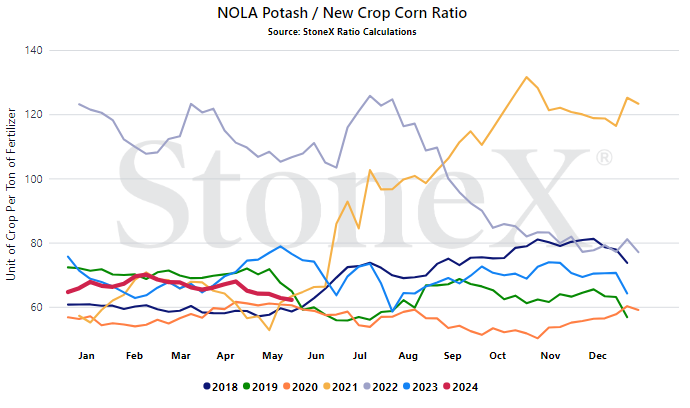
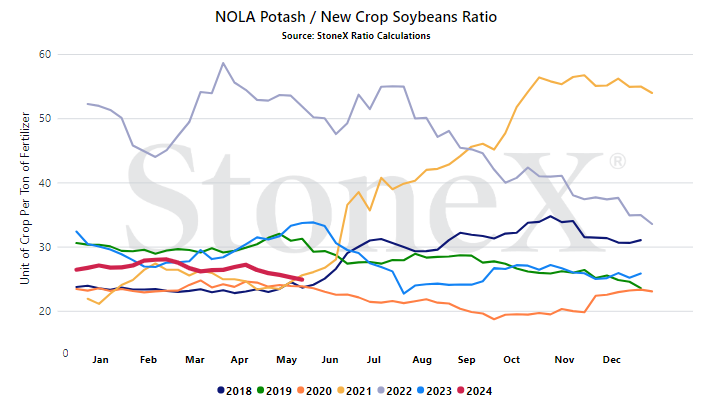
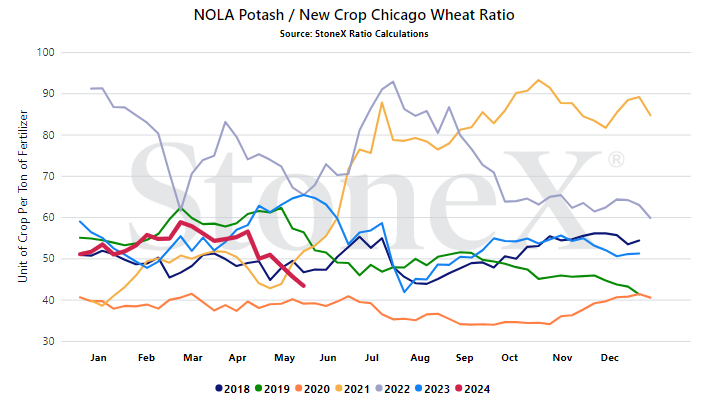
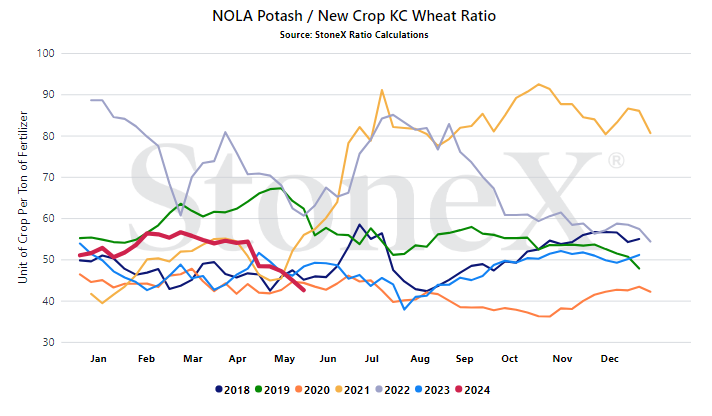
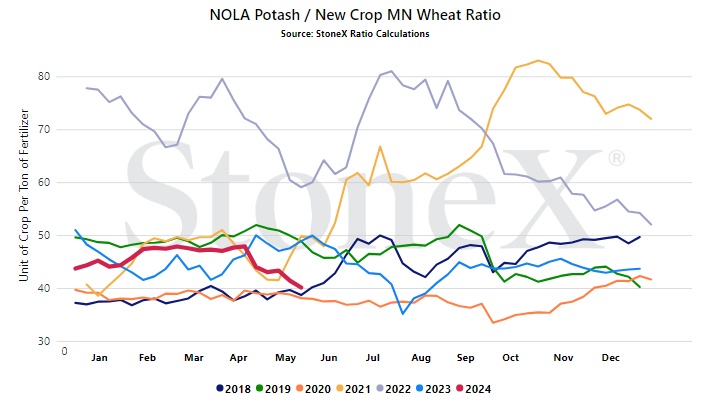
Where are the current potash/grain ratio values today
We believe that only looking at the flat price of either grains or fertilizer can be misleading:
-
Only selling grain can hurt you if fertilizer prices rise substantially
-
Only buying fertilizer can hurt you if grain prices fall
We look at the ratio "value" to get a better indication of where we are or how many bushels of X does it take to pay for 1 ton of fertilizer.
Would you rather:
-
Spend 120 bushels to pay for 1 ton of potash
-
Spend 60 bushels to pay for 1 ton of potash
When we compare the current ratio value against recent years, we start to see if we are high or low.
YOUR VALUES MAY LOOK DIFFERENT
This graph looks at the NOLA potash price vs the flat grain price. There are no logistics on either product. Your location will look different due to fertilizer logistical costs, grain basis, etc.
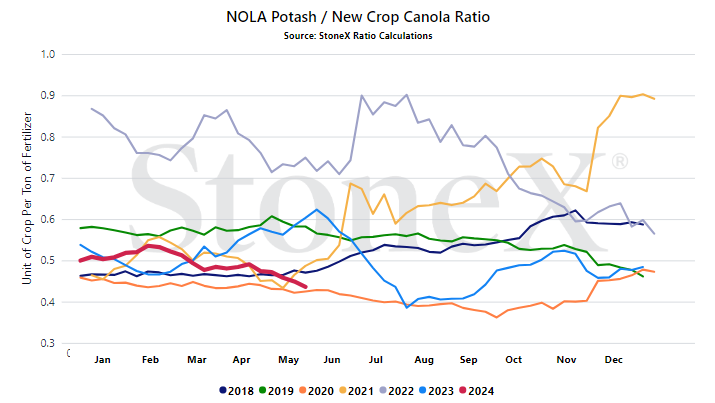
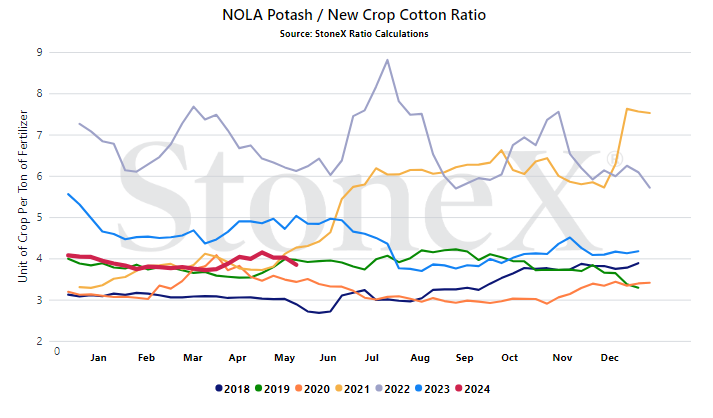
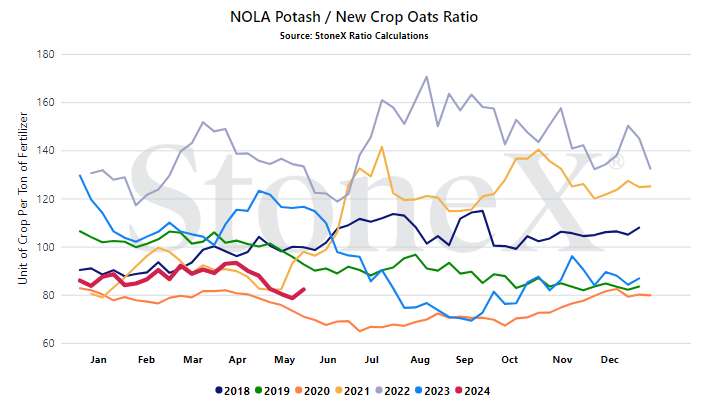
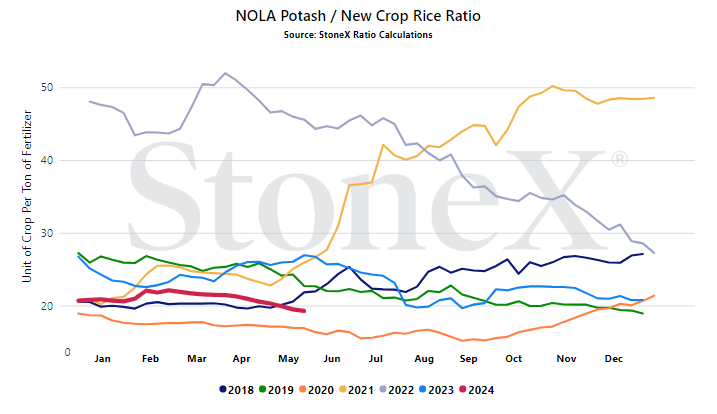
- Canadian rail strike - while I doubt that the strike threats will result in actual work stoppage (all parties involved seem to understand the importance of continued rail movement for Canada as a whole), the chance is not zero. If we were to see these threats become reality, it could cause serious harm for the potash market.
- How manufacturers approach summer fill programs - potash values never rallied like other fertilizer prices did. It's value dropped and then has stayed very steady. As a result, there is not much need for prices to fall substantially. It is already well priced. However, that flat price could cause buyers to become complacent and drag their feet on purchases. As a result, manufacturers "should" roll out something slightly more aggressive to offset interest costs and make the buyers feel good. Whether or not they do that, time will tell.
StoneX Ratio Calculation
The ratio calculation is derived from Bloomberg historical grains values as well as fertilizer values from StoneX, NPKFAS, and Argus.
The calculation is simply dividing the fertilizer price by each grain price.
All data was sourced from StoneX unless otherwise noted.