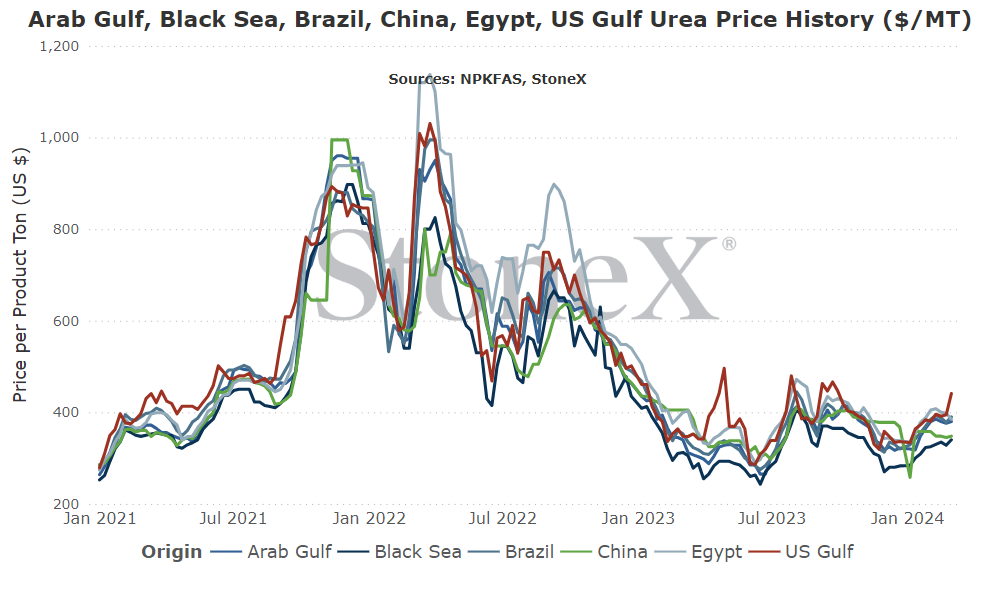
There has been a lot more bullishness to start 2024 than I expected. However, every dollar higher is just another reset dollar on the other side. While it may not feel like it, the slow demand period of summer is coming quickly. For the last month, sales have been relatively quiet.
Over the next month or two, I expect to see a little more push higher in global values before the slide to summer begins.
I realize that is a very wide ranged answer from a timing standpoint. If I knew the timing exact, I would be doing a different job with more zero's on the paycheck! All in all, short term feels slight bullish but longer tear feels bearish.
Ending on a better note, the news that China is returning to the export market is a big win for Aussie farmers. It allows importers to wait just a little longer to pull the trigger on purchases. China's proximity gives that ability and comfort level.
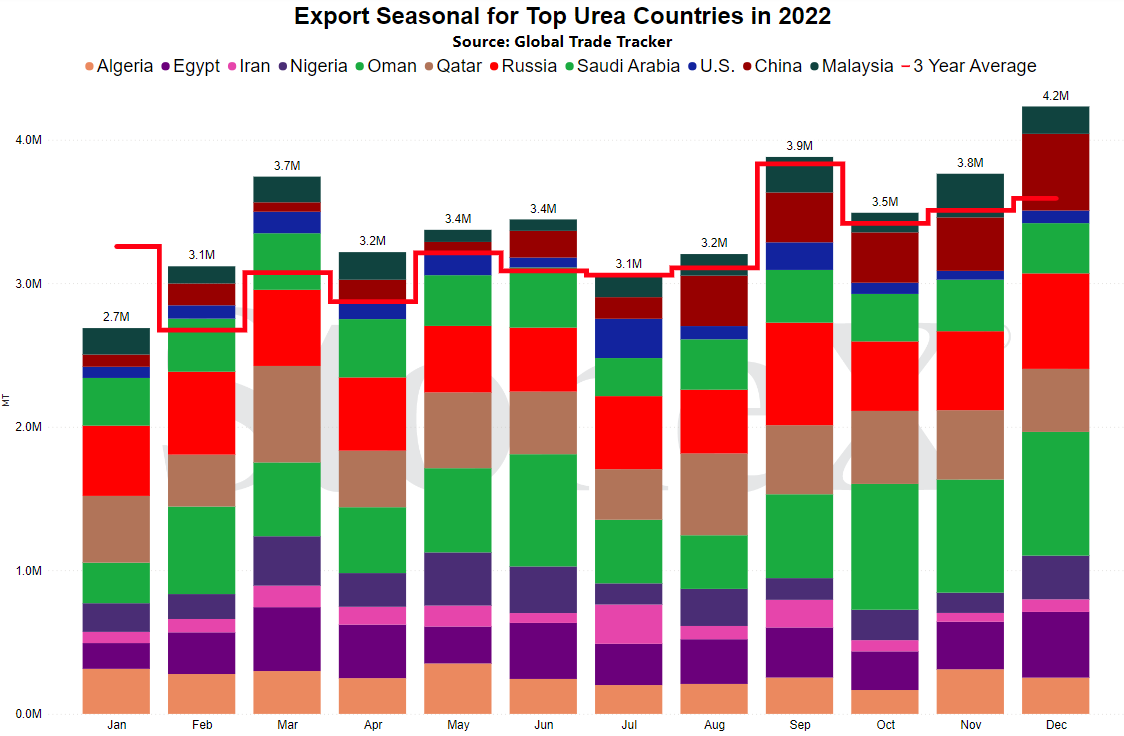
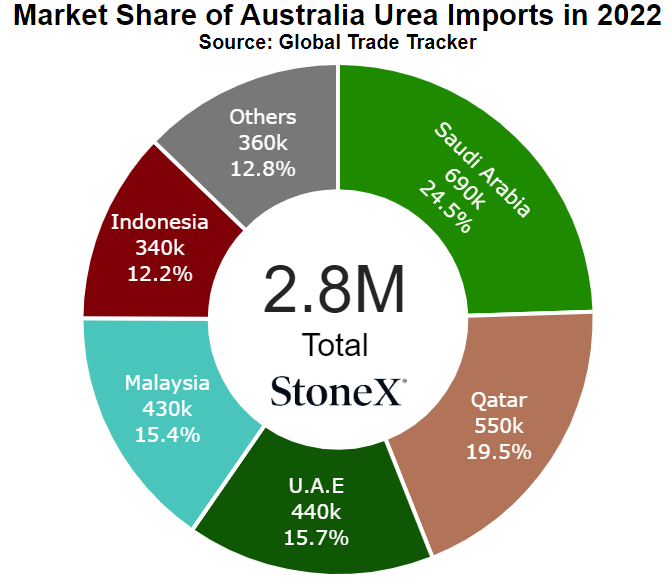
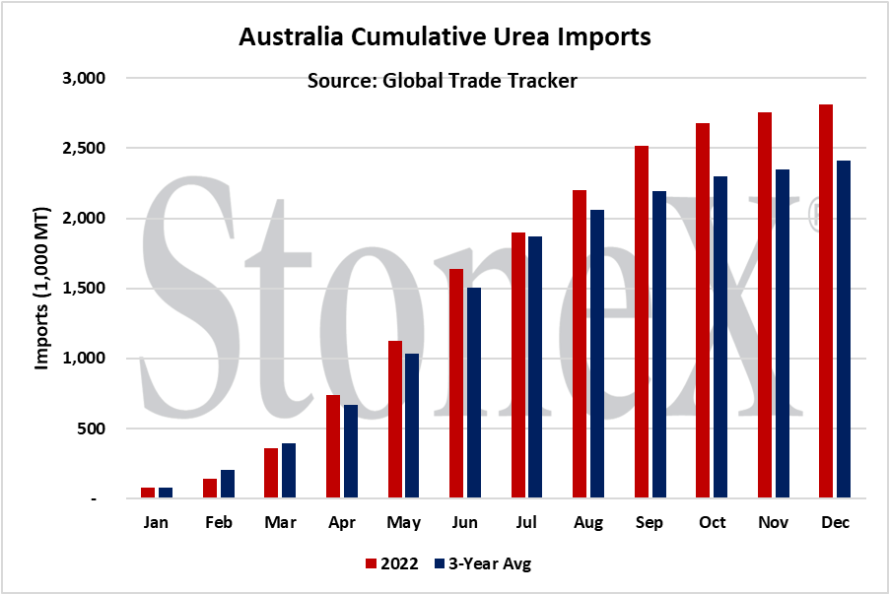
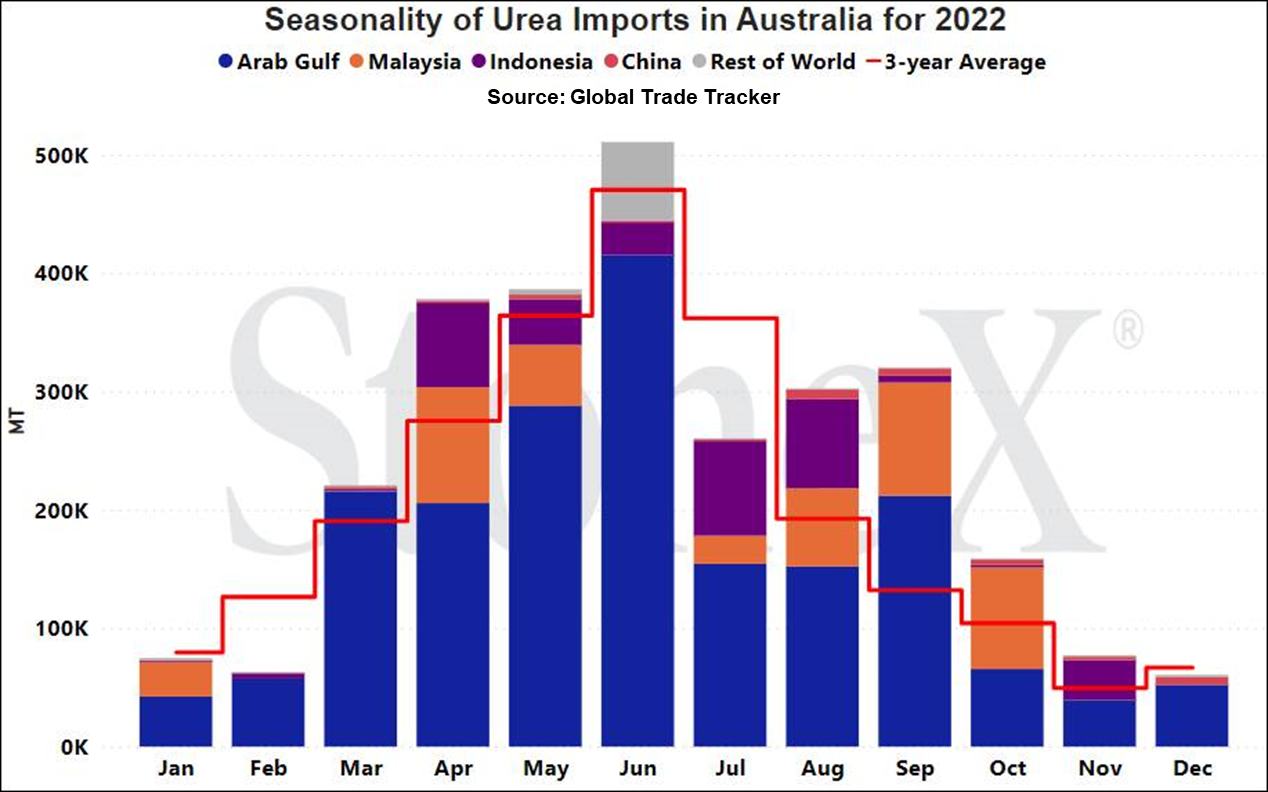
Global demand goes quiet, but values hold
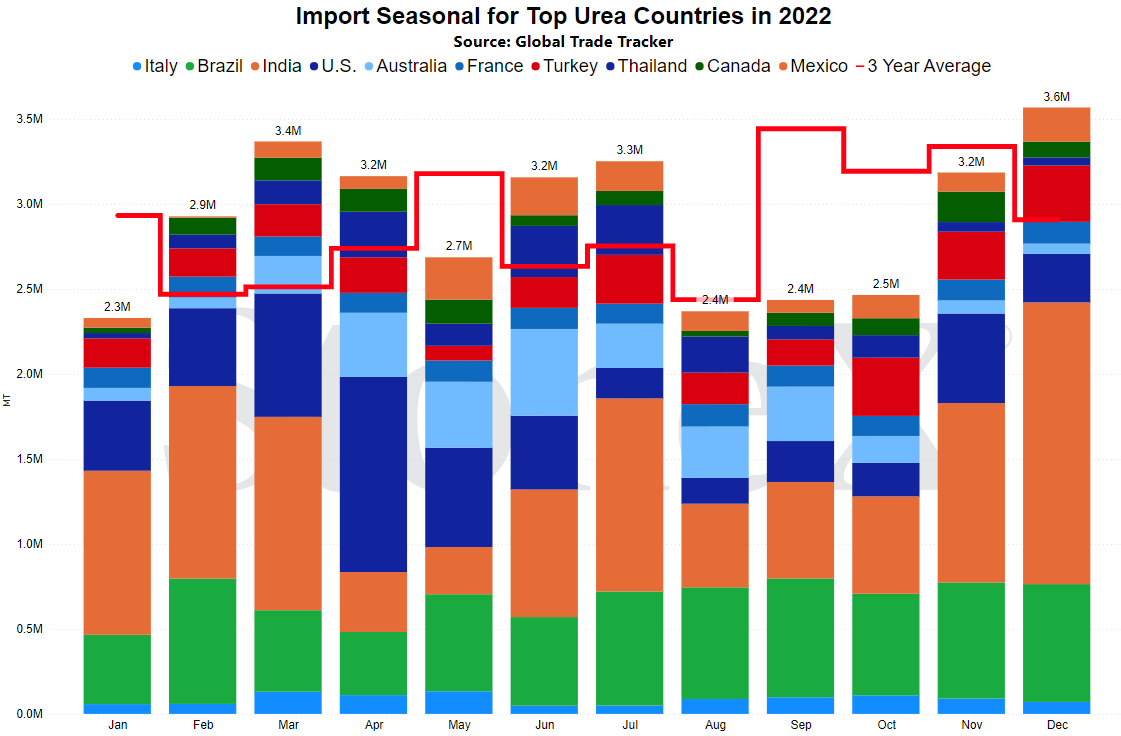
In the last month, global reports of sales have gone relatively quiet. At least in comparison to the month prior. Part of this is due to the hectic sales pace that was set before. Many manufacturers around the world were happy to report being well sold into and thru February. If production is sold, new sales are really not needed.
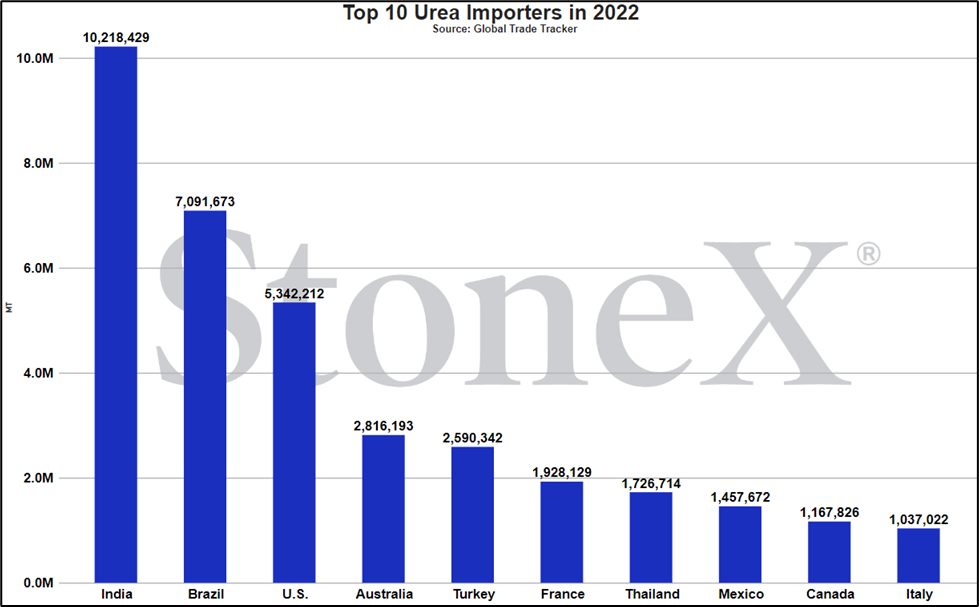
However, now we are in March. I didn't hear/see many reports that folks were sold into this month...and new sales are still tough to find. The biggest fish in the sea, India, doesn't sound like they are in a hurry to come forward. Their new production has been doing a great job of running and their imports have been solid. That means they are not forced to step forward until they absolutely have to.
Could this change? Of course. We have seen it many times but every day that passes like this builds the tension of the market. Eventually, that tension makes a company break...for buyers hopefully with lower values to bring demand forward.
Why does this impact Australian farmers?
With Australia urea season coming, what happens with the world should happen with Australian pricing. If we were to see global values under pressure, likely that gets passed along...hopefully get passed along.
Chinese export restrictions being loosened!!
This is a big win for Aussie farmers! When China removed themselves from the export market, it meant that Asia/Australia had to look for alternative sources. That breeds more competition and higher pricing. Now that it looks like China is returning, it should lower tensions and bring a nearby exporter back to the fold.
Starting to hear reports that the Chinese government is taking a page out of its phosphate book and is starting to loosen export restrictions on urea!
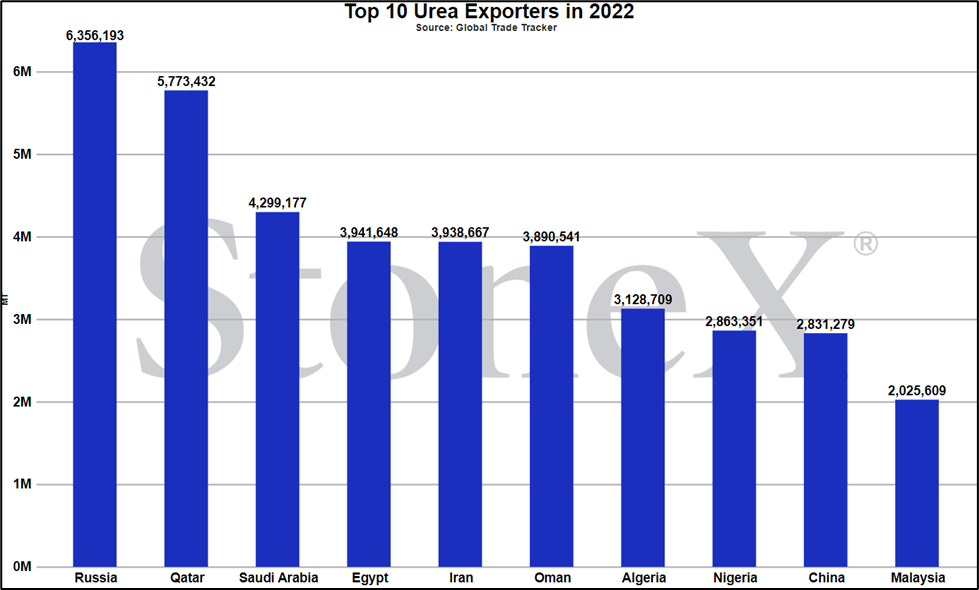
The good news is that this means the hopeful triumphant return of one of the world's largest exporters (typically around 10% of global export total).
These processes take time to happen. In fact, right now companies are only being allow to apply for exports. Now thru April, the inspection and quarantine period is around 40 days. After May 1, that drops to a more historically normal 10 days.
So we may not see huge Chinese exports over the next 60 days but that is ok as the market focuses on phosphate. As China starts to return to normal, Australian urea application will begin. There may be a gap, but hopefully it is not so wide to disrupt things.
Why does this impact Australian farmers?
This is a very big deal for Aussie farmers. China would add in much needed supplies to the world that directly impact the global S&D in a bearish way which should improve values. Then, we also take into account how close China is vs alternative areas. This is/would be a win/win.
European outlook continues to improve
On the bright side, the outlook for the remaining offline European nitrogen plants continues to improve. Global nitrogen values continue to push higher while inputs (Dutch TTF) continues to fall!
On the not so bright side (always a caveat in my newsletters), we still have not seen many plants returning. There was only the rumor of a couple plants in Romania restarting and those were only rumored. Otherwise, it has been quiet.
I keep holding out hope that the rest of these plants will restart but I have to remember that the remaining plants are older. They need to have confidence that once they restart, they are going to stay online for the foreseeable future. There are plenty of reasons for doubt to creep in.
Still, we will continue to watch this space just in the hopes that it does restart and put downward pressure on global prices!
Why does this impact Australian farmers?
If Europe turns the rest of their production on, it means that global supplies rise and demand falls. Recipe for bearishness in global price ideas.
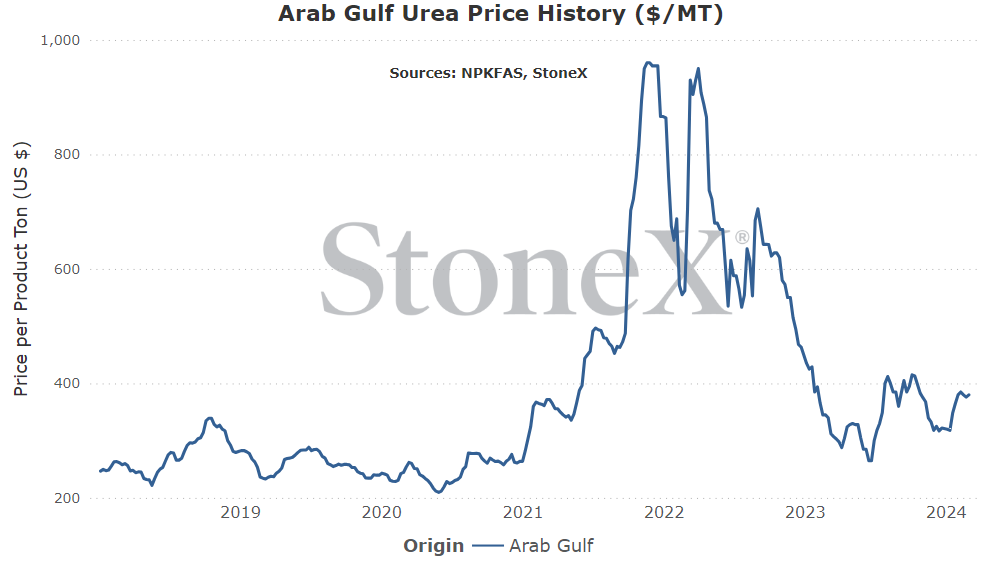
Number 1 exporter (as a region, not as individual nations)
Vs 30 days ago - unchanged vs last month
Vs 90 days ago - +14% or approximately $48 higher
Vs 6 months ago - -1% or approximately $5 lower
Vs 1 year ago - +12% or approximately $40 higher
Egypt
Number 4 global exporter in 2022
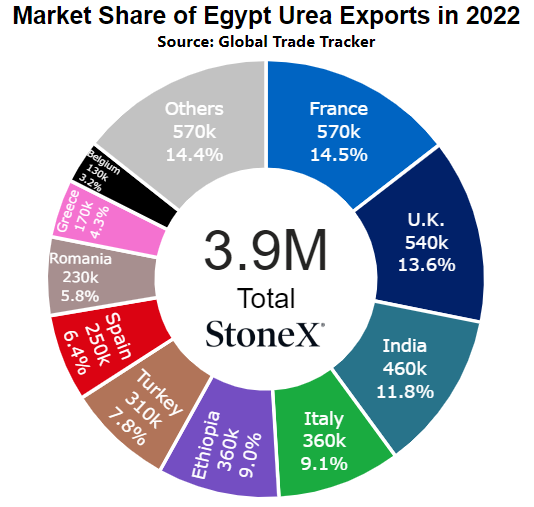
Price comparisons
Vs 30 days ago - -5% or approximately $20 lower
Vs 90 days ago - +9% or approximately $32 higher
Vs 6 months ago - -4% or approximately $15 lower
Vs 1 year ago - -4% or approximately $15 lower
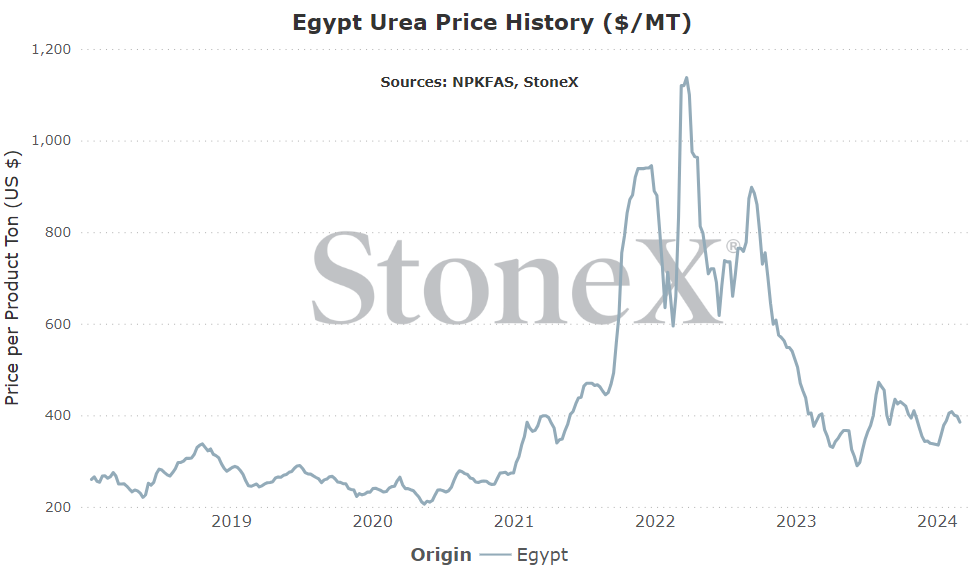
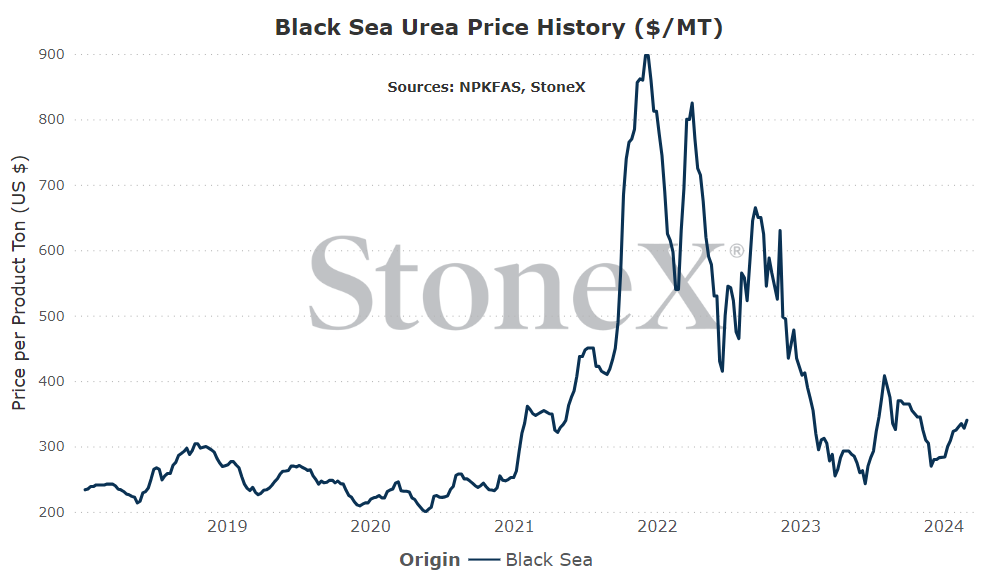
Black Sea
Number 1 global exporter in 2022
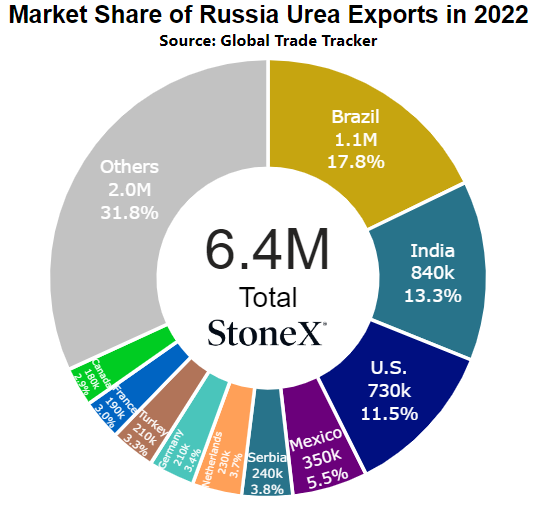
Price comparisons
Vs 30 days ago - +5% or approximately $15 higher
Vs 90 days ago - +11% or approximately $35 higher
Vs 6 months ago - +1% or approximately $5 higher
Vs 1 year ago - +9% or approximately $28 higher
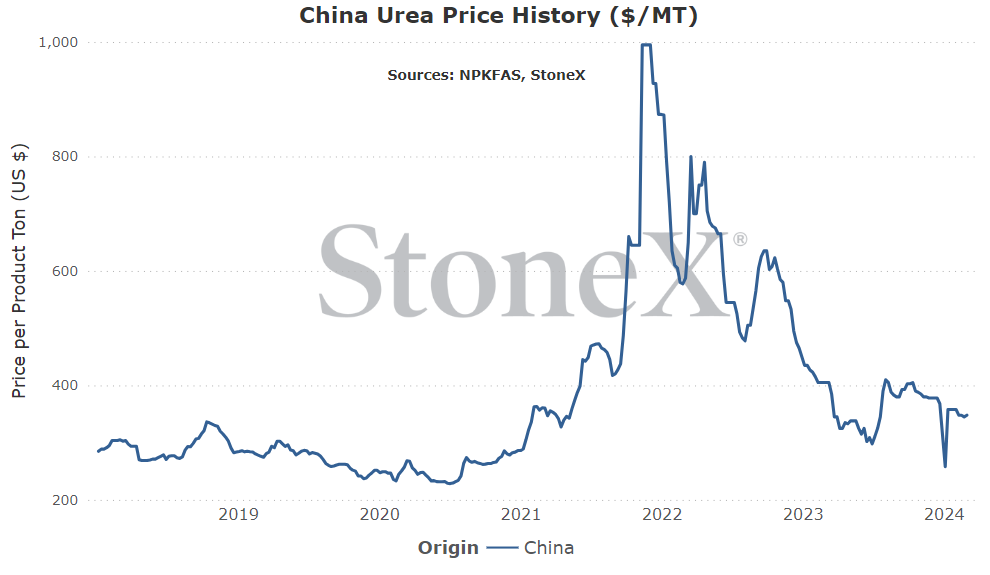
China
Number 9 global exporter in 2022
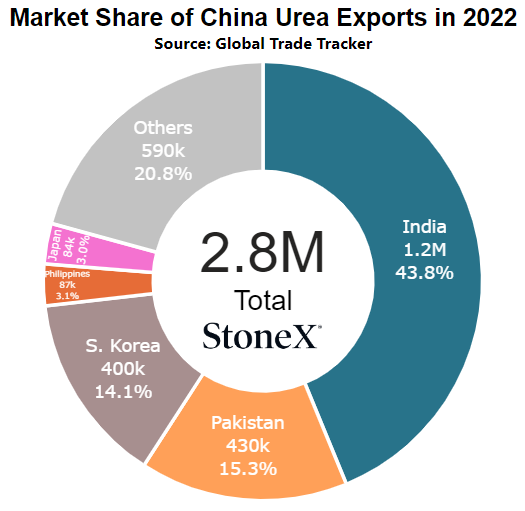
Price comparisons
Vs 30 days ago - -3% or approximately $10 lower
Vs 90 days ago - -8% or approximately $30 lower
Vs 6 months ago - -9% or approximately $35 lower
Vs 1 year ago - -14% or approximately $57 lower
- Middle East tensions - I've talked about this many times before so long story short, Red Sea attacks are irritating but ships can take longer/charge more to go south. If Iran enters the fray and shuts down the Persian Gulf, upside bets are off.
- Russia acting up again - while it seems very unlikely, the possibility of Russia acting up to the point that sanctions start to include fertilizer is not zero. If we suddenly see NATO friendly countries sanction Russian fertilizer, likely that product starts targeting Brazil/India/etc. The countries that place the sanctions will pay the price.
- Lack of imports cause inventories to be tight - I know everyone expects all fertilizer supplies to be in place when demand time comes. However, there is decent price risk in the coming months that will have importers questioning how much to bring. Not saying nothing will show up, it is just a cautionary tale to have conversations sooner than later.
- Europe outlook improving - global nitrogen values are rising. The cost of production in Europe is falling. If this continues, the remaining offline plants could restart which would push tons back to the world market. More supply + unchanged demand = bearish tint on the market.
- Q2/Q3 reset will be looming - it is a dangerous game the distributors are going to be playing. Hold onto your product long enough and likely make a bigger profit. Hold onto your product too long, risk missing demand and then having to carry that product into the summer. That typical low price reset summer...
- China's triumphant return - "normally", China accounts for around 10% of global urea exports. Their return on just that is cause for a bearish outlook. When you add in the fact that China is so local to Australia...alright, "local" may be a bit much but you get the idea!...it adds another reason to believe prices will be lower.
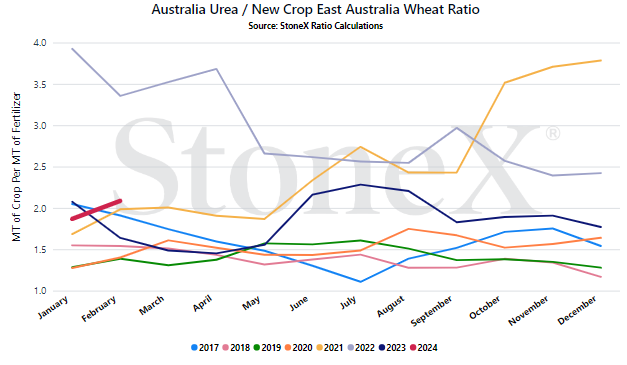
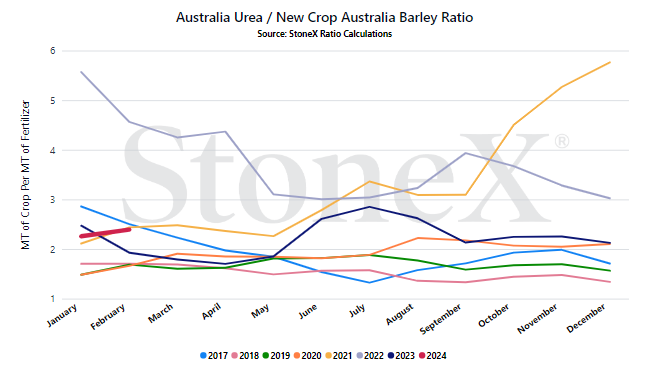
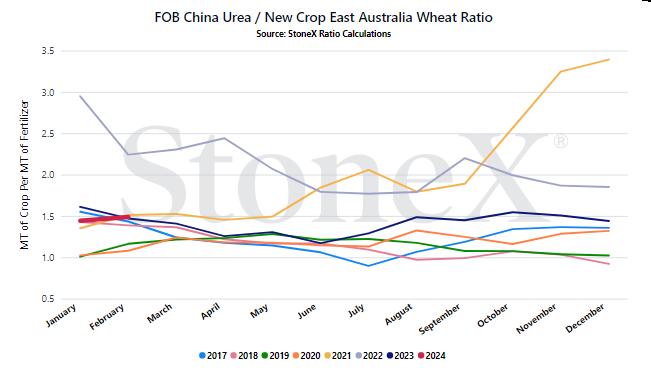
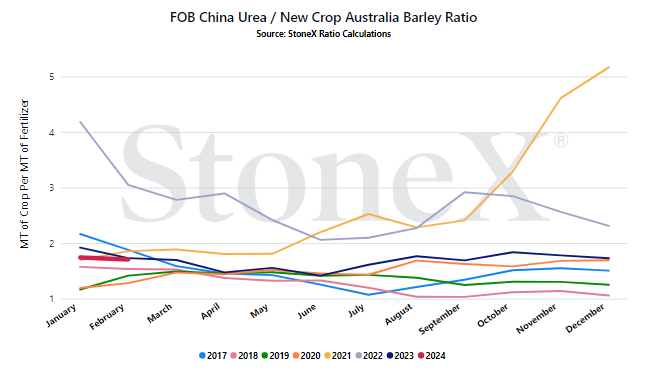
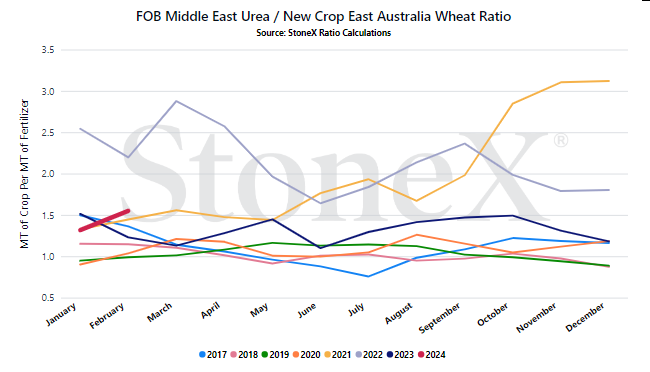
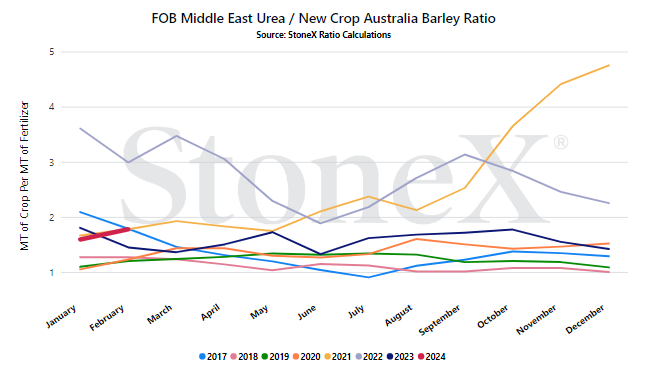
We believe that only looking at the flat price of either grains or fertilizer can be misleading:
-
Only selling grain can hurt you if fertilizer prices rise substantially
-
Only buying fertilizer can hurt you if grain prices fall
We look at the ratio "value" to get a better indication of where we are or how many bushels of X does it take to pay for 1 ton of fertilizer.
Would you rather:
-
Spend 135 bushels to pay for 1 ton of urea
-
Spend 55 bushels to pay for 1 ton of urea
When we compare the current ratio value against recent years, we start to see if we are high or low.
YOUR VALUES MAY LOOK DIFFERENT
This is a work in progress section! We plan on looking at the relationship between Aussie grains and global price points (and hopefully Aussie specific locations, though that data is hard to secure, very protected). Big reason why we are still in the "trial" stage of this newsletter!!!!
- Red Sea/Persian Gulf tensions - to be up front, this situation looks like it is settling down. Yes, the last vessel I saw attacked was a fertilizer vessel originating from Saudi Arabia, but recent strikes and defensive measures seem to be working. Still, if the Red Sea attacks resume/continue, it will force more vessels south adding time and cost to the shipping lane. If we suddenly see Iran enter the fray and start attacking the Persian Gulf, I literally do not know how high of a price to put on urea. That channel is that important.
- Chinese export programs - we are finally seeing first steps that the Chinese government will allow urea exports to resume!! It is going to take time. This is not an immediate impact situation and likely impacts the summer more than the spring. Still, their return is very good news for global buyers.
- Russia - so Russia is back in the news and the urea market quickly tried to say that they thought urea exports would be sanctioned. Personally, I highly doubt it but I cannot guarantee it. My thought is if we did not sanction them for invading a country resulting in hundreds of thousands of lives lost, why would we cross that threshold due to a political assassination? Not saying that life is not worthy. Not at all. Just putting it into context. If we DID see sanctions placed against Russia, I think they would find homes around the world but the countries that placed sanctions would suffer. Again, low likelihood.
- Nearby supplies vs Q3 resets - with spring either quickly approaching or already here, the nearby S&D means much more than global movements. Importers will be fearful of purchasing early and then watching values drop. It is a razors edge they walk.
- Grain values - as you saw in the ratio charts, it isn't always just fertilizer price moves that impact the ratio value. Grains have been having a tough time and that also impacts the overall input/output value. If grain prices stay under pressure, could it impact fertilizer demand?
StoneX Ratio Calculation
The ratio calculation is derived from Bloomberg historical grains values as well as fertilizer values from StoneX, NPKFAS, and Argus.
The calculation is simply dividing the fertilizer price by each grain price.
All data was sourced from StoneX unless otherwise noted.