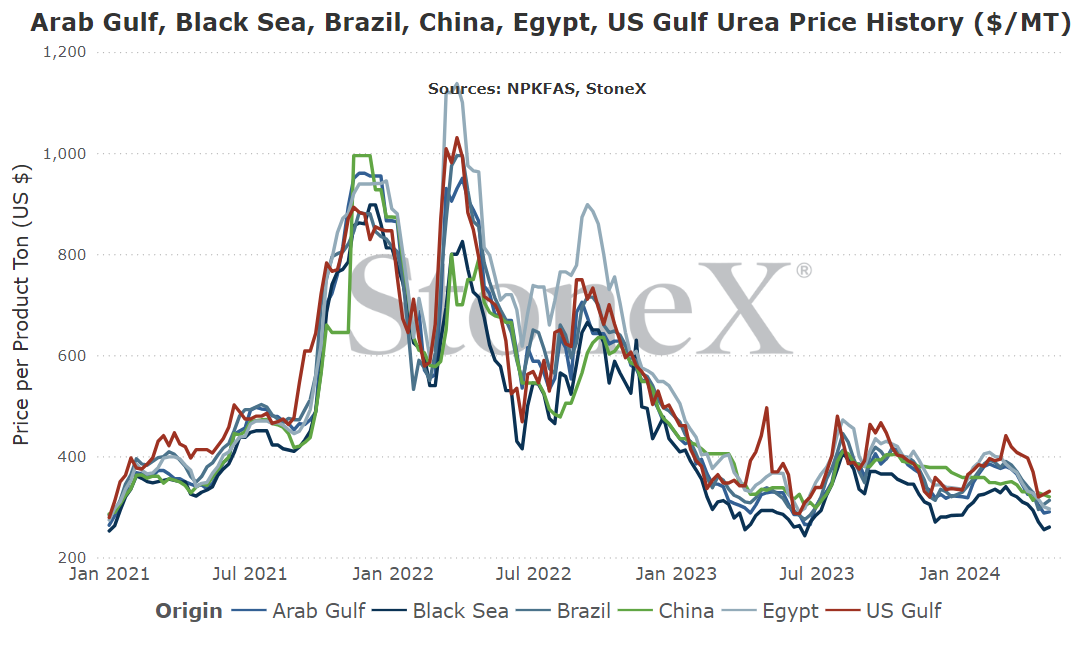
While we were expecting to see global urea values under pressure, the timing was earlier and the harshness of the decline was faster than we thought we would see. That puts today in an interesting situation.
The world hasn't even entered the typical summer quiet demand period yet, but prices are already dipping fairly low. That does not mean that prices shouldn't go lower. In fact, that is our expectation but given the timing, we are now wondering what manufacturers will do to offset it out of fear of even lower values being established.
I continue to believe that global urea values will remain under pressure in the short term due to continued production, return of Chinese exports, and a general lack of demand. However, be on the watch out for manufacturers to start fighting the bearishness. This very well may come in the form of shutting down production for needed repairs. If enough are announced, supplies may be impacted and help set a floor...for a short time.
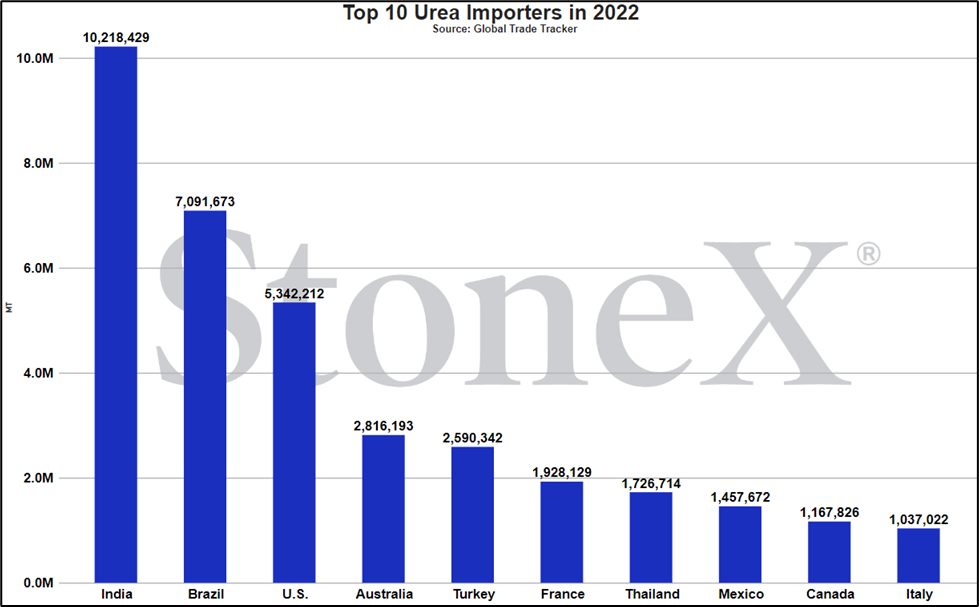
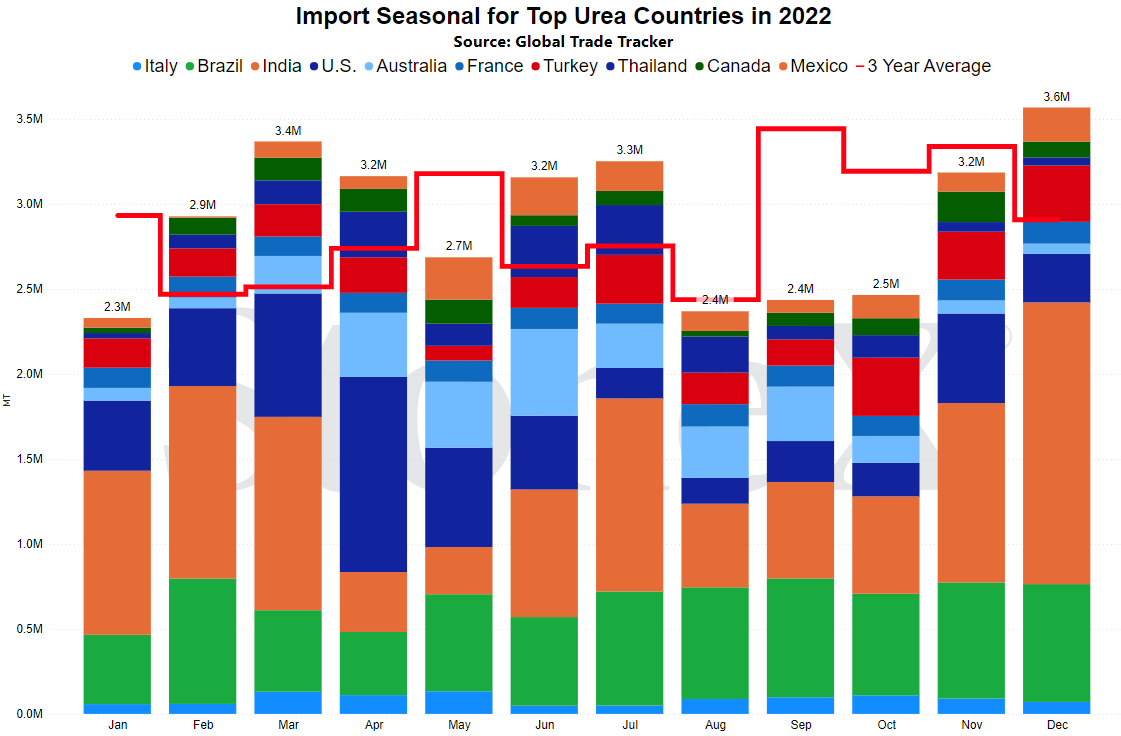
India shocks the world, cutting their purchase from 760K to 340K
For those in the market that were wanting the unexpected, India sure did its part!
As was discussed last month, India had stepped forward with a fresh purchase tender announcement. The purchase was expected by most in the marketplace. While Indian domestic production has been doing quite well, they are still expected to be a net importer (regardless of some POV's). As the global urea market had been so quiet of demand, this was seen as a huge boost...and a huge test to the will of offers.
When those offers were announced, we saw that approximately 3M tons were offered and most offers were within striking distance of the lowest values. Over the last few years, it has become normal to see some offers $30+ over the lowest values. This was the first that I could remember where most were within $10 each coast. That was the first surprise.
The second came on the initial purchase volume. With so many tons offered so close to the lowest price levels, many expected that they would secure over 1M tons which would help mop up excess length in the marketplace. However, after negotiations, we learned that they had only secured 760K tons. A large number but short of expectations. Market bull's went into the weekend with hopes of support to start the next week. That would not be the case...
Monday, the world woke to the news that India had shattered all expectations and cut their purchase volume by nearly half! Domestic supplies were more ample than some had expected and with so many tons offered within a lower/tight price range, they smelled blood in the water. Cutting their volume means that they can return to a marketplace that should be even lower on price ideas...if they need to return at all. To date, we continue to watch for their return but have seen nothing.
This storyline has resulted in global urea price ideas falling around the world and goes to show why something halfway around the world matters to you.
What does this mean for Aussie farmers?
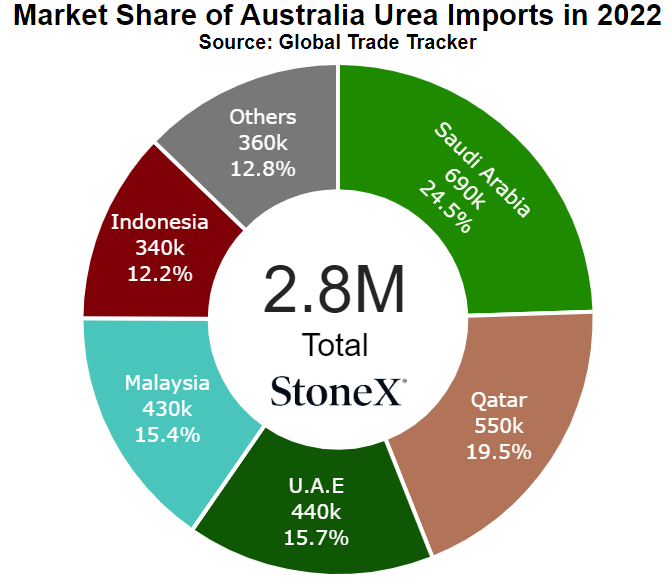
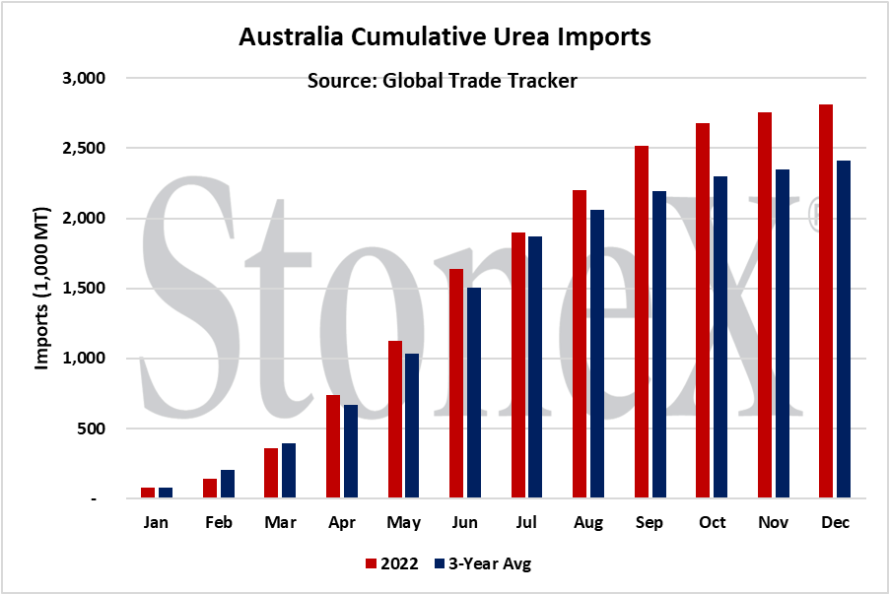
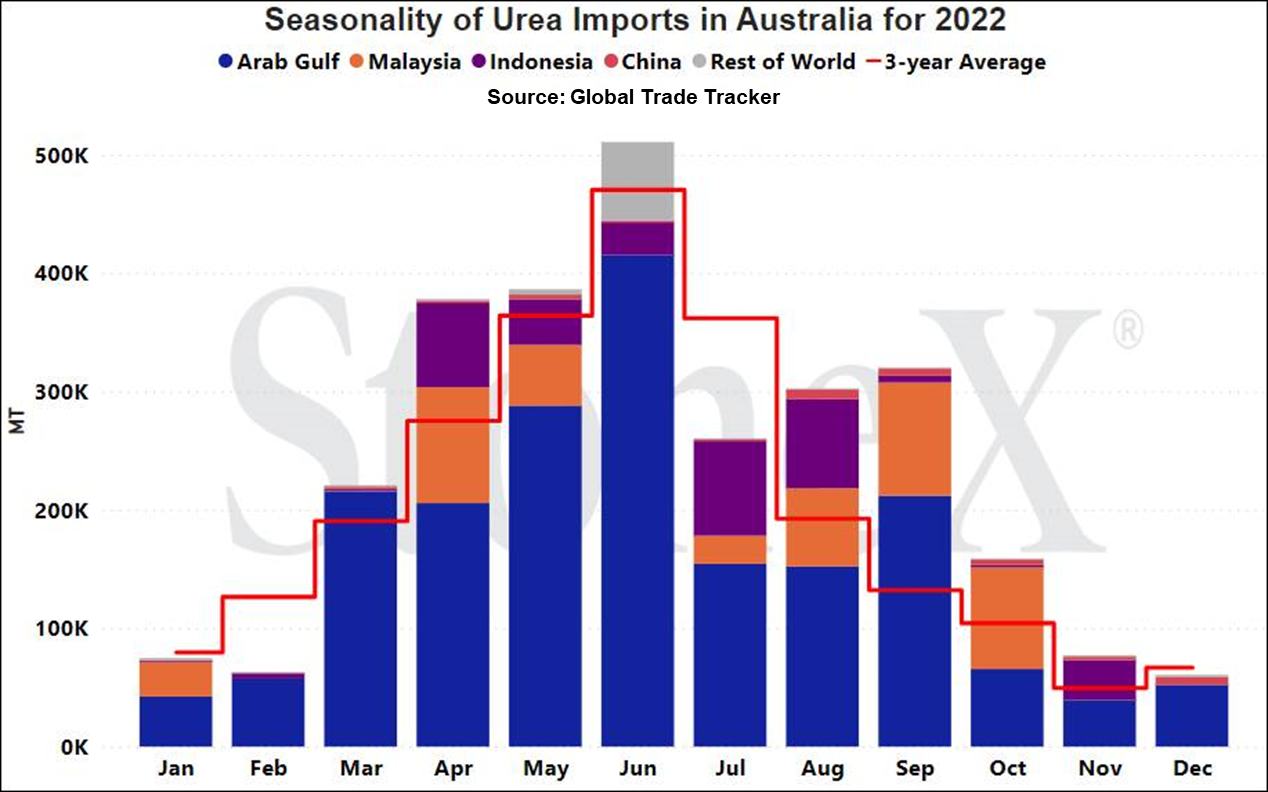
India cutting their purchase tonnage means that the world was forced to look at any remaining demand. That list is lead by Australia this time of year. Suddenly, Australia became the popular girl at the dance!!!! Hopefully this will mean that importers will start to get aggressive with values.
Global values fall apart following India's shock tonnage cut
With India surprising the world in cutting their purchase volume, global long sellers were forced to contemplate what was too come...and that outlook must have appeared bleak based on how values have reacted.
While it seems early to be saying this, summer is quickly approaching. Before long, we will be in the midst of the season low demand period where we typically see annual low's set. A lot of product being produced daily combined with a lack of demand is a recipe for lower pricing.
It was expected that global values would see significant pressure in the coming months. However, it has been a surprise to see how quickly it came forward and a lot of that is due to India's actions forcing the market to take stock of what is to come. We are now seeing Arab Gulf producers willing to discuss physical sales in the mid-$280's to mid-$290's range while Iran, typically a discount to other AG regional producers due to heavy sanctions, is discussed in the $250's. NOLA values are also off heavily. Early March saw physical barges discussed in the low $400's while current values are now sub $300.
We are starting to get a better feel of what we expect to have happen this summer, but I'll save that for below.
What does this mean for Aussie farmers?
If global values are falling, it should mean that Australian values eventually do the same.
Chinese exports resuming...or are they?
If India cutting their purchase volume in half played a part in dropping global urea price ideas, the expected return of Chinese exports played the other part.
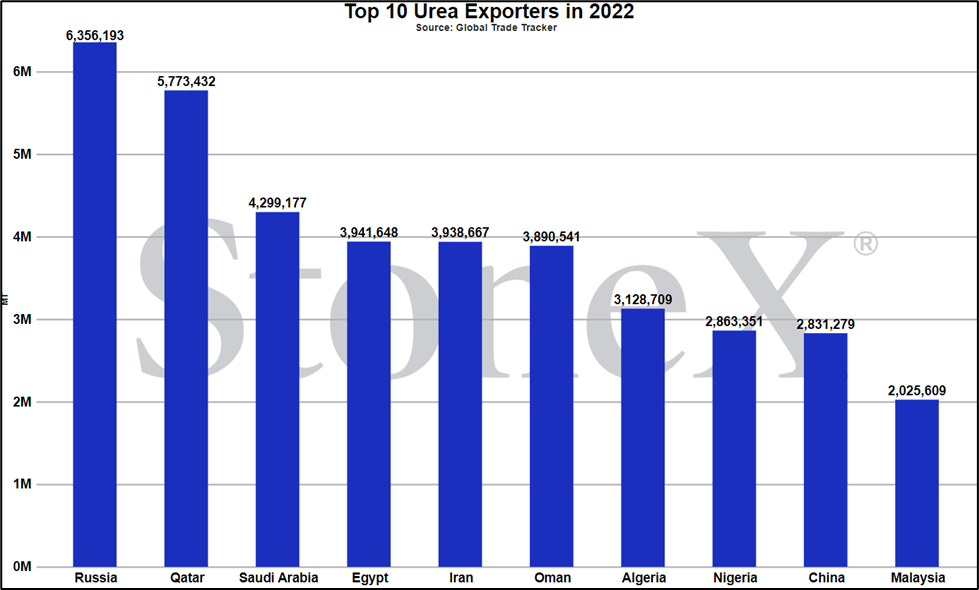
A bit of backstory for context: historically speaking, China accounts for approximately 10% of the global urea export marketplace (5 - 5.5MMT/year). However, in recent years with global supply issues, the Chinese government stepped in to restrict/reduce exports as a way of guaranteeing Chinese farmer access to supplies while also dropping domestic values. For a large part, this strategy worked.
In recent weeks/months, we had been hearing that the Chinese government was set to reverse that approach. Global supplies were close to normal, values were down substantially and domestic manufacturers had been eager to return to the export market. With those factors in play, they started steps toward a return to normalcy...but then issues arose.
The most notable is that Chinese urea future values started to climb. For those in the market, this should not have been a surprise. If domestic producers were only able to sell domestic buyers, that would theoretically mean lower prices due to a lack of demand. However, if opening the export avenue, that raises the demand side of the S&D substantially which supports price ideas. It appears some in the government did not expect this and quickly rumors spread that exports would be blocked again.
As with everything China, it is hard to get a strong conviction on what will/will not be done. While the outward story is that of further restrictions, we continue to hear that quietly, exporters are being guided to continue as they were. It is very possible that these rumors were placed in an attempt to squash domestic market bulls. If true, it is also very possible that global bulls/long positions jumped on the story. This price decline has happened at the worst of times in the lead up to spring. Inventories must be anticipated weeks/months in advance so those distributors were in a poor position. Any bullish story could help stop the bleeding.
Given China's importance on the global export marketplace, they need to continue to be watched. If an export stoppage is put into place, it will certainly be a win for bull's. However, if exports start slipping out at historical levels, watch for buyers to slide away and hope for lower prices.
What does this mean for Aussie farmers?
If China had returned back to historic export levels, there would have been that much more tonnage available to compete for remaining Australian demand. Unfortunately, this delay meant that regional manufacturers could be a little more bold with price ideas as they didn't have to compete as much. Indonesia was a big winner in this case, selling several vessels destined for Australia at slightly higher than expected prices.
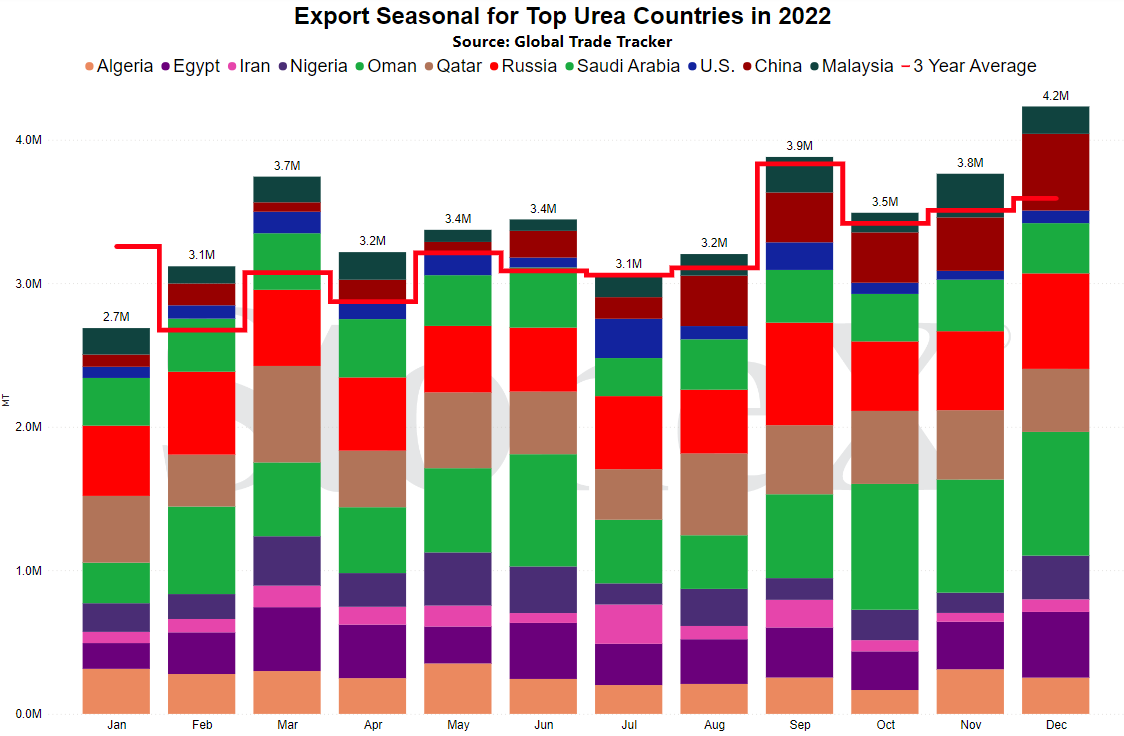
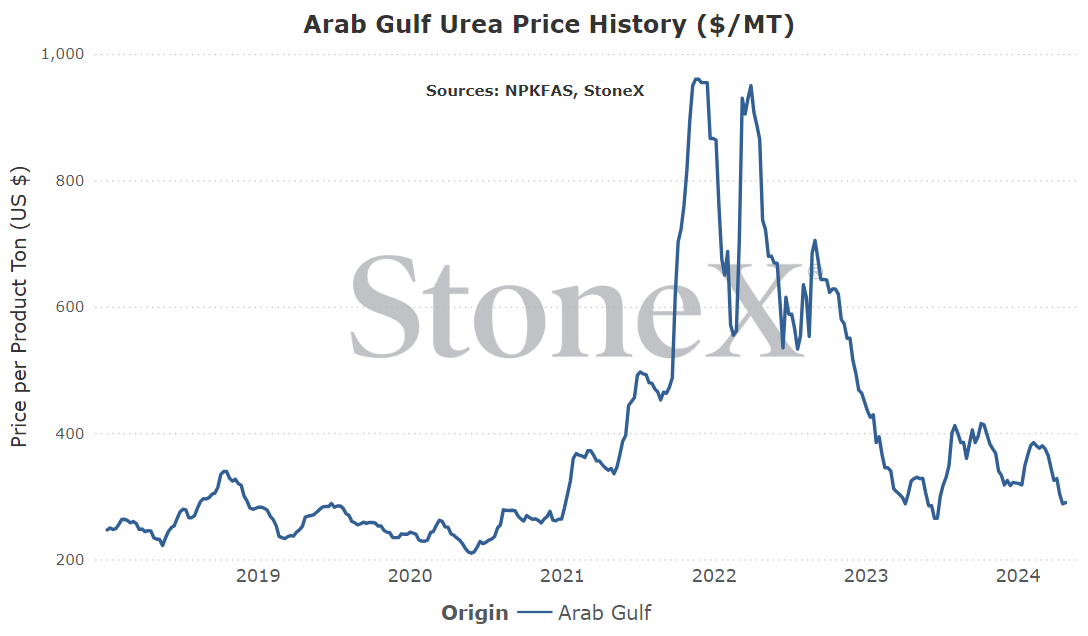
Number 1 exporter (as a region, not as individual nations)
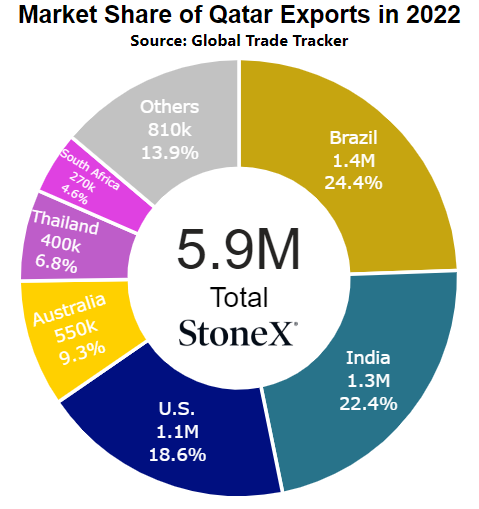
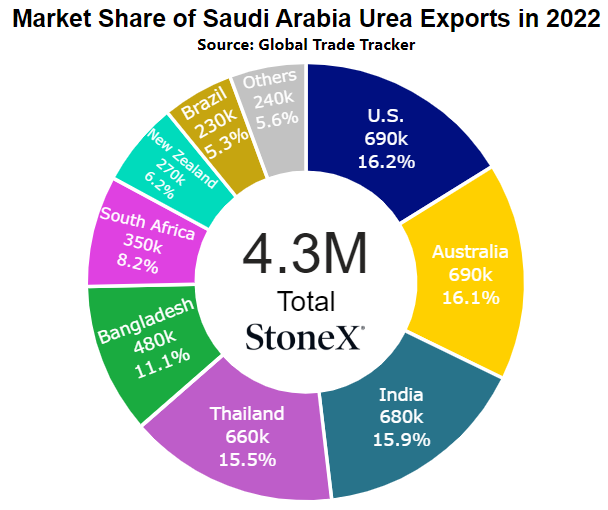
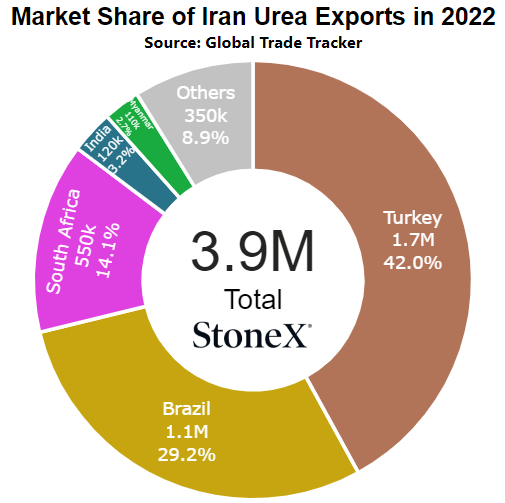
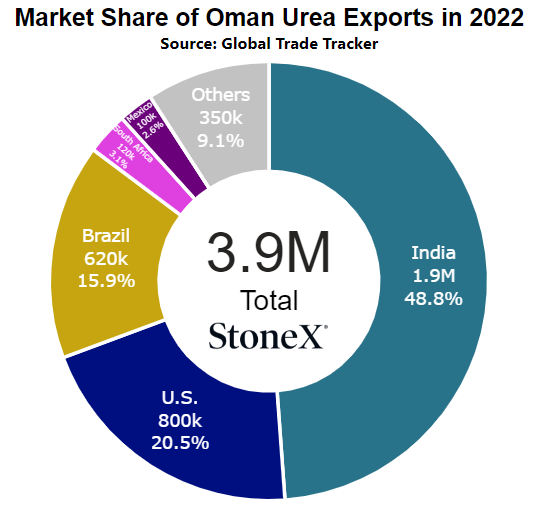
Vs 30 days ago - -11% or approximately $35 lower
Vs 90 days ago - -21% or approximately $75 lower
Vs 6 months ago - -27% or approximately $108 lower
Vs 1 year ago - -11% or approximately $38 lower
Egypt
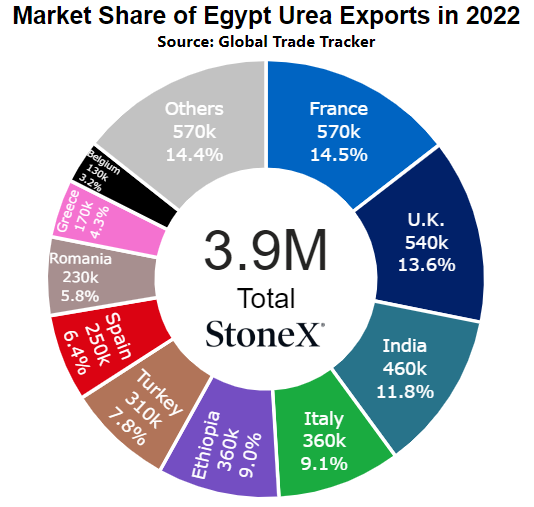
Number 4 global exporter in 2022
Price comparisons
Vs 30 days ago - -11% or approximately $35 lower
Vs 90 days ago - -24% or approximately $92 lower
Vs 6 months ago - -26% or approximately $106 lower
Vs 1 year ago - -18% or approximately $64 lower
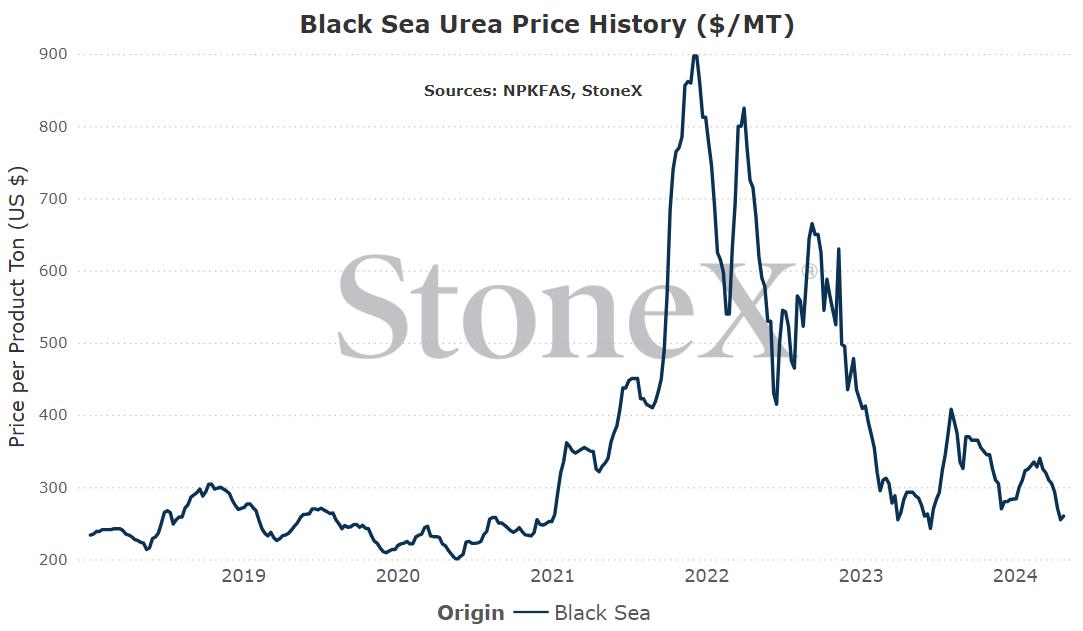
Black Sea
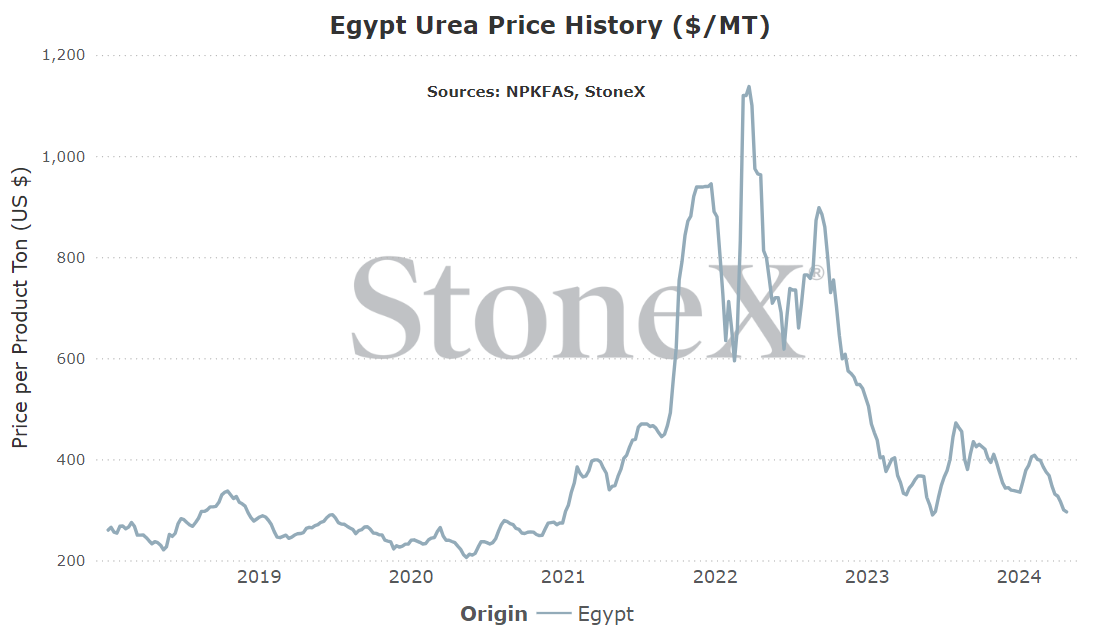
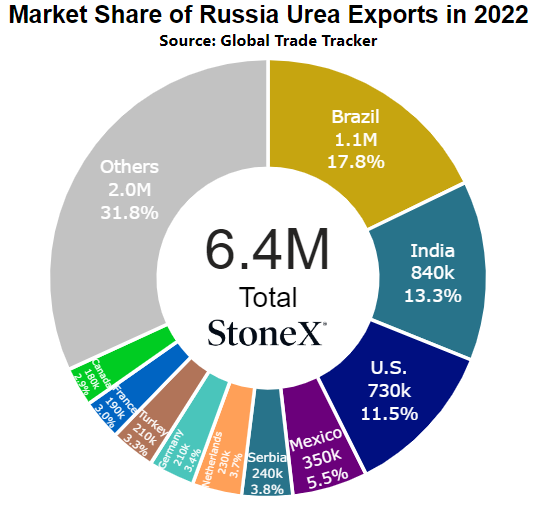
Number 1 global exporter in 2022
Price comparisons
Vs 30 days ago - -15% or approximately $45 lower
Vs 90 days ago - -19% or approximately $63 lower
Vs 6 months ago - -26% or approximately $90 lower
Vs 1 year ago - -11% or approximately $33 lower
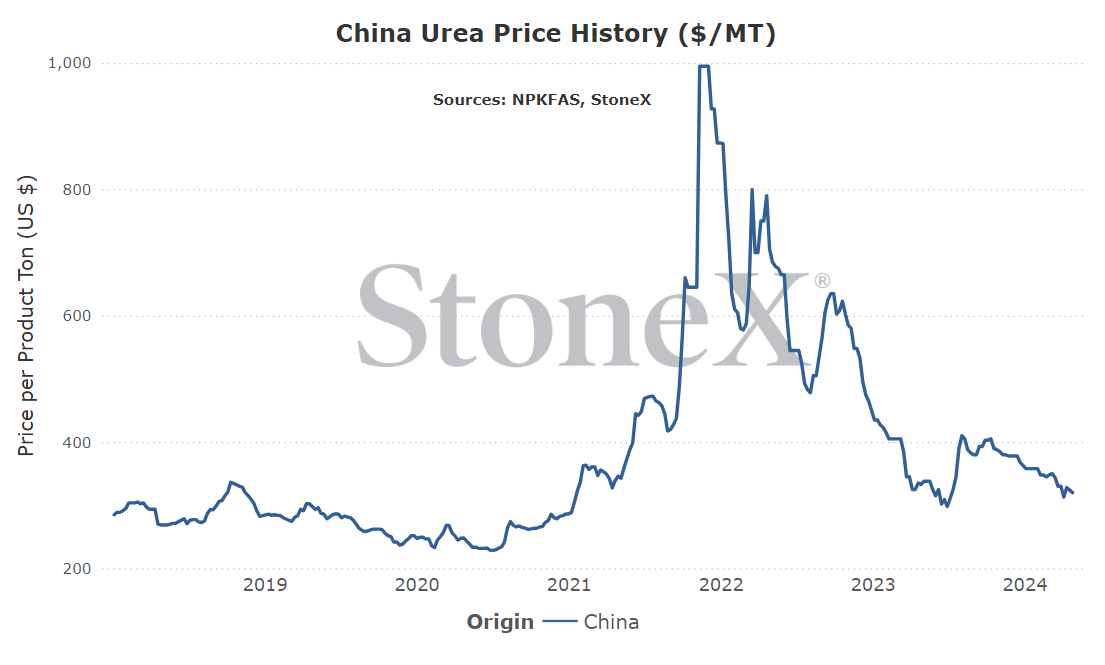
China
Number 9 global exporter in 2022
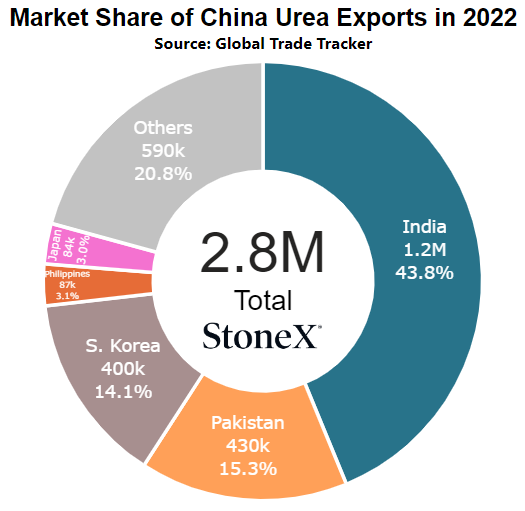
Price comparisons
Vs 30 days ago - -3% or approximately $10 lower
Vs 90 days ago - -10% or approximately $38 lower
Vs 6 months ago - -18% or approximately $70 lower
Vs 1 year ago - -4% or approximately $13 lower
- China limits exports - Chinese exports are typically seen as the urea boogeyman...at least to me they are. When exports return to the market, I see it as the return of a very motivated seller which means other sellers need to get price aggressive. However, if we see the Chinese government clamp down on exports, as rumors have swirled, the opposite happens. While we still expect China to return, it is not out of the question that the government could slow them once again to help lower domestic price ideas.
- Global manufacturers shut down production for repairs during low price timeline - the coming weeks/months could provide a perfect time to shut down a plant for repairs. Given recent market values/margins, manufacturing plants should have been running as hard as possible. That breakneck pace creates a lot of wear and tear on equipment. So if the plant needs repairs and the looming market is low priced and low demand, why not pull forward that shut down date if possible. Better to not be producing product when demand and prices are low vs when there is ample demand and high prices/margins. Enough production goes down and it could certainly tighten global supplies. It wouldn't be the first time this has happened.
- Buyers come out of the woodwork to take advantage of low price opportunities - prices cannot go down forever. Pretty sure we are not going to see manufacturers paying parties to take their urea. What is this, oil?!! In all seriousness, at some price point, we could pull a lot of demand forward. If demand starts to step forward early, it could provide some excitement that could boost price ideas. Eventually, we would need to worry about how quiet it will be when those buyers would normally return but for that period where buying happens, prices could reflect higher.
- China returns to their export plans - if/when Chinese exports return to the global marketplace, that will mean the return of aggressive competition. Chinese exporters have been removed from the world stage for some time. Many will be looking to get a foothold back in the market which should spook other sellers. That competition should breed lower values.
- Global buyers pull back further on weak markets - prices are already down much earlier than expected. If prices are already down to this level, what will be possible in the weeks/months to come? Desperation typically results in more desperation and many buyers around the world have been taught over and over again to not be the first to stick their hand out. Wait for a bounce before committing. If buyers stay away, it just makes for an even more bearish outlook.
- Europe/Brazilian production resumes full capacity - today, the biggest shortfalls on production of urea are Europe and Brazil. Brazil is fighting high domestic natural gas values...but it is not out of the question that the government could step in as they understand the importance of domestic production. Europe could also improve. While profitability has not improved, warmer temps will make it easier to restart old plants and manufacturers will want to jump ahead of importers. If both return, the global supplies could be back to normal levels...which should drop global price ideas.
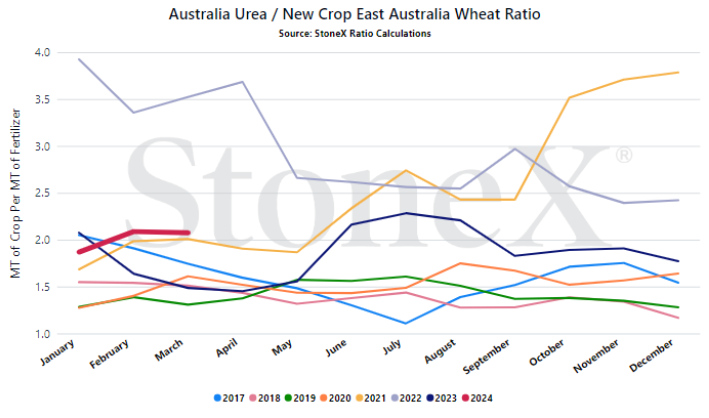
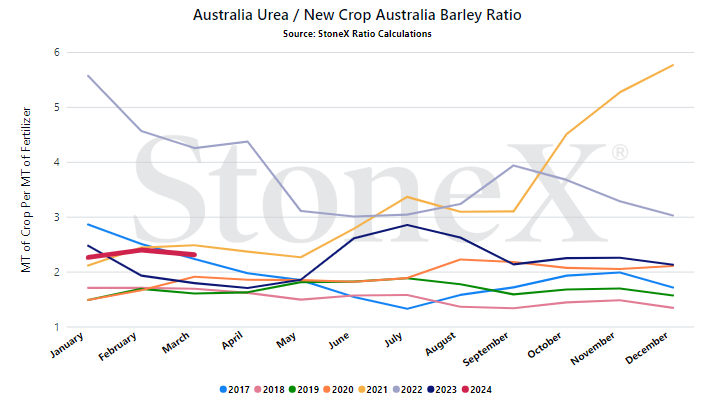
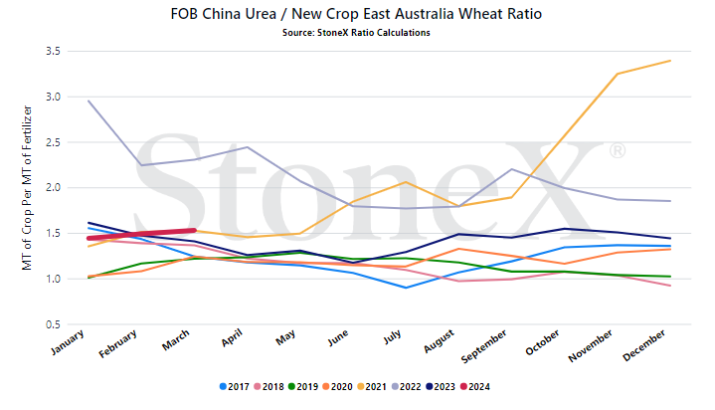
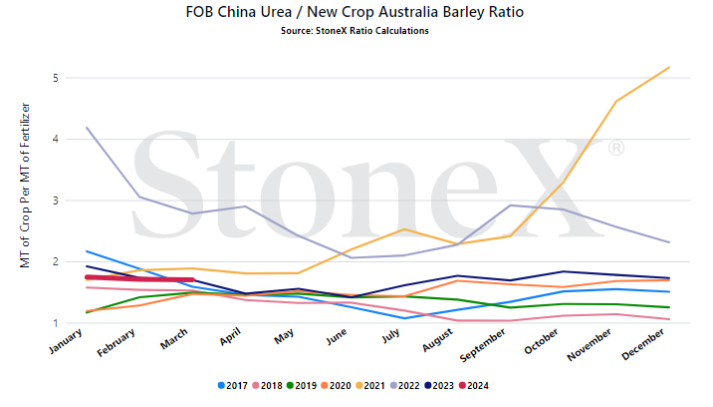
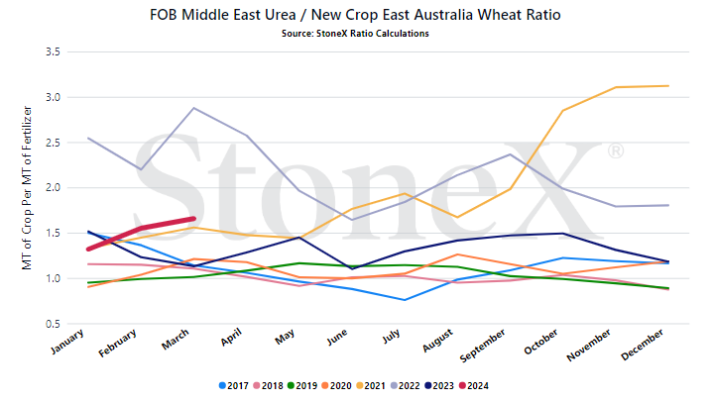
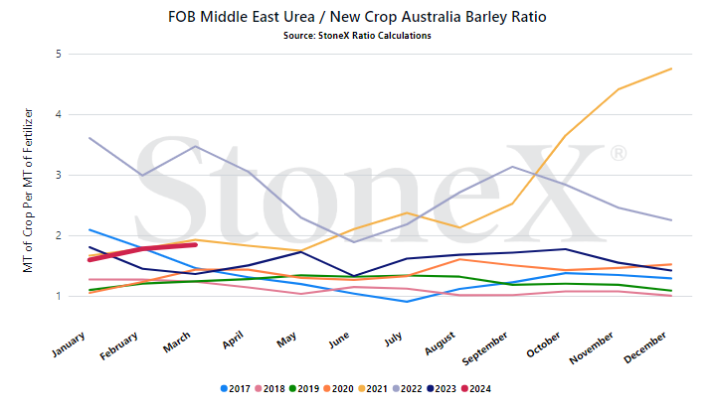
We believe that only looking at the flat price of either grains or fertilizer can be misleading:
-
Only selling grain can hurt you if fertilizer prices rise substantially
-
Only buying fertilizer can hurt you if grain prices fall
We look at the ratio "value" to get a better indication of where we are or how many bushels of X does it take to pay for 1 ton of fertilizer.
Would you rather:
-
Spend 135 bushels to pay for 1 ton of urea
-
Spend 55 bushels to pay for 1 ton of urea
When we compare the current ratio value against recent years, we start to see if we are high or low.
YOUR VALUES MAY LOOK DIFFERENT
This is a work in progress section! We plan on looking at the relationship between Aussie grains and global price points (and hopefully Aussie specific locations, though that data is hard to secure, very protected). Big reason why we are still in the "trial" stage of this newsletter!!!!
- Chinese export programs - what China does or does not do with urea export programs will go a long way in dictating global price directions. Historically, China accounts for approximately 10% of the global export market so when they are absent, values are supported. Opposite holds true. We must continue to watch China, a nation notorious for not sharing info, for signs of where the world will go.
- Price of urea vs the price of grains - it isn't always just about the flat price. Some of the summer values already being discussed are higher than our summer reset low expectations. That means they should be ignored, right? Wrong. The problem is that we could be right that urea drops another $25+ from where it is today (theoretically). However, if corn values come under pressure due to higher acres and solid growing conditions, ultimately our value could be worse. We need to start watching for opportunities to lock in both sides of the farm equation.
- Looming bearish markets vs current tight regional S&D - this was a tough month to write. As I look around the world, I see a lot of bearish values. However, I'm waiting for the responses of "well, my prices have not moved". I wish that were not reality...but it is. It still takes time to move vessels from its production point to Aussie ports. Buyers can wait and hope that values dip, but they run the risk that inventories get tight as has been seen in the past.
- Middle East tensions - with a lot of the Middle Eastern tensions appearing to have lowered, I didn't want to spend a lot of time covering it...but do not make the mistake of thinking that situation is gone. It would take very little for that situation to erupt once again. We nearly saw it with the tit for tat issue with Israel/Iran. Know that today we are never far away from this becoming a regional crisis...which would mean a crisis of urea if the Persian Gulf is shut down...
StoneX Ratio Calculation
The ratio calculation is derived from Bloomberg historical grains values as well as fertilizer values from StoneX, NPKFAS, and Argus.
The calculation is simply dividing the fertilizer price by each grain price.
All data was sourced from StoneX unless otherwise noted.