Morning Ferrous Markets
Market Overview
The global steel market has faced a multitude of challenges and fluctuations, reflecting regional economic conditions and shifting demand dynamics. In the United States, hot-rolled coil (HRC) prices have declined for ten consecutive weeks, highlighting a persistent imbalance between supply and demand, particularly in sectors like agriculture and construction. Europe's steel market also remains weak, with German and Italian sheet prices continuing to fall amidst low demand and impending EU safeguard measures affecting import quotas. In China, adverse weather conditions and economic uncertainties have dampened market sentiment, despite resilience in the automotive sector. Meanwhile, Asia has seen a drop in prices for imported sheet products due to weak demand and robust supply, with significant decreases in HRC, cold-rolled coil (CR), and hot-dipped galvanized (HDG) coil prices.
Upcoming Data Releases

North American (US) HRC Steel Market
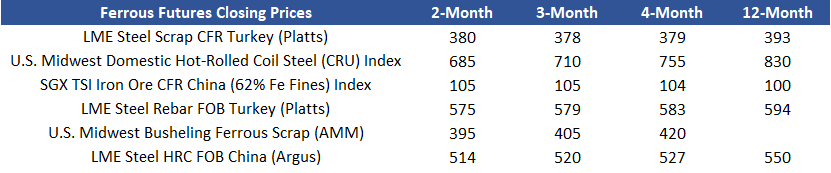
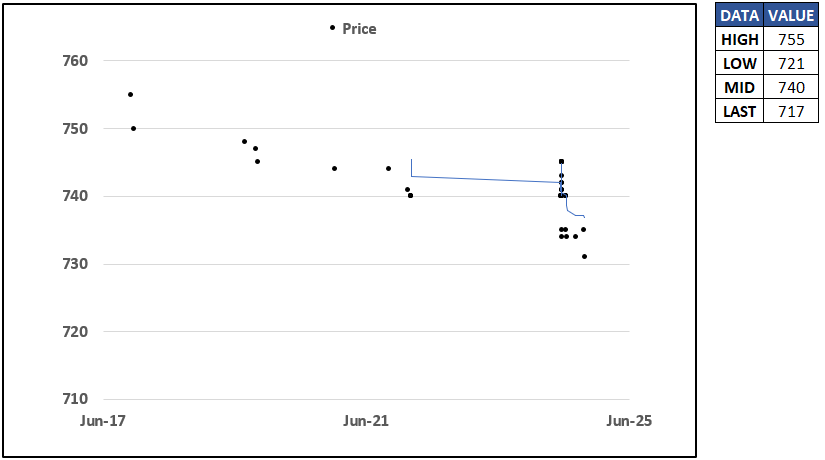
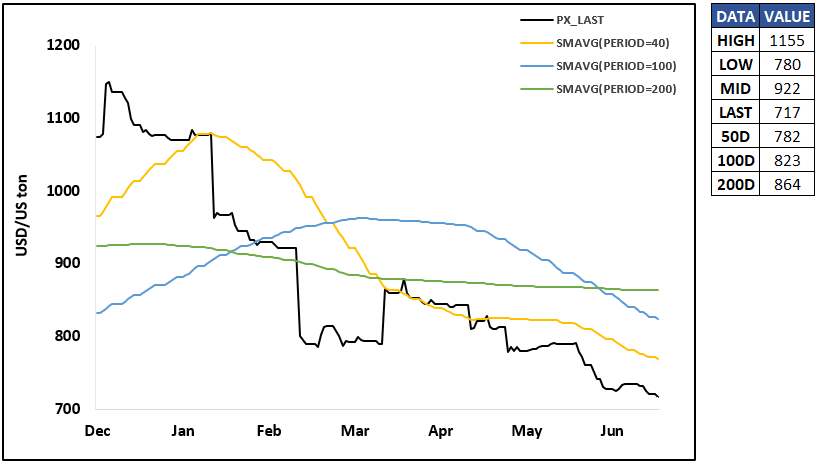
The US HRC market experienced notable gains today, particularly in the early 2025 contracts, indicating some optimism or speculative activity for future prices. The largest price increase was in the January-25 contract, which rose by 2.09% to $830 per short ton. The February-25 and March-25 contracts also increased by 1.22% to $830 per short ton. Despite these gains, the current bearish sentiment is reflected by the oversold conditions for August-24 and July-24 contracts, with RSI values of 13.14 and 20.81, respectively. Additionally, spot prices for US Midwest HRC dropped by $5 to $710 per short ton, continuing a 35% YTD decline.
Large-volume, low-priced deals continue to dominate due to an imbalance between supply and demand, particularly affecting mills exposed to sectors like agriculture and construction. Service center inventories have steadily built up in 2024, and until there's a need for restocking or a reduction in mill output, prices are unlikely to rise in the near term.
HRC Front Month 3 Day Trend
StoneX & Bloomberg
HRC Front Month 6 Month Price Trend
StoneX & Bloomberg
Chinese Steel & Iron Ore Markets
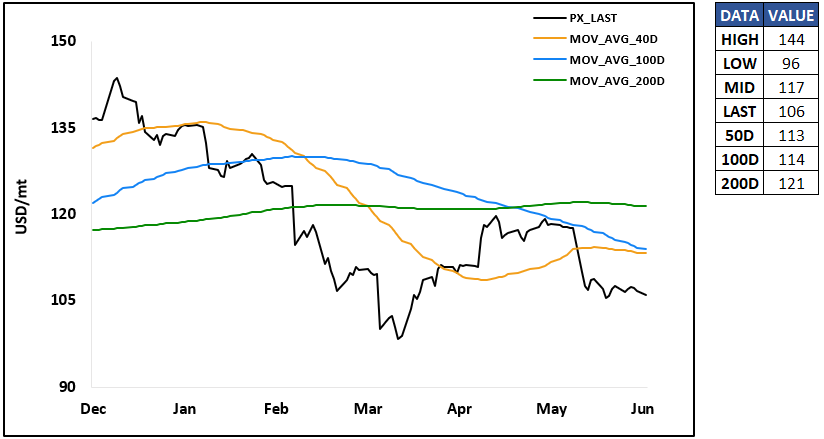
Iron ore prices continued to decline, driven by concerns over Chinese demand and high inventory levels, indicating a bearish outlook. The largest price decrease was observed in the January-25 contract, down by 2.52% to $100 per metric ton. The December-24 and November-24 contracts also saw decreases of 2.32% and 2.28%, respectively. Spot prices for 62% Fe iron ore also fell by $1 to $107 per metric ton, maintaining a YTD drop of 25%. This trend of falling prices is consistent across multiple contracts, reflecting ongoing pessimism in the market.
Generally, the iron ore market in China and Asia has been influenced by several factors leading to price fluctuations. In China, domestic sheet prices have declined by RMB10-20/mt week-on-week, primarily due to end-users' reluctance to purchase high-priced material amid flood warnings and adverse weather, which have disrupted construction and transportation activities.
As the off-season for demand approaches, combined with a lack of significant macroeconomic improvements, market sentiment has turned bearish, leading to cautiousness in both futures and spot markets. However, the automotive sector has shown resilience with slight increases in auto sales and a decrease in the auto inventory index, potentially supporting sheet demand during the summer lull. In the broader Asian market, prices for imported sheet products have also decreased due to weak demand and strong supply. Deals for hot-rolled coil (HRC) SAE1006 were concluded at lower prices, and offers from producers like Formosa Ha Tinh Steel have decreased by about $10/mt. Overall, the market is characterized by falling prices across HRC, cold-rolled coil (CR), and hot-dipped galvanized (HDG) coil, reflecting the current weak demand and ample supply.
SGX Iron Ore CFR China (62%) Futures
StoneX & Bloomberg
European Steel and Steel Scrap Markets
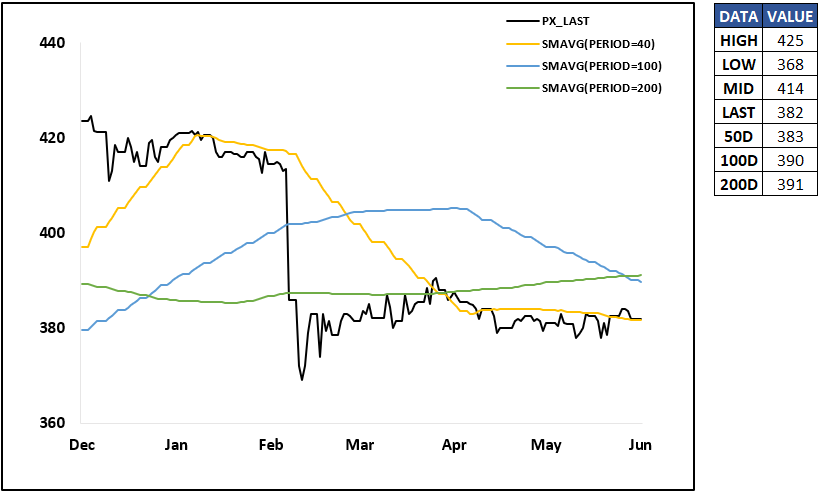
The Turkish scrap market showed minimal movement, with spot prices remaining unchanged at $386 per metric ton. This stability contrasts with the broader declines seen in other ferrous markets. Despite the steady spot price, the Turkish scrap market's overall sentiment remains cautious amid broader market uncertainties. More generally, Turkish scrap remains a favorite commodity for those invested in the carbon credits space despite current sideways price trends.
More generally, Europe's aggressive decarbonization targets are expected to significantly impact steel futures prices. The steel industry, responsible for 5% of global emissions, is transitioning to low-carbon technologies, including electric arc furnaces and hydrogen utilization. The EU is the second largest steel producer in the world responsible for 11% of global steel production.
With approximately 60 projects in progress, targeting an 81.5 million mt/year CO2 reduction by 2030, the anticipated shift to greener production methods is poised to reshape market dynamics. As the industry moves away from carbon-intensive blast furnaces, futures prices may reflect the increased costs associated with adopting these new technologies and the anticipated scarcity of scrap metal, green energy, and hydrogen. The ongoing supply constraints and the need for substantial investment in infrastructure could drive up production costs, thereby influencing futures prices. Moreover, the expected rise in global steel demand by 30% by 2050 could further exacerbate price volatility in the futures market, as supply and demand dynamics adjust to the new low-carbon production landscape.
Turkish Scrap 1st Month Futures
StoneX & Bloomberg
Current Prices