Global
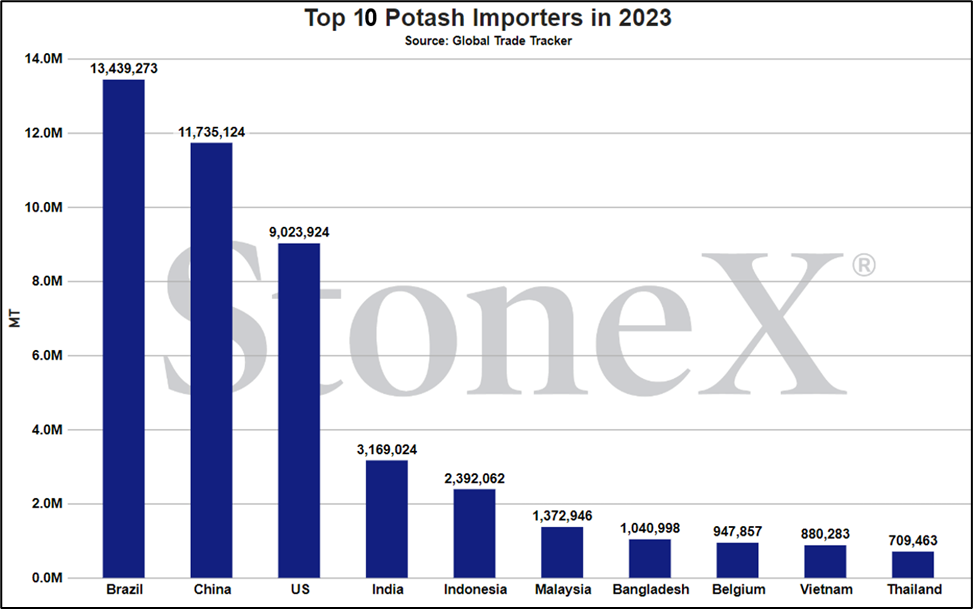
Not much has changed on this outlook. Global supplies continue to feel solid. Belarus is still finding its way back to the global market after Lithuania shut them out due to their Russian support. More production is expected in the coming months/years across several countries. Demand has appeared rather strong (given the solid price potash has had), but that has done little to move price ideas.
While we need to pay attention to places like Russia and Israel to make sure that supplies do not change, it appears that values should stay relatively flat. Just nothing to get excited about today.
North America
Like the global outlook, the supply forecast remains solid. We have not talked with anyone who has even given a hint that there could be problems with supplies. If you want tons, you can get tons. Maybe there will be some logistical issues in season, but otherwise it doesn't seem like there are any issues. However, remember that prices are not going to fall forever.
The outlook remains the same. We keep seeing potash relatively flat and if we had to pick a direction, it is slightly lower. Now, as we head into fall application season, we could see some price bumps, but I would assume those have more to do with logistics than it does the "real" S&D of potash.

Values remain relatively steady on a well-supplied forecasted market
Potash continues to be the little market that could. The weeks/months continue to go by, and it just keep chugging along. However, not overly surprising.
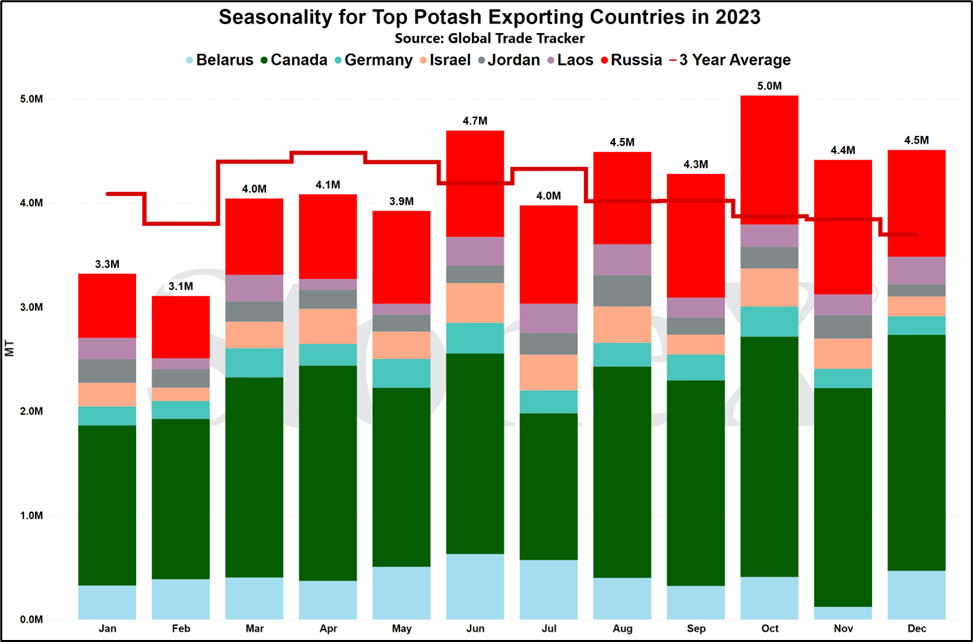
As we have been talking about for a while, the current potash market remains very well supplied...and that only looks to improve which means very good things for buyers. With more production expected to come from Canada/Russia/Laos, an eventual full return from cut off regions like Belarus, and other general improvements in current production lines, there seems to be much more supply out there than there is demand. The result has been great for buyers.
Of course, anything can happen. A lot of global potash comes from Russia and given their continued invasion of Ukraine, we cannot count out a possible stoppage of their product. Israel is another big exporter and given high tensions in the Middle East, one never knows what will happen day to day.
Even though we have those watch points, the current market is in a good place.
What does this mean for farmers?
Solid pricing is what it means. It also means a much less price volatile market than many of the other inputs.
An oversupplied market struggles to push price ideas higher. With so many tons available, if one supplier pushes higher, there are plenty of other tons willing to slide in and sell lower to get the business. It also raises the chance that values could fall if certain manufacturers try to disincentivize new producers from coming on board.
Basically, this is all great news for farmers.
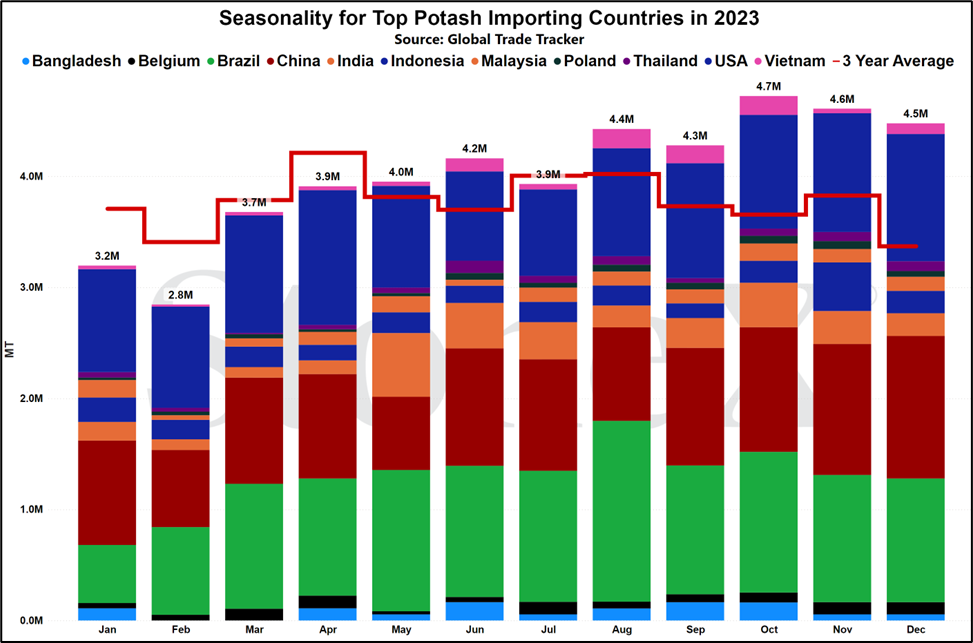
Fall demand could cause in season price bumps due to logistics
N.A. is gearing up for the start of the fall run. As mentioned above, supply levels seem more than adequate so from that perspective, there is little to fear. However, that does not take into account logistics.
One of the biggest issues over the years has been logistical channels struggling. The lower Miss River continues to have low water issues which makes barges struggle. Talk to any elevator or rail receiver and you will find a party that has plenty of delivery gripes. Then there are trucks. It gets harder and harder every year to find trucks to haul product and that is ultimately the life blood of the system. Truckers make more money hauling for other industries. They get to be home much more often in other industries. The fewer trucks at the industries disposal means it gets harder to move product in a timely basis.
Now, do not read this and interpret it as me saying you will not get your product. That is not true. Not at all. I am merely trying to point out that as we get thru the next 4 - 6 weeks, we could see some hiccups. You will get your product but some of it might take a little longer and might be a little more expensive as the market struggles thru the season.
NOLA/New Orleans Louisiana
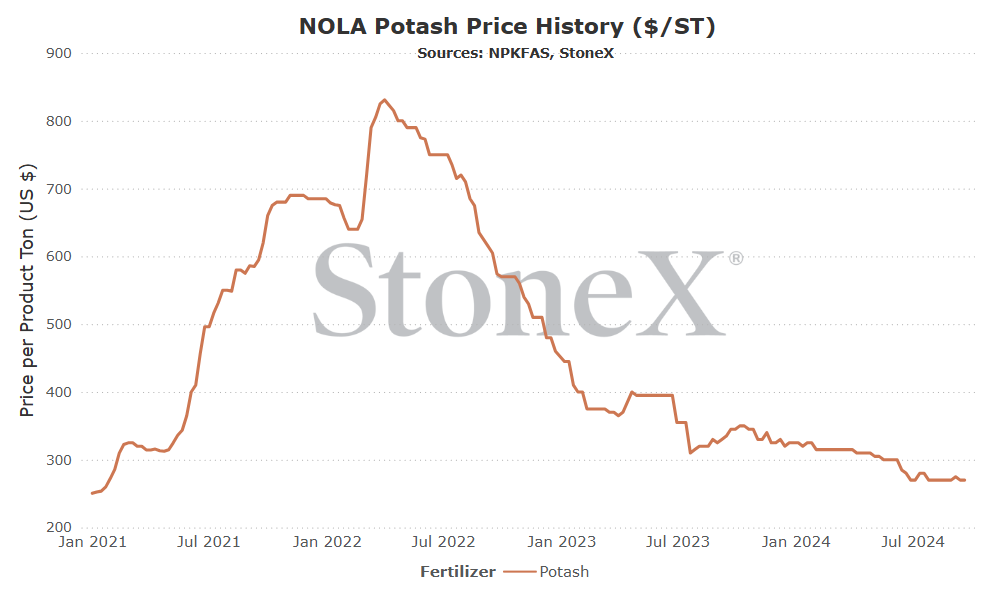
Vs 30 days ago - -4% or approximately $10 lower
Vs 90 days ago - -7% or approximately $20 lower
Vs 6 months ago - -16% or approximately $50 lower
Vs 1 year ago - -25% or approximately $85 lower
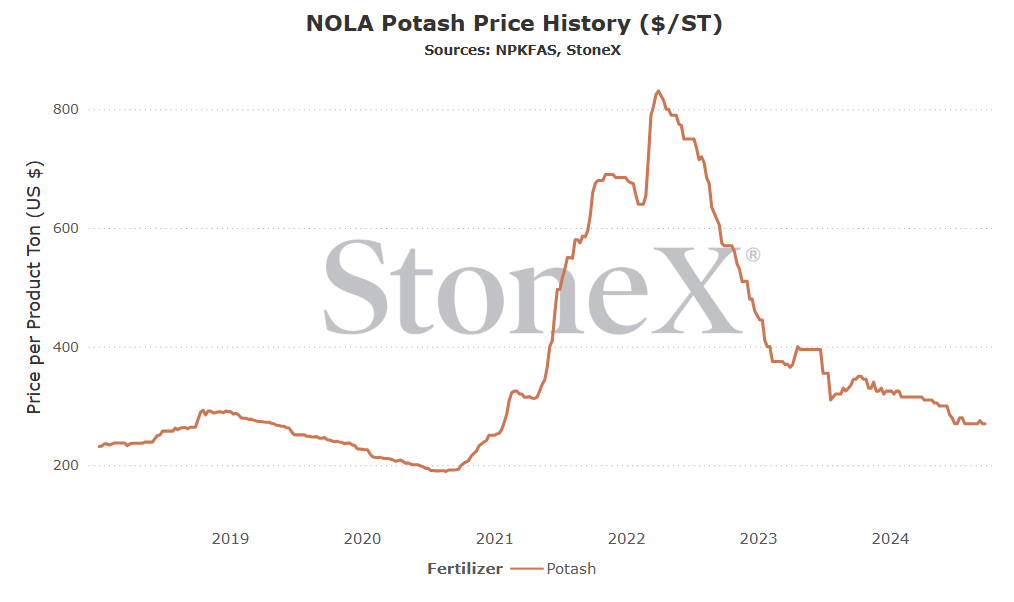
U.S. Midwest Average (average of several points across the Midwest)
Vs 30 days ago - -3% or approximately $9 lower
Vs 90 days ago - -8% or approximately $28 lower
Vs 6 months ago - -13% or approximately $48 lower
Vs 1 year ago - -21% or approximately $84 lower
- In season logistics get stressed – to me, this is the highest likelihood but the lowest impact situation. In season is tough on logistics. Especially when the market has been so conservative in the lead up. If we see a huge run across all of N.A. at the same time, the market will struggle to keep up and prices could rise for a little period in time.
- Attacks on Israel start targeting potash production - most of the attacks on Israel have been targeting the public. Their adversaries are looking for the "media wins" rather than attacks that will cripple Israel. I'm not saying that Israeli potash operations are what drive their economy. However, if Iran and others start trying to attack their economy for a longer-term impact, potash production could be on that list.
- Blockades of Russian produced potash – if in season logistics are the high probability/low impact factor, then Russian product getting blocked is the opposite. It seems like a very low probability situation that the world will block Russian product...and it would have to be the world. Just a few countries putting tariffs on Russian product doesn't do anything but hurt their farmers. However, if it started to happen...
- Exporters like Belarus return to full export flows – this doesn't seem like something that will happen overnight, but it does seem like something that will happen. Belarusian potash manufacturers want to return to the global export marketplace. That is a lot of profit that is being lost. They, and others, will continue clawing their way back to normal. That means more supplies available.
- New production starts coming online - Russia / China / Laos. There are plenty of increased production projects going on around the world right now and most of the remaining list looks like they are going to be completed. When those tons come online, it is even more supply on an already well supplied marketplace.
- Poor fall run equates to a heavy inventory carryover – while it doesn't seem likely today, there is certainly a chance that the N.A. fall runs fails to meet expectations. If this were to happen, we will go into the start of 2025 with already full inventories. Manufacturers start getting desperate in those times. They do not want to shut down their production, but they also already have full warehouses. They will fight for any open space in the market and typically that fight elicits lower values.
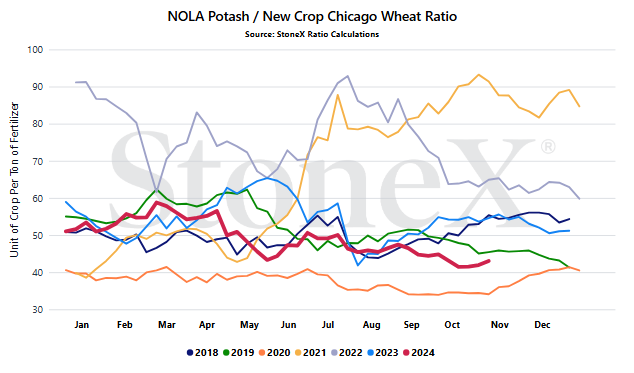
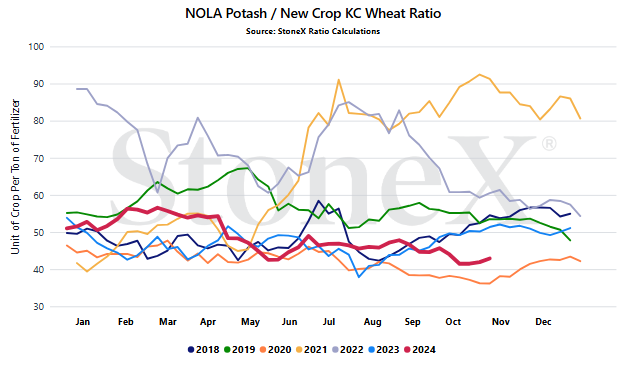
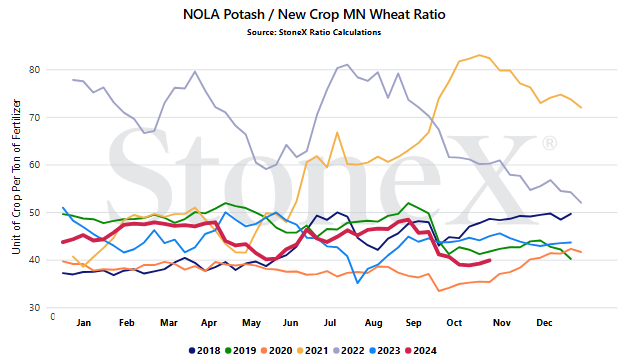
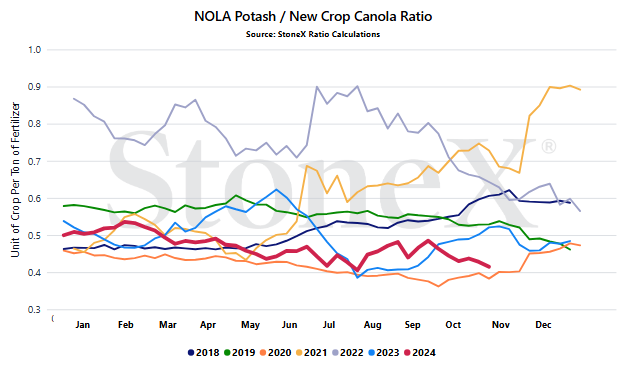
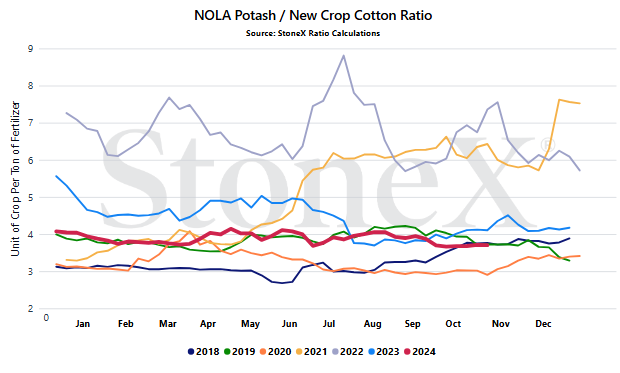
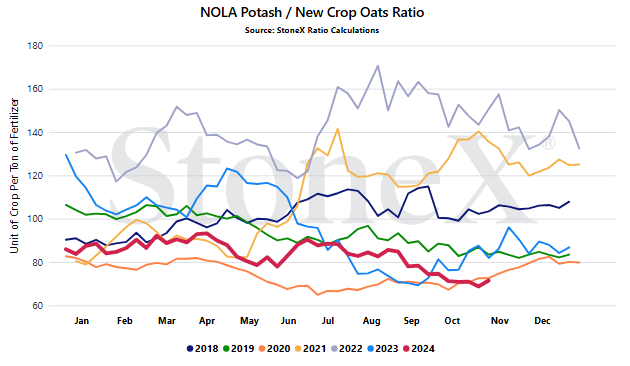
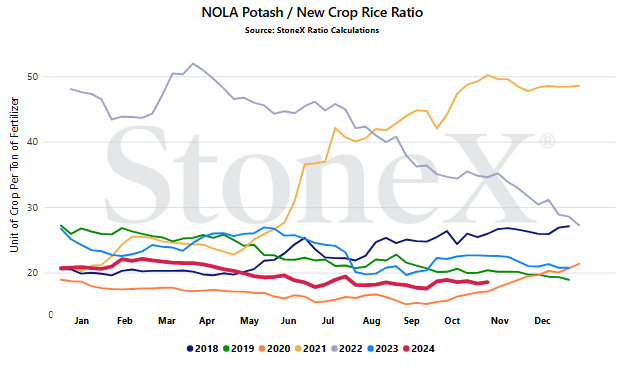
Where are the current potash/grain ratio values today
We believe that only looking at the flat price of either grains or fertilizer can be misleading:
-
Only selling grain can hurt you if fertilizer prices rise substantially
-
Only buying fertilizer can hurt you if grain prices fall
We look at the ratio "value" to get a better indication of where we are or how many bushels of X does it take to pay for 1 ton of fertilizer.
Would you rather:
-
Spend 120 bushels to pay for 1 ton of potash
-
Spend 60 bushels to pay for 1 ton of potash
When we compare the current ratio value against recent years, we start to see if we are high or low.
YOUR VALUES MAY LOOK DIFFERENT
This graph looks at the NOLA potash price vs the flat grain price. There are no logistics on either product. Your location will look different due to fertilizer logistical costs, grain basis, etc.
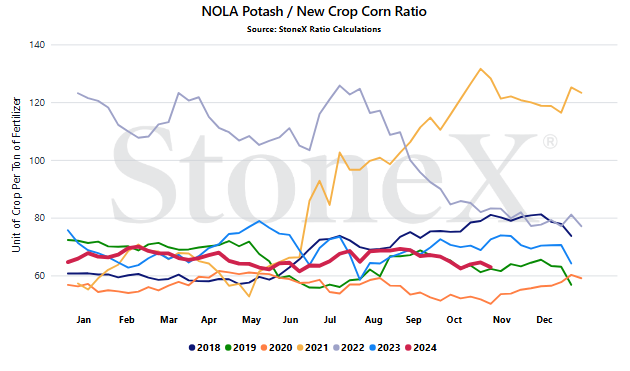
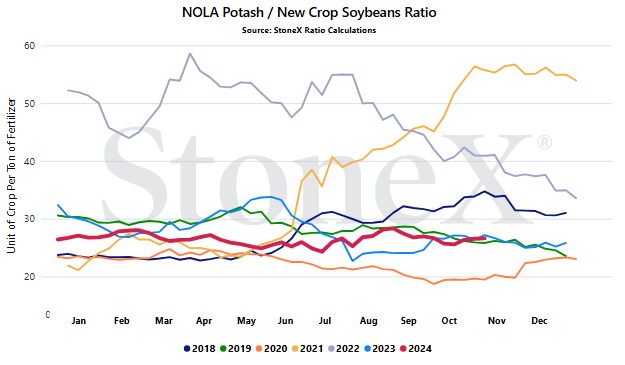
- New/increased production timing - there are a lot of new tons coming online in the coming months/years. When these tons arrive, it should put even more downside pressure on the marketplace as they fight to force their way into the market. This isn't expected to happen in the next couple months, but it is expected.
- Logistics - now that we are beginning the fall N.A. application run, how successful that run is will determine how prices react for the next couple months and into 2025. A solid run will pressure logistics and possibly drive costs higher for a short time. It would also cause inventories to be emptied, giving manufacturers plenty of places to go with product. On the flip side, a poor fall run has the opposite effect. Unfortunately, all we can do right now is sit back and watch.
StoneX Ratio Calculation
The ratio calculation is derived from Bloomberg historical grains values as well as fertilizer values from StoneX, NPKFAS, and Argus.
The calculation is simply dividing the fertilizer price by each grain price.
All data was sourced from StoneX unless otherwise noted.