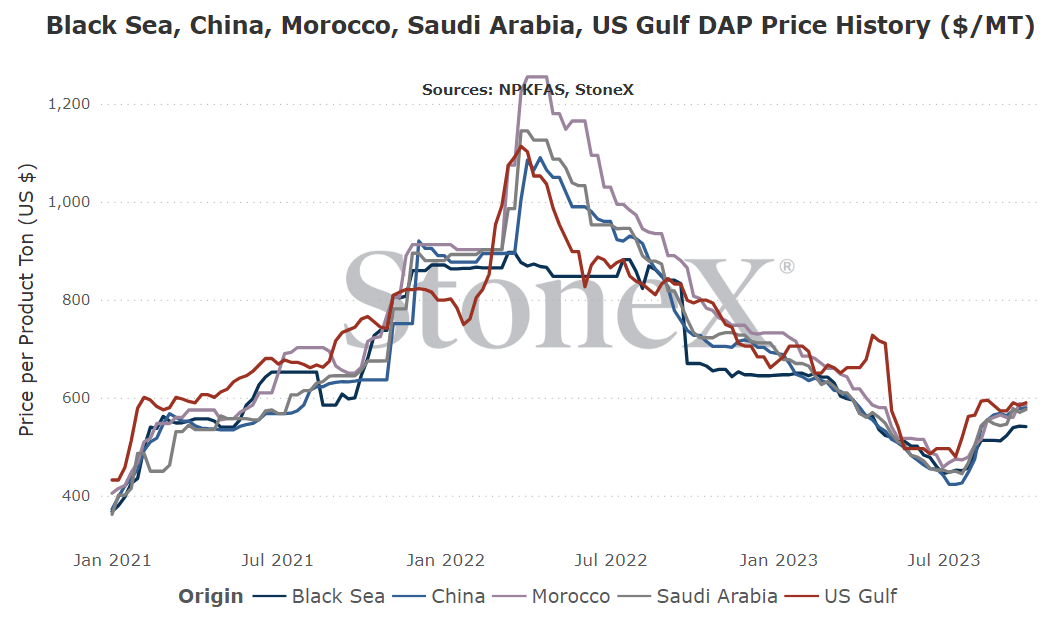
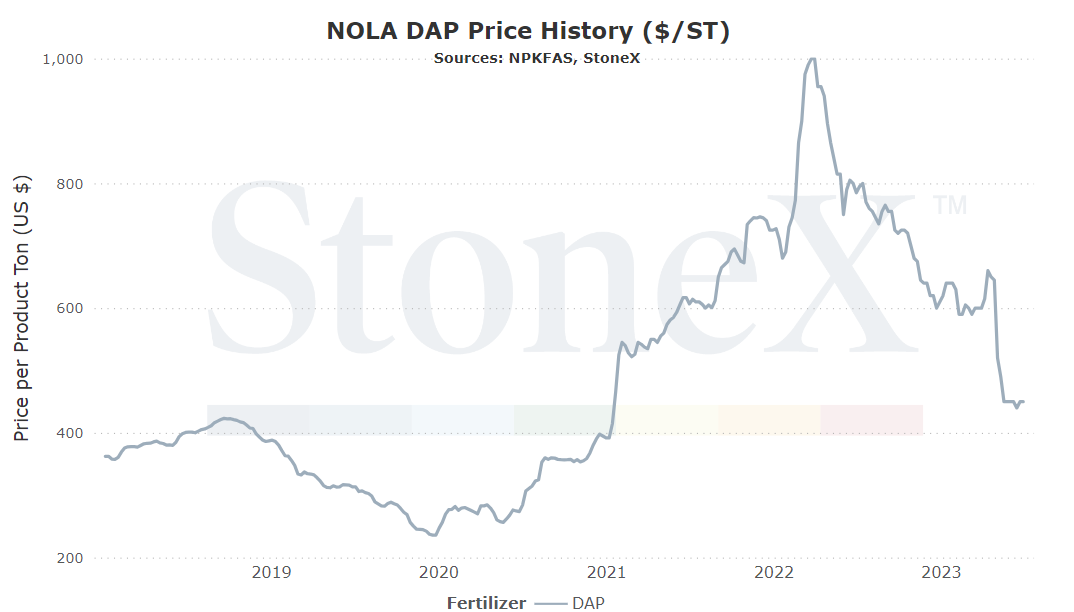
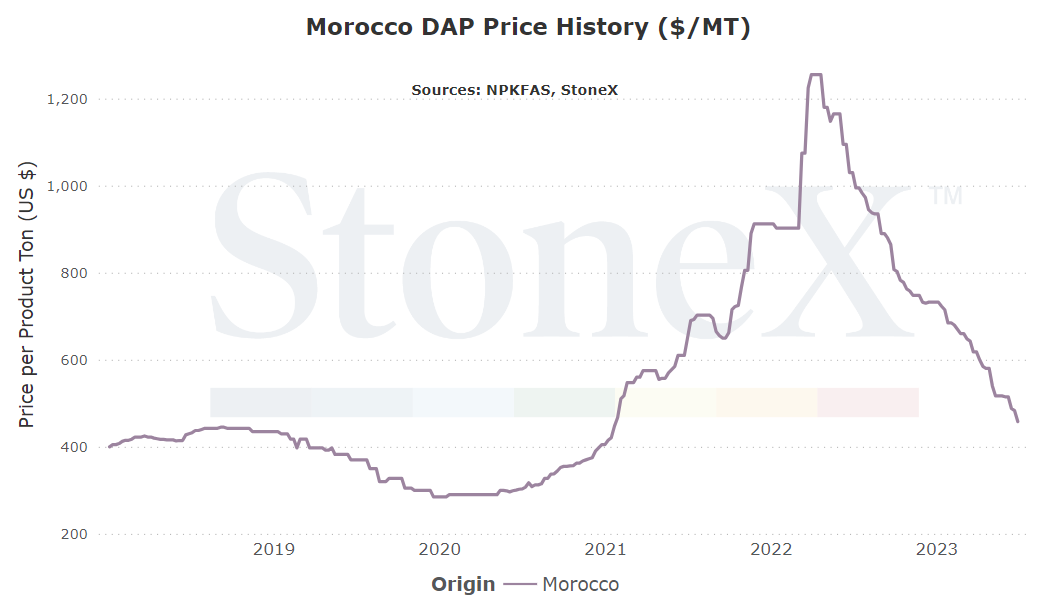
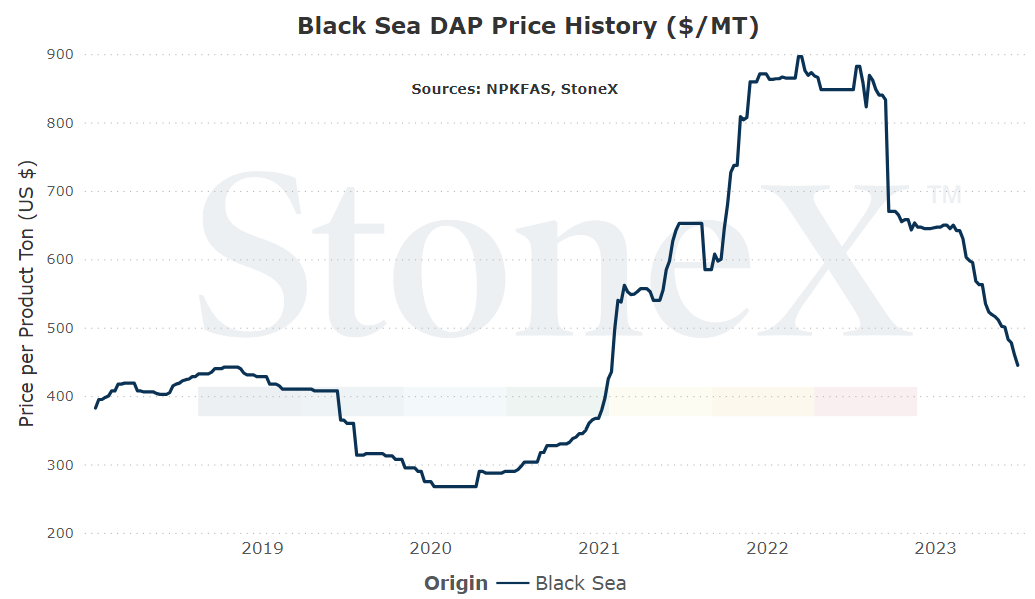
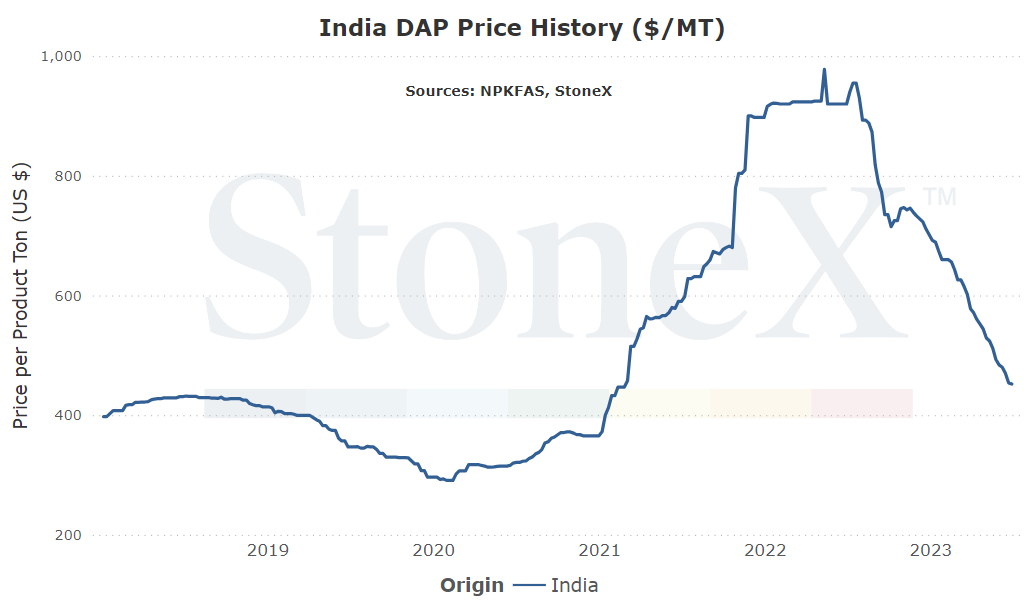
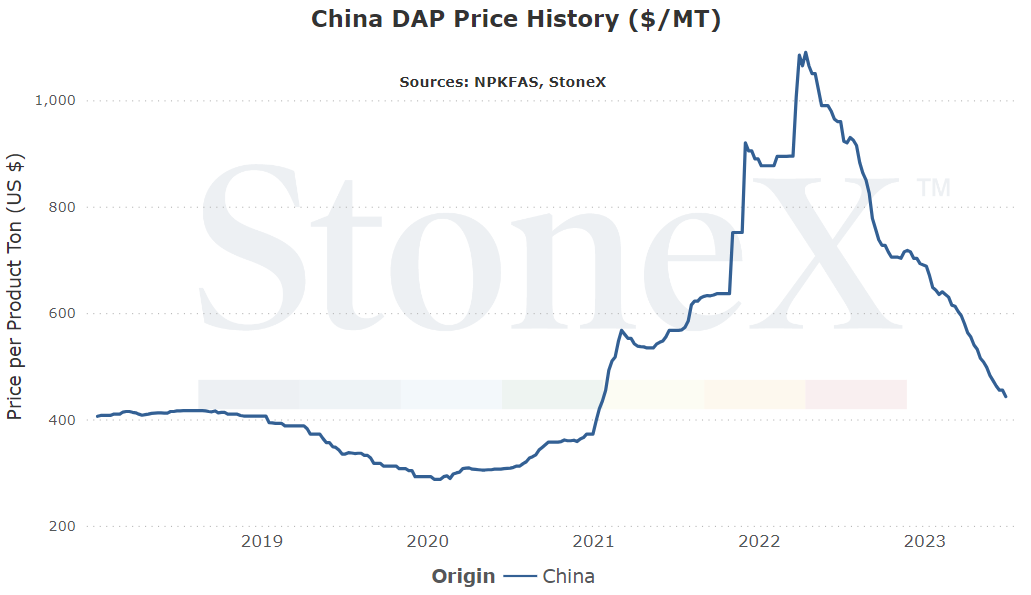
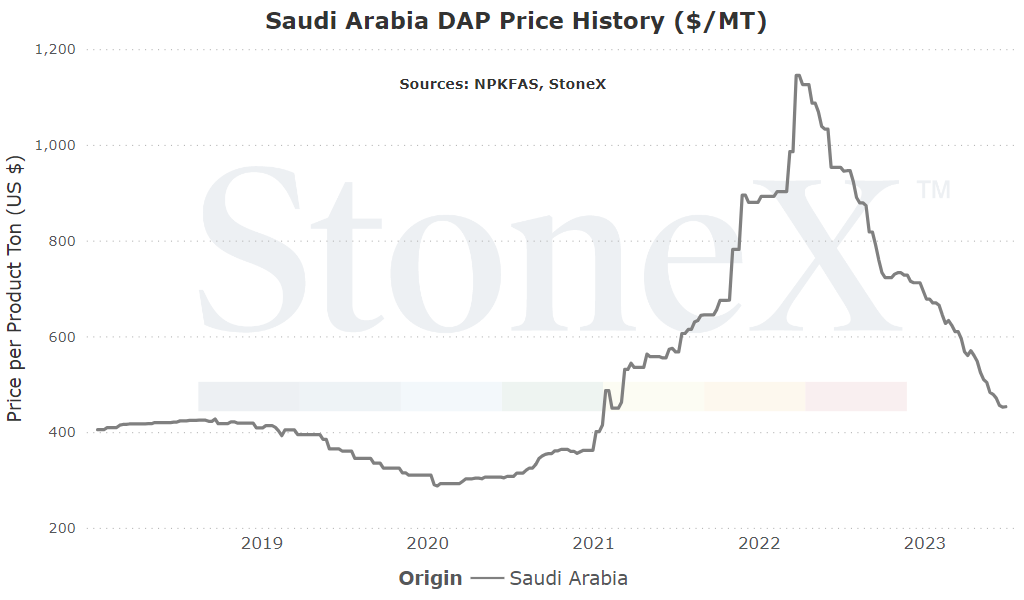
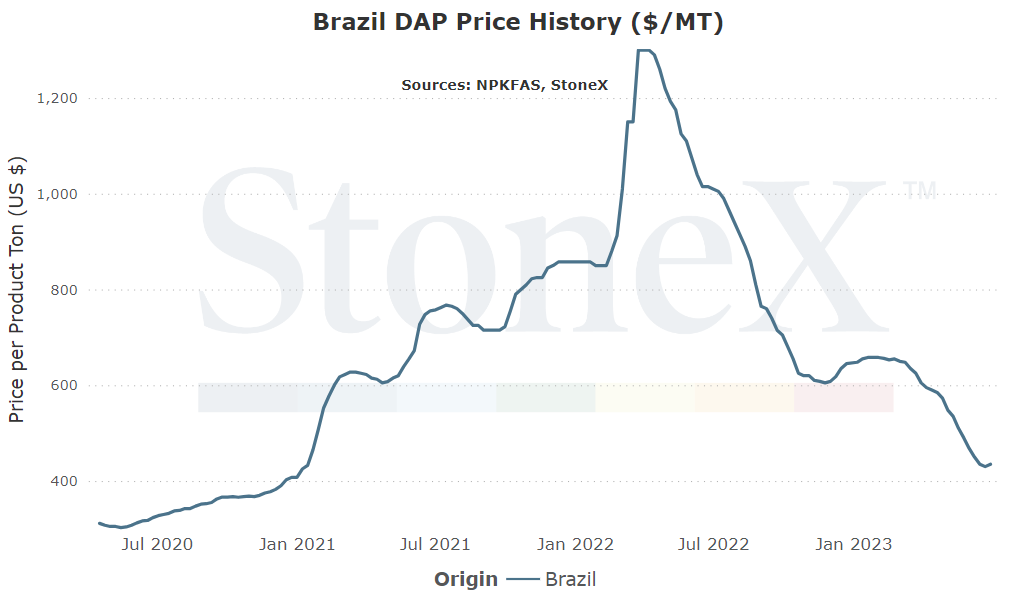
I will say this now and will say it going forward to eternity: these are the flat price graphs for each individual location. Your price where you are is going to be different. There are logistics. There is the cost of storage/interest/insurance/etc. These graphs should not be taken as "it shows the price at $700, why isn't my price $700". These graphs should be used to give an appreciation for price movements.
All values are in metric tons and USD currency.
Global
As much as it pains me to say this to buyers of phosphate, it looks like global values have bounced off a floor and have found at least short term support. Major global buyers have been aggressive with their purchases which has allowed manufacturers to feel comfortable and move price ideas higher. Continued questions/concerns regarding Chinese export programs certainly haven't helped!
However, longer term, I cannot help but see more downside. Phosphate values obviously did a TON of work coming off their high's set back in April '22, but it didn't do nearly as much work as other fertilizers have done on a percentage basis. When we look around the world, it seems like supplies are getting closer to normal...but today's values are still high vs historic norms. None of that takes into account what happens in a few years when Norway's production begins to find its way around the world!
Long story short - short term markets should continue flat to higher as demand continues to press but longer term should see more corrections in store.
Australia
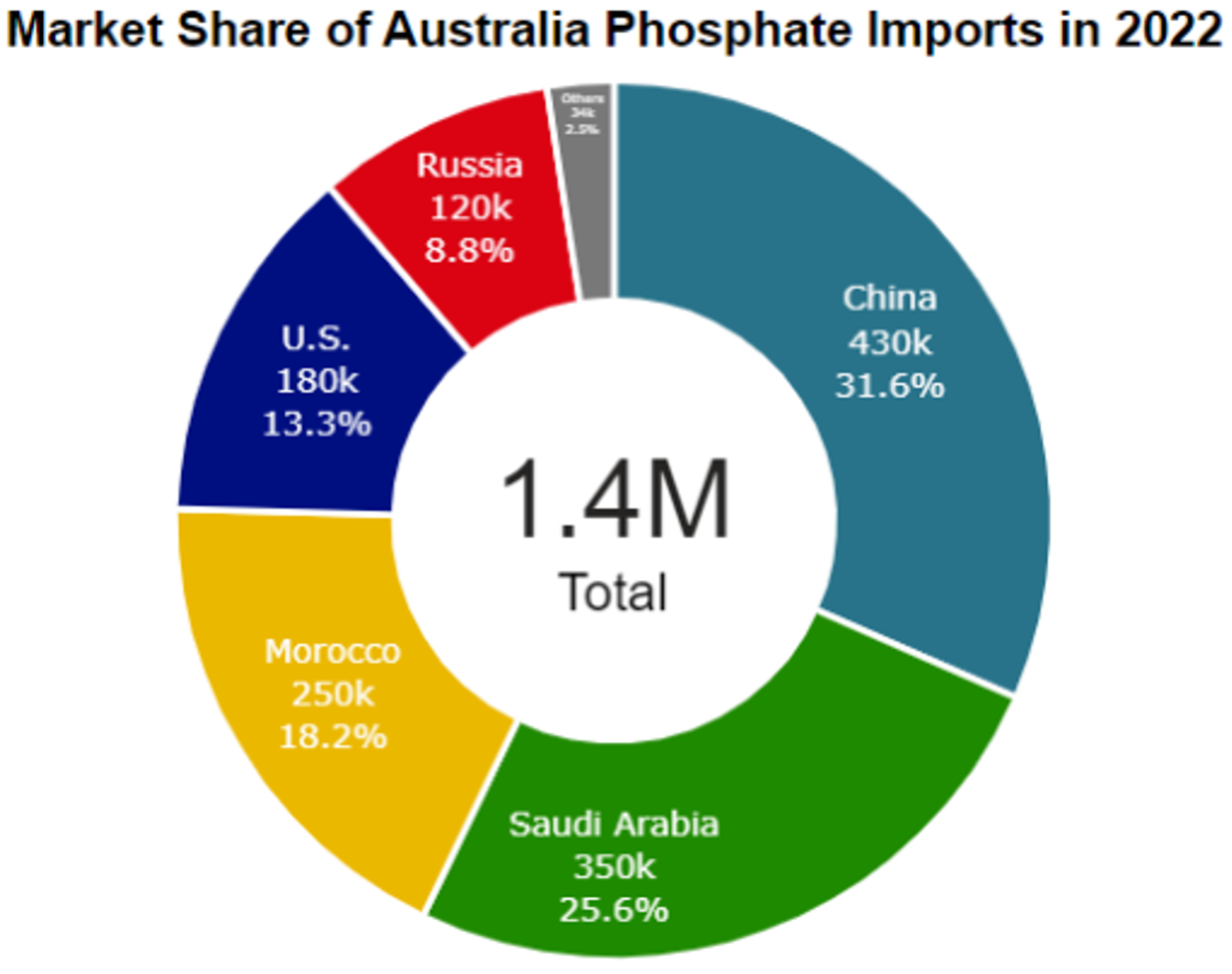
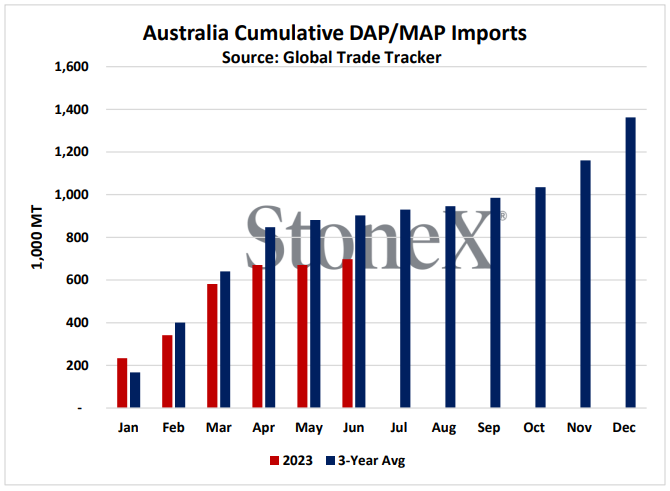
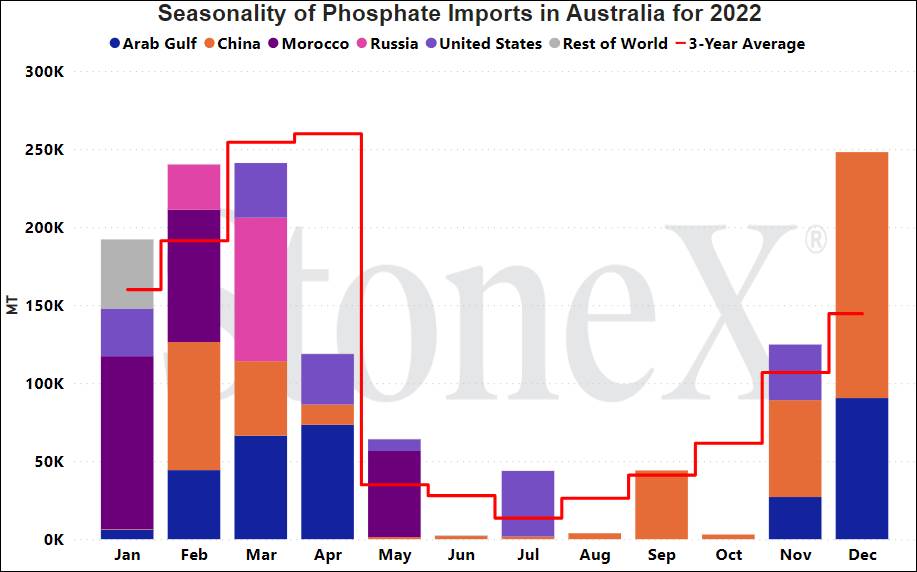
So Australia is in a bit of a pickle if the bearish outlook is real (I'm not right 100% of the time...but I try to be!!). On the one hand, it is only October. There is PLENTY of time between now and application season ramping up in February. However, that calendar isn't nearly as long as it feels today. The next few months will move really quickly and that demand period will be upon us.
Now, consider it from the importer POV. If they share our sentiment on the phosphate outlook (bearish longer term), they will not be thrilled about bringing unsold priced vessels to Australian ports. Recipe for financial disaster. That means that we could easily see imports slow to appear. If this drags on long enough, we could start the next demand cycle on the lower side of inventories.
This is not a fear tactic. This is merely trying to bring attention to a situation that could start coming to a head in the next couple months.
Long story short - be cautious as we start looking forward but have conversations with your supplier about your anticipated needs moving into later Q1/Q2 of 2024. Much better for the supply chain to have a plan of attack rather than hoping.
Comments
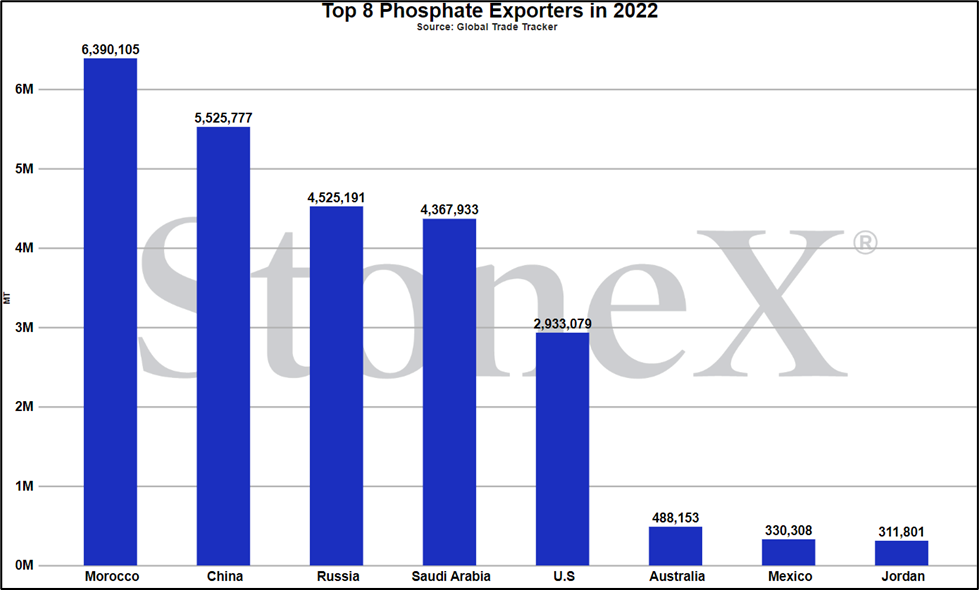
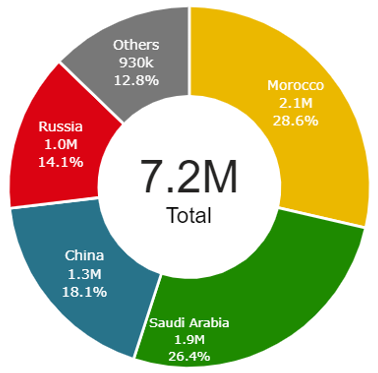
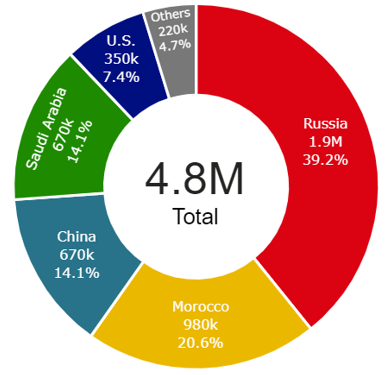
China is the world's largest producer of DAP/MAP.
China is normally the world's largest exporter of DAP/MAP.
It makes sense that we should watch China for signs of where the market is going!!!!
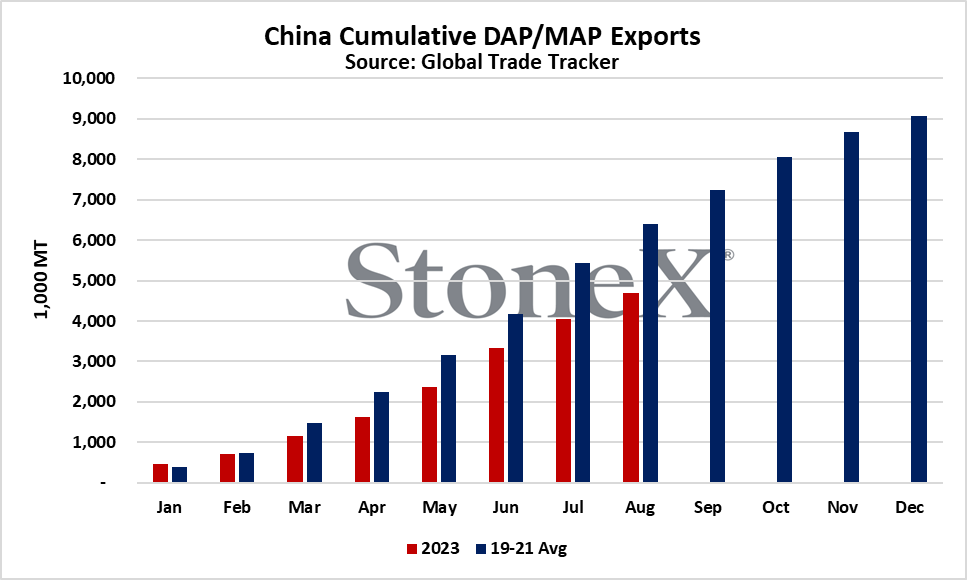
Unfortunately for those hoping for lower values, Chinese exports thru August fell further behind their average numbers.
- January thru August 3-year average (2019 - 2021) - 6.4MMT
- January thru August this year - 4.7MMT
While this is an improvement over last year's pace, it still shows their exports lagging traditional numbers which is leaving the world more tightly supplied than it would normally be.
Global buyers are holding out hope that Chinese export programs will begin to pick up pace and help supply even more supply to the marketplace. Unfortunately thru August, that is not the case.
GLOBAL PHOSPHATE MARKETS CONTINUE TO DODGE NATURAL DISASTER BULLETS (MOROCCAN EARTHQUAKE)
Last month it was hurricanes. This month it is earthquakes. The common denominator is that the phosphate market continues to dodge bullets.
Last month, we talked about the Hurricane that traveled thru the Gulf of Mexico and launched into Florida just north of Tampa. Fortunately for the phosphate market, it moved just far enough north to spare the Tampa Bay region and as a result, spared phosphate production and shipping lanes.
This month, Morocco was devastated by a major earthquake that had horrible impacts on lives and buildings. From a fertilizer perspective, fears quickly grew that phosphate production facilities and supply lines were damaged and/or destroyed.
Fortunately, this was not the case. All mines/shipping lines/production facilities/ports/etc. were largely untouched and production continued with very little downtime.
While we were fortunate that neither event resulted in a market change, it does highlight how susceptible the global market is to singular events. We can believe that we have the market figured out...but it only takes one event completely out of our control to completely turn the market on its head.
INDIA/BRAZIL IMPORTS CONTINUE THEIR HOT PACE
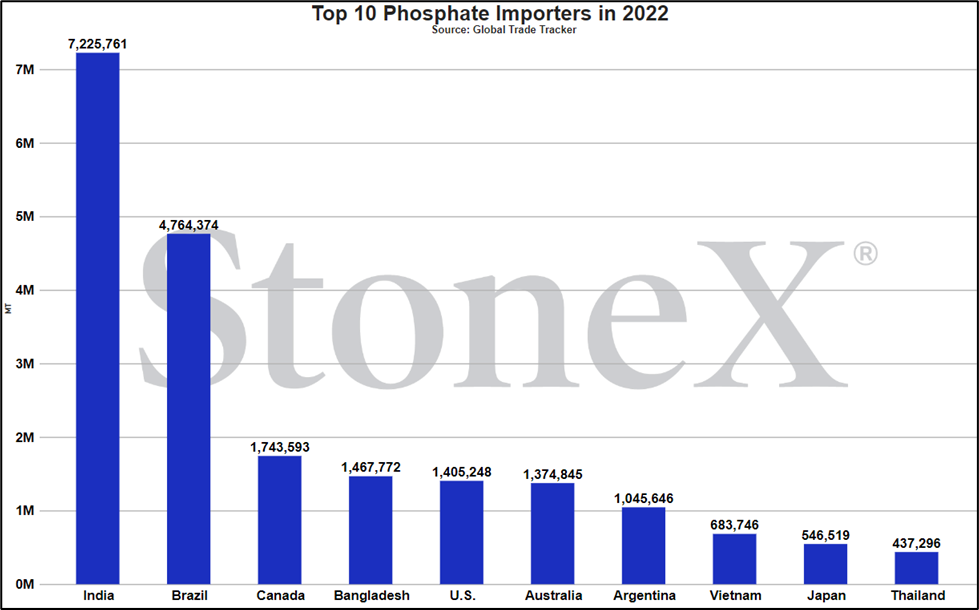
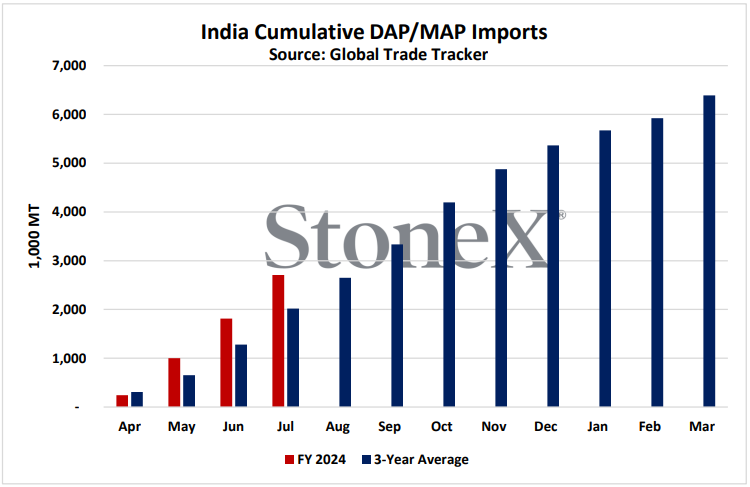
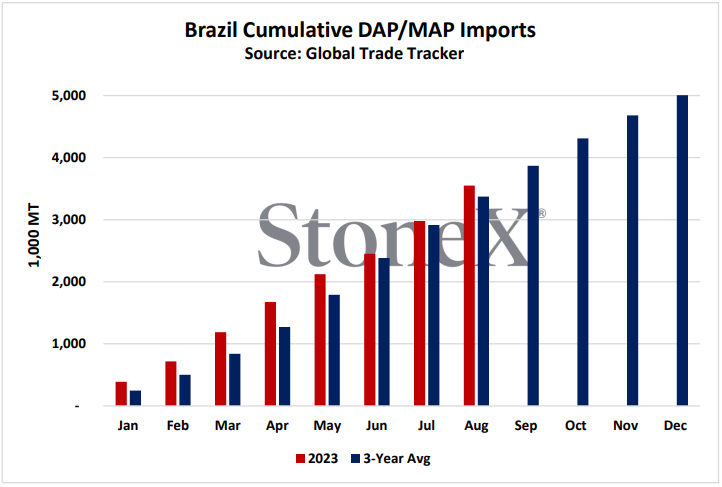
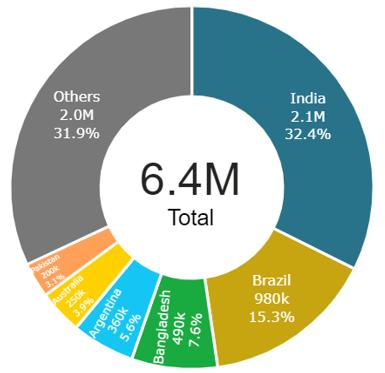
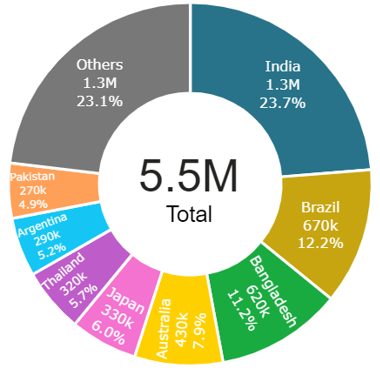
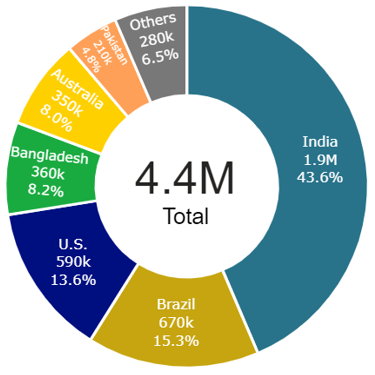
A quick glance at the top global importers of DAP/MAP above will show that India and Brazil rank numbers one and two in the world. If we need to focus on China due to their being the largest exporter, it makes sense to focus on two of the biggest importers as well!!!!
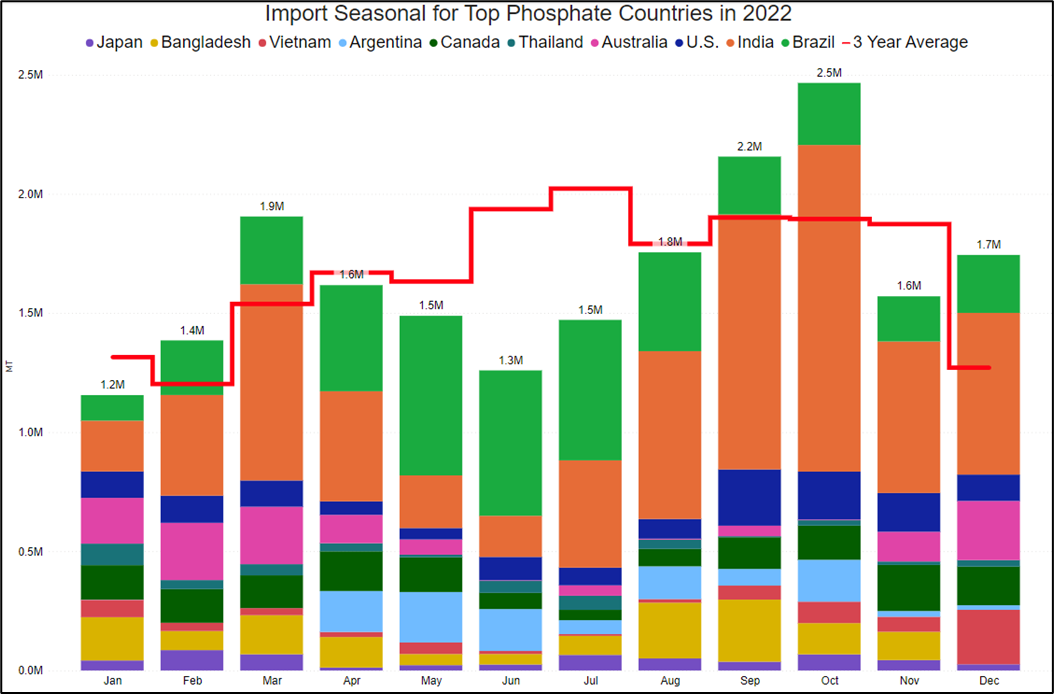
Brazil imports thru August continue to track just slightly ahead of their 3-year average with no signs of slowing down for the remainder of 2023. There is nothing there that raises our suspicions.
However, India continues to be WELL ahead of average with their pace thru July closing in on a million tons ahead of average. This, combined with Chinese exports being lowered, have combined to create a tight global S&D situation.
What India does going forward is what has my interest.
Will they continue at this pace? - if this is the storyline, then phosphate likely stays firm. They are locking up a lot of available product around the world which is keeping manufacturers in control of price ideas.
Will they be able to pause purchases in the coming months? - this is my fear. If they are this far ahead, do they reach a point where they look at stockpile and realize they do not need as much as is coming and as a result, shut down purchases. In this scenario, the world is left with little demand.
Today, we are not hearing anything one side or the other, but will continue to monitor the situation since its impact on the global market can be huge.
NOLA/New Orleans, Louisiana DAP price comparison
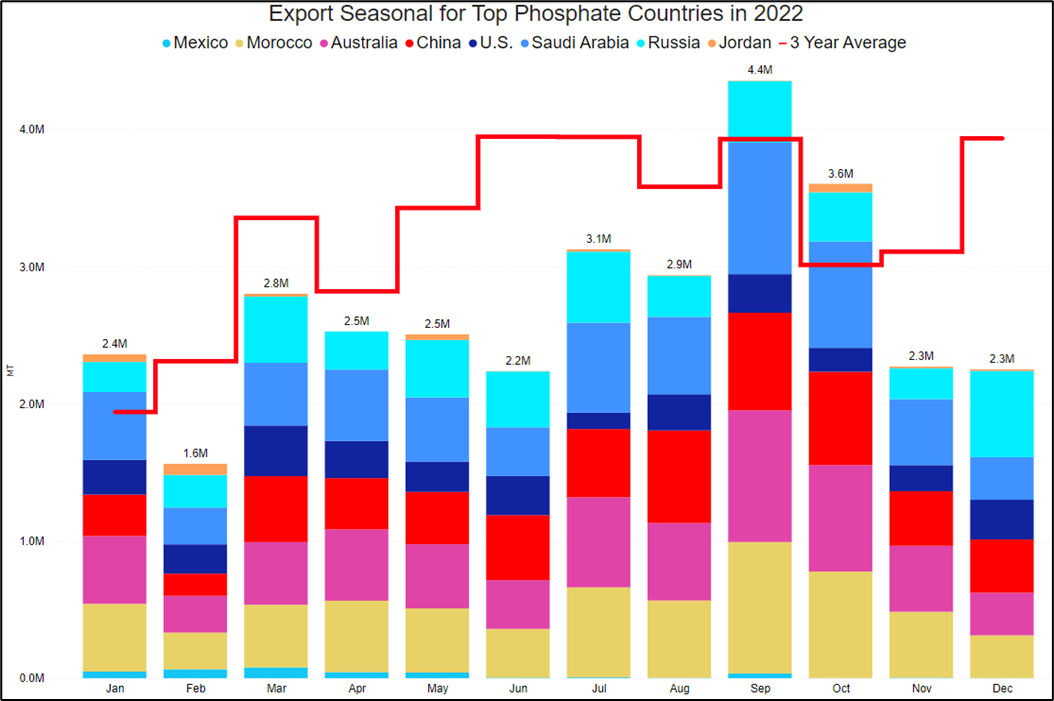
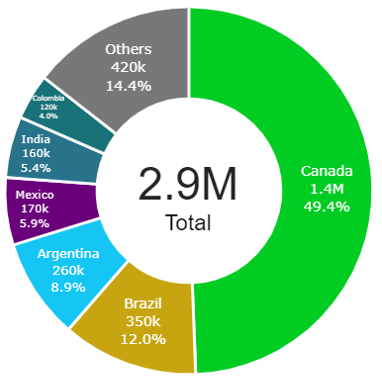
Number 5 global exporter in 2022
Price comparisons
Vs 30 days ago -
Vs 90 days ago -
Vs 6 months ago -
Vs 1 year ago -
Morocco DAP price comparison
Number 1 global exporter in 2022
Price comparisons:
Vs 30 days ago -
Vs 90 days ago -
Vs 6 months ago -
Vs 1 year ago -
Black Sea DAP price comparison
Number 3 exporter of DAP/MAP in 2021
Price comparisons:
Vs 30 days ago -
Vs 90 days ago -
Vs 6 months ago -
Vs 1 year ago -
India DAP price comparison
Number 1 global importer in 2022
Price comparisons:
Vs 30 days ago -
Vs 90 days ago -
Vs 6 months ago -
Vs 1 year ago -
China DAP price comparison
Number 2 global exporter in 2021
Price comparisons:
Vs 30 days ago -
Vs 90 days ago -
Vs 6 months ago -
Vs 1 year ago -
Saudi Arabia DAP price comparison
Number 4 global exporter in 2021
Price comparisons:
Vs 30 days ago -
Vs 90 days ago -
Vs 6 months ago -
Vs 1 year ago -
Brazil DAP price comparison
Number 2 global importer in 2021
Price comparisons
Vs 30 days ago -
Vs 90 days ago -
Vs 6 months ago -
Vs 1 year ago -
- Chinese exports continue to fall behind "average" export pace – sometimes, the flow or lack of flow from the world's largest producer and exporter should be taken into consideration for the global phosphate market. Oh, who am I kidding, it should ALWAYS be considered. While exports of DAP/MAP are better than last year, they are still trailing "normal". That means the world is still more tightly supplied than typical.
- World's largest importers either on or ahead of schedule – mainly focusing on India/Brazil here. Brazil is slightly ahead of their average import pace while India is well ahead of import pace. If this continues, the heightened demand will continue to help press price ideas higher.
- N.A. inventories still tight following last spring – unfortunately, it does not feel like the phosphate market has done as good a job as the potash market has in getting refilled after a huge spring. As N.A. approaches the fall application period, it may quickly find that available in place supplies are not as ample as is typical and that resupply loads are longer to arrive...and higher priced.
- Phosphate values are still considered high – to be fair, the phosphate markets have come off a decent amount from their high's back in April '22. However, when looking at how much phosphate dropped against nitrogen and potash, it is nowhere near as much. That, in addition to some major grain ratios being on the high side, could spell trouble for demand. Will it go to zero? Of course not. Could we see farmers cut their rate 15 - 25%? Possibly. Can small percentage changes result in big market changes. Bet your butt they can.
- Ahead of schedule imports for India could mean lower demand in the near future – on the bullish factor side, I said that if India continues to buy at this pace, it could continue to boost price ideas. However, the opposite is also true. What if India gets comfortable with their inventories/stockpiles due to heavy import flows...then decides they can slow down or stop for a few weeks or longer? No doubt the market would take notice.
- Current challenges to CVD against Morocco could be successful – this is music to the farmers ears. In the summer of 2020, a counter vailing duty case was brought against Moroccan and Russian produced phosphate. Since that time, imports from both origins have gotten very low, keeping N.A. supplies tight and competition scarce. Now, there are challenges against at least the Moroccan piece of it. If these challenges are successful, imports can freely come to the U.S. (and as a result, Canada) and not only add supply to the market but also add competition.
We believe that only looking at the flat price of either grains or fertilizer can be misleading:
-
Only selling grain can hurt you if fertilizer prices rise substantially
-
Only buying fertilizer can hurt you if grain prices fall
We look at the ratio "value" to get a better indication of where we are or how many bushels of X does it take to pay for 1 ton of fertilizer.
Would you rather:
-
Spend 150 bushels to pay for 1 ton of DAP
-
Spend 80 bushels to pay for 1 ton of DAP
When we compare the current ratio value against recent years, we start to see if we are high or low.
YOUR VALUES WILL LOOK DIFFERENT
This is a work in progress section! We plan on looking at the relationship between Aussie grains and global price points (and hopefully Aussie specific locations, though that data is hard to secure, very protected). Big reason why we are still in the "trial" stage of this newsletter!!!!

- Chinese export flow questions remain - for urea, China was making a major comeback as a normal exporter...until they were not...until now when we are not sure. The same situation can occur with phosphate with even larger ramifications given that they are the top manufacturer/exporter of DAP/MAP in the world. If they decide to cut phosphate exports, the global phosphate market should be bullish. If they return to normal export flows or more, the global phosphate market should be bearish.
- Importers approach to the coming demand cycle - if the outlook remains bullish for importers, then supplies should not be an issue as they will feel comfortable bringing product in anticipation of demand. However, if they share our forward POV that a normalized global supply market will lend bearish pressure on prices, they will be more reluctant to import. There is plenty of time before we get into the meat of demand...but the calendar goes fast. Seems to go faster the older I get but that is a newsletter subject all to itself!!!
All data was sourced from StoneX unless otherwise noted.
This material should be construed as market commentary, merely observing economic, political and/or market conditions, and not intended to refer to any particular trading strategy, promotional element or quality of service provided by the FCM Division of StoneX Financial Inc. (“SFI”), StoneX Financial (Canada) Inc. (“SFFC”) or StoneX Markets LLC (“SXM”). SFI, SFFC and SXM are not responsible for any redistribution of this material by third parties, or any trading decisions taken by persons not intended to view this material. Information contained herein was obtained from sources believed to be reliable, but is not guaranteed as to its accuracy. Contact designated personnel from SFI, SFFC or SXM for specific trading advice to meet your trading preferences. These materials represent the opinions and viewpoints of the author, and do not necessarily reflect the viewpoints and trading strategies employed by SFI, SFFC or SXM. The FCM Division of StoneX Financial Inc., a subsidiary of StoneX Group Inc., is a member of the National Futures Association (“NFA”) and registered with the U.S. Commodity Futures Trading Commission (“CFTC”) as a futures commission merchant and commodity trading advisor. StoneX Financial (Canada) Inc. is currently registered as a Futures Commission Merchant or equivalent in all provinces of Canada and is a member of the Investment Industry Regulatory Organization of Canada.