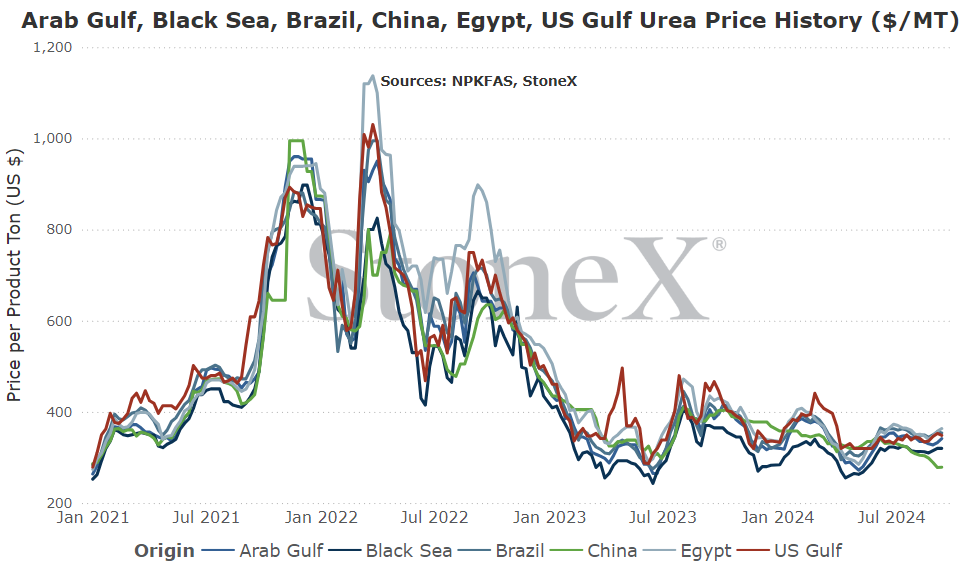
Globally, my focus continues to be on the supply issues we are facing. The EU is still producing at 75% of normal with no signs of improving anytime soon. Brazilian production is still offline due to high natural gas costs. Chinese exports continue to disappoint and is leaving a big hole in supplies. If this was years ago when the world had a large amount of excess production, I wouldn't be concerned...but that isn't the case. Global N production has been allowing global N demand to catch up and that production/demand differential continues to shrink.
Unfortunately, I am still leaning to the side of seeing prices rise as we move thru the calendar. Chinese exports remain my biggest "Josh, you were dead wrong" factor because if they return in a big way Q4 '24/Q1 '25, all bets are off. However, that does not seem likely today. My fear is that when global demand returns in a big way, manufacturers are ready to move prices higher as a result.
India concludes purchase tender and follows with another
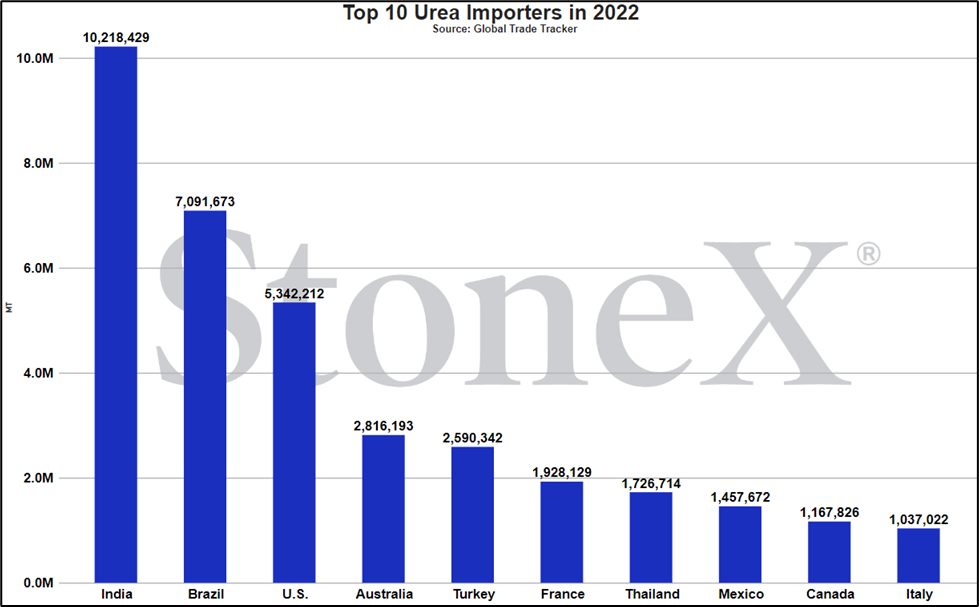
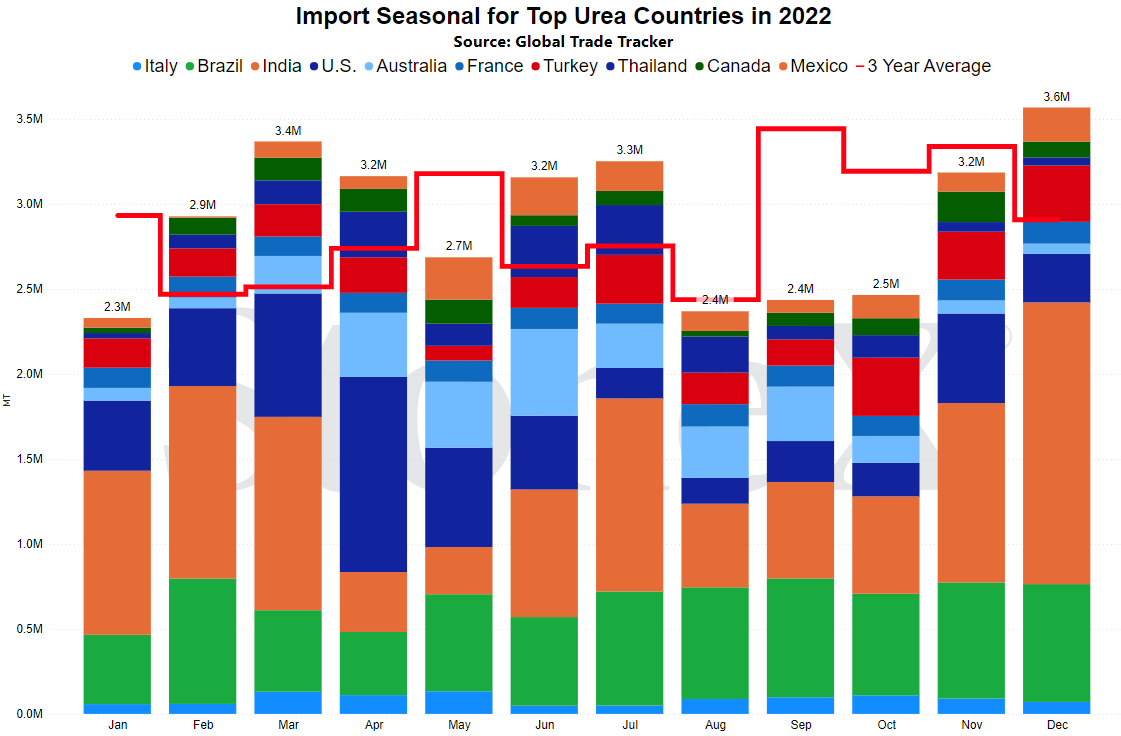
In last month's edition, we were still in the thick of an Indian urea purchase tender. It had a longer shipment window and we expected solid participation. For once, we were right!
The tender concluded with India securing nearly 1.2M tons of urea. This was a large amount and little to none of it was expected to originate from China which meant this purchase helped to "clean up" a lot of excess inventory in the market. This helped price ideas stabilize and gave manufacturers hope that the worst of the price slides were behind them.
After that, most beliefs were that India could wait until near the end of the calendar year to make another purchase tender. India had started their season very comfortable on stockpiles, domestic production was running well, and they had just secured a large amount of tons. Needless to say, the market was surprised when a fresh purchase tender was announced last week (September 19). If the last tender acted in a way to stop the price bleeding, this one could serve as a strong bull push.
The shipment window of this tender runs thru November 20 which is a lot of calendar to work with. Because of that, we SHOULD see a lot of tons offered...emphasis on "should". The reason I say that is that we are hearing that sellers in the previous tender are still working to secure tons to back their commitments and may be finding out there wasn't as much product/weakness as previously thought. If that is true, this tender may turn out significantly less tons offered. We are still not seeing any sign of China's return (more on that below). Manufacturers appear comfortably sold. Demand is still expected to be solid. That is a manufacturers/sellers paradise and we know what they want when they have control.
Obviously we need to see how this tender plays out. There have been so many twists and turns on recent India purchases that I do not dare hang a bull or bear sign around this thing so early. However, if I have to choose a price direction coming out of it, I'm picking higher. I do not like it, but that is what the tea leaves are telling me.
What does this mean for farmers?
One of the beautiful things about the India approach to buying is that it lays the market bare. All the talk/hype/b.s./etc. are laid to rest as global sellers are forced to show their hand.
Unfortunately, while this process can help to destroy global price ideas with high volumes offered and low values submitted, it can also show a market that is very tightly supplied with few tons offered and high prices submitted.
It appears that we are in the 2nd camp.
We have been seeing global urea values rising as the offer due date nears. We have also been hearing more and more stories of just how tight inventories are around the globe thru the end of the year.
All of these, if they hold true, reflect a market with rising prices...and those rising prices should eventually make their way to you. Australian farmers, like any farmer around the world, is a part of the global economy. Things halfway around the world impact everyone.
Egyptian production continues to suffer from tight gas supplies
All summer, one of the common storylines has been Egyptian urea production issues. As temps moved higher, public demand for natural gas moved higher as well. As a result, the industrial complex was asked/forced by the government to reduce their pull of inventories. Urea/nitrogen production was not immune and has seen the plants turn off until those gas inventories improved.
I thought that as we hit September that we would see those gas supplies improve and no longer impact nitrogen production. The Northern Hemisphere is moving out of summer so temps are dropping. The Egyptian government has also taken steps to purchase import natural gas to keep its industrial sector running smoothly. Unfortunately, they are not out of the water yet.
In the last 30 days, we saw yet another production curtailment occur. To date, production is improving with gas supplies but I do not believe they are back to 100%. I think that they will, but every day/week/month where production stops or slows are tons that are lost for the year. For a global urea market that is already struggling with supplies, we need production running full steam.
What does this mean for farmers?
Production hiccups/curtailments = less tons produced
Less tons produced = tighter S&D
Tighter S&D = higher prices
Egypt just represents another supply issue around the world...another supply issue the global urea market will struggle to withstand without reacting.
Chinese exports remain all but non-existent
While I basically knew that when we got the August Chinese export data, it was going to show that volumes were poor, I held out hope that I was wrong. My hope was that export volumes were much bigger, causing the world market to panic, and allowing values to drop.
I really wanted to be wrong...but I wasn't.
August exports were reported at only 25,513 tons. Without some context, that doesn't mean much:
- Historic annual export volumes - 5M to 5.5M tons
- Believed daily urea Chinese production - 197,000 tons
The August export data brought China's 2024 calendar year cumulative total to approximately 245,000 tons. That means from January thru August, China has exported the equivalent of a little over a day's production. Think of the supply hole that leaves in the world.
Unfortunately, my hopes do not rise for the remainder of 2024. Based on the recently concluded India urea purchase tender, it does not look like China played any part. As a result, we expect September data to be meager at best. Then we look to Q4. Rumors/stories continue to paint a picture where the Chinese central government is continuing this approach of not allowing exports. They have now learned that by restricting exports, it keeps more than adequate supplies available for domestic farmers as well as keeping prices lower than global trends. For a Communist government, that is a win/win.
Now, one of the big questions is "where are the tons going"...and I do not have a solid answer for you. There are theories but they are just that:
- Production rates are much lower than reported - possible given how difficult it is to get information from China.
- Exports are occurring to neighboring countries but not being reported - I am not a believer of this one as I think the market would pick up/discuss it if it were happening.
- China is using it - this is my best working theory. The government has told its people it needs to be more self reliant on things like food. How do you grow more food? You apply more fertilizer. I know 5M tons is a huge amount but when you think of the size of China, it isn't completely out of the realm of possibilities.
- China will do a 180 and start exporting heavily soon - this is certainly possible. As they fill domestic storage, they realize their problem and start allowing heavy exports. This would be a big bearish factor.
Ultimately, like all things China, we have to make educated guesses and go from there. At this point, I am taking the approach that Chinese exports are gone until they are not. That is a global problem.
What does this mean for farmers?
China is historically a large enough exporter/supplier of urea that it affects all corners of earth. When they are typically exporting 5 to 5.5M tons per year and this year they are only 245K thru August with signs that they get worse in Q4...it isn't a good outlook for buyers.
It gets even worse for those in the "east". Regional buyers of Chinese products are forced to turn to other, further away supply points to find their product. That means more competition for the same ton...and eastern buyers have to pay more for logistics.
Ultimately, China not existing so far this year is a big boost to global values.
Global supply situation continues to worsen
So, we have a few urea supply issues:
- EU producing 75% of normal - 3 to 4M ton shortfall (based on 15M/year production)
- China stopping exports - 4 to 5M ton shortfall (if export rates remain unchanged for 2024)
- Brazil production still offline - 1 to 1.5M ton shortfall
- Egypt production still having problems - several hundred thousand tons production lost
Some on that list were expected at the beginning of the year (EU and Brazil). However, the surprises hurt (China and Egypt). The thing that worries me is the total. 8 to 10+M tons not being produced/exported that would normally be there in the global S&D. When you look at global urea production capacity vs global urea demand, there isn't that big of a difference to take care of the shortfall.
Now, let me back up. I am NOT saying there will be outages. I'm done with that crap. At a price and a timeline, you can find it. However, what I AM saying is that inventories are tighter than they are feeling/being discussed today and I'm afraid this is the story that will emerge in the coming months. India moped up a lot of excess length in the last tender and will do more on that with this one. There is still a lot of global demand yet to step forward.
Not claiming this storyline is the gospel, but it demands our attention...
What does this mean for farmers?
Are you starting to see a theme in this month's edition?
Supplies around the world are tight...and buyers are having to pay the price.
Now, there will be instances where some domestic markets may lag global price moves. Might be due to a lack of any market demand. It might be due to excessive supplies in place (sellers wanting to make sure they sell rather than risk carrying product into 2025).
Eventually, the global market wins out and unfortunately, it looks like this story will last for a while.
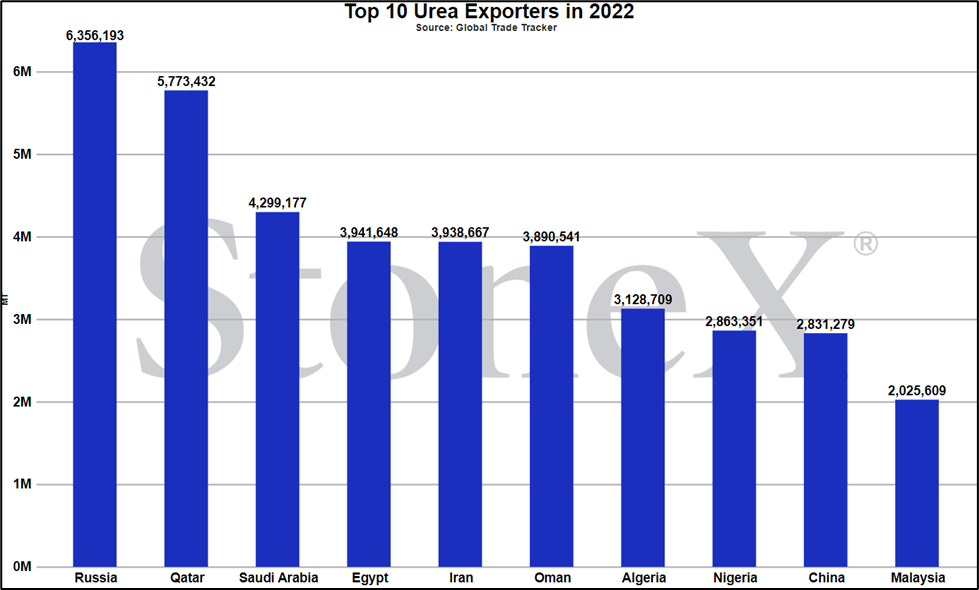
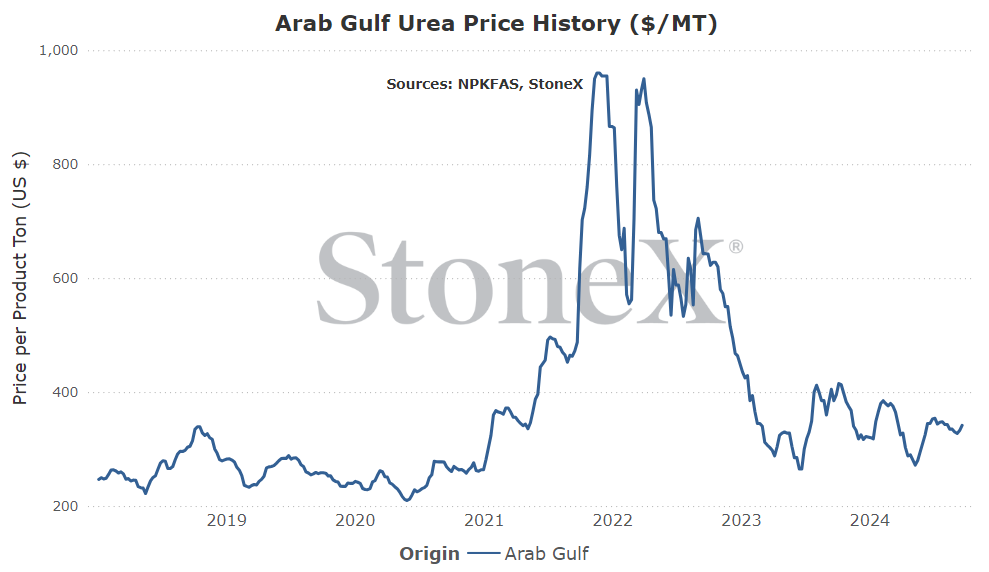
Number 1 exporter (as a region, not as individual nations)
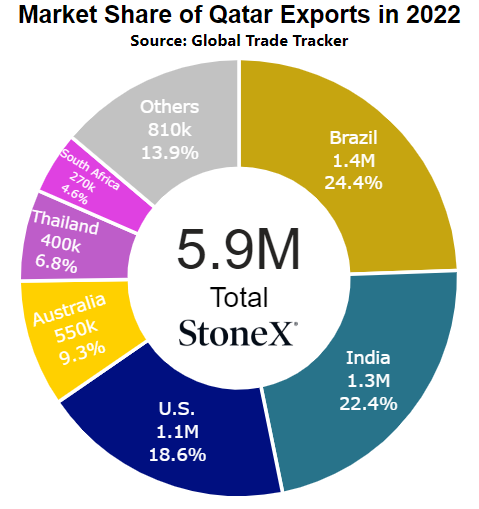
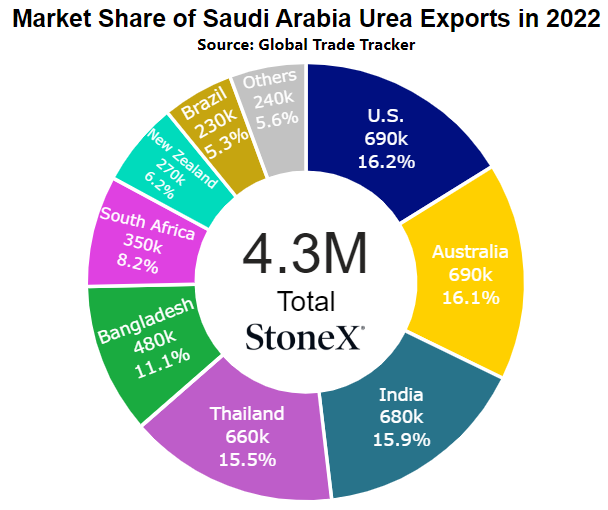
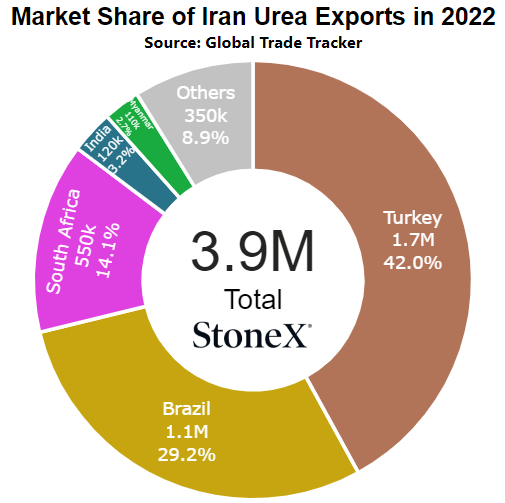
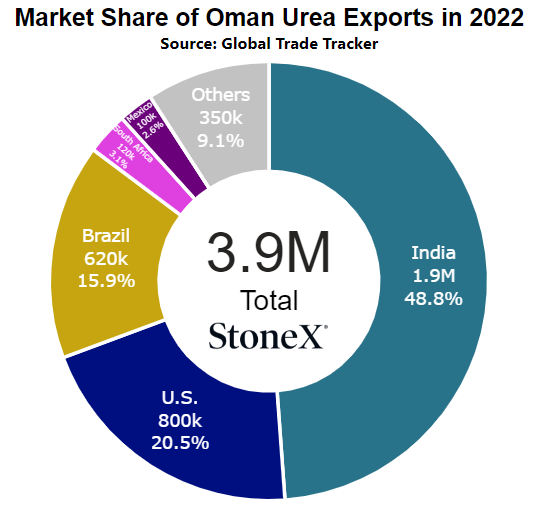
Vs 30 days ago - 2% or approximately $7 higher
Vs 90 days ago - unchanged vs 3-month earlier
Vs 6 months ago - 5% or approximately $17 higher
Vs 1 year ago - -11% or approximately $44 lower
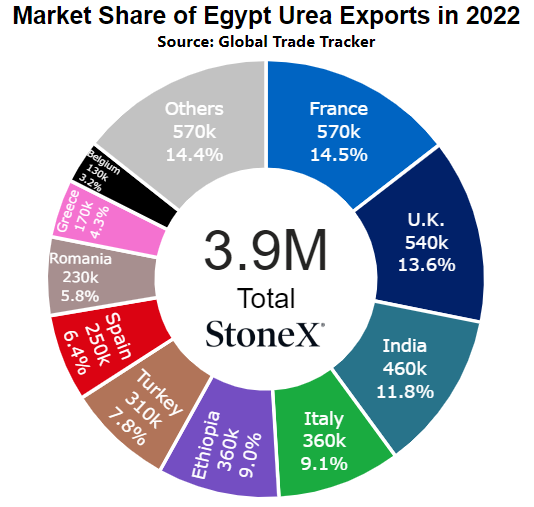
Egypt
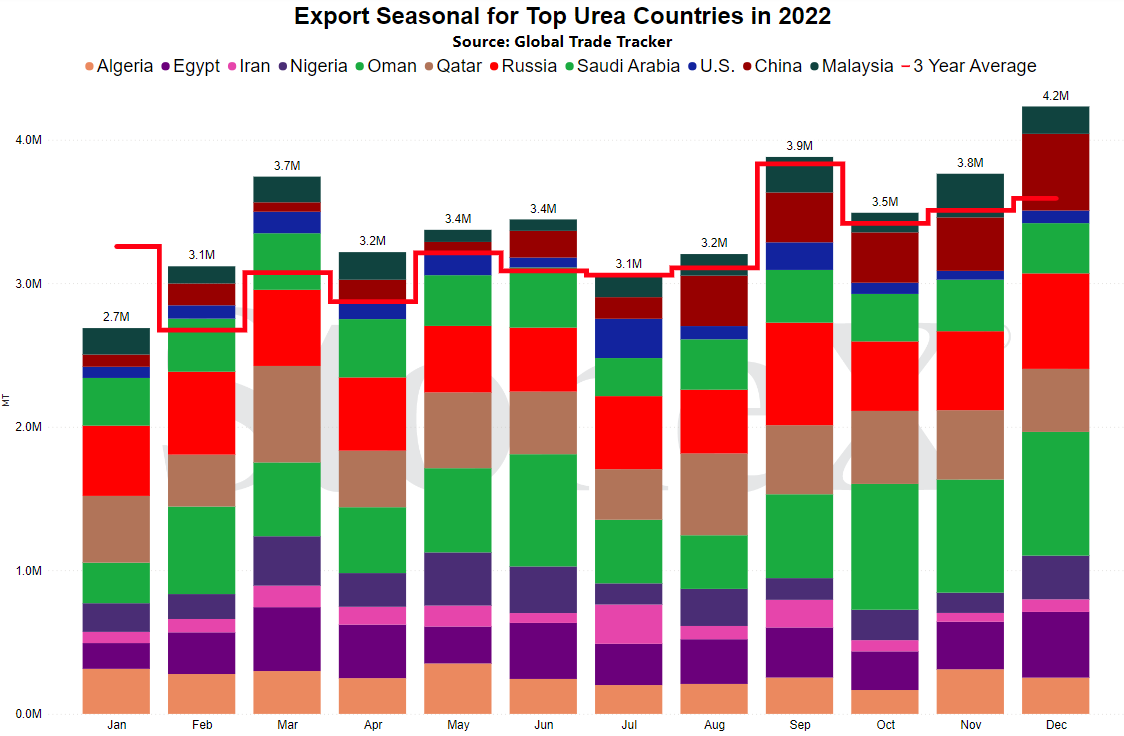
Number 4 global exporter in 2022
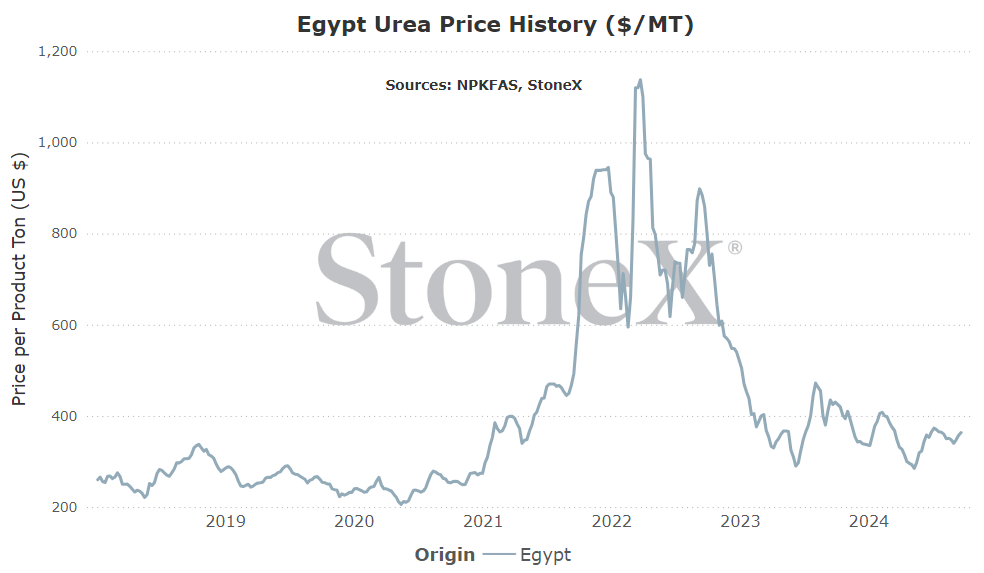
Price comparisons
Vs 30 days ago - 5% or approximately $16 higher
Vs 90 days ago - 3% or approximately $11 higher
Vs 6 months ago - 10% or approximately $33 higher
Vs 1 year ago - -14% or approximately $62 lower
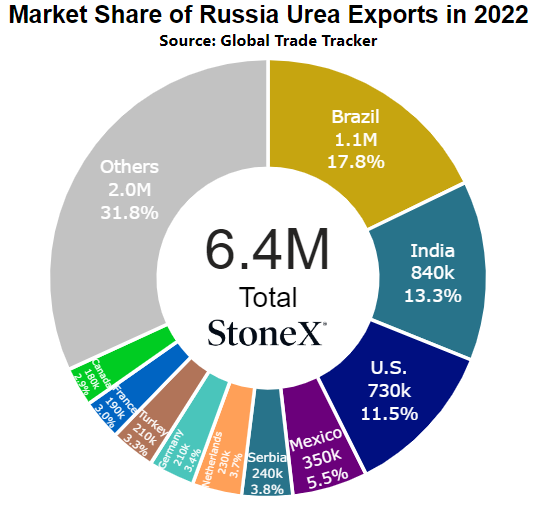
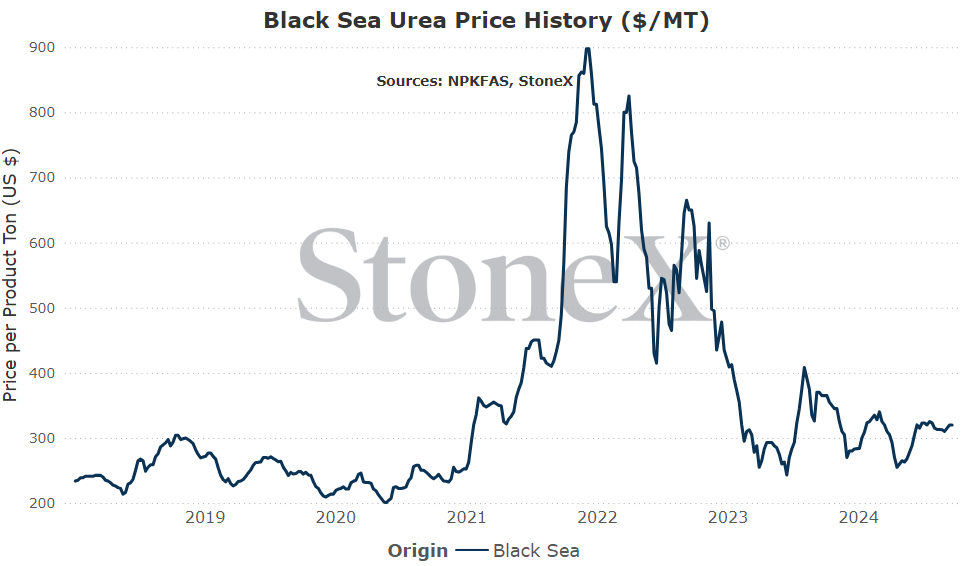
Black Sea
Number 1 global exporter in 2022
Price comparisons
Vs 30 days ago - 2% or approximately $8 higher
Vs 90 days ago - 2% or approximately $5 higher
Vs 6 months ago - 5% or approximately $15 higher
Vs 1 year ago - -12% or approximately $45 lower
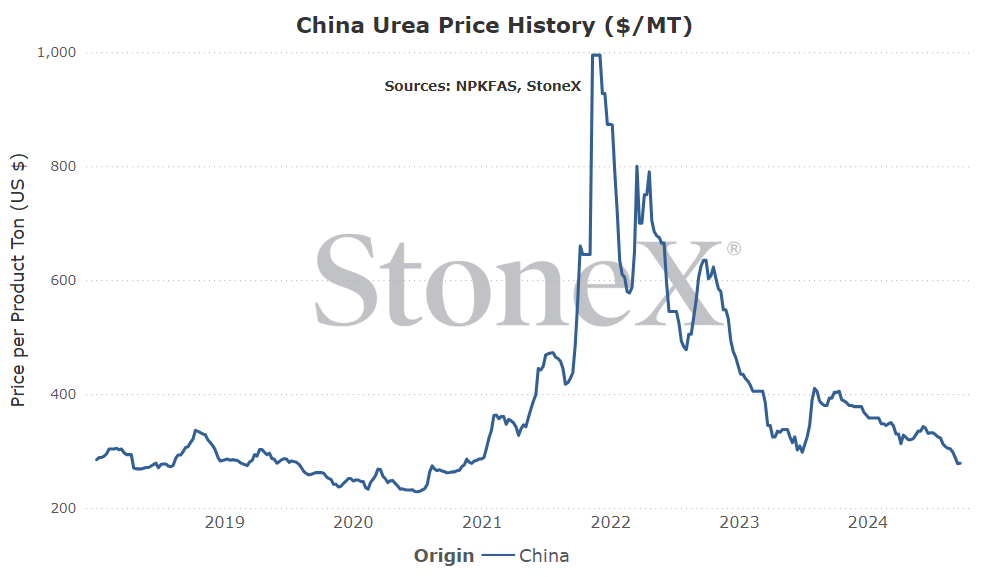
China
Number 9 global exporter in 2022
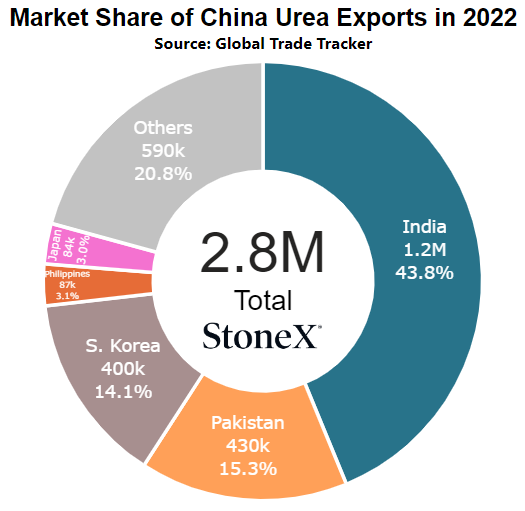
Price comparisons
Vs 30 days ago - -8% or approximately $26 lower
Vs 90 days ago - -16% or approximately $53 lower
Vs 6 months ago - -16% or approximately $52 lower
Vs 1 year ago - -29% or approximately $114 lower
- Chinese exports continue to disappoint - Chinese exports are just not happening. August was a pathetic 25K tons. For reference, they are believed to be making around 200K per day. There is the chance that they start exporting heavily in Q4, but the more likely situation and expected case is that 2024 closes with none of their participation. This leaves a massive hole in the global export market.
- Aussie values start catching up with the world - we have been hearing reports that some Aussie urea values are below/well below global replacement values. That makes sense given how many vessels have/had been pointed toward Australia when global demand went away. Australia became a great place to shove product. However, with such a definitive move higher in global prices, Australian values may now need to catch up.
- Current India tender mops up excess inventories for remainder of 2024 - this current India purchase tender has the ability to mop up most of the "excess" product left around the world for 2024. Imagine that does happen. Manufacturers are not pressed to sell for the rest of the calendar year and still anticipate normal demand coming. In that scenario, they have buyers backed into a corner and they like higher prices.
- China shocks the market and returns with big exports - one of the big talking points surrounding China is the reporting that their production rates are near record levels. This, if believed, means that China is producing nearly 200K tons per day...and exports are non-existent. In that case, where are they putting it all? Could be that we see production rates scale back significantly once domestic storage is full...or we could see China export in a massive way once full. If we saw that happen (China exporting massively), it would be hard to imagine global prices higher.
- Long positions care more about getting rid of inventories - Australian urea demand happens for a relatively short time. Miss it and you may very well end up carrying that unsold pile until next years run. That means more interest. That means more insurance. That means having to risk global market price moves with little way of protecting yourself. If unsold inventories are still high, you could see that group start getting a little more desperate to sell. Doesn't feel highly likely today...but something to watch.
- India cuts down large on their current tender - just because India announced a fresh purchase tender much quicker than anyone expected, it doesn't mean they will buy tons. If they see offered values as too high, they could scrap the tender completely and leave the urea market reeling. Not likely, but it has happened before. Even more likely if they suddenly see a path forward where China returns...
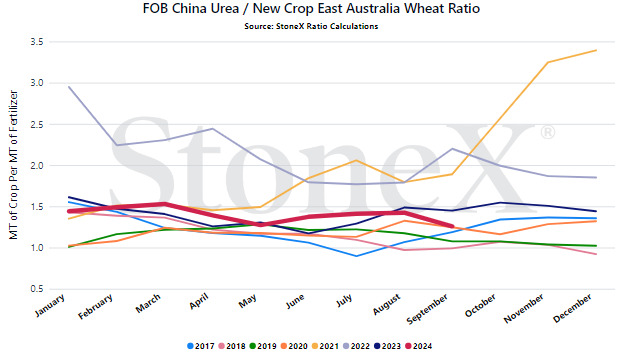
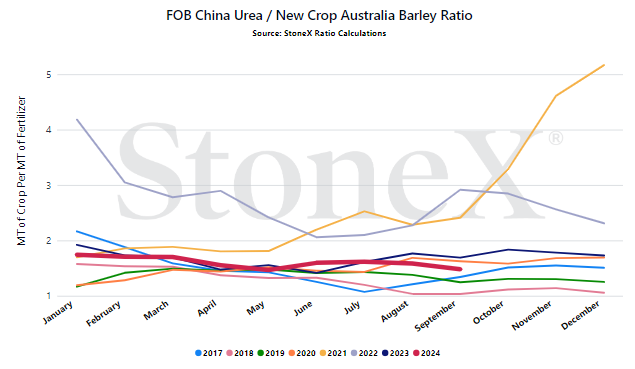
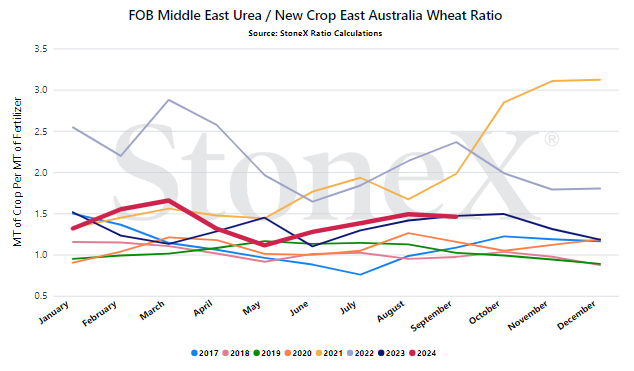
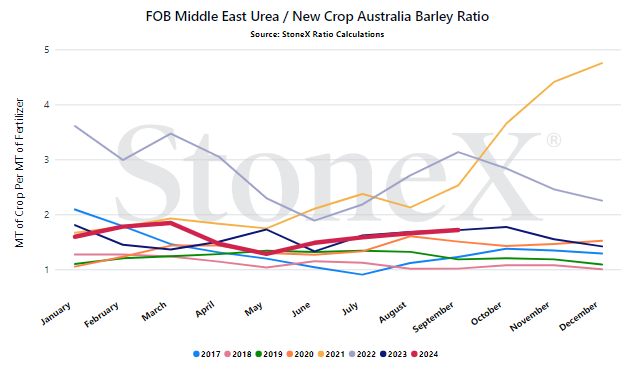
We believe that only looking at the flat price of either grains or fertilizer can be misleading:
-
Only selling grain can hurt you if fertilizer prices rise substantially
-
Only buying fertilizer can hurt you if grain prices fall
We look at the ratio "value" to get a better indication of where we are or how many bushels of X does it take to pay for 1 ton of fertilizer.
Would you rather:
-
Spend 135 bushels to pay for 1 ton of urea
-
Spend 55 bushels to pay for 1 ton of urea
When we compare the current ratio value against recent years, we start to see if we are high or low.
YOUR VALUES MAY LOOK DIFFERENT
This is a work in progress section! We plan on looking at the relationship between Aussie grains and global price points (and hopefully Aussie specific locations, though that data is hard to secure, very protected). Big reason why we are still in the "trial" stage of this newsletter!!!!
- Chinese export flows - this is easily my top focal point this month. We now have "official" export data on China thru August and it shows a glaring hole in urea supplies. Normally exporting north of 5M/year, January thru August shows less than 250,000 tons...and the Q4 outlook is not much better. If this trend continues, I am afraid it is going to come to a head and world buyers are going to pay the price (pun not intended). However, if China suddenly starts exporting heavily, the opposite can and probably will hold true. China wields that power...for now.
- India purchase tender success/failure - in their recently concluded purchase tender, India locked up nearly 1.2M tons of urea from the world. That helped to mop up a lot of excess/unsold product. Shockingly, they stepped in not 2 weeks after the conclusion of the first purchase tender with another tender that can ship thru most of November. My fear is that this tender is going to reveal that there are not a lot of extra tons in the world and values go higher as a result. If that happens, other global price points are very likely to follow suite.
- Overall global supply tightness - China looks like it is going to close out 2024 4+M tons short of normal export flows. The EU region, with operating rates still around 75% of normal, will likely fall 3+M tons short of normal production. Brazil is still struggling with high natural gas values and shouldn't produce anything. Egypt continues to have production issues. All of these combined are creating a massive hole in global supplies. When supplies tighten and demand remains unchanged (or possibly higher based on some of our current 2025 forecasts), that is a recipe for higher pricing.
- Demand "timing" - the longer term view that we hold today is that values will go higher on the back of solid N demand and struggling supplies. However, that does not mean short term markets cannot suffer a bit if buyers stay away. While it is looking more likely that manufacturers around the world will be well sold thru the remainder of 2024, that isn't a guarantee. If buying shuts down again and unsold inventories grow, it can put some short term weakness in the market. Eventually, the market fundamentals win out but timing can sway the market before that ultimate move.
StoneX Ratio Calculation
The ratio calculation is derived from Bloomberg historical grains values as well as fertilizer values from StoneX, NPKFAS, and Argus.
The calculation is simply dividing the fertilizer price by each grain price.
All data was sourced from StoneX unless otherwise noted.