April 28 - Russian President Putin announced a three-day ceasefire in Ukraine from May 8 - 10. This coincides with the 80th anniversary celebration of victory over Nazi Germany, at which time he also plans to host Chinese President Xi Jinping in Moscow for the celebration. He previously declared an Easter ceasefire, which both Russia and Ukraine accused the other of violating. Ukrainian President Zelenskiy stated that he would be willing to hold peace talks with Putin once the fighting stops, but confidence is low that this ceasefire will bring a lasting end to the fighting.
U.S. Treasury Secretary Scott Bessent stated today that one of the first trade deals to be announced may be with India, which essentially has the highest tariff rate in the world. Trade talks reportedly are proceeding with 15 - 18 significant trading partners. Signature trade deals are needed with major trading partners to keep the pressure on China. Otherwise, I do not see China as being in any hurry to negotiate a trade deal as long as President Xi Jinping's popularity remains high within China. I do believe that low level talks are likely happening with China, but those are not the kind of talks that produce trade deals.
Stocks rallied early today, before drifting lower into midday. The VIX firmed back above 26 as a result, with the dollar index trading near 99.0. Yields on 10-year Treasuries are trading near 4.22%, representing 20-day lows, while yields on 2-year Treasuries are trading near 3.69%. Crude oil prices are more than 2% lower on demand concerns. The grain and oilseed sector started the day in the red, led lower by wheat prices after a weekend of good rains in the dry areas of the Plains. But soyoil led soybeans, then corn, firmer on hopes of a biofuel announcement soon from the EPA.
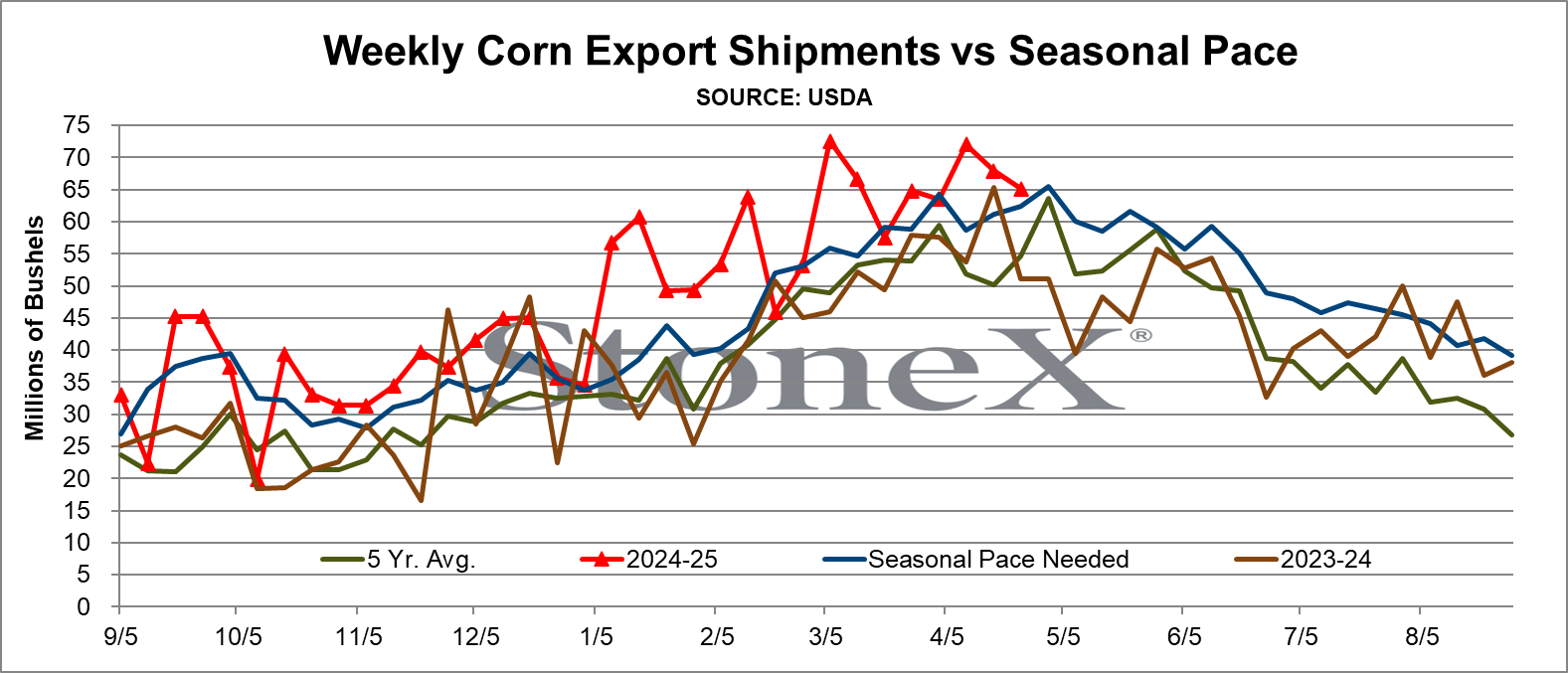
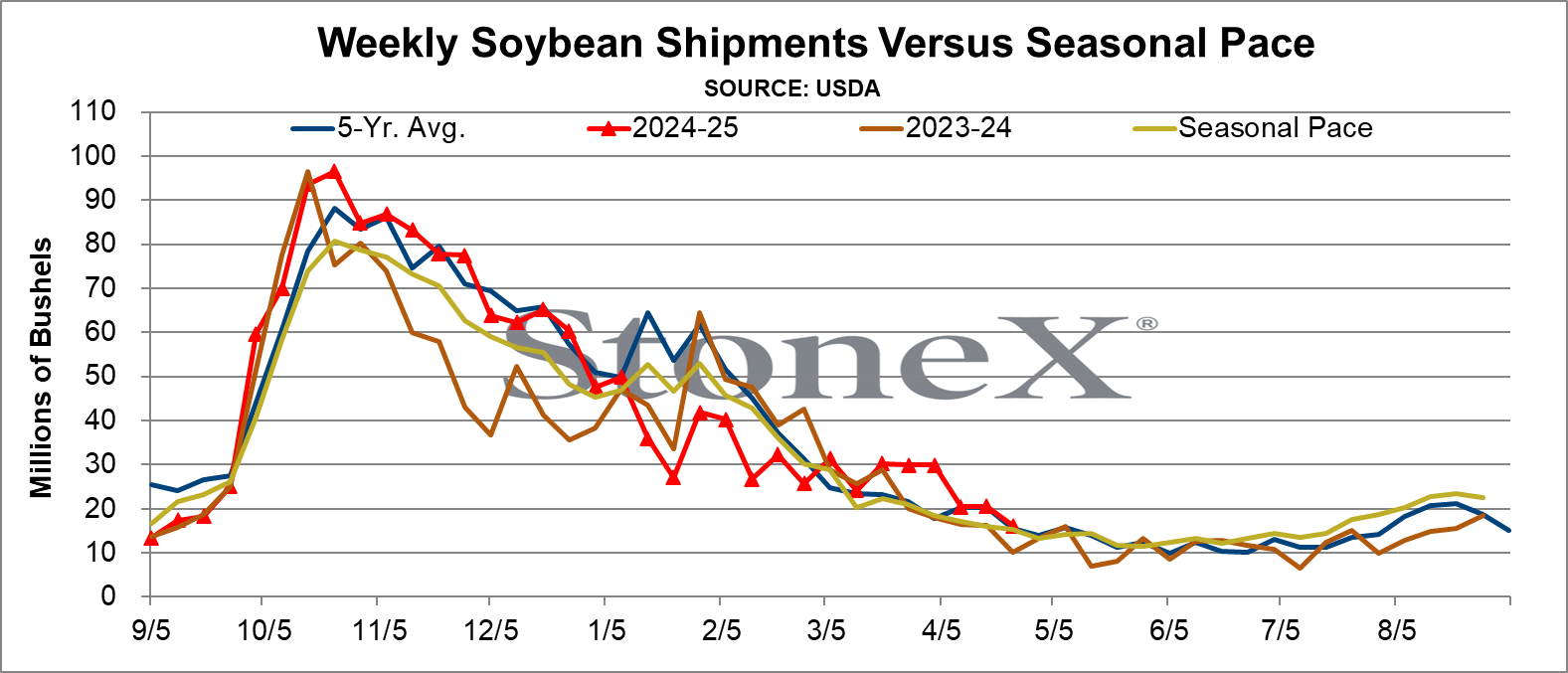
USDA inspected 65.1 million bushels of U.S. corn for export in the week ending April 24, as shown below, along with 16.1 million bushels of soybeans, 23.8 million bushels of wheat, and 0.9 million bushels of grain sorghum. The soybean inspections for the week were at a seven-month low, while the wheat inspections posted a seven-month high. The corn inspections remained strong as they've been for the bulk of the marketing year. The grain sorghum inspections were for a couple of trains going to Mexico.
The wheat marketing year ends at the end of May, with marketing year to date export inspections currently exceeding the pace needed to hit USDA's target by 14 million bushels. Marketing year to date corn export inspections to date total 1.610 billion bushels, up 362 million bushels or 29% from the previous year's pace. This year's total also exceeds the seasonal pace needed to hit USDA's target by 186 million bushels, up from 182 million bushels the previous week. The pressure continues to be there for USDA to raise its corn export target again, and I believe that it will do so in the May WASDE crop report by at least another 50 million bushels to help it solve for a new-crop ending stocks estimate that is below 2 billion bushels. Marketing year to date soybean export inspections total 1.584 billion bushels, up 161 million or 11% from the previous year's pace, and up 103 million from the seasonal pace needed to hit USDA's target. Today's inspection total included 7.5 million bushels shipped to China, including 2 cargoes from the Gulf and 1 from the Pacific Northwest. These are believed to be Sinograin purchases for China's reserve. Being a state-grain buying agency, it is essentially immune from the tariffs. It can take the soybeans in now essentially tariff-free, and then auction them off to crushers - possibly at higher prices - in the fourth quarter of this year.