April 7 - Volatility remains high in the broader markets, with the DOW trading more than a 2,700 point range this morning, while the S&P traded more than a 400-point range and the Nasdaq more than a 1,500-point range. The market sold off hard overnight, before recouping much of the loss by daybreak. It then rallied sharply into positive territory on a CNBC report that President Trump's Director of his Economic Council had stated that the president was considering a 90-day pause on the tariffs for all countries outside of China. The White House later stated that the above was fake news, and the markets sold off again. However, they didn't return to their previous lows, as the selling pressure beings to ease. The VIX is still trading at a high 49, but that's well-below the 60 we saw overnight. The dollar index is trading near 103.4, which is at its highest level since Wednesday. Yields on 10-year Treasuries are trading near 4.15%, while yields on 2-year Treasuries are trading near 3.72%. Crude oil prices are still trading near the $61 per barrel level on worries that OPEC+ will boost supply at a time when the world economy is under pressure from the tariff war, while the grain and oilseed markets are mixed to higher in very active choppy trade.
What is President Trump's ultimate goal with the tariffs? That's the question that I've been frequently asked in recent days. Keep in mind that Trump likes to keep everyone in the dark on its ultimate goal when in a negotiating position, but I'll attempt to give my read on him anyway. First, there are some industries that he deems to be vital to national security. The steel and aluminum industry is such a sector, and so I believe that he intends to leave those 25% tariffs in place regardless of where negotiations go from here. He has also thrown the 25% auto tariffs into that same category, but I believe there may be some room for negotiation there. Beyond that, most of the remaining tariffs appear to be for the purpose of bringing countries to the negotiating table to negotiate down existing tariffs and trade restrictions. Does that mean that that the tariffs can get down to zero? Probably not as long as Trump holds onto the above national security tariffs, but we can get a lot closer. Yet, I expect to see a bumpy road along the way, with a lot of headlines whipsawing the markets.
One of those headlines this morning indicated that President Trump is threatening an additional 50% tariff would be levied on Chinese goods if it doesn't pull back on its 34% retaliatory tariff that it initiated last week. The Truth Social post indicates that he will do so if his demand is not met by tomorrow. He also threatens to end all talks requested by China. Ironically, China responded to Trump's tariffs last week by pointing at how the U.S. markets had collapsed, but it did so while its markets were closed for a holiday. However, its markets collapsed today, partially due to a Fitch credit rating downgrade due to its sluggish economy and rapidly mounting debt. An escalating tariff war would simply amplify that problem for China.
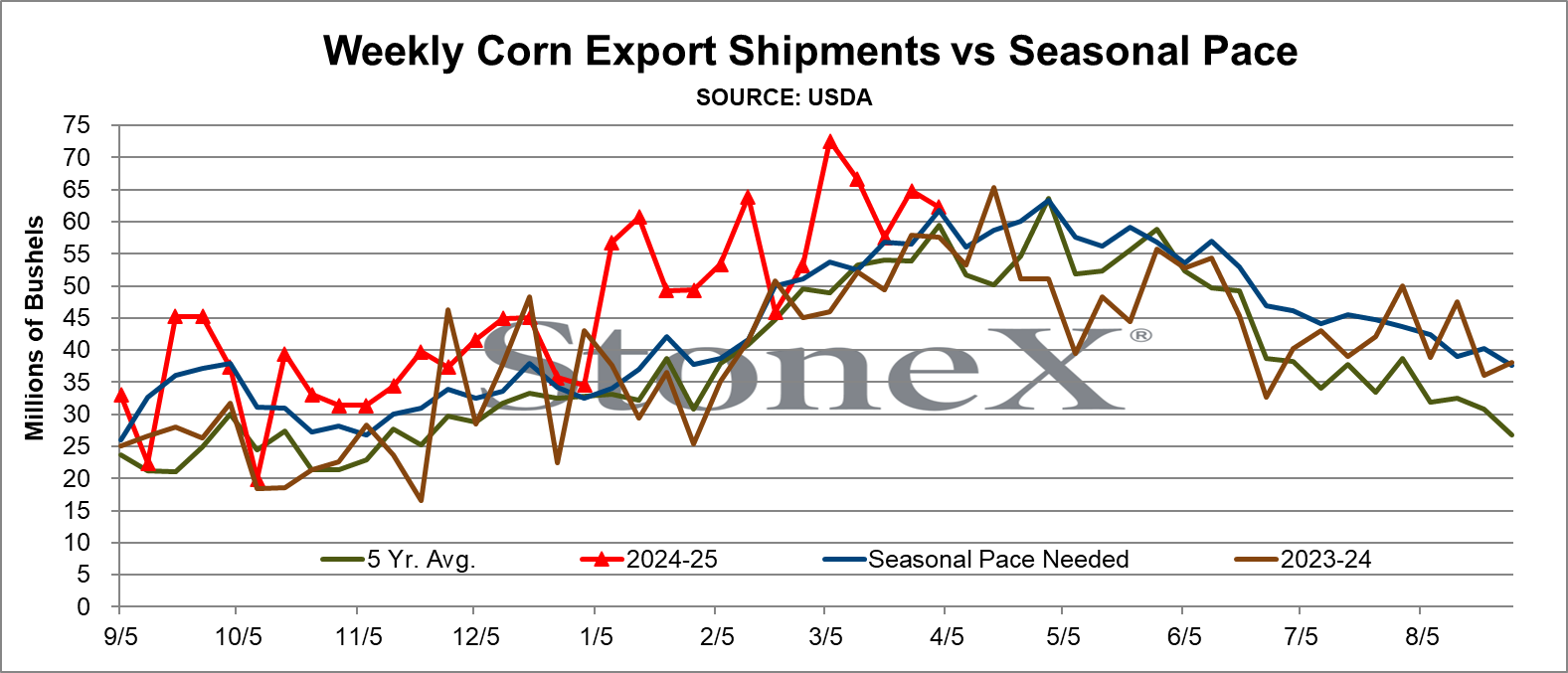
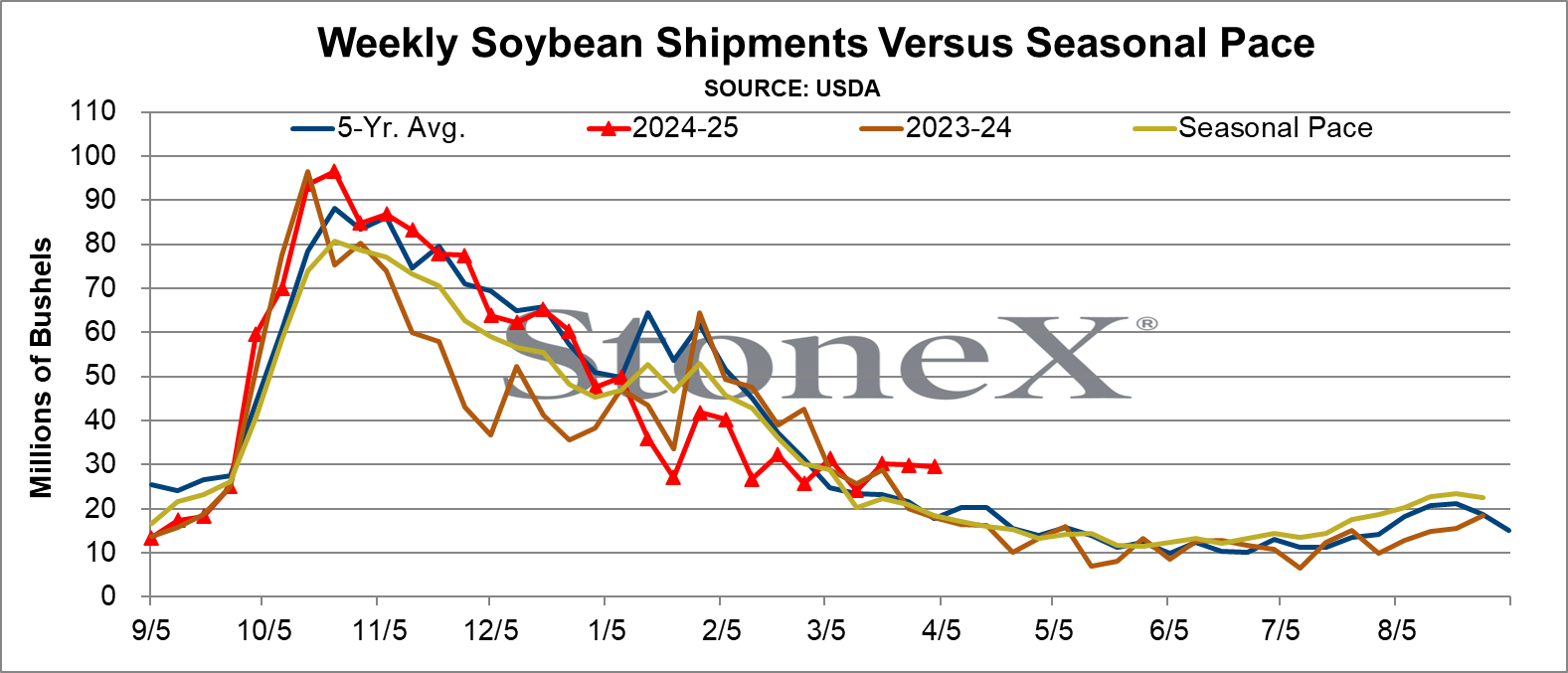
USDA inspected 62.3 million bushels of corn for export shipment in the week ending April 4, along with 29.6 million bushels of soybeans, 12.3 million bushels of wheat, and 0.8 million bushels of grain sorghum. The portion of the above that was inspected for shipment to China included 12.5 million bushels of soybeans - presumably by Sinograin for its reserve. Marketing year to date corn export inspections total 1.401 billion bushels, up 323 million bushels from the previous year's pace, and 208 million bushels above the seasonal pace needed to hit USDA's target. Marketing year to date soybean export inspections total 1.527 billion bushels, up 146 million from the previous year's pace, and 94 million bushels above the seasonal pace needed to hit USDA's target.