August 1 - A weaker tone was seen on Wall Street today, following downbeat manufacturing data released this morning, and mixed earnings reports. The VIX continues to trade near 14, while the dollar index is firmer near 102.3, after setting a fresh three-week high today. Yields on 10-year Treasuries are trading near 4.05%, which is also a three-week high, while yields on 2-year Treasuries are trading near 4.91%. Crude oil prices are modestly lower following yesterday's fresh 15-week highs, while the grain and oilseed markets are mixed to lower. StoneX Brazil raised the size of this year's total corn crop to 139.23 million metric tons this morning, up from 136.04 mmt last month, and above USDA's estimate of 133 mmt. That means more export competition for U.S. supplies. StoneX released its first estimate for the '23/'24 soybean crop to be planted in October, pegging it at 163.47 mmt on an increase in area of about 2%. That would be up from this past year's crop of 157.68 mmt, with the pace of expansion expected to slow this coming year due to poor margins at current price levels.
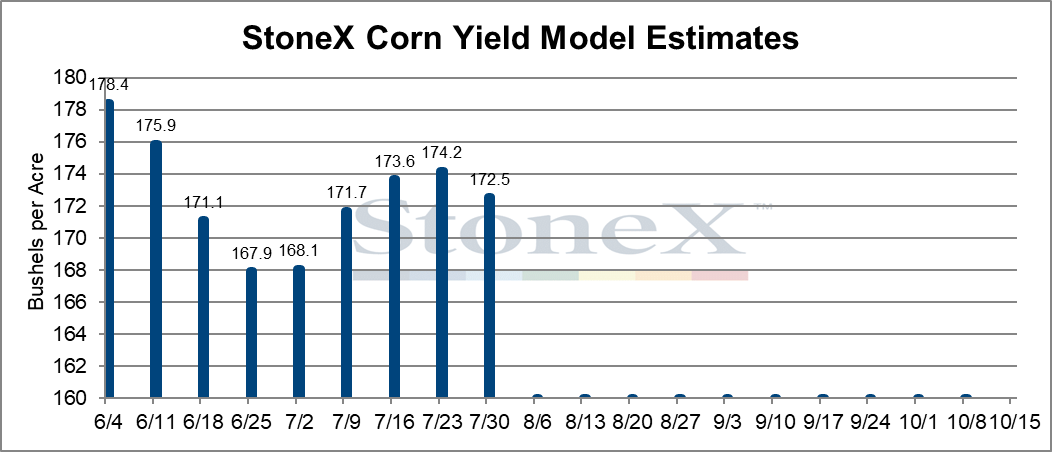
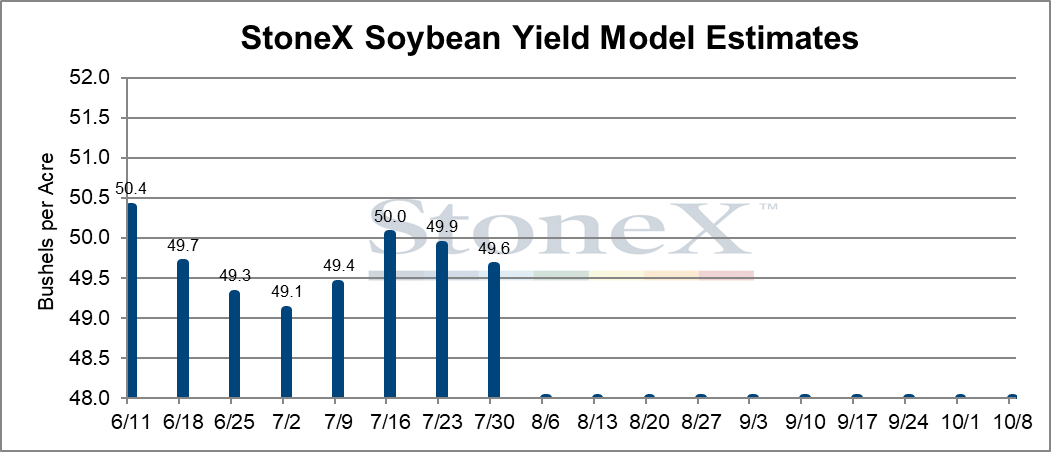
My seasonally adjusted U.S. corn and soybean yield models are based on weekly crop ratings from the USDA. USDA's ratings tend to be highest for the corn and soybean crops early in the growing seasons, when the subjective appearance of the crops is usually best, and then they trend lower as the crops move toward maturity. As such, I include a seasonal adjustment for those tendencies while using regression analysis to estimate a yield. USDA's condition ratings of Excellent, Good, Fair, Poor, and Very Poor are subjective, based on the visual appearance of the crops. USDA has been posting these weekly ratings since 1986, and my regression analysis is based on that history. Most years it will run within a percent or so of final. The years when it tends to be off is years when August grain fill weather is either adverse or favorable because USDA's subjective ratings don't "see" length of kernel. August weather can either add or subtract 10 - 15% to kernel length, with that directly impacting yield. Forecasters expect a mild wet August for the bulk of the Midwest this year. That should add kernel length for corn, albeit it can only add length to kernels that exist. You can't put kernels back on the corn ear that were aborted in last week's heat, but the added length to the remaining kernels can offset some of that loss. The bottom line then is that I would expect USDA's final yield to come in higher than my model if August is favorable as forecast. StoneX will be releasing its customer survey based yield and production estimates tomorrow afternoon, updating them monthly through November, which will be our official StoneX estimates.
Today's JOLTS report showed that there were 9.582 million job openings posted on June 30, down from 9.616 million the previous month. Today's number came in a bit below the 9.650 million forecast by analysts. This still leaves us at close to 1.5 job openings for every person looking for a job, supporting wage inflation, but it's a move in the right direction toward slowly bringing openings into balance with job seekers. Other data released today showed that construction spending increased 0.5% month-on-month in June, supported by solid housing construction numbers. Even so, overall construction spending growth slowed from the 1.1% rate seen in May. Construction spending in June was up 3.5% year-on-year, which is better than the 2.6% annualized growth rate seen in May. The final July PMI manufacturing index came in at 49.0, sustaining a pace of modest contraction for the sector. The ISM manufacturing index showed a bit more contraction with a 46.4 reading.