August 29 - Stocks rallied as Treasury yield fell this morning on economic data releases, but the moves were limited by the fact that even bigger data releases are scheduled over the next several days. The VIX traded near 14 as we approached midday, which puts it at four-week lows following the release of this morning's economic data. The dollar is following Treasury yields lower, trading near 103.8. Yields on 10-year Treasuries are trading near 4.13%, while yields on 2-year Treasuries are trading near 4.89%. Crude oil prices are modestly higher, while the grain and oilseed markets are mostly lower today. Wheat prices hit sell stops below recent lows, triggering expanded technical selling today, while corn and soybean traders were disappointed that they didn't see larger cuts in this week's crop ratings. Even so, losses in corn and soybeans are limited by continued reports from the field that crops are still deteriorating. USDA crop surveyors are out in those fields sampling corn and soybean crops currently, which should provide us with our best look at production potential when the agency releases the results of its work on September 12.
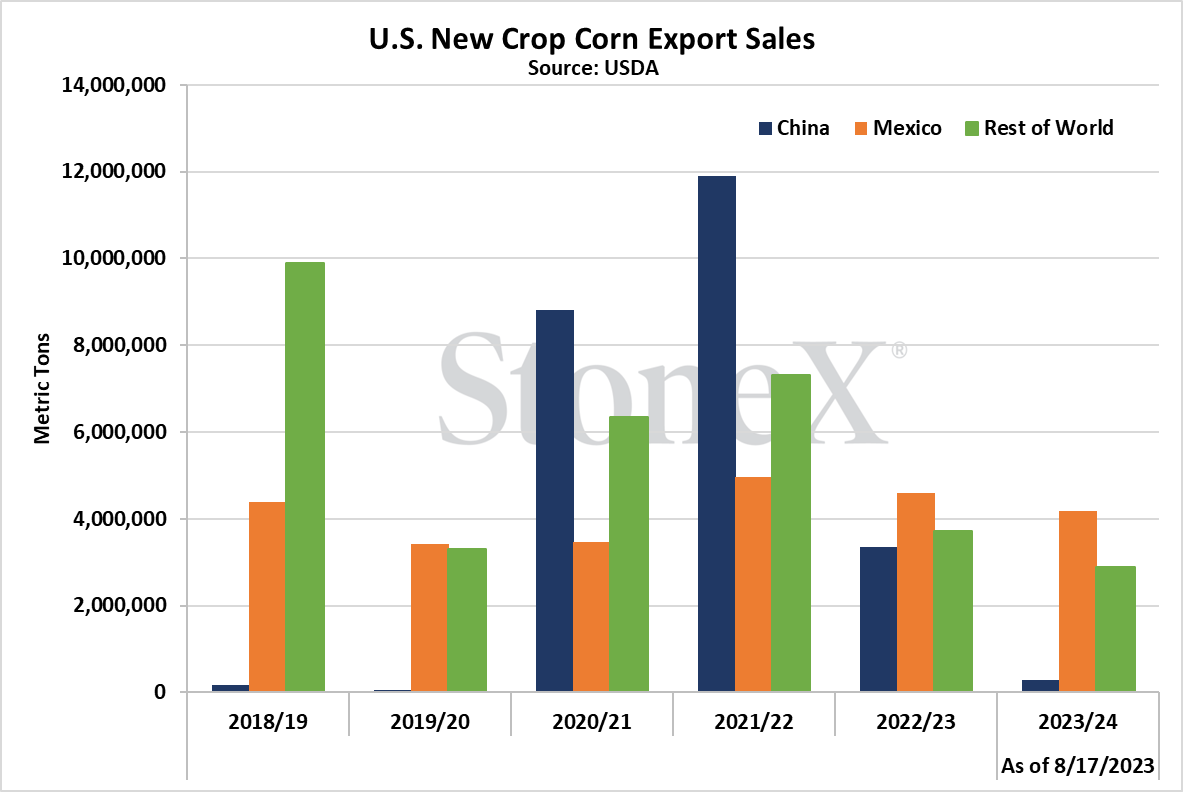
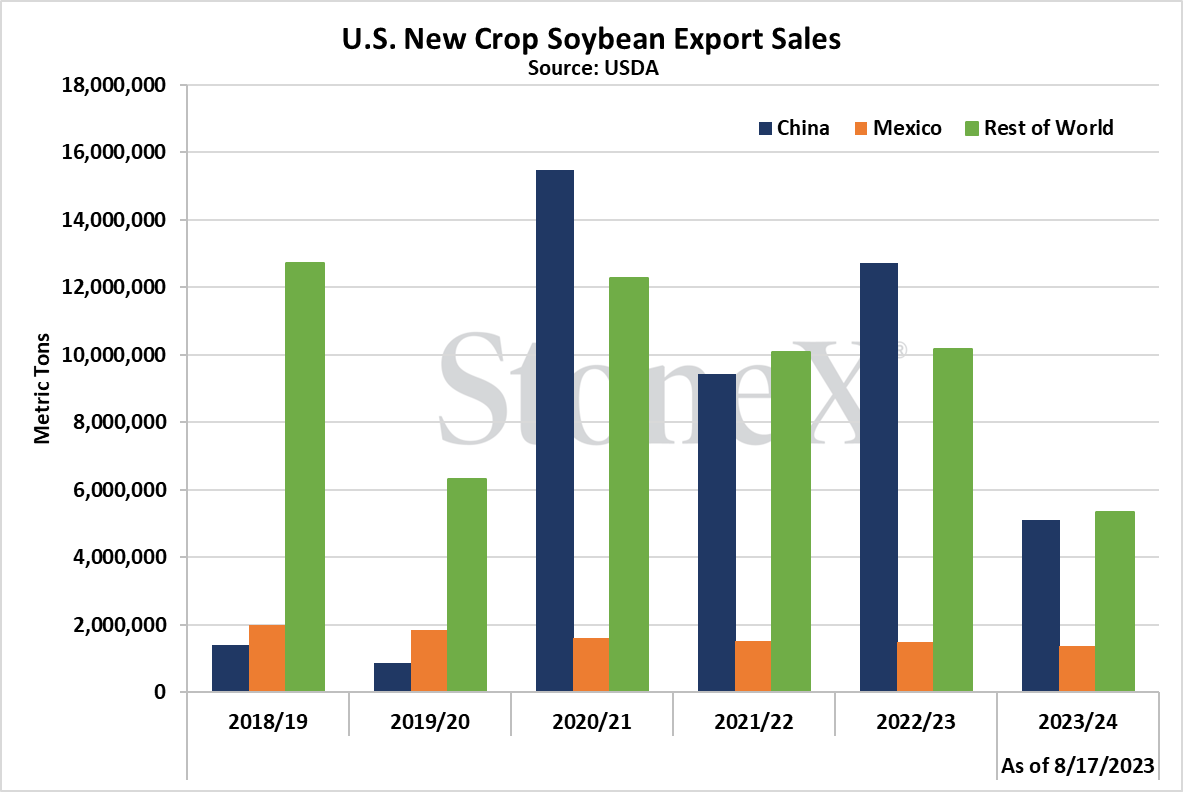
New-crop corn and soybean sales continue to be disappointing. New-crop soybean sales have improved over the past month, but they still remain well below where we'd like to see them as we prepare to start the new marketing year on Friday. The graphics below provide a bit of perspective on new-crop sales through August 17, which is the latest data we have available via USDA's comprehensive weekly export sales reports. New-crop corn export sales on the books as of August 17 totaled 7.352 million metric tons, or 289 million bushels. Note in the top graphic below that advanced sales of corn to Mexico are pretty similar to previous years at 4.182 mmt, while sales to China are a mere fraction of recent years at just 0.272 mmt. Advanced sales to the rest of the are similar to 2019 and 2022, but they're well below other recent years. We still hold a freight advantage shipping corn to Mexico, but most other customers can get corn cheaper from Brazil, leading to the slow new-crop sales thus far. Similar patterns are seen for soybeans as well. New-crop soybean sales through August 17 totaled 11.811 mmt or 434 million bushels, with Mexico accounting for 1.376 mmt of the total, while China accounts for 5.107 mmt. This illustrates the impact that rapidly expanding corn and soybean production in Brazil is having on lost U.S. market share, and it's another reason I'm skeptical of USDA's new-crop export estimates for the two crops.
Today's JOLTS report showed "just" 8.827 million job openings posted at the end of July, down from analyst expectations of 9.559 million. Furthermore, the previous month's data was revised to 9.165 million openings, down from the 9.582 million originally reported. This suggests that the Federal Reserve's monetary policy is having a greater impact on slowing the jobs market than what was believed last Friday when Fed Chair Jerome Powell gave his hawkish speech at Jackson Hole, Wyoming. Furthermore, this morning's consumer confidence index for August came in at 106.1, down from a downwardly revised 114.0 in July, and below analyst expectations of 116.5. This month's survey revealed that consumers are once again preoccupied with rising prices - especially as inflation impacts the price of groceries and gasoline. Declining consumer confidence tends to slow consumer spending, also doing some of the Fed's work for it in slowing down demand, which slows business activity, which slows hiring activity, which in turn eases wage inflation. Today's market reacted to both of these reports with renewed optimism that the Fed doesn't need to be as aggressive, despite other data showing a modest rise in home prices with demand firming again. Even so, Friday's monthly jobs report will likely trump the rest of this week's data in regards to significance.