August 5 - Antacid sales are high on Wall Street. We're still seeing big losses on the Street at midday, but the major stock indices are well-off their lows, and in some cases are near session highs, even though still deep in the red. The key here is that the outside markets are holding above their early session lows. There's a sense of some stability here, especially after this morning's economic data reminded traders that the economy's not that bad. That idea was reinforced by a member of the Federal Open Market Committee in an interview on one of the business networks this morning. A semblance of stability in the outside markets has therefore allowed stability to return to the commodity markets as well, with end users seeing opportunity to extend coverage at these low levels, while managed money sees the opportunity to pocket extra profits gained on their big short positions on this panic selloff.
This morning's purchasing managers index final reading for July came in at 54.3, with the services index coming in at 55.0. Both were a bit below the previous flash estimates, but both suggest significant month-on-month expansion. The ISM services index came in at 51.4, up from 48.8 the previous month, and above expectations of 51.0. That's not as strong as the previous numbers, but it still indicates month-on-month expansion. That's not indicative of a recession. These numbers helped to bring some of the stability to the stock market this morning, although we still must deal with the continued unwinding of carry trades in the days and weeks ahead that has money flowing toward Japan at the expense of our dollar and of our financial markets. There have been calls for an emergency meeting of the Federal Reserve, but we're probably not to that point yet of seeing that happen, although it still can't be ruled out.
Stocks continue to slowly come back, albeit from deep early losses. The VIX is trading near 33, after surging to trade just short of 66 earlier this morning. That alone suggests a significant calming of the waters. The dollar index is trading near 102.7, which is roughly 60 basis points off its low as Treasury yields recover as well. Yields on 10-year Treasuries are trading near 3.80%, while yields on 2-year Treasuries are trading near 3.90% - both are significantly off their session lows. Crude oil prices are flirting with positive numbers for the day, while the same is true for the grain and oilseed markets as well. Keep in mind that corn and soybean prices held higher on Friday in the face of this selling in the outside markets, following a lower-than-feared set of yield estimates from StoneX on Thursday afternoon, even though those yield estimates came in above USDA's current estimates. The market had been pricing in fears that this year's crops would be even bigger yet - perhaps much bigger.
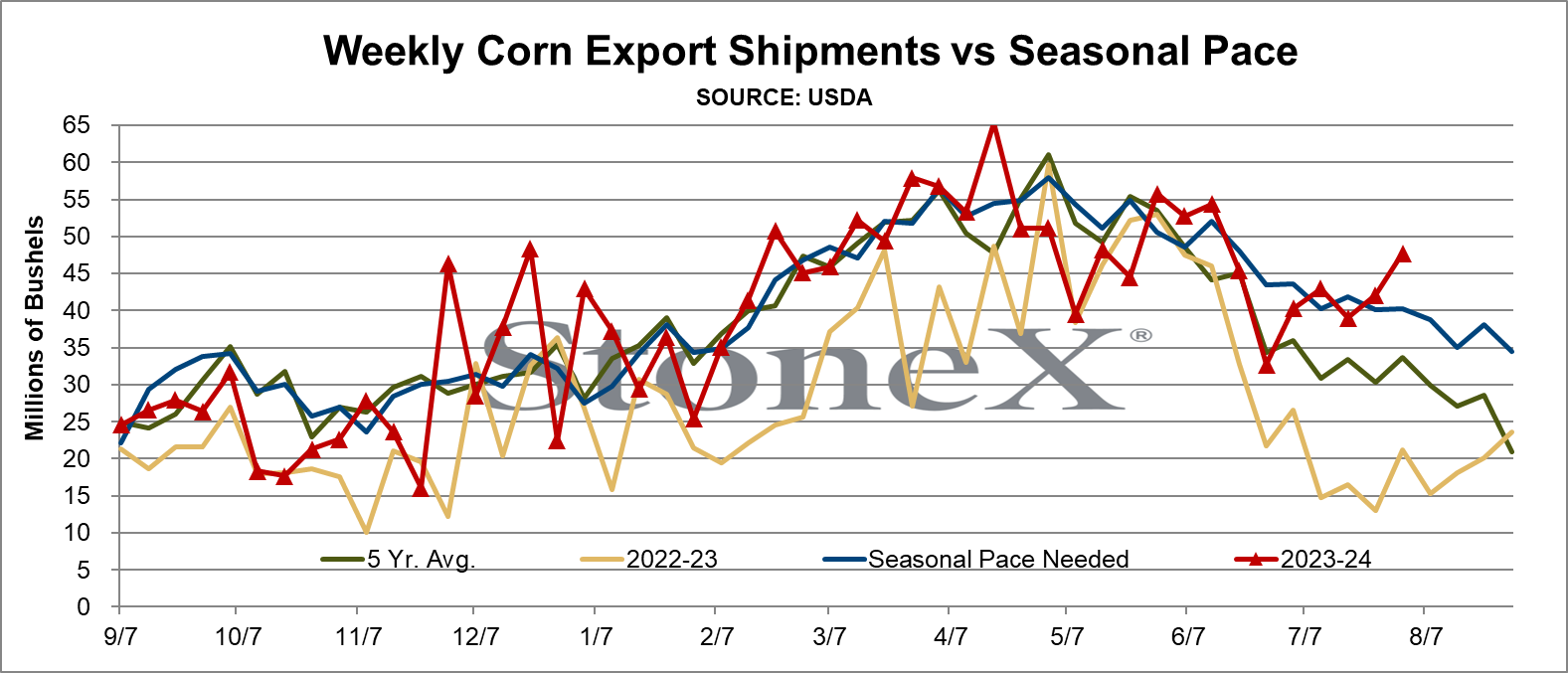
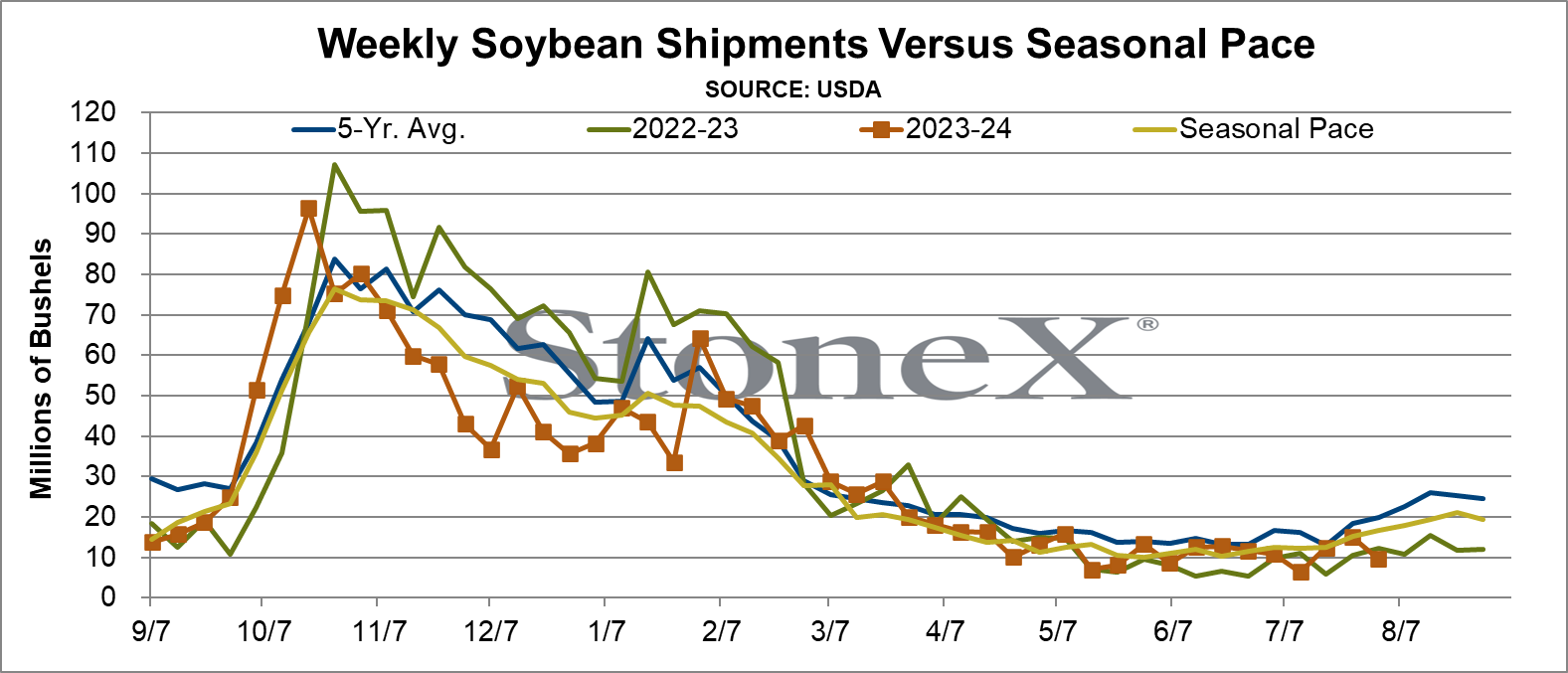
USDA inspected a seven-week high 47.8 million bushels of corn for export shipment in the week ending August 1, as shown below, along with 9.6 million bushels of soybeans, 16.2 million bushels of wheat and 6.8 million bushels of grain sorghum. Nearly all of the grain sorghum went to China, while just very small container amounts of corn, soybeans and wheat were inspected for shipment to China. Marketing year to date corn export inspections fall short of the seasonal pace needed to hit USDA's target by 31 million bushels, but that deficit is rapidly closing due to this contra seasonal strength that we're currently seeing in corn shipments. The recent collapse in prices continues to keep U.S. corn competitive in more markets than just those where we have a freight advantage. Marketing year to date soybean export inspections exceed the seasonal pace needed to hit USDA's target by 16 million bushels, but the surplus continues to shrink week to week as shipments to China slow, and as Brazilian supplies remain competitive.