February 10 - The major stock indices remain in the green at this hour as Wall Street waits for greater clarity on anticipated tariffs, as well as while waiting for this week's inflation data. The VIX is trading just below 16 at midday, while the dollar index is trading near 108.3. Yields on 10-year Treasuries are trading near 4.49%, while yields on 2-year Treasuries are trading near 4.26%. Crude oil prices are roughly 2% higher as sanctions are tightened on Iran and Russia. The grain and oilseed complex is mixed, with wheat prices correcting lower following recent gains, while corn tries to lead soybean prices modestly higher.
Wheat prices saw a significant speculative short covering rally over the past two weeks, but the lead Kansas City contract failed to hold a spike above the 200-day moving average on Friday, leading to a selloff that continued into today's session, with Chicago close behind it. We have ample supplies of wheat in the United States, but global exporter supplies are becoming snug. Export demand for U.S. wheat is expected to improve in the fourth quarter of the current marketing year, likely continuing into the first quarter of the next. Weather risks in the Black Sea Region, the U.S. winter wheat belt, and elsewhere left fund managers at risk who were holding large short positions, leading them to unwind a significant portion of them until they had greater clarity. The corn / wheat spreads were also screaming for a correction, which they got. But now we need fundamental support for the rally, and that is more of story for later in the year, if it unfolds. The managed money crowd continues to show solid conviction at defending their ownership of corn, with major exporter supplies tight there as well. Soybeans are more there for the ride. A significant trade agreement with China could provide support for soybeans, but it's looking like such an agreement would likely take time to come together, leaving prices somewhat vulnerable in the near-term. Rising inflation expectations on Wall Street have also created some tailwinds for the grain and oilseed markets, which underperformed over the past two years. Those expectations can quickly change, so traders will have their eyes on this week's inflation data for direction.
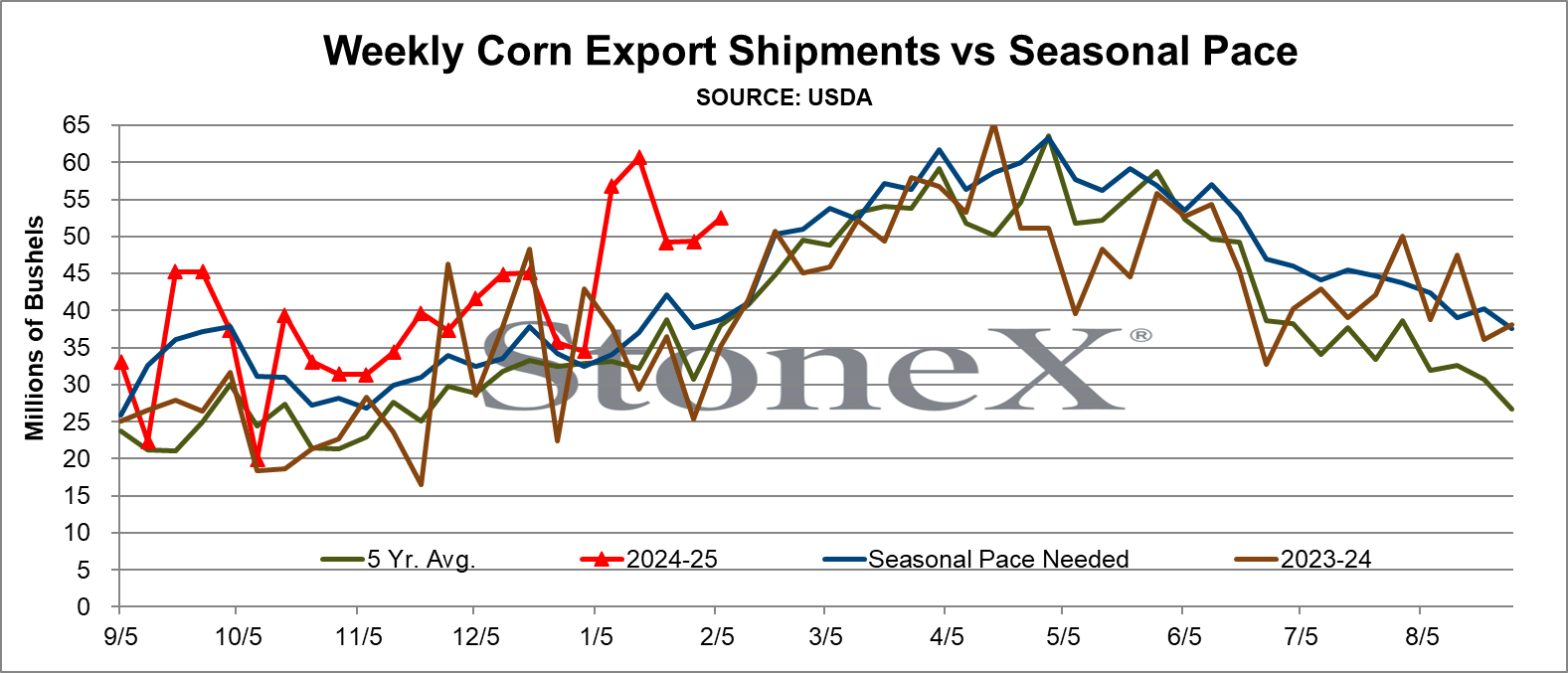
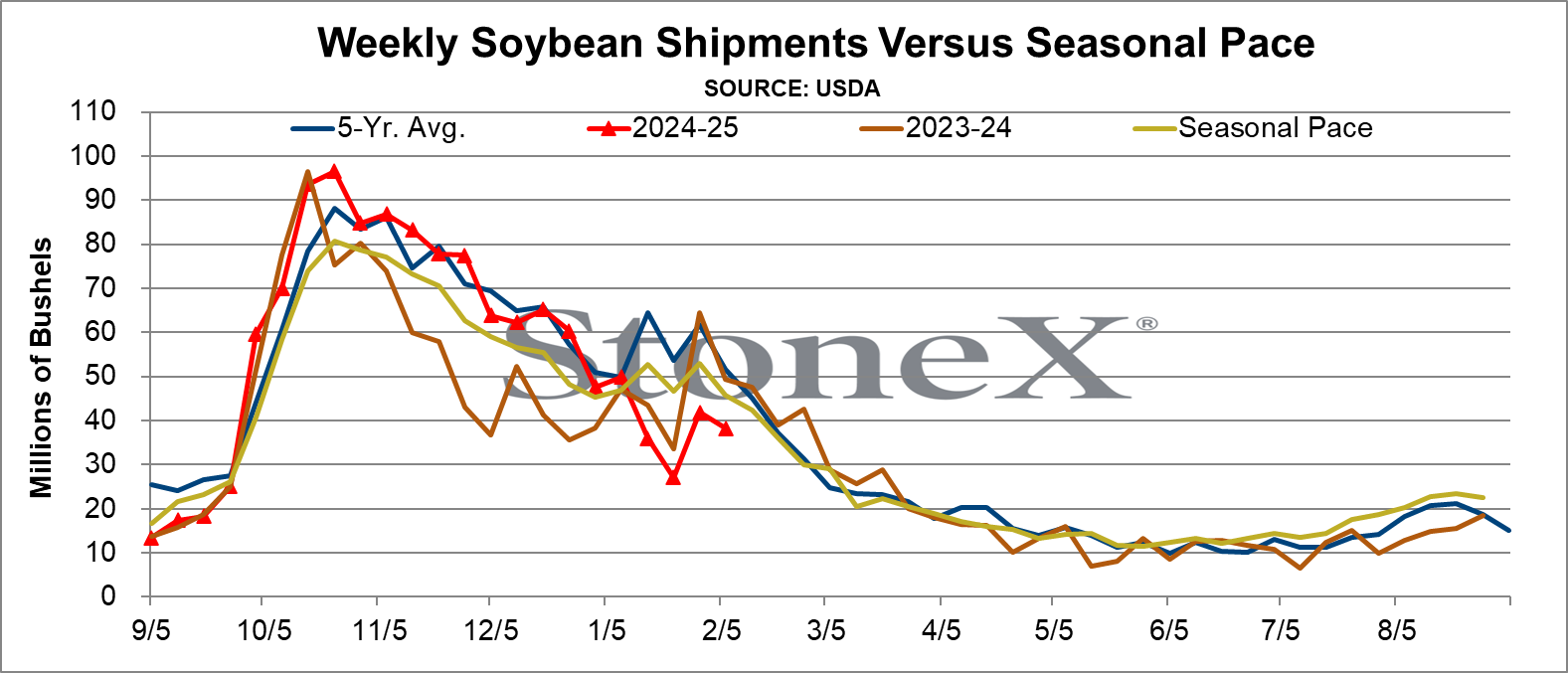
USDA inspected 52.5 million bushels of corn for export shipment in the week ending February 6, as shown below, along with 38.3 million bushels of soybeans, 19.7 million bushels of wheat and 0.09 million bushels of grain sorghum. The portion of the above that was inspected for shipment to China included 20.4 million bushels of soybeans, and no corn, sorghum or wheat. Marketing year to date grain sorghum export inspections continue to lose ground in the absence of meaningful demand from China, with year to date shipments falling short of the seasonal pace needed to hit USDA's target by nearly 30 million bushels. Marketing year to date wheat export inspections fall short of the seasonal pace by less than 10 million bushels.
Marketing year to date corn export inspections total 909million bushels, up 231 million bushels or 34% from the previous year's pace, and 140 million bushels above the seasonal pace needed to hit USDA's target. That's why I expect USDA to increase its export target by another 50 million bushels tomorrow, taking that off the bottom line. I could also see it bump its ethanol use estimate by 10 - 25 million bushels, but I think it will wait to do that until we have more data in. Marketing year to date soybean export inspections total 1.295 million bushels, up 164 million bushels or 14% from the previous year's pace, but that gap is narrowing. Soybean shipments have slowed dramatically over the past month. Marketing year to date export inspections still exceed the seasonal pace needed to hit USDA's target by 82 million bushels, but the surplus has nearly been cut in half in recent weeks, and it continues to shrink.