February 24 - Stocks are mixed in two-sided traded today, with the tech sector the weakest and the Dow showing the greatest strength. Overall, it's a consolidation day following the active liquidation seen to close out last week. The VIX is moderately elevated near 18 to start the week, while the dollar index is trading near 106.6, similar to where it closed on Friday. Yields on 10-year Treasuries are trading near 4.41%, after falling to fresh nine-week lows earlier today, while yields on 2-year Treasuries are trading near 4.19%. Crude oil prices are modestly higher at midday, while the grain and oilseed markets are mostly lower.
The Dallas Fed manufacturing survey produced a general activity index of -8.3 for February, down from +14.1 the previous month, while the production index fell to -9.1, down from +12.2 in January. Contraction was also seen in new orders, as well as capacity utilization. Shipments continued to expand, albeit at a slower pace. Perceptions of broader business conditions deteriorated this month, while the outlook uncertainty index surged to 29.2, up from near zero in January. Both input costs and prices charged continued to rise, while wage pressure eased slightly.
Corn prices continue to set the tone for the grain markets, although wheat prices boast larger losses today. Friday's trade data shows that corn open interest declined by 96,921 contracts in what was largely speculative long liquidation. That trend continued today, with more selling on tap as prospects for South America's corn crop improve and expectations for U.S. planted acreage in the coming growing season increase. Soybean prices tried to bounce today, but they lack the fundamentals to sustain a rally in the absence of strength in corn. Wheat prices face a similar dynamic. None of this means that prices can't reach new highs for the move, but the current momentum is clearly to the downside, and the momentum trading Algos are piling on to increase the losses.
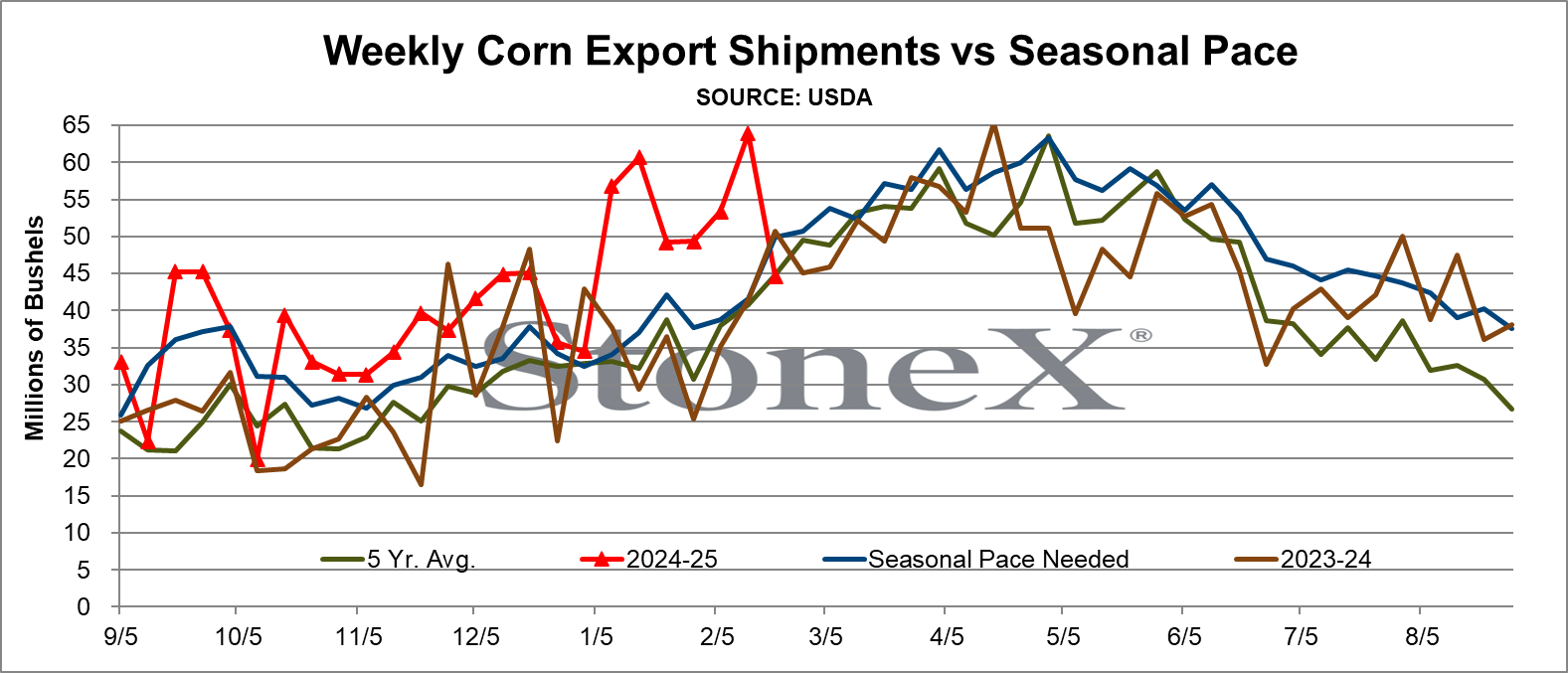
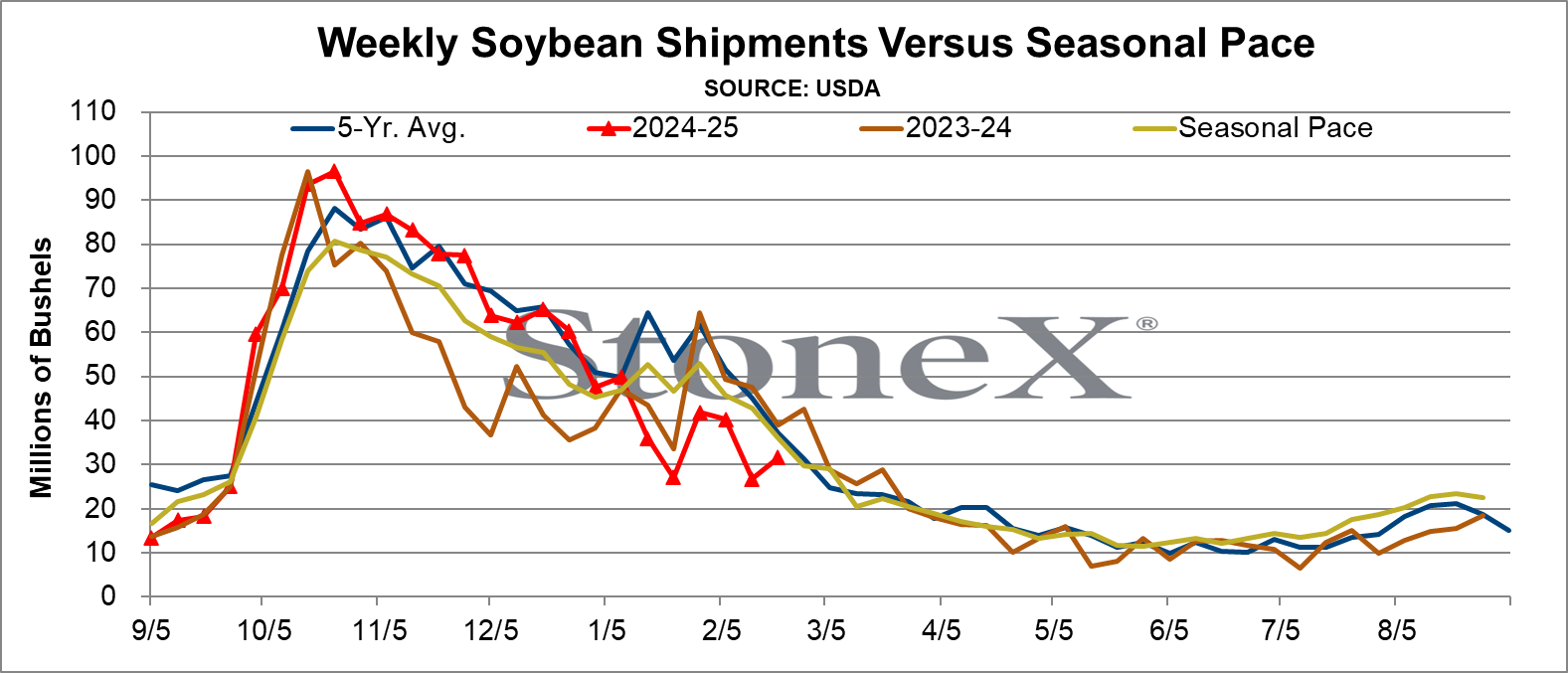
USDA inspected 44.7 million bushels of corn for export shipment in the week ending February 20, as shown below, along with 31.6 million bushels of soybeans, 13.8 million bushels of wheat and 0.2 million bushels of grain sorghum. The portion of the above that was inspected for shipment to China included just 17.8 million bushels of soybeans. Grain sorghum export inspections continue to be very sluggish, with just a container here and there going to China, while it is starting to perk a little interest in Mexico. Even so, marketing year to date grain sorghum export inspections fall short of the seasonal pace needed to hit USDA's target by 17 million bushels, and the deficit continues to grow. Marketing year to date wheat export inspections also fall short of the seasonal pace needed to hit USDA's target by 17 million bushels, but a recent trend toward stronger sales suggest that we should see that export pace pick up a little momentum in the fourth quarter of the marketing year.
Marketing year to date corn export inspections total 1.019 billion bushels, up 249 million bushels or 32% from the previous year's pace, and 158 million bushels above the 10-year seasonal pace needed to hit USDA's target for the current marketing year. That gap had been growing week-by-week, but it pared back a few bushels this week. Marketing year to date soybean export inspections total 1.355 billion bushels, up 137 million bushels or 11% from the previous year's pace, and 63 million bushels above the seasonal pace needed to hit USDA's target. However, that gap versus the seasonal pace continues to shrink as weekly inspections fall short amid the increased flow of new crop South American soybeans heading to China.