January 27 - The Dow Jones Industrial Average is poised for a possible test of last week's high at midday, despite ongoing strong losses for the tech sector. The VIX eased back to trade below 19 at midday, while the dollar index is trading near 107.4. Yields on 10-year Treasuries are trading near 4.54%, after holding a test of 4.5% earlier in the session, while yields on 2-year Treasuries are trading near 4.20%. Crude oil prices are nearly 3% lower at midday, trading at their lowest level since January 2nd, while the grain and oilseed complex remains mostly lower as well. The protein sector saw another round of follow-through buying in the cattle market to set new highs once again, after December placements fell roughly 60K head below trade expectations on Friday afternoon.
New home sales rose to an annualized pace of 698K in December, up from analyst expectations of 672K. Furthermore, November sales were revised to 674K units, up 10K from what was originally reported. This bodes well for the housing industry, to go along with better than expected data from the manufacturing sector in the Dallas Fed region, which saw its general activity index rise to 14.1, up from 4.5 the previous month. Its production index rose to 12.2 in January, up from 5.3 the previous month. The above combined with better-than-expected numbers from the Chicago Fed national activity index this morning to help the non-tech portion of the stocks recover from their overnight sell-off.
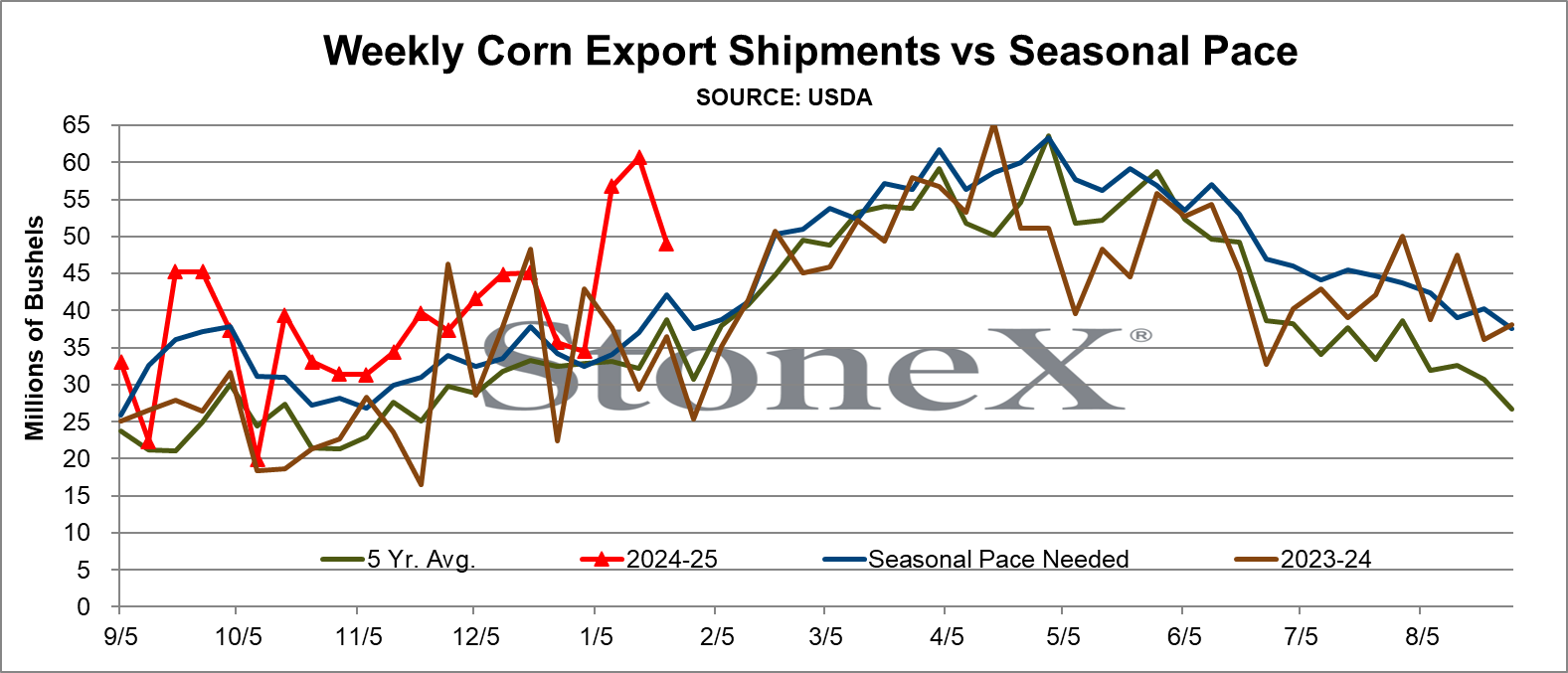
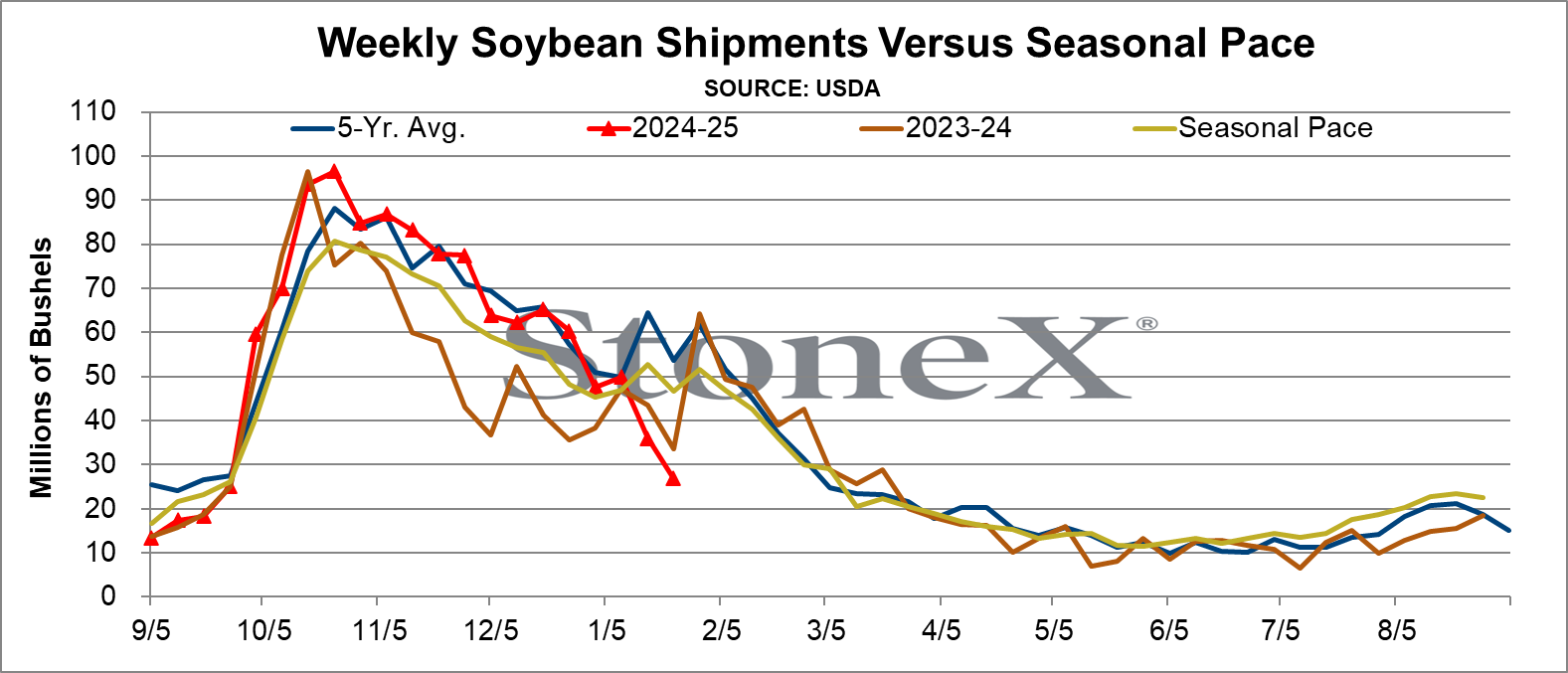
USDA inspected 49.1 million bushels of corn for export shipment in the week ending January 23rd, as shown below, along with 26.8 million bushels of soybeans, 17.8 million bushels of wheat, and 0.03 million bushels of grain sorghum. The portion of the above that was inspected specifically for shipment to China included 5.2 million bushels of soybeans, and virtually no corn, wheat or grain sorghum. Marketing year to date corn export inspections total 807 million bushels, up 190 million bushels or 31% from the previous year's pace, and 114 million bushels above the seasonal pace needed to hit USDA's target for the year. The past week's shipment pace slowed significantly from the 61 and 57 million bushel totals the previous two weeks, but it was still above the seasonal pace, causing the year-to-date surplus to swell further. The past week's shipments included 4.8 million bushels destined to Colombia, with whom President Trump nearly started a trade war over the weekend. Marketing year to date soybean export inspections total 1.214 billion bushels, up 196 million bushels or 19% from the previous year and 100 million bushels above the seasonal pace needed to hit USDA's target. However, the weekly pace has dropped off sharply this month, falling below the seasonal pace so that the year-to-date surplus is rapidly shrinking.
President Trump's spat with Colombia's president over the weekend nearly started a trade war with it, but it didn't. Yet, it provided a reality check for the markets ahead of Trump's current deadline for applying tariffs to Canada, Mexico and China on Saturday. That has the markets nervous, although there's still an underlying assumption that it will somehow all get worked out. But, it's going to leave these markets vulnerable to headline risk in the meantime. Argentina's late-week surprise cut in its export tax for the commodities also raises fear that we'll see a flush of Argentine corn and soybeans hit the global market. Better-than-expected weekend rains to provide relief for dry areas of Argentina also weighed on the markets. In fact, those rains may have had the largest effect on today's price action, particularly with the models continuing to look better for these areas as we move forward into February.