July 15 - Online betting sites raised the odds of a successful Trump presidential campaign following his survival of an assassination attempt on Saturday, leading to another record-setting day on Wall Street as traders pin their hopes on a shift toward a more hawkish trade policy and looser regulations. The VIX continues to trade near 13 at midday, while the dollar index is trading near 104.1. Yields on 10-year Treasuries are trading near 4.22%, while yields on 2-year Treasuries are trading at fresh four-month lows near 4.44%. Crude oil prices are modestly weaker at midday, while the grain and oilseed markets continue to deal with active selling pressure.
Soybean prices led the way lower for the grain and oilseed sector, as chart support gives way amid a flood of selling and an absence of buyers thus far today. Old-crop stocks look more than adequate after today's export inspection report from USDA showed weekly shipments at a 12-month low, while new-crop prospects are improving with favorable weather in the forecast. Double-digit losses were also seen for wheat prices, which added to corn's woes today as well. Corn had a big bullish surprise from USDA on Friday, but the market response was unimpressive, with the market not believing USDA's friendly adjustments that still left new-crop projected stocks near 2.1 billion bushels. Traders also now fear that we could see an above-trend national average corn yield, with weather generally seen as favorable for Midwest pollination over the next couple of weeks.
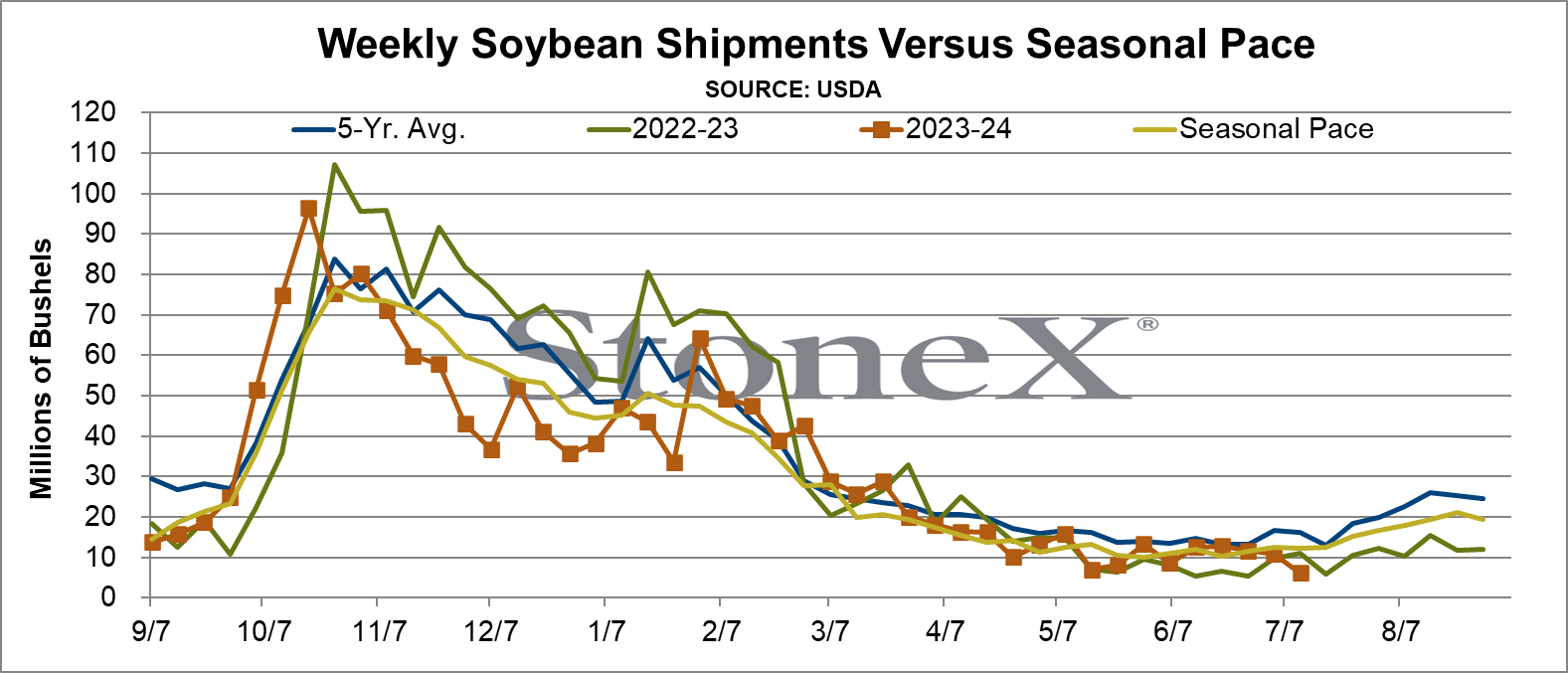
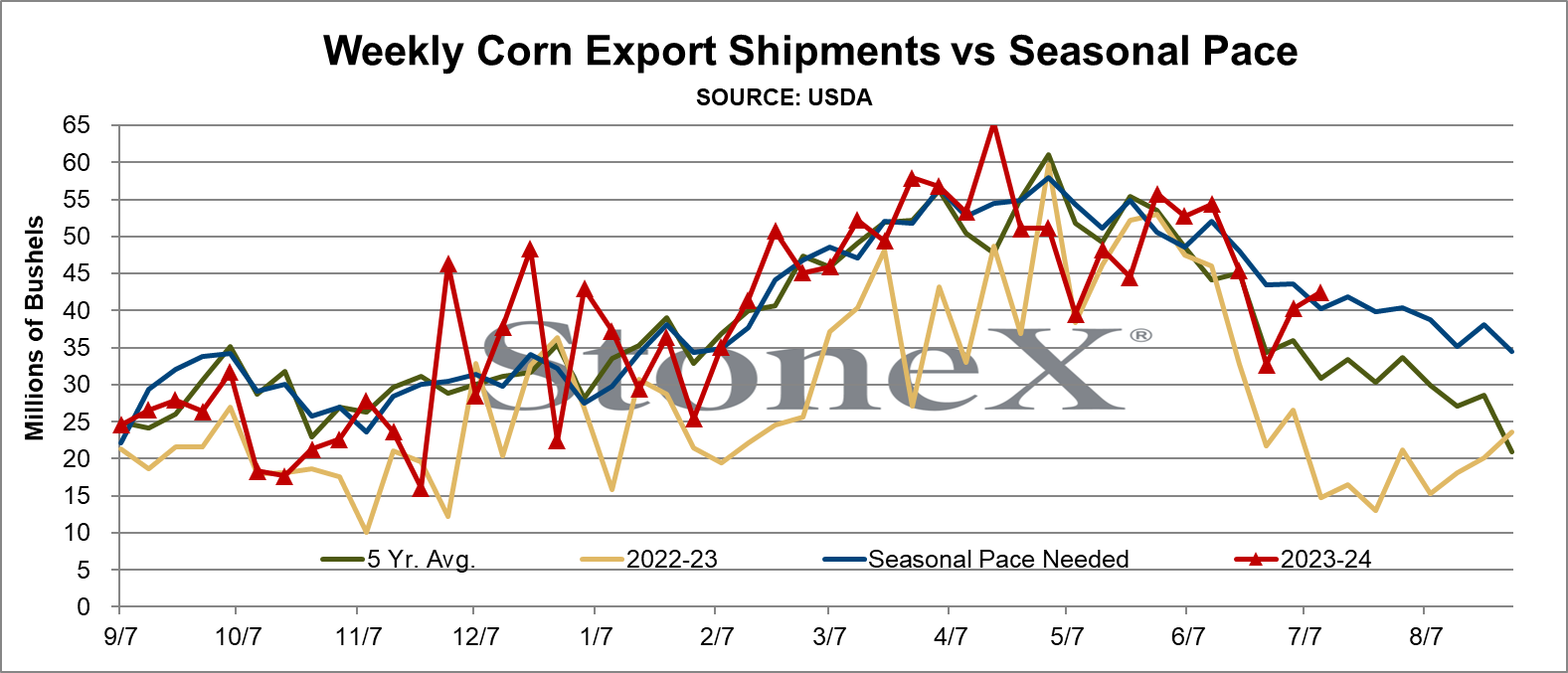
USDA inspected 42.5 million bushels of corn for export shipment in the week ending July 11, along with 6.2 million bushels of soybeans (as shown below), 19.6 million bushels of wheat and 2.8 million bushels of grain sorghum. Of the above, the portion that was inspected specifically for shipment to China included 2.5 million bushels of wheat, 2.4 million bushels of grain sorghum, 0.4 million bushels of corn and just 0.05 million bushels of soybeans. Wheat export shipments for the marketing year to date are just slightly behind the seasonal pace needed to hit USDA's target, while grain sorghum shipments are still slightly above the pace. It's a little more interesting though for corn and soybeans. Marketing year to date corn export inspections total 1.755 billion bushels, up 419 million bushels from the previous year's pace, but down 39 million bushels from the seasonal pace needed to hit this year's USDA target. Marketing year to date soybean export inspections total 1.544 billion bushels, down 289 million bushels from the previous year's pace, but up 23 million bushels from the seasonal pace needed to hit USDA's target. Unfortunately, we anticipate that export shipments will remain more flat than the seasonal pace through August, with Brazilian soybeans remaining priced below U.S. Gulf soybeans shipped into China through the period.
Furthermore, the National Oilseed Processors Association reported today that its members crushed 175.6 million bushels of soybeans, down from the average trade guess of 177.9 million bushels. Accounting for non-NOPA member crush, that leaves roughly 363 million bushels to be crushed in the final two months of the marketing year to hit USDA's target, which is very doable, but certainly much less than we anticipated. Floods in the northwestern Midwest curtailed activity in June more than expected, and we were already looking at two fewer working days in June than what we saw the previous year due to how the calendar fell this year. The primary focus now will be on the weekly export shipment pace, as well as the weekly crop ratings. The trade expects both corn and soybean ratings to tick higher today, which would further increase trade confidence for national average yields above trend levels, keeping supplies more than adequate for the 2024-25 marketing year.