July 22 - Stocks are mixed to firmer at midday, as Wall Street assesses the impact of a Biden exit from the presidential campaign. The VIX continues to slowly slip lower to trade closer to 15 at midday, after spiking above 17 on Friday. The dollar index is trading near 104.4. Yields on 10-year Treasuries are trading near 4.27%, which is its highest level since July 11th, while the same is true for yields on 2-year Treasuries near 4.54%. Crude oil prices are back up near $80 per barrel, after falling to fresh five-week lows earlier in the session on forecasts for supplies to exceed demand next year. The grain and oilseed markets are mostly higher, with the exception of Kansas City wheat, which has slipped into the red at midday.
There's more talk about potential supply risks in the grain and oilseed markets today, now that prices seem to have put in a near-term bottom. It's not unusual for the narrative to flip following a change in price action, but it is often debated which came first? The forecast is hotter and drier for the Midwest, and hot dry conditions are generally expected over the next 10 days for much of the North American spring wheat belt, as well as a portion of the Black Sea spring wheat belt as well. In fact, 50% of the Black Sea corn crop will also remain under stress. None of these stories is enough by themselves to justify rationing demand with higher prices, but they do garner more attention when price momentum starts to flip, and when managed money holds large short positions. There's still a lot of corn and wheat in the U.S. farmer's hands, and the Brazilian farmer still has quite a few soybeans to sell as well. The U.S. corn that is in on-farm storage in particular will need to be moved in the next 40 days or so, which may make rallies difficult to sustain until that has happened, and / or until a more significant weather threat emerges. This afternoon's crop ratings will likely set the tone overnight. The trade expects stable ratings this week, while I'm expecting a modest decrease in conditions. But a modest decline in ratings is what typically happens on nearly a weekly basis in July, so stable ratings would push most yield models higher.
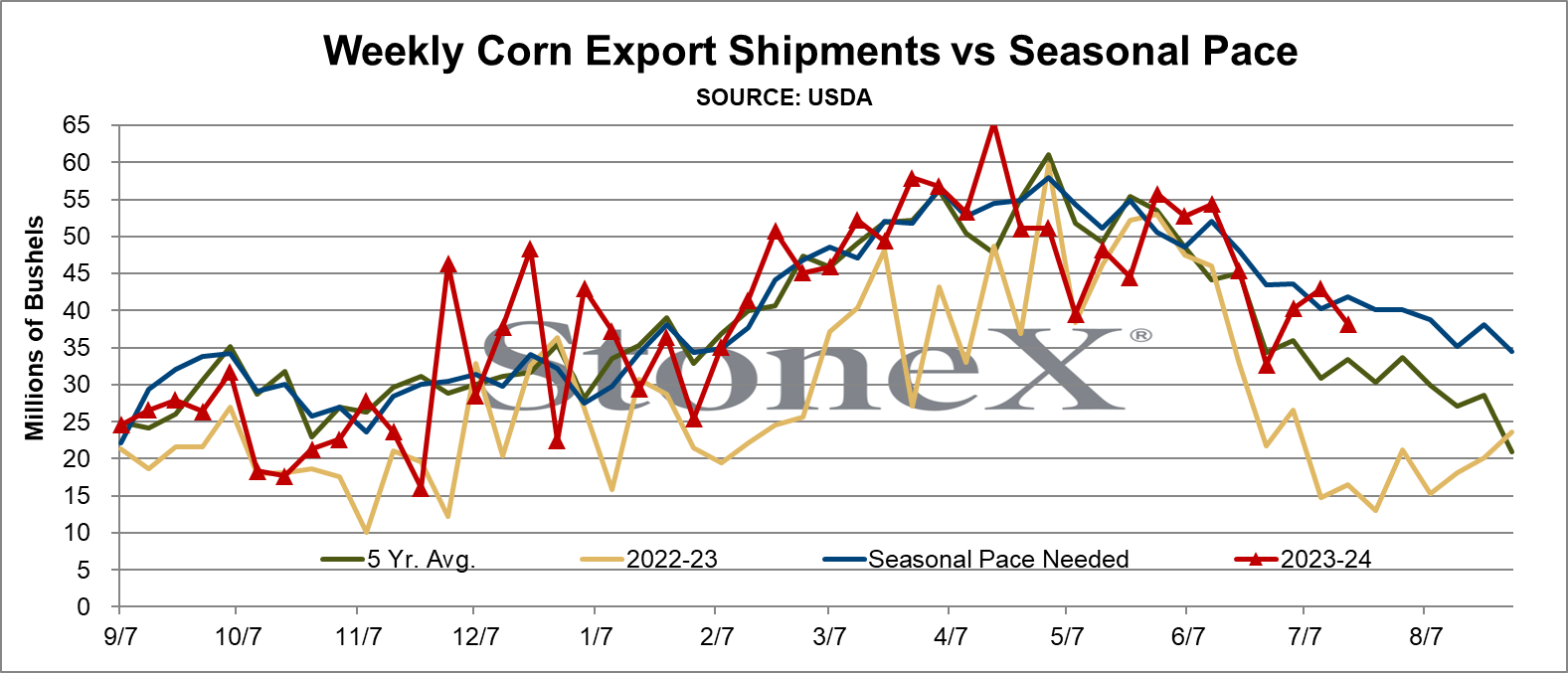
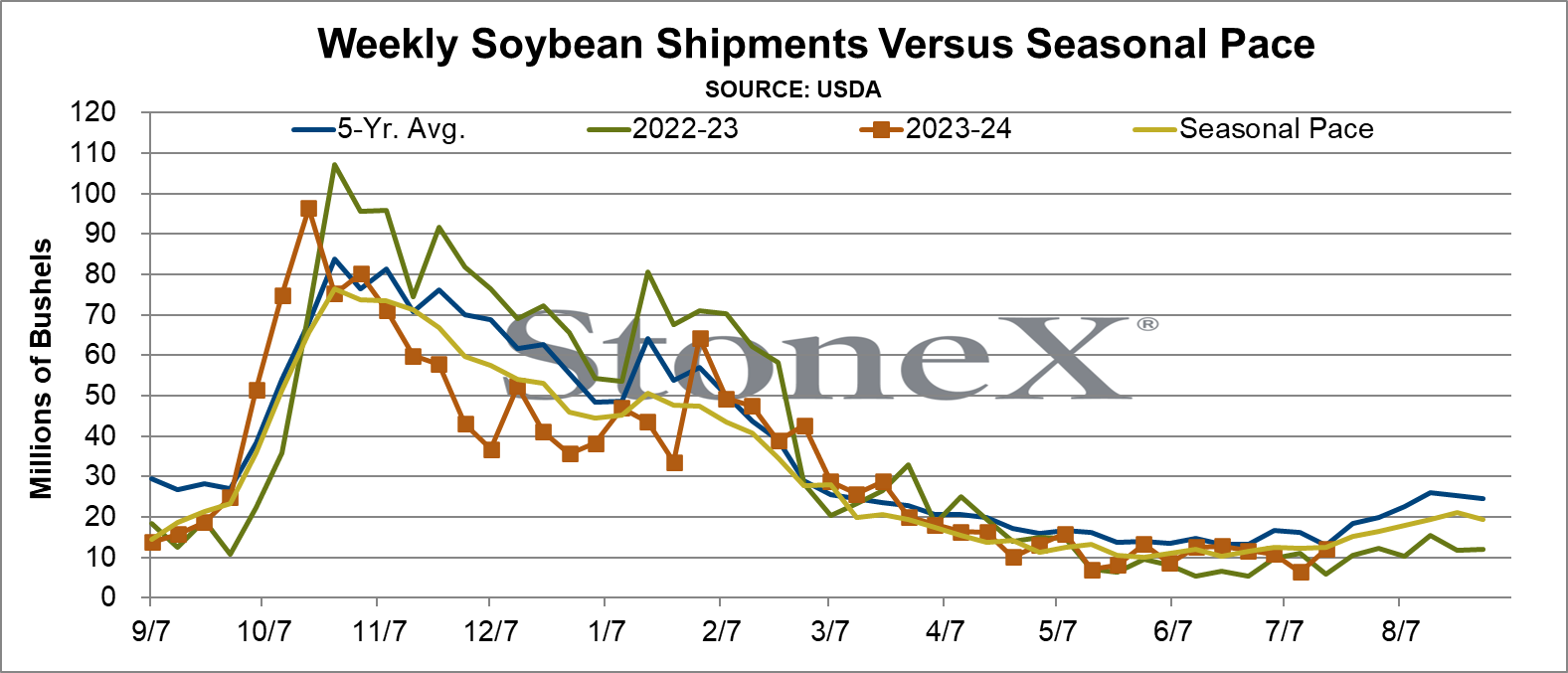
USDA inspected 38.2 million bushels of corn for export shipment in the week ending July 18, as shown below, along with 12.0 million bushels of soybeans, 8.7 million bushels of wheat and 2.7 million bushels of grain sorghum. Virtually all of the grain sorghum went to China, while just miniscule amounts of the rest of the above was inspected for shipment to China. The grain sorghum inspections generally keep marketing year to date inspections on pace to hit USDA's target for the year that ends on August 31, while wheat shipments are starting to slip a little behind the seasonal pace early in its marketing year, but wheat still has plenty of time to make up the deficit.
Marketing year to date corn export inspections total 1.794 billion bushels as of July 18, up 444 million bushels or 33% from the previous year's pace, largely due to a big increase in shipments to Mexico this year. However, much of that has already been factored into USDA's elevated export target, which it just increased by another 75 million bushels. Considering that increase, marketing year to date export inspections currently fall short of the seasonal pace needed to hit USDA's target by 41 million bushels, versus being short by 39 million bushels the previous week. Marketing year to date soybean export inspections total 1.556 billion bushels, down 288 million bushels or 16% from the previous year's pace, largely due to a decline in demand from China this year. As a result, USDA lowered its target this year by 292 million bushels to 1.700 billion bushels. Marketing year soybean export inspections to date still exceed the seasonal pace needed to hit that lower target by 23 million bushel, which is unchanged from last week.