June 3 - Stocks slipped lower and the dollar dropped with Treasury yields following the release of soft manufacturing data this morning that showed more contraction in that sector. Yet, the Mexican peso saw sharp losses against the dollar today as the market reacted to the election of Claudia Sheinbaum as the existing ruling party scored a strong election showing that might result in constitutional changes that diminish checks and balances within Mexico. The VIX is trading near 14 at midday, with the dollar index at a two-week low near 104.2. Yields on 10-year Treasuries are trading near 4.41%, while yields on 2-year Treasuries are trading near 4.82%. Crude oil prices fell through chart support triggering more Algo selling to put them down by more than 3% at nearly four-month lows, while the grain and oilseed markets are mostly lower as well in a broad selloff.
StoneX Brazil cut its soybean production estimate to 149 million metric tons today, based on its latest customer survey, down from 150.8 mmt the previous month. The crop was cut by roughly 3 mmt in Rio Grande do Sul in southern Brazil due to the persistent rains and flooding in that region, which is just now starting to dry out. As such, we could see more adjustments coming as the damage assessment is done in the days and weeks ahead. However, that was partially offset by adjustments in other states, including more than a 1 mmt increase for Mato Grosso due to an increase in area harvested. StoneX Brazil cut its all-corn production estimate to 121.75 mmt, down from 125.55 mmt the previous month. No change was made to its summer corn crop, but the winter (safrinha) crop was reduced to 93.5 mmt, down from 97.3 mmt last month. Mato Grosso's crop was increased slightly again, with modest increases elsewhere as well. But those increases were more than offset by yield cuts in Mato Grosso do Sul and in Parana. I don't see these numbers materially impacting U.S. corn and soybean exports, but additional cuts could do so.
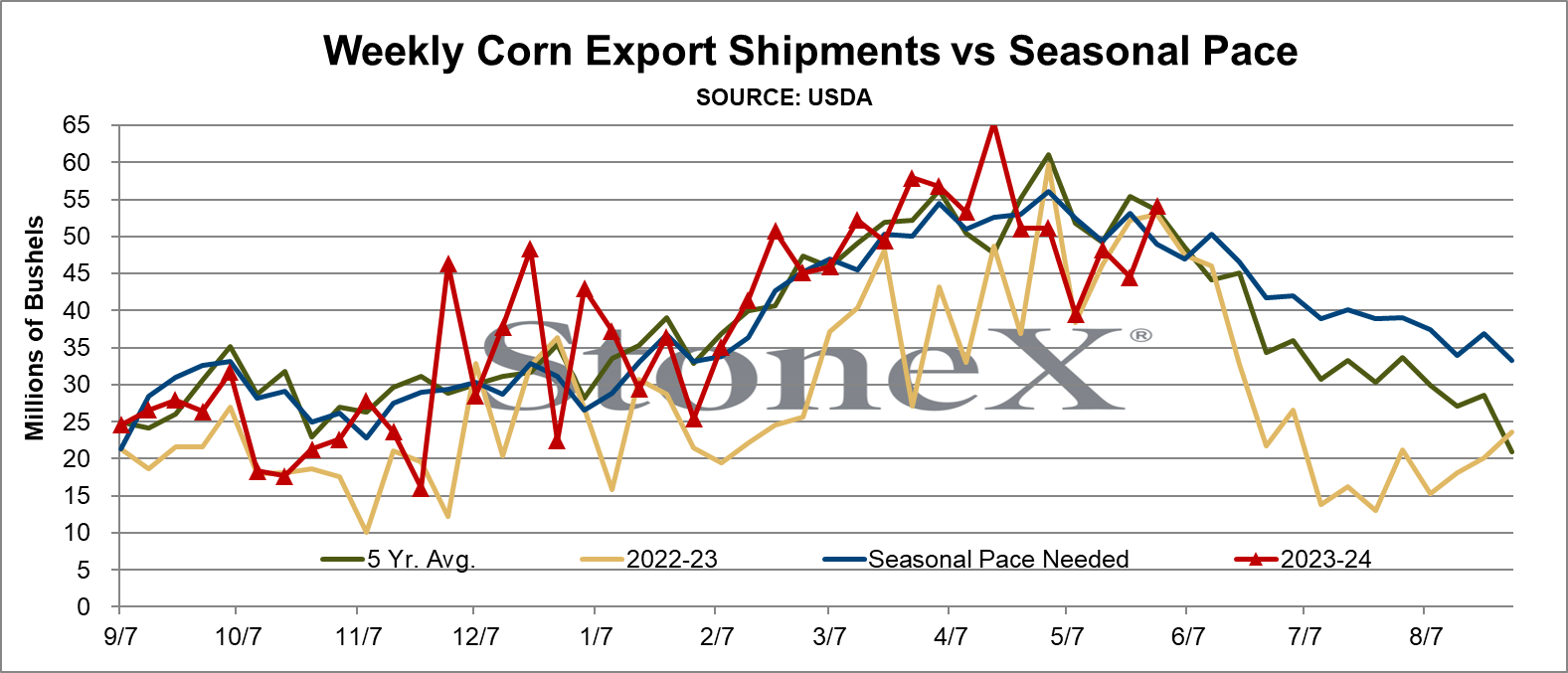
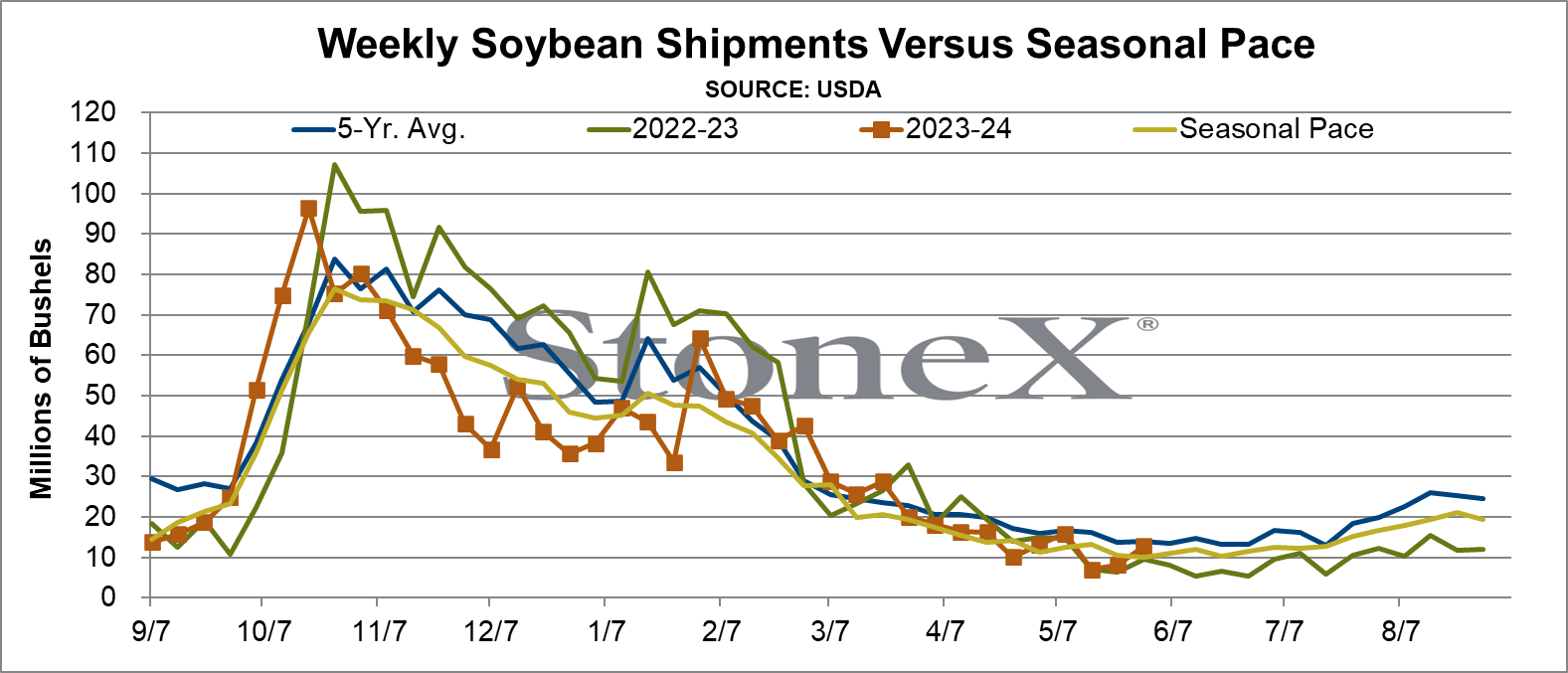
USDA inspected a six-week high 54.1 million bushels of corn in the week ending May 30, as shown below, along with 12.8 million bushels of soybeans, 15.3 million bushels of wheat and 2.7 million bushels of grain sorghum. The portion of the above that was inspected specifically for shipment to China included 5.4 million bushels of corn, 2.5 million bushels of soybeans, and 2.7 million bushels of grain sorghum. No wheat was inspected in the week ending May 30 for shipment to China. The marketing year for wheat ended on Friday, so there will be another day's shipments added to the 2023-24 marketing year total, plus any non-inspected wheat shipments. In the end, I expect total wheat shipments to come in within 5 million bushels of USDA's target - perhaps on the low side of it.
Marketing year to date corn export inspections total 1.486 billion bushels, up 307 million bushels or 26% from the previous year's pace, and 19 million bushels above the seasonal pace needed to hit USDA's current export target. Those weekly export inspection totals had been disappointing over the past five weeks, but the past week's number looks impressive once again. Nevertheless, we anticipate the weekly total trending lower over the next several months as new-crop Argentine supplies hit the world market, although that's factored into those above seasonal calculations. Marketing year to date soybean export inspections total 1.481 billion bushels, down 309 million bushels or 17% from the previous year's pace, although 30 million bushels above the seasonal pace needed to hit USDA's current target. That seasonal pace needs to trend higher in the last half of July through August as Brazil runs out of soybeans. That's not expected to happen this year, unless flood losses are larger in Rio Grande do Sul than currently believed.