May 19 - Stocks opened lower following the weekend sovereign debt credit downgrade by Moody's but then the market seemed to move on with a shrug. Stocks were mixed at midday as traders continue to digest the headlines. The VIX slipped from its early high near 20 to trade near 18 as anxiety eases on the Street, while the dollar index came off its session low to trade near 100.4. Yields on 10-year Treasuries are trading near 4.49%, after trading to 4.56% earlier in the session, while yields on 2-year Treasuries are trading near 3.99%. Crude oil prices erased early weakness to trade 1% higher, firming with the stock market. The grain and oilseed sector continues to post modest gains. Russia declared a crop emergency regarding frost damage to crops earlier this month, although the damage appears to be rather localized and much less than what we saw a year ago. The soyoil market also continues to recover following the collapse mid-week last week, as the market realizes it likely overreacted to rumors about the EPA's recommendations for the Renewable Fuel Standard.
Nebraska had been the poster-child for drought this spring, but much of the state received good rains over the weekend. More is needed, but the rains were very timely and beneficial. Meanwhile, areas of the southern Midwest remain excessively wet, preventing farmers there from planting this year's corn and soybean crops. The market isn't focused on those wet areas yet, believing that there is still time, but that may change over the next few weeks. Today's strength in the grain and oilseed sector is largely seen as a technical bounce at this point in a market that is otherwise struggling to find footing. Today's weekly crop progress report from the USDA should show that roughly 80% of the nation's corn crop is in the ground, along with two-thirds of the soybean crop - both of which are strong for this point in the year.
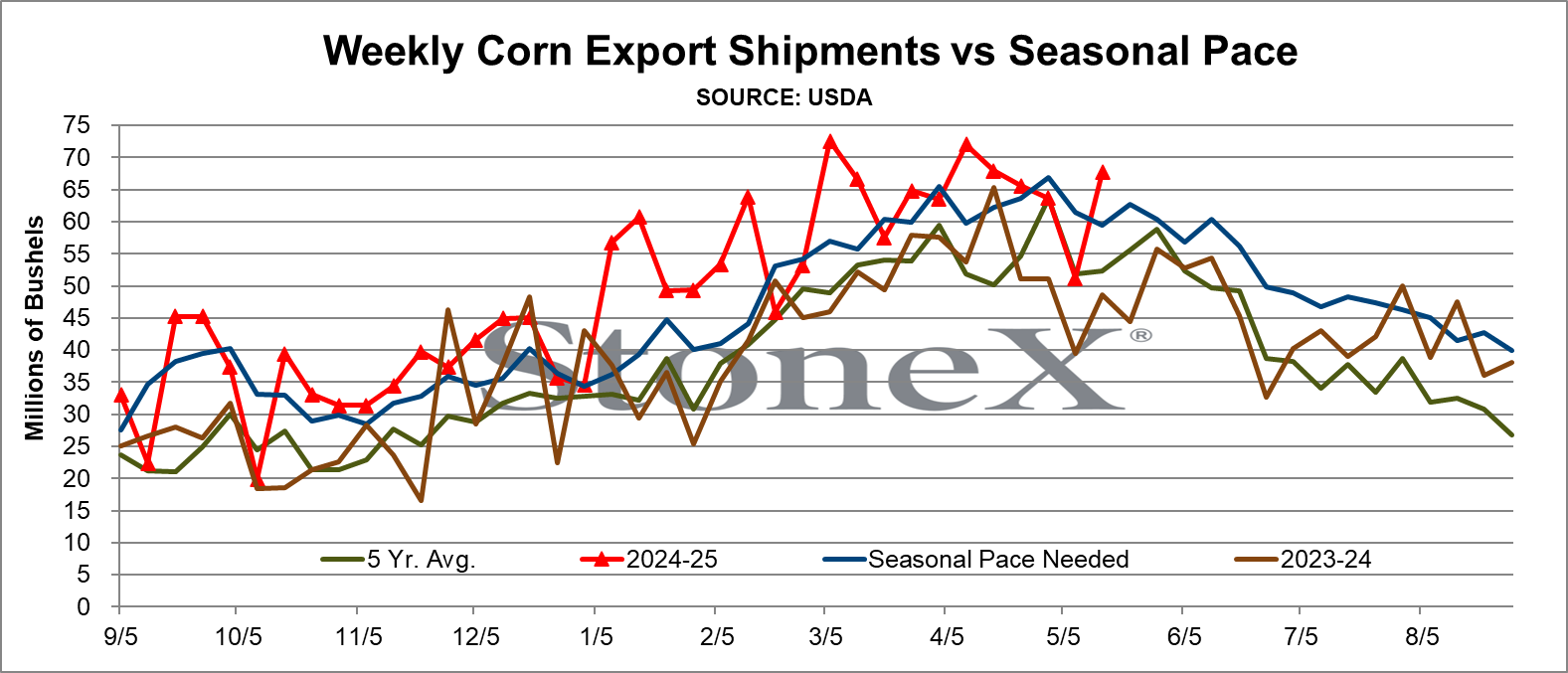
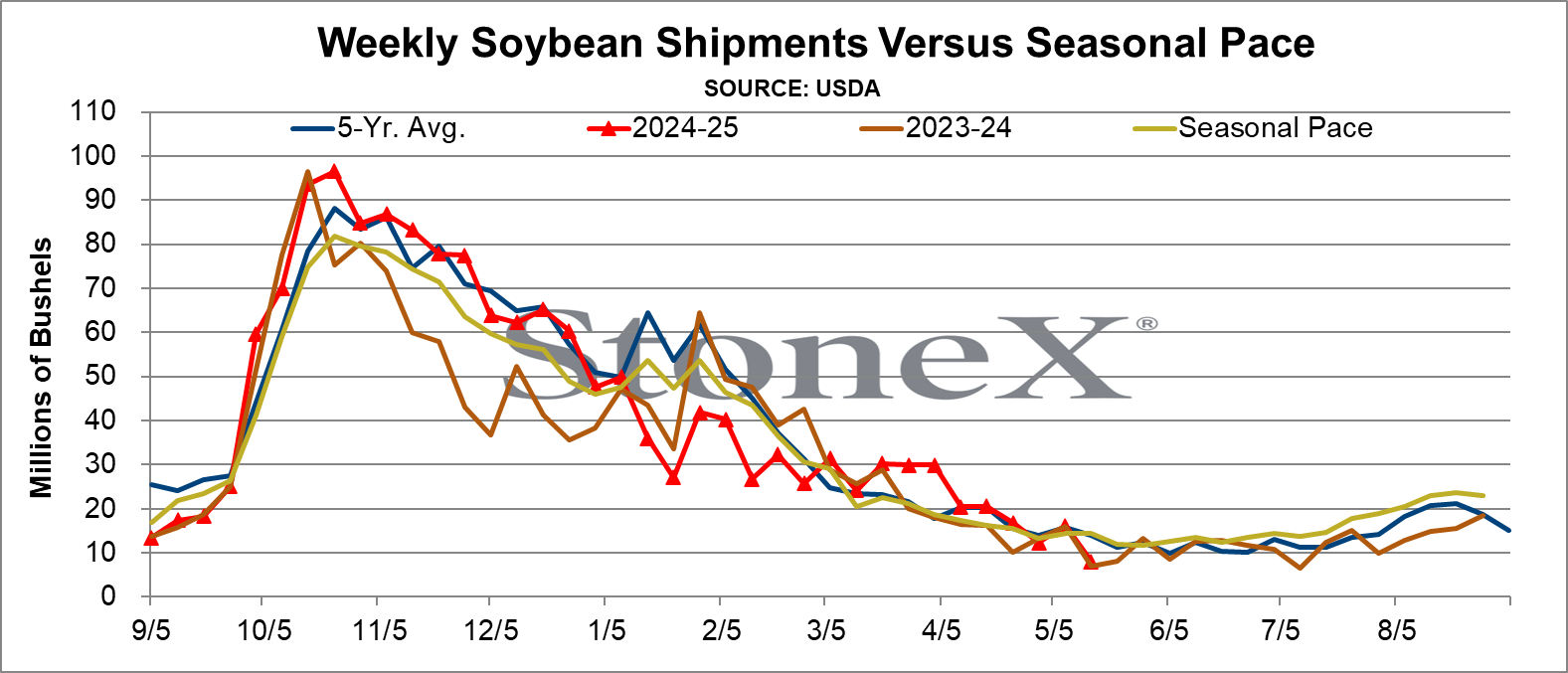
USDA inspected 67.7 million bushels of corn for export shipment in the week ending May 15, as shown below, along with 8.0 million bushels of soybeans, 15.6 million bushels of wheat, and 1.5 million bushels of grain sorghum. None of the above was inspected for shipment to China during the week. It's unknown how much grain and oilseeds China may have purchased under "unknown destinations," but it otherwise just has one cargo of soybeans on the books. That cargo is likely owned by Sinograin, which is basically immune to the tariffs. It also has a miniscule amount of grain sorghum on the books, which is likely a container or two of supply. Otherwise, Chinese purchases have essentially shut down.
Marketing year to date corn export inspections total 1.793 billion bushels, up 405 million bushels or 29% from the previous year, and up 153 million bushels from the seasonal pace needed to hit USDA's target for the year that ends on August 31. The past week's shipments were impressive indeed, but they follow a week with very sluggish shipments. Overall, corn export demand remains strong. The graphic below shows that shipments seasonally slow from May through August as first Argentine, and then Brazilian new-crop supplies hit the market. But U.S. shipments overall remain solid thus far overall. Marketing year to date soybean export inspections total 1.622 billion bushels, up 162 million bushels or 11% from the previous year's pace, and up 78 million bushels from the seasonal pace needed to hit USDA's target for the year that ends on August 31st. Soybeans face greater risk than corn of sliding below the seasonal pace needed to hit USDA's target, shrinking that surplus notably in the next several months. The focus then will be whether we see China begin to book new-crop soybeans for delivery in the fourth quarter of this year, and if so, how much? I'm still expecting trade negotiations with China to string out over a long period of time.