October 7 – Stocks continue to hover in the red at mid-day as a readjustment of rate cut expectations weighs on sentiment. The VIX is elevated today, pushing near 21.2 earlier in the session but now falling back slightly to hove near 20.7 at the time of writing. The dollar has faded from overnight strength to now trade slightly in the red below 102.3, though still high compared to the previous two months following last week’s rally. Treasuries are up slightly at mid-day, with 10-year yields trading above 4.01% and 2-year yields trading at 3.98%. Crude oil is continuing to rally on heightened Middle East tensions, with the nearby WTI contract trading at nearly 6-week highs above $76.50, while the ags are largely mixed.
USDA inspected 52.6 million bushels of soybeans for export in the week ending 10/3, coming in well above the high-end trade guess and marking the largest weekly inspections seen since late January. Corn and wheat export inspections were both toward the lower end of their estimate ranges, however, coming in at 36.7 and 13.4 million bushels, respectively. A softer week isn’t the end of the world for corn and wheat shipments, with both getting off to ahead of schedule starts in the new marketing year and maintaining paces ahead of USDA estimates, though soybeans still have some catching up to do as U.S. harvest progresses.
Another grain vessel was damaged by a Russian missile in Ukrainian waters, according to the country’s restoration ministry. The ship was reportedly loaded with corn in the Ukrainian port of Pivdennyi, just to the east of the major port city of Odesa. When we saw this happen to a wheat vessel last month, the wheat market rallied in response as spec funds covered shorts out of fear. The market isn’t responding as sharply to today’s news, with both corn and the wheat complex showing small gains, but if this were to become a more common occurrence that materially limits Ukrainian exports, it would have significant implications for the grains going forward. This is amplified further by the region coming off of a down year of production and already being off to a rough start to winter wheat planting due to ongoing dryness.
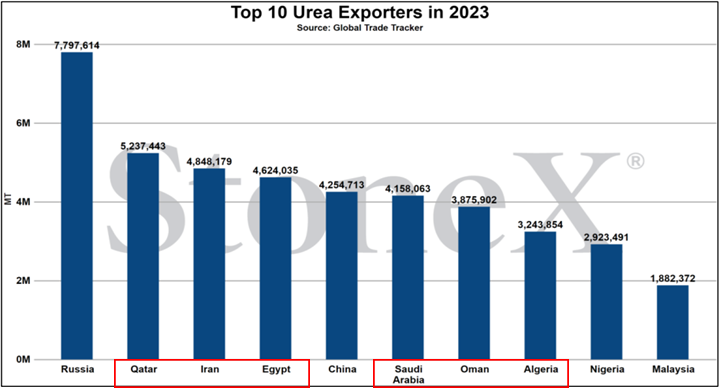
The escalating conflict in the Middle East isn’t just driving energy markets higher, it’s also served as a catalyst to drive nitrogen prices higher. Urea is the most commonly used nitrogen fertilizer in the world and it’s difficult to overstate the region’s importance to this market, with six of the world’s top ten urea exporting countries being located in the Middle East and North Africa, accounting for half of the entire world’s urea exports. A handful of supply issues have been bubbling under the surface in the nitrogen markets, namely China’s ongoing export restrictions, shaky production due to natural gas supply issues in Trinidad and Egypt, and continued delays to the return of Russian ammonia exports. With farm economics remaining weak due to softening grain prices, demand has been disengaged enough that this tightness hasn’t been fully realized to date. However, demand from the world’s top two urea importers, Brazil and India, has now been ramping up. Last month, India stepped forward and made their largest urea purchase since late 2023 in a tender, securing ~1.13 MMT. While this purchase wasn’t a shock, the announcement of another tender soon after certainly was. That tender is still in progress, with sellers having until tomorrow to accept counterbids, but it doesn’t appear that they’ll be able to secure as big of volumes as desired with the near-term global supply tightness being evident in offers. With harvest ahead of schedule here in the U.S. and extended forecasts pointing to great weather for fall application season, we could be feeling some of that tightness domestically in the months ahead.