September 1 - Treasury yields reversed higher this morning, with the dollar then following them higher, responding to comments by Cleveland Federal Reserve President Letta Mester. She had a hawkish tone to her speech, suggesting that while this morning's jobs report showed progress, it may still not be enough to tame inflation to the 2% mandate. That sent the tech sector lower, while moderating gains in other stocks. The VIX is trading near 13, while the dollar index is trading near 104.2, which is 90 basis points off its session low. Yields on 10-year Treasuries set a fresh three-week low at 4.06% before rallying to 4.19% at this hour. Yields on 2-year Treasuries are trading near 4.88%, after setting a three-week low at 4.76% earlier this morning following the release of the monthly jobs report. Crude oil prices set a fresh nine-month high above $85 this morning, although they're trading just below that level as we approach midday. The grain and oilseed markets are generally mixed to higher. Wheat prices are again trying to confirm another low, with new first-of-the-month money coming in. There's also some Black Sea headline risk heading into a three-day holiday weekend. The markets will be closed Monday for the Labor Day holiday. Strength in wheat helps support corn prices, which saw some short-covering after holding support at the August lows on the charts. Soybean prices are mixed as we head into the holiday weekend.
Two more cargo vessels left Ukraine ports near Odessa today, which makes four that have done so utilizing Ukraine's "humanitarian corridor" that keeps them close to the Ukraine coastline until they get to Romanian waters where they can traverse the Black Sea. These ships have been trapped in Ukraine ports since the war began in February 2022. Ukraine hopes to use the corridor to move grain to the export market once these ships have cleared, although it is yet unclear whether Russia will allow that to happen. It's also unclear whether shippers will be willing to take the risk.
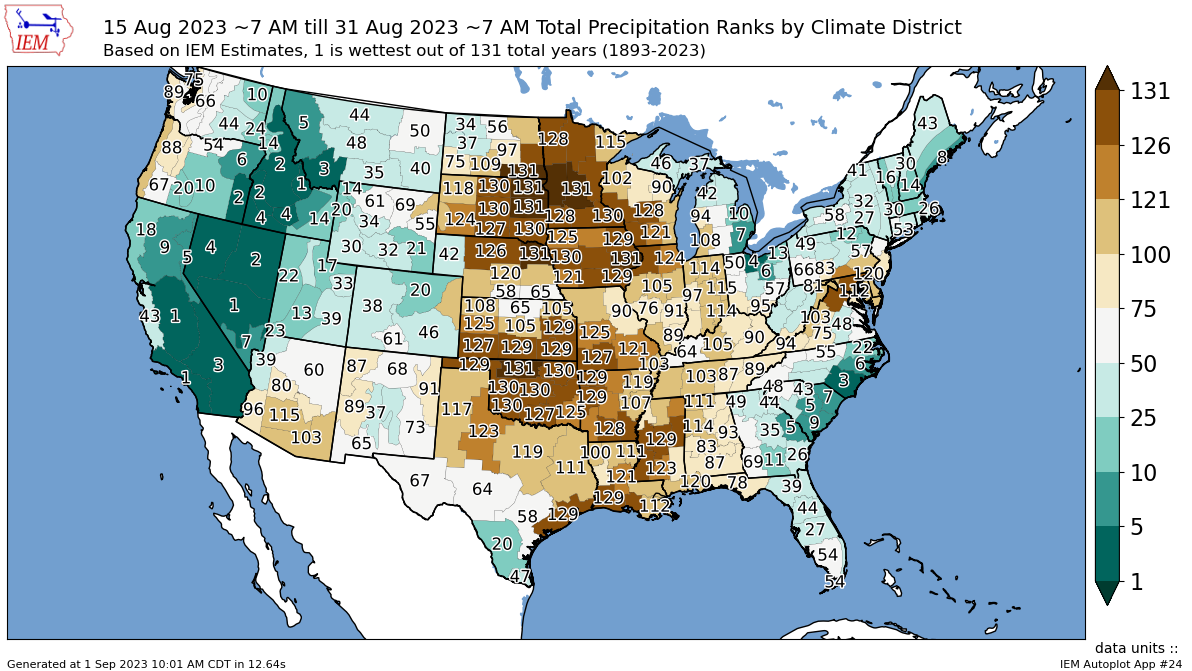
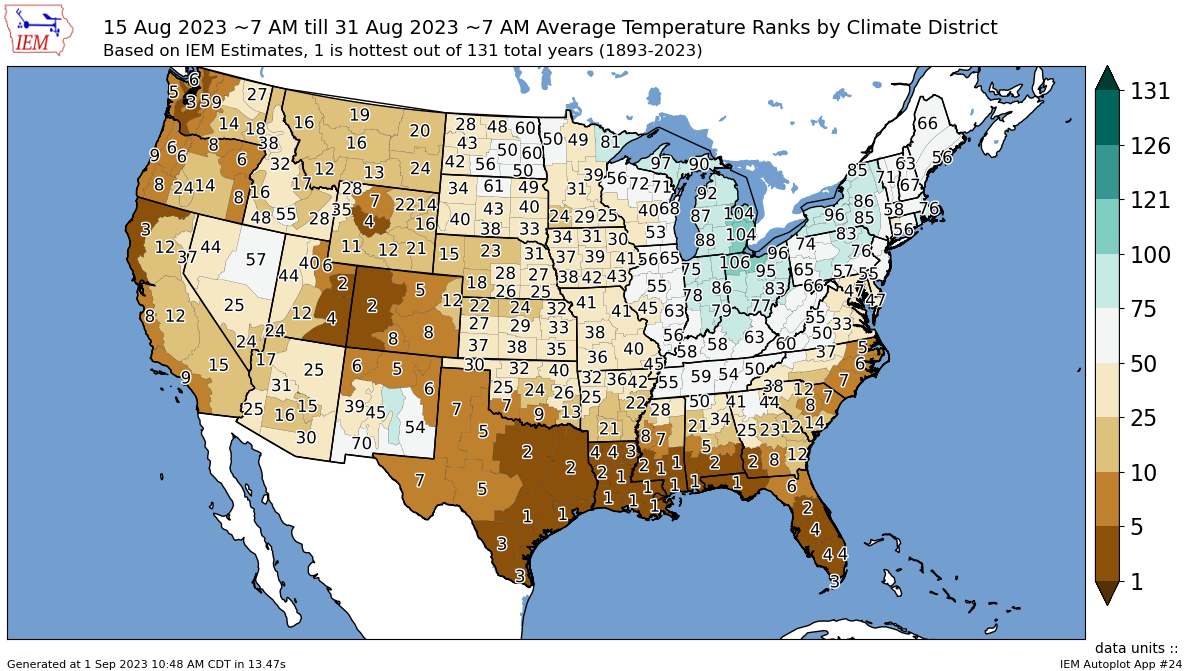
The last half of August was quite dry across the center of the country, as shown in the graphic below, including prime corn and soybean growing areas of the central and western Midwest. In fact, the period was either the driest of the past 131 years, or in the top 5 driest on record through much of the center of the country. The period included a week of extreme heat in that same region as well, although that was moderated somewhat by a week of mild readings. The region ended up warmer than normal overall, while the record-setting heat for the last half of August stayed farther to the South. The question then is, what was the impact on yield as corn matured through the grain fill period and soybeans attempted to finish pod set and pod fill? The answer is obvious in some areas, with the crops dying prematurely. But that's not the case across the Midwest as a whole.
The biggest thing that we're seeing is a speeding of the maturation process. That tends to give less time for corn to build depth-of-kernel and the soybean to build size of seed in the pod. A 5% smaller seed leads to a similar reduction in yield, for example. USDA tries to adjust for that in its September production estimates that are based on sampling crops in the field, but the combine will ultimately tell the story. We'll adjust our official StoneX production estimates on September 6 based on what our customers tell us they're seeing in the field. Near-term, I'd expect USDA to lower demand estimates along with lowering corn yield estimates, leaving stocks well above previous year's levels. There's less room to do so for soybeans though, and that's the primary concern. It's my sense that we'll see the national average soybean yield slip below 50 bushels per acre, but we'll see what the data shows. As such, soybean traders still need to respect the possibility that they may need to ration demand, while they're less concerned about that with corn unless we see a much larger drop in yield than currently anticipated.