September 26 - Stocks were notably lower today as higher interest rates escalate concerns about the U.S. economy, creating headwinds for the broader commodity sector as well, with the dollar index hitting fresh 10-month highs. The VIX posted a fresh five-week high just below 19 as we approached midday, while the dollar index is trading near 106.2. Yields on 10-year Treasuries are trading near 4.54%, which is just below today's fresh 16-year high near 4.57%, while yields on 2-year Treasuries are trading near 5.15%. Crude oil prices are 1% higher on the session as global supplies tighten, while the grain and oilseed sector is mixed. Escalated bombing of Ukraine ports provides underlying support for wheat, while biofuel demand provides support for soyoil, while corn and soybean prices felt the pressure of seasonal harvest selling.
The consumer confidence index slipped to 103.0 this month, down from 108.7 the previous month and down from analyst expectations of 105.8. The Present Situation Index improved slightly to 147.1, up from 146.7 previously. However, the Expectations Index fell nearly 10 points to 73.7, dropping back below the "80" level that often signifies a coming recession. The survey revealed a focus by consumers on rising prices for groceries and for gasoline - two areas that policymakers in Washington tend to ignore in their inflation discussions. Consumers also indicated concerns about higher interest rates and the current political climate. The decline in consumer confidence was seen across all age groups, and particularly so in those with incomes of $50K and more.
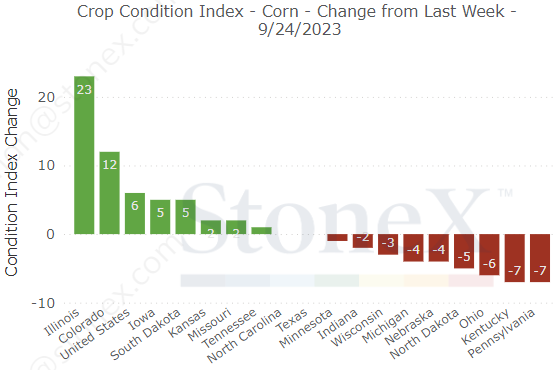
USDA reports that the corn condition index score for this week is 338, up from 332 the previous week, up from 332 the previous year, but down from the 10-year average for the week of 362. The improvement surprised the market, raising some questions about the origins of the better numbers. The portion of the crop rated Good to Excellent rose two points this week, but more significantly, the portion of the crop rated Poor to Very Poor fell by 2 points this week. It’s very rare to see Poor to Very Poor ratings jump to that extent in early harvest. Remember, that I’ve previously stated that these subjective ratings are essentially a beauty contest reflecting how the crop looks. That switches to a reality contest when the combine starts to roll. The people filling out these weekly surveys hear the farmers talking. They hear the yield reports, and that influences their perception of the crop when filling out the reports.
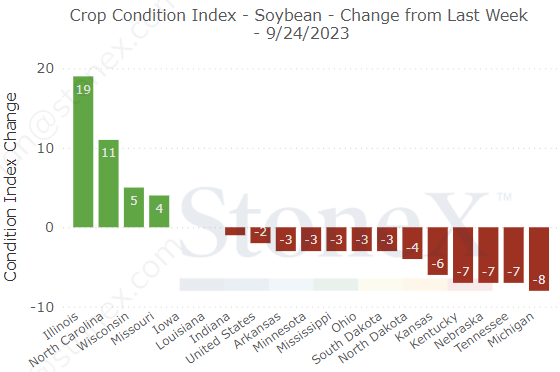
Specifically, this week’s ratings largely saw an improvement due to a seven point move in the Poor to Very Poor up to the Good to Excellent for the state of Illinois. It’s possible that was an error on USDA’s part, which we should know if we see a similar number next week. But the likely scenario is that early harvest results are coming in “better than expected” in areas of Illinois thought to be a problem, resulting in the jump in that state’s ratings. That’s important, with Illinois being one of the top two production states, along with Iowa. As for soybeans, they continued their slow decline in national ratings, despite a significant jump in Illinois numbers for them as well. The percent of Illinois soybeans rated Poor to Very Poor fell by eight points this week, but that was offset by declines in other states. The portion of Illinois soybeans rated Good to Excellent rose by 6 points, while the national crop held steady at the top end of the scale. The change in this week's ratings pushed my corn yield model up 2.1 bushels to 173.1 bushels per acre, while my soybean yield model continued to slip lower to 49.8 bpa. The official StoneX yield estimates will be updated with our customer survey next week on Monday afternoon.