StoneX logo

Precious Metals Talking points 040926 Federal Reserve Minutes; wrap and analysis

By: Rhona O'Connell, Head of Market Analysis

Banner Precious Metals

Talking points; Federal Reserve March Minutes

Rhona O'Connell, Head of Market Analysis, EMEA & Asia

 Tel: +44 203 580 6115 / mobile +44 7384 833897

Fed Minutes March 2026 – walking through treacle

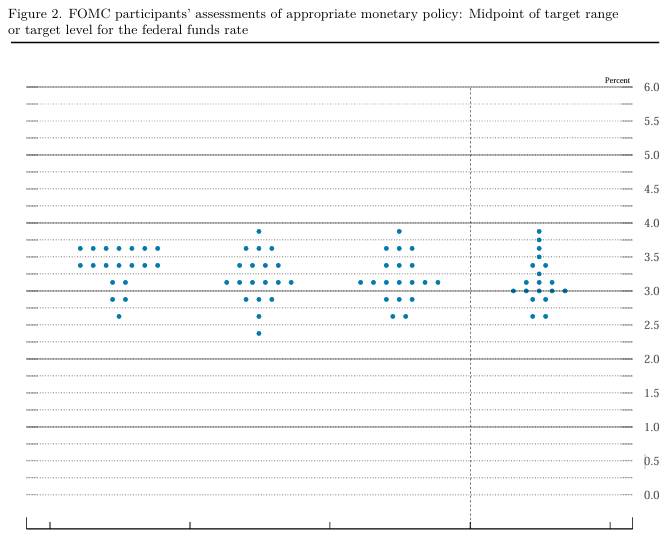
Fed funds target rate 3.50-3.75%

image-20260409132338-1Source: Federal Reserve Board

The Minutes of the March meeting show how the onset of war in the Gulf bifurcated the Committee with some arguing for lower rates due to the impact on the economy, notably the labour force, and others pushing for a future hiking policy in order to head off potential inflationary forces.  The former held sway, especially given that concerns over the labour market were already growing even before the outcome was to keep rates on hold, while it appears that some participants wanted a change in the reports of Committee contributions in order to show both sides of the argument, the possibility of raising rates if inflation was persistently above target. “The Committee is strongly committed to supporting maximum employment and returning inflation to its 2 percent objective” and “a couple of … participants highlighted that, in their projection for the appropriate path of the policy rate, they had pushed their assessment of the most likely timing of rate cuts further into the future in light of recent readings on inflation.

Only one dissenting vote this time; Stephen Miran as usual, who is the strongest advocate on the Committee with respect to looser policy.  Chris Waller, who was the other voter for a cut at the January meeting, has swung to the centre.

As I am on the road I have turned to AI for detailed review, below.

1. Economic Staff Assessment

Labour Market

  • Current conditions:
    • Unemployment rate at 4.4% in February, unchanged since September 2025.
    • Job gains low, partly distorted by a healthcare strike and harsh winter weather (staff expects payback in March).
    • Wage pressures cooling gradually:
      • Employment Cost Index: +3.4% YoY (Dec)
      • Average hourly earnings: +3.8% YoY (Feb), slightly below year‑earlier pace.
  • Outlook:
    • Staff expect unemployment to remain near current levels through most of next year, then edge down toward the natural rate.
    • Risks to employment and GDP tilted to the downside, especially given elevated uncertainty and AI adoption risks.

Inflation

  • Current readings:
    • Headline PCE inflation 2.8% YoY (Jan); core PCE 3.1% YoY.
    • February estimates slightly lower for core (~3.0%) but still elevated.
    • Core goods inflation picked up, largely due to tariffs.
    • Core services disinflation driven mainly by housing; non‑housing services inflation sticky.fomcminutes20260318
  • Outlook:
    • Staff mark up near‑term inflation due to energy prices linked to Middle East developments.
    • Inflation expected to return close to 2% by end‑2027, assuming tariff and oil effects fade.
    • Risks to inflation skewed moderately to the upside, particularly if oil prices stay elevated.

Middle East / Iran (Staff framing)

  • Staff explicitly note elevated forecast uncertainty from the conflict in the Middle East.
  • Baseline assumes only modest and temporary macro effects, but highlights risk of:
    • Higher energy prices
    • Inflation persistence
    • Weaker global growthfomcminutes20260318

2. Committee Participants’ Views

Labour Market

  • Current assessment:
    • Most participants judge the labour market as “broadly in balance”:
      • Low job growth seen consistent with slower labour force growth.
    • Some note temporary weakness from February strike and weather effects.fomcminutes20260318
  • Emerging concerns:
    • Several participants highlight signs of softening, including:
      • Slight rise in prime‑age unemployment
      • Job growth concentrated in healthcare and a few sectors
      • Declining survey measures of job availability
    • Business contacts show greater caution in hiring, partly due to AI uncertainty.
  • Risks:
    • Vast majority see downside risks to employment.
    • Low hiring environment makes unemployment vulnerable to shocks.
    • Prolonged Middle East conflict could further depress hiring sentiment.

Inflation

  • Current assessment:
    • Participants agree inflation remains above the 2% target.
    • Some stress lack of recent progress on disinflation.
    • Tariffs keeping core goods inflation elevated.
    • Non‑housing core services inflation still too high relative to pre‑pandemic norms.
  • Expectations:
    • Long‑run inflation expectations largely well anchored.
    • Near‑term inflation expectations have risen sharply, reflecting oil prices.fomcminutes20260318
  • Risks from Middle East:
    • Participants emphasise that a prolonged conflict (including Iran‑related escalation risks implicitly) could:
      • Keep oil prices high
      • Lead to pass‑through into core inflation
      • Increase risk that expectations become more sensitive to energy shocks
  • Bottom line:
    • Majority believe inflation risks are now higher than in January, and progress to target may be slower.
    • 3. Interest Rates & Policy Debate

Policy Decision

  • Target range maintained at 3½–3¾%.
  • Almost all participants supported holding rates steady.

Rationale

  • Policy rate seen as around neutral after 75 bp of cuts in H2 2025.
  • Holding steady keeps the Committee nimble given uncertainty.
  • Too early to assess full economic impact of Middle East developments.

Forward Guidance / Reaction Function

  • Many participants expect rate cuts eventuallyconditional on inflation declining.
  • Some have pushed expected timing of cuts further out, reflecting inflation data.
  • Importantly, several participants explicitly argue for a two‑sided reaction function:
    • Cuts if labour market weakens materially
    • Hikes possible if inflation remains persistently above target

Market Context (from Desk)

  • Markets shifted to fewer and later cuts; non‑zero probability of hikes (~30%).
  • Oil shock drove up near‑term inflation pricing, but longer‑term inflation compensation remains stable.

4. Voting Breakdown

  • Vote:
    • 11–1 in favour of holding rates.
  • Dissent:
    • Stephen I. Miran voted to cut rates by 25 bp, citing:
      • Policy still restrictive
      • Weak labour demand
      • Elevated downside risks to employment
  • Board of Governors unanimously kept:
    • IORB at 3.65%
    • Primary credit rate at 3.75%fomcminutes20260318

5. Key Takeaways (Macro Angle)

  • Labour market: Balance for now, but asymmetric downside risks dominate the discussion.
  • Inflation: Core progress stalled; energy + tariffs seen as meaningful upside risks.
  • Middle East / Iran risk: Treated as a major uncertainty amplifier, especially via oil and expectations.
  • Policy stance: Neutral, patient, explicitly two‑sided for the first time in tone.
  • Bias: Not a near‑term cut signal; Committee is defending optionality.

Below is an explicit hawk–dove mapping of FOMC participants based only on statements, votes, and revealed preferences in the March 17–18, 2026 minutes. Where the minutes do not attribute a view to a named individual, I classify only when the text is sufficiently explicit; otherwise I mark “centre / data‑dependent” rather than over‑infer. All characterisations are grounded in the minutes text.

How to read the map

  • Hawk: Emphasises inflation persistence, openness to hikes, caution on cuts
  • Lean hawk: Recognises downside risks but stresses inflation risks / slower cuts
  • Centre / balanced: Two‑sided reaction function, wait‑and‑see, data‑dependent
  • Lean dove: Focus on labour‑market downside risks; earlier cuts conditional
  • Dove: Explicit preference for near‑term easing

Explicit Hawk–Dove Spectrum (March 2026)

🕊️ Dove

Stephen I. Miran

  • Action: Sole dissenter; voted to cut rates 25 bp at this meeting.
  • Rationale: Current stance still restrictive; weak labour demand; elevated downside risks to employment.
    ➡ Clear, revealed dovish preference

🟢 Lean Doves

(No additional participants explicitly named as favouring a cut now)

  • The minutes do not identify any other named participants advocating an immediate cut.
    ➡ Classification intentionally left empty to avoid inference

⚪ Centre / Balanced (Two‑Sided Reaction Function)

Jerome H. Powell (Chair)
John C. Williams (Vice Chair)
Philip N. Jefferson
Lisa D. Cook
Neel Kashkari
Lorie K. Logan
Christopher J. Waller
Michelle W. Bowman
Michael S. Barr
Beth M. Hammack
Anna Paulson

  • Shared stance:
    • Strong support for holding rates steady.
    • Policy seen as around neutral after 75 bp of easing in H2 2025.
    • Repeated emphasis that policy is not on a preset course and must respond to data.
    • Explicit acknowledgement of both downside risks to employment and upside risks to inflation.
      ➡ Balanced core of the Committeefomcminutes20260318

Important nuance: several of these participants explicitly support a two‑sided description of future policy—cuts if labour weakens, hikes if inflation stays elevated—but without committing to either now.

🟠 Lean Hawks

(Subset of the centre with a clear inflation‑risk tilt)

Christopher J. Waller
Michelle W. Bowman
Lorie K. Logan

  • Textual signals:
    • Support for explicitly acknowledging that rate increases could be appropriate if inflation fails to converge to 2%.
    • Heightened concern about energy‑driven inflation persistence and pass‑through risks from a prolonged Middle East conflict.
    • Stress that progress on inflation has been slower than expected.
      ➡ Not calling for hikes now, but clearly guarding the inflation flank

🔴 Hawks

(No participant explicitly advocating an immediate hike)

  • While some participants discussed the risk case for future hikesnone voted for or proposed tightening at this meeting.

Key Interpretation (Macro‑relevant)

  • Committee centre of gravity: Broadly centrist, with strong emphasis on optionality.
  • Asymmetry: One clear dove vs multiple participants actively defending the possibility of hikes if inflation persistence materialises.
  • Middle East / Iran risk: Acts as a hawkish tail risk, not a base‑case pivot.
  • Net signal: This is not a pre‑cut Committee; it is a risk‑management Committee guarding inflation credibility while monitoring labour downside risks

Participant‑by‑Participant Rationale

🕊️ Cuts First

Stephen I. Miran

  • Only dissent: explicitly voted for a 25 bp cut at this meeting.
  • Clear focus on restrictive stance and labour‑market downside risks. ➡ Unambiguously first mover toward easing

🟢 Early Lean‑Cut Camp (But Not Immediate)

Neel Kashkari

  • Emphasised downside labour‑market risks and low hiring environment.
  • Did not dissent, but rhetoric aligns with cutting if labour softening accelerates. ➡ Would move quickly after Miran if employment deteriorates.
  • Lisa D. Cook
  • Strong focus on employment mandate and labour vulnerability.
  • No overt inflation‑hawk language in the minutes. ➡ Likely supportive of earlier cuts conditional on jobs data.

Centre Core (True Two‑Sided Reaction Function)

Jerome H. Powell

  • Explicitly balanced framing: elevated inflation and elevated employment risks.
  • Repeated insistence on data‑dependence and optionality. ➡ Will not move first; likely moves with the Committee consensus.


Philip N. Jefferson

  • Consistent with Chair’s balanced approach.
  • No clear tilt toward either early cuts or hikes. John C. Williams
  • Emphasised uncertainty and neutrality of current stance.
  • Comfort with waiting for clearer inflation confirmation. ➡ These three define the median voter.

🟠 Early Lean‑Hike Camp (If Inflation Persists)

Christopher J. Waller

  • Explicit support for stating that rate hikes could be appropriate if inflation remains above target.
  • Concerned about persistence from energy and tariffs. ➡ First among those willing to re‑tighten if inflation stalls.

Michelle W. Bowman

  • Similar inflation‑credibility emphasis.
  • Comfortable keeping option of hikes clearly on the table.
  • Lorie K. Logan
  • Focus on financial conditions and inflation pass‑through risk.
  • Alert to oil‑price driven persistence. ➡ Most sensitive to inflation‑expectations slippage.

Key Macro Interpretation

1. Asymmetry is real

  • Only one outright dove, but multiple participants actively stress the hike tail‑risk.
  • This skews the reaction function slightly hawkish relative to market pricing.

2. Middle East / Iran risk is pivotal

  • Energy‑price persistence is the bridge variable:
    • Sustained oil shock → Logan / Waller / Bowman move first.
    • Labour hit without inflation persistence → Miran → Kashkari / Cook.

3. Median voter = Powell–Jefferson–Williams

  • Policy only shifts decisively when data forces the centre, not from the wings.


  • Precious Metals

This material should be construed as market commentary and represents the opinions and viewpoints of the author, and does not reflect tailored advice associated with any specific account.


The views are current only through the date stated and are subject to change at any time based upon market or other conditions, and StoneX Group Inc. (“SGI”) disclaims any responsibility to update such views. Actual results, performance, or achievements may differ materially from those expressed or implied. Information is based on data gathered from what we believe are reliable sources. Past performance does not guarantee future results.


The StoneX Group Inc. group of companies provides financial services worldwide through its subsidiaries, including physical commodities, securities, exchange-traded and over-the-counter derivatives, risk management, global payments and foreign exchange products in accordance with applicable law in the jurisdictions where services are provided.


References to certain OTC products or swaps are made on behalf of StoneX Markets, LLC (SXM), a member of the National Futures Association (NFA) and provisionally registered with the U.S. Commodity Futures Trading Commission (CFTC) as a swap dealer. SXM’s products are designed only for individuals or firms who qualify under CFTC rules as an ‘Eligible Contract Participant’ and who have been accepted as customers of SXM.


StoneX Financial Inc. (SFI) is a member of FINRA/NFA/SIPC and registered with the MSRB. SFI is registered with the U.S. Securities and Exchange Commission (SEC) as a Broker-Dealer and with the CFTC as a Futures Commission Merchant and Commodity Trading Advisor. StoneX Financial (Canada) Inc. (SFCI) is registered in Canada and is a member of CIRO and CIPF. References to certain securities trading are made on behalf of the BD Division of SFI and are intended only for an audience of institutional clients as defined by FINRA Rule 4512(c). References to certain exchange-traded futures and options are made on behalf of the FCM Division of SFI. Wealth Management is offered through SA Stone Wealth Management Inc., member FINRA/SIPC, and SA Stone Investment Advisors Inc., an SEC-registered investment advisor, both wholly owned subsidiaries of SGI.

R.J. O’Brien & Associates, LLC (RJO) is registered with the CFTC as a Futures Commission Merchant and is a member of NFA.


StoneX Financial Ltd (SFL) is registered in England and Wales, company no. 5616586. SFL is authorized and regulated by the Financial Conduct Authority (FCA) (registration number FRN:446717) to provide services to professional and eligible customers including: arrangement, execution and, where required, clearing derivative transactions in exchange traded futures and options. SFL is also authorized to engage in the arrangement and execution of transactions in certain OTC products, certain securities trading, precious metals trading and payment services to eligible customers. SFL is authorized and regulated by the FCA under the Payment Services Regulations 2017 for the provision of payment services. SFL is a category 1 ring-dealing member of the London Metal Exchange. In addition SFL also engages in other physically delivered commodities business and other general business activities which are unregulated and not required to be authorized by the FCA.


This communication is issued in the European Economic Area by StoneX Financial Europe GmbH (SFEG). StoneX is the trade name used by STONEX GROUP INC. and all its associated entities and subsidiaries. StoneX Financial Europe GmbH (“SFEG”) is a securities trading firm registered in Germany under Company No. HRB 80844.


StoneX Financial Pte Ltd (Co. Reg. No 201130598R) (“SFP”) is regulated by the Monetary Authority of Singapore and is a Capital Markets Service Licence holder (for dealing in capital market products), an Exempt Financial Adviser (for advising on investment products and issuing or promulgating analyses/ reports on investment products) and a Major Payment Institution (for domestic and cross-border money transfer services).


SFP may distribute analysis/report produced by its respective foreign affiliates within the StoneX Group of companies pursuant to an arrangement under Regulation 32C of the Financial Advisers Regulations Recipients should contact SFP at (65) 6309 1000 for any matters arising from, or in connection with, this webinar.


StoneX APAC Pte. Ltd. (“SAP”) (Co. Reg. No 200616676W) is regulated as a Dealer (PS20190001002) under the Precious Stones and Precious Metals (Prevention of Money Laundering and Terrorism Financing) Act 2019 for purposes of anti-money laundering and countering the financing of terrorism.


StoneX Financial (HK) Limited (CE No.: BCQ152) (“SHK”) is regulated by the Hong Kong Securities and Futures Commission for Dealing in Securities and Dealing in Futures Contracts.


StoneX Financial Pty Ltd (ACN 141 774 727) holds an Australian Financial Service License (AFSL: 345646) for Dealing in Securities, Exchange-Traded Derivatives Contracts, OTC Derivatives Contracts and Foreign Exchange Contracts, and is regulated by the Australian Securities and Investments Commission.


StoneX Securities Co., Ltd. (“SSJ”) (Co. Reg. No 010401047199) is regulated by the Japanese Financial Services Agency as a Type-I Financial Instruments Business Operator (Kanto Local Finance Bureau (FIBO)No.291’), is a member of the Financial Futures Association of Japan for dealing and broking FX and FX Option transactions, and is a member of the Japan Securities Dealers Association for dealing and broking stock indices and option transactions.


Trading swaps and over-the-counter derivatives, exchange-traded derivatives and options and securities involves substantial risk and is not suitable for all investors. Past performance of any futures or option is not indicative of future success. Indicators are not a trading system and are not published as a specific trade recommendation. The information herein is not a recommendation to trade nor investment research or an offer to buy or sell any derivative or security. It does not take into account your particular investment objectives, financial situation or needs and does not create a binding obligation on any of the StoneX group of companies to enter into any transaction with you. You are advised to perform an independent investigation of any transaction to determine whether any transaction is suitable for you. No part of this material may be copied, photocopied or duplicated in any form by any means or redistributed without the prior written consent of StoneX Group Inc.


The report/analysis herein is not directed to, or intended for distribution to or use by, any person or entity who is a citizen or resident of or located in any locality, state, country or other jurisdiction where such distribution, publication, availability or use would be contrary to law or regulation.


© 2026 StoneX Group Inc. All Rights Reserved.

Satellite view of Earth at night showing illuminated cities across Asia and the Middle East

Discover more insights

Our subscribers have access to comprehensive market analysis from StoneX spanning commodities, equities, currencies and more.

StoneX: We open markets

Our market expertise, advanced platforms, global reach, culture of full transparency and commitment to our clients’ success all set us apart in the financial marketplace.

Reach

With access to 40+ derivatives exchanges, 180+ foreign exchange markets, nearly every global securities marketplace and numerous bi-lateral liquidity venues, StoneX’s digital network and deep relationships can take clients anywhere they want to go.

Transparency

As a publicly traded company meeting the highest standards of regulatory compliance in the markets we serve; our financials and record of accomplishment are matters of public record. StoneX’s commitment to “doing the right thing over the easy thing” sets us apart in the industry and helps us build respect, client trust and new partnerships.

Expertise

From our proprietary Market Intelligence platform, to “boots on the ground” expertise from award-winning traders and professionals, we connect our clients directly to actionable insights they can use to make more informed decisions and achieve their goals in the global markets.