Why are recessions so difficult to pinpoint – much less track their approach? Definitions are controversial, but there are some measures that can reflect the weight of economic strain before an official ‘recession’ is declared.
Talking Points:
Leading economic indicators, including the U.S. LEI, have repeatedly signaled recession risk without an official downturn materializing
The official designate for calling US recessions, NBER’s, framework has more dimensions than just consecutive quarters of contracting GDP
Market-based indicators may offer forward-looking insight, but no single signal has proven decisive in the current cycle
To sign up for the Trading Global Macro podcast, find it on your preferred podcast platform: Apple Podcasts, Spotify, or YouTube.
Official Recessions May Not Be So Definitive
The question of when a recession will occur - and how to identify one in advance - has weighed on market participants’ and citizens’ minds throughout time. While recessions (at least in the US) are officially designated after the fact, markets and analysts spend considerable effort attempting to anticipate them using ‘leading indicators’. The challenge of late, as discussed in this episode, is that many of the traditional signals have produced persistent warnings without an accompanying economic contraction.
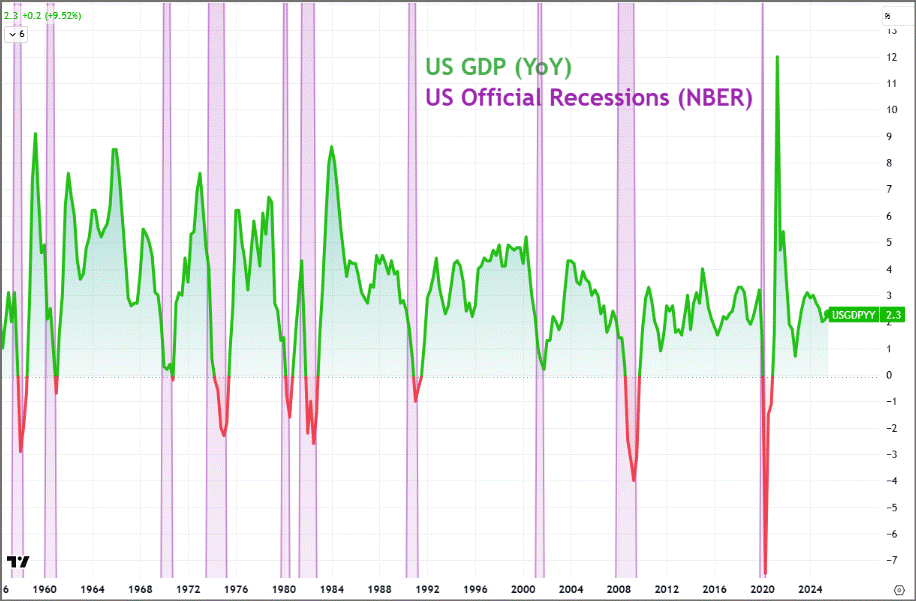
In the United States, recessions are officially dated by the National Bureau of Economic Research (NBER). While many consider their official guideline as a shorthand definition of two consecutive quarters of GDP contraction, the reality is more complicated. The NBER considered a broad, sustained decline in economic activity; considering factors such as income, employment, consumption, sales, and production. This distinction matters, given that there are fiscal and financial ramifications to official recessions; while weak or uneven growth data can lead to ‘unaddressed’ issues and confound prognosticators.
Chart of US Annual GDP and Official Recessions According to NBER (Quarterly)
Source: TradingView.com; US Bureau of Economic Analysis; NBER
Leading Indicators: The Tools of the Economic Observer
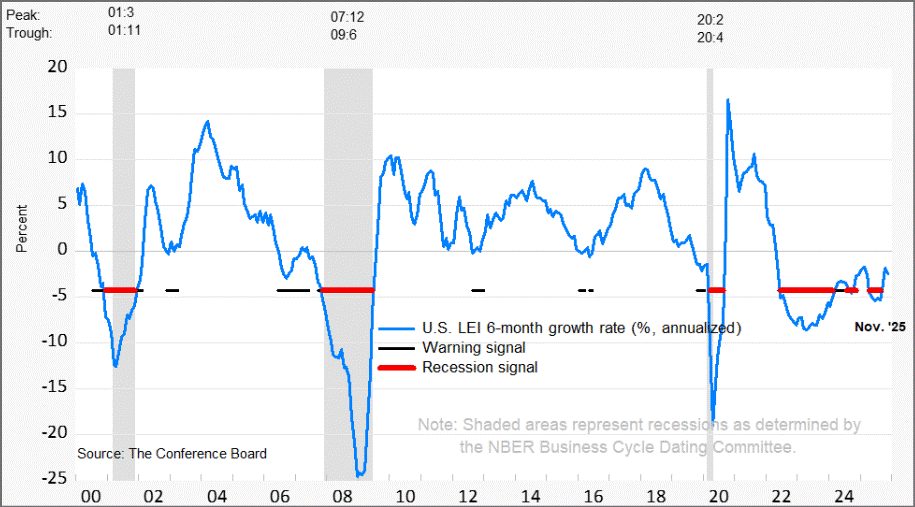
Leading indicators are often cited as tools for forecasting downturns that may or may not tip the scales into an official recession. There many and they all have their flaws as well as detractors. Among the most prominent is the U.S. is the Leading Economic Index (LEI) from the Conference Board, which aggregates a range of economic and market-based inputs. However, taken at face value, the LEI has insinuated recession risk for the country over several years without an official stamp being given. Scepticism over the reading’s usefulness seems to be clear in the lacking market reaction to the monthly updates. It is the case that economic trends happen over months, if not quarters, but the uncertainty over this data stream goes beyond the marginal macro trends.
Chart of US Leading Economic Index (Monthly) Source: The Conference Board; NBER
What Goes Into Assessments of Economic Health?
Part of the issue in leading indicators’ signal ability are the relevance of its representation. Some components of composite indicators may be less applicable in different economic cycles, particularly given shifts in what is driving growth at present. Manufacturing, for example, features heavily in many recession frameworks, yet the U.S. economy is predominantly service-oriented for both output and employment. While manufacturing activity has experienced slowdowns or mild contractions, this draw has been more than offset by services health.
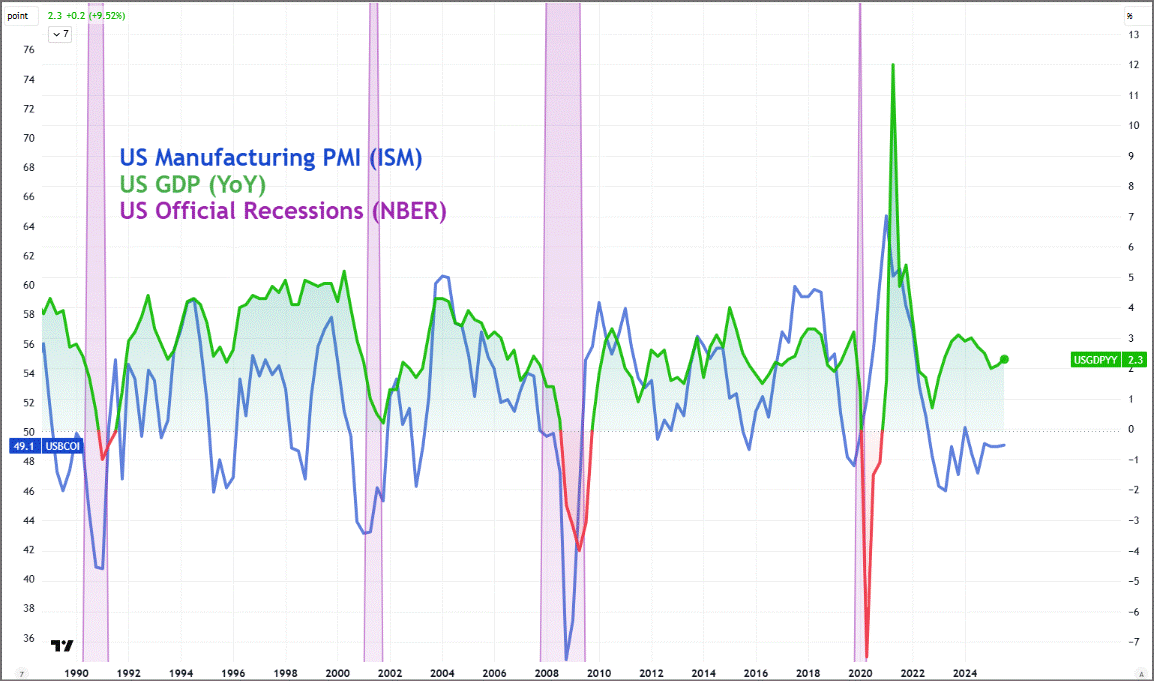
That said, more timely indicators that are reflected upon proportionally to the underlying economy, can help track growth. Measures such as the ISM surveys provide near-term insight into economic momentum, well ahead of GDP releases that are delayed and subject to large revisions. Manufacturing ISM data can be useful, but given service-sector activity is more representative of overall U.S. economic health, it can be considered more closely in macro evaluations.
Chart of US Annual GDP and Official Recessions According to NBER (Monthly) Source: TradingView.com; ISM; US Bureau of Economic Analysis; NBER
Market-Based Indicators Are Even Timelier – If Further from the Source
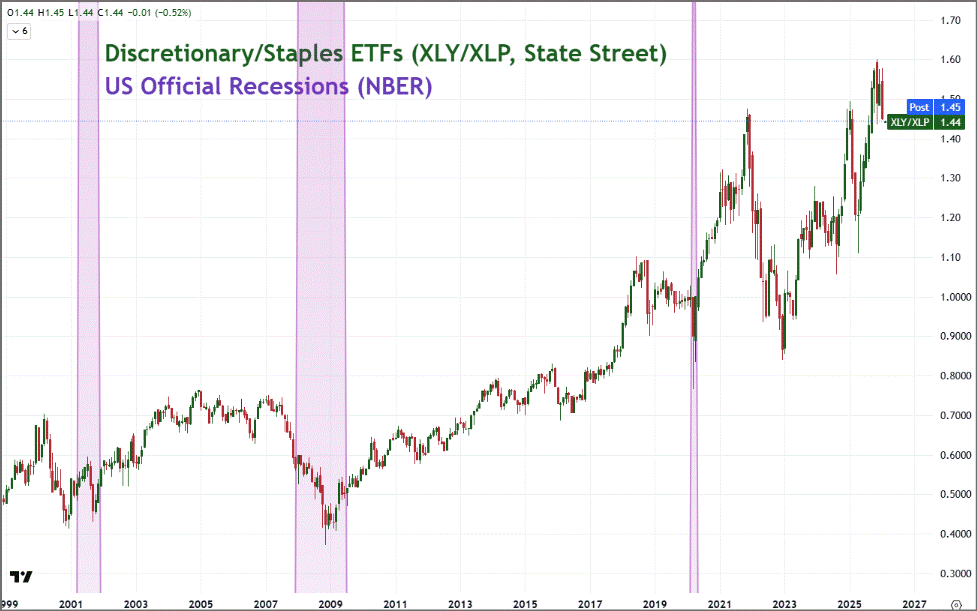
Market-based indicators are also used heavily in recession analysis. Given the forward-looking nature of markets and the weight that capital allocation represents in applied confidence (or hedging), there is reasonable insight to take from key measures. Ratios such as consumer discretionary stocks versus consumer staples can reflect how investors are positioning for growth or slowdown. Shifts toward staples may signal defensive behavior, while strength in discretionary sectors can suggest growing confidence with expectations of increased spending by one of the main engines of US economic activity. These signals incorporate vast amounts of information, including data not directly observable to most market participants; so it is important to contextualize insights.
Chart of Consumer Discretionary / Consumer Staples Ratio with US Recessions (Monthly) Source: TradingView.com; State Street; NBER
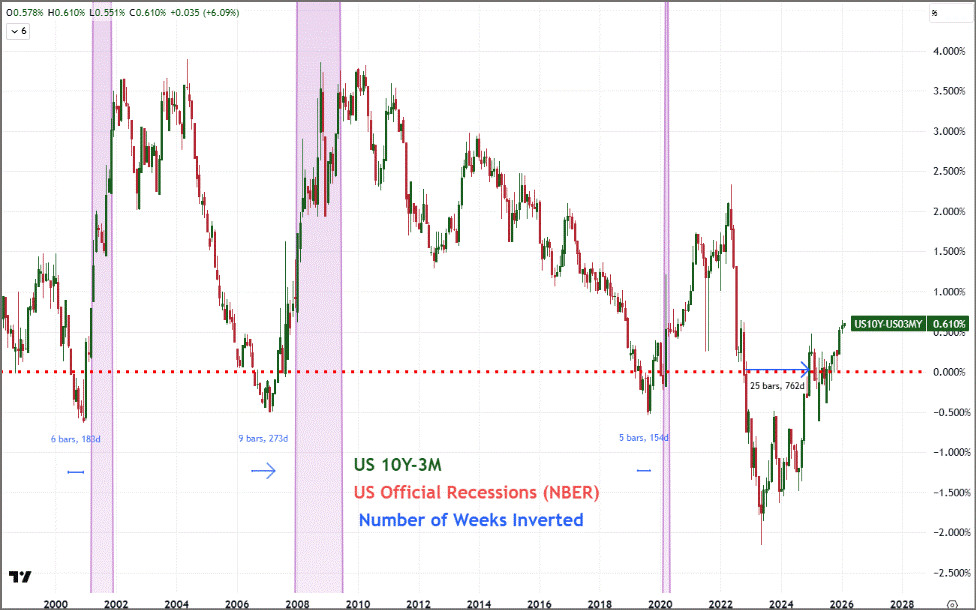
Among the experienced financial participants, there are some traditional market-based indicators that have a history of being used to evaluate economic health. Two such measures are the US Treasury yield curve and key commodity ratios. Investors and economists have long used a yield curve inversion- the former focusing on the 10-year and 2-year differential and latter the 10-year and 3-month spread - have historically preceded recessions. Yet in recent years, prolonged inversions have occurred without a recession following. That doesn’t undermine the value of the tools, but it does deserve closer observation. Similarly, ratios like gold versus copper have become harder to interpret as market dynamics evolve and new demand drivers emerge – such as stress on the Dollar sending capital to the precious metal while the rise of AI investment charges demand for copper.
Chart of US 10-Year to 3-Month Treasury Yield Spread and Official US Recessions (Monthly)
Source: TradingView.com; NBER
While current conditions may have frustrated recession indicators, it does not mean that they are without use or inaccurate. A slowing economy can still materially impact investment and market trends even if it isn’t an official recession. Ultimately, setting such signal in context of current conditions and looking at a breadth of factors to more broadly reflect on activity is more reliable. A single warning signal may warrant attention, but confidence only grows as multiple indicators align. Considering the current standing of popular measures, it does not seem a US recession is imminent. However, it is important to apply critical review in our analysis as well as an openness to changing the components of our assessment to suit a changing backdrop.
Access More Global Macro Insights, Forecasts and Tools
Stay connected to timely global macro analysis designed to help market participants navigate shifting economic conditions and evolving risk. Gain access to regular market commentary, updated quarterly forecasts, a comprehensive two-week forward economic event calendar, and specialized tools built to support informed trading and risk management decisions.
The subsidiaries of StoneX Group Inc. provide financial products and services, including, but not limited to, physical commodities, securities, clearing, global payments, risk management, asset management, foreign exchange, and exchange-traded and over-the-counter derivatives. These financial products and services are offered in accordance with the applicable laws in the jurisdictions in which they are provided and are subject to specific terms, conditions, and restrictions contained in the terms of business applicable to each such offering. Not all products and services are available in all countries. The products and services offered by the StoneX Group of companies involve risk of loss and may not be suitable for all investors. Full Disclaimer.
This content is not intended for residents of any particular country, and the information herein is not advice nor a recommendation to trade nor does it constitute an offer or solicitation to buy or sell any financial product or service, by any person or entity in any jurisdiction or country where such distribution or use would be contrary to local law or regulation. Please refer to the Regulatory Disclosure section for entity-specific disclosures.
No part of this material may be copied, photocopied or duplicated in any form by any means or redistributed without the prior written consent of StoneX Group Inc. The information herein is provided for informational purposes only. This information is provided on an ‘as-is’ basis and may contain statements and opinions of the StoneX Group of companies as well as excerpts and/or information from public sources and third parties and no warranty, whether express or implied, is given as to its completeness or accuracy. Each company within the StoneX Group of companies (on its own behalf and on behalf of its directors, employees and agents) disclaims any and all liability as well as any third-party claim that may arise from the accuracy and/or completeness of the information detailed herein, as well as the use of or reliance on this information by the recipient, any member of its group or any third party.
Currencies
The subsidiaries of StoneX Group Inc. provide financial products and services, including, but not limited to, physical commodities, securities, clearing, global payments, risk management, asset management, foreign exchange, and exchange-traded and over-the-counter derivatives. These financial products and services are offered in accordance with the applicable laws in the jurisdictions in which they are provided and are subject to specific terms, conditions, and restrictions contained in the terms of business applicable to each such offering. Not all products and services are available in all countries. The products and services offered by the StoneX Group of companies involve risk of loss and may not be suitable for all investors. Full Disclaimer. This content is not intended for residents of any particular country, and the information herein is not advice nor a recommendation to trade nor does it constitute an offer or solicitation to buy or sell any financial product or service, by any person or entity in any jurisdiction or country where such distribution or use would be contrary to local law or regulation. Please refer to the Regulatory Disclosure section for entity-specific disclosures. No part of this material may be copied, photocopied or duplicated in any form by any means or redistributed without the prior written consent of StoneX Group Inc. The information herein is provided for informational purposes only. This information is provided on an ‘as-is’ basis and may contain statements and opinions of the StoneX Group of companies as well as excerpts and/or information from public sources and third parties and no warranty, whether express or implied, is given as to its completeness or accuracy. Each company within the StoneX Group of companies (on its own behalf and on behalf of its directors, employees and agents) disclaims any and all liability as well as any third-party claim that may arise from the accuracy and/or completeness of the information detailed herein, as well as the use of or reliance on this information by the recipient, any member of its group or any third party.
Our market expertise, advanced platforms, global reach, culture of full transparency and commitment to our clients’ success all set us apart in the financial marketplace.
Reach
With access to 40+ derivatives exchanges, 180+ foreign exchange markets, nearly every global securities marketplace and numerous bi-lateral liquidity venues, StoneX’s digital network and deep relationships can take clients anywhere they want to go.
Transparency
As a publicly traded company meeting the highest standards of regulatory compliance in the markets we serve, our financials and record of accomplishment are matters of public record. StoneX’s commitment to “doing the right thing over the easy thing” sets us apart in the industry and helps us build respect, client trust and new partnerships.
Expertise
From our proprietary Market Intelligence platform, to “boots on the ground” expertise from award-winning traders and professionals, we connect our clients directly to actionable insights they can use to make more informed decisions and achieve their goals in the global markets.