- World production estimated above consumption in 2023/24, according to the USDA;
- Improvement in productivity with the harvest progress in Brazil;
- USDA cuts Brazil's crop by just 1 million tonnes;
- Crop should be favorable in Argentina;
- Concerns about the pace of global demand;
- Prospects for area growth in the USA.
- More pronounced production cut by Conab;
- USDA revises Chinese exports upwards;
- NOPA brings sharper crushing in the US in February;
- High net short position of spec funds;
- The Argentine situation still favors holding soybean as insurance.
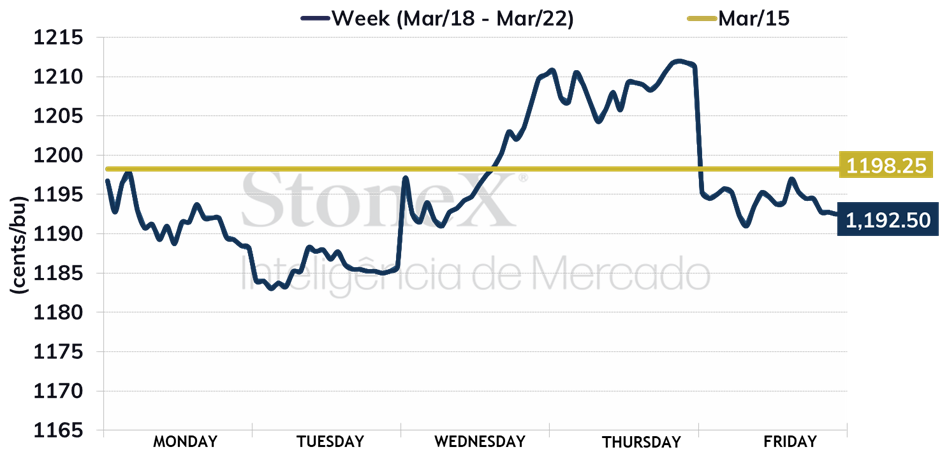
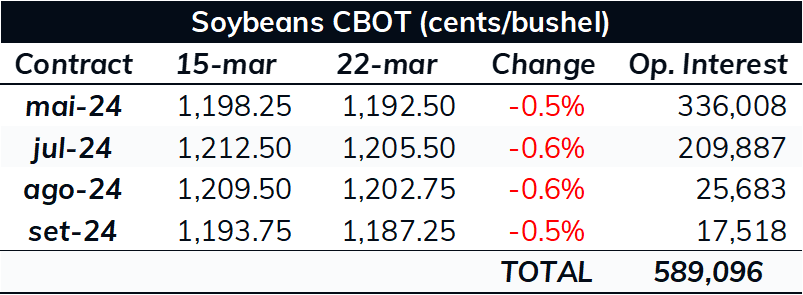
Last week, the soybean May contract in Chicago exceeded the 1200 cents per bushel level but gave back some of the gains and ended the period with a slight decrease of 0.5%, at 1192.5 cents per bushel. It is important to remember that spec funds have a very large net short position, which leaves the market subject to adjustments.
Traders continue to monitor the crop in South America, focusing on the discrepancies between the figures from Conab and USDA. The Brazilian Supply Company estimates a crop more than 8 million lower than the latest US Department of Agriculture data.
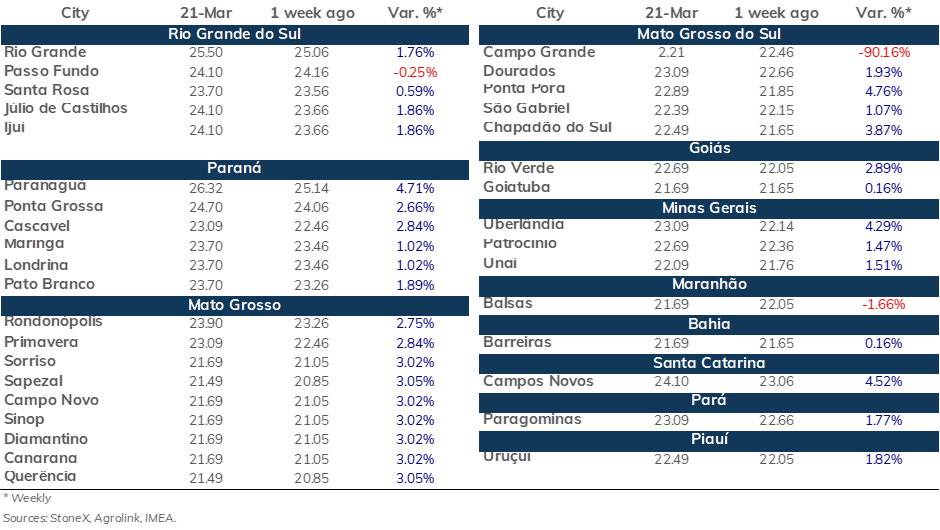
The harvest is progressing, reaching 70.9% of the total, according to StoneX, on the last Friday (22nd). StoneX will release another update on the figures for the Brazilian crop 2023/24 next Monday (04/01), which should become less subject to changes as fieldwork progresses.
Even if Conab's lower figure is confirmed, the broad crop rebound in Argentina should more than offset the losses here, still ensuring a robust supply in South America.
The conditions favor the Argentine crop, with an important part of the fields going through key phases. The Buenos Aires Grain Exchange announced last Thursday (21) that 31% of the plants are in good/excellent condition, an increase of 1 p.p. compared to the previous data. Another 53% of the crop is in normal condition, while the regular/poor percentage remained at 16%.
According to the Buenos Aires Exchange, the Argentine soybean crop is expected to grow by more than 30 million tonnes, increasing from just 21 million tonnes in 2022/23, when it was sharply affected by La Niña, to 52.5 million tonnes in the current cycle, 2023/24.
American exports are also being monitored on demand, with Brazil remaining more competitive. Brazilian exports in January and February exceeded the same months of 2023, even with the 2023/24 crop losses.
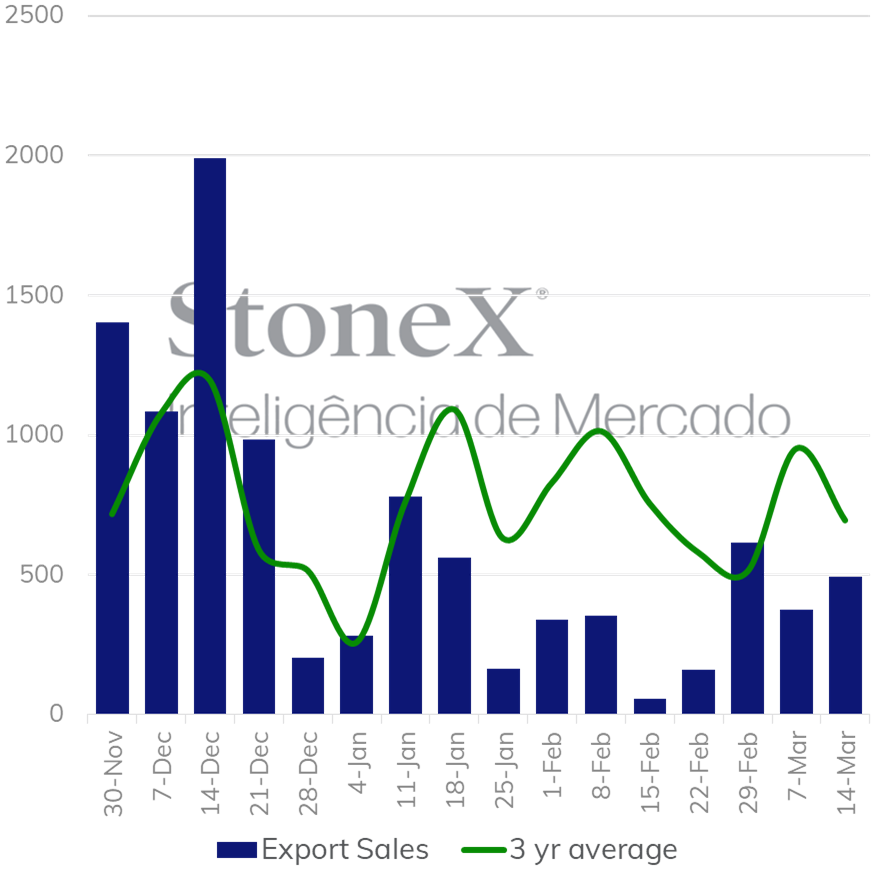
In the USA, export sales in the week ended on 03/14 stood at 494 thousand tonnes, a volume within the range of estimates, which ranged from 250 to 800 thousand. In total, 40.16 million tonnes were traded against 49.4 million in the same period last year. Of this difference of 9.25 million tonnes in the annual comparison, China accounts for 7.7 million.
The market eagerly awaits the USDA planting intentions report, which will be released next Thursday (March 28). This is the first acreage figure for the country's 2024/25 crop, based on a survey of producers. The expectations point to an annual growth in the soybean area, motivated by a tighter balance in the US and a proportionally smaller drop in prices versus corn. Corn would decrease acreage compared to the 2023/24 cycle.
Many doubts exist about the potential growth of the American soybean acreage, with market estimates ranging from 34.54 to 35.61 million hectares, against 33.83 million last year. This disclosure can shake up the market, especially if it falls far from expectations.
If productivity remains within the usual trend, a larger planted acreage tends to result in a looser supply-and-demand balance for soybeans in the US. Initial outlooks point to a growth in demand for American soybeans in the 2024/25 crop, but supply could increase more sharply if there are no significant weather surprises and considering an increase in acreage.
In addition to this much-awaited data, the positioning of spec funds should continue to be on the radar this week that begins, as well as the progress of the crop in South America and the soybean exports from the US.