- Bearish Factors
- Global production for 24/25 significantly above consumption, according to USDA;
- Comfortable supply and demand balance in the US;
- Concerns over global demand pace;
- Record production estimate for the Brazilian 24/25 crop;
- Favorable weather in South America;
- Uncertainty about subsidies for biofuels in the US.
- Bullish Factors
- New incentive measures adopted by the Chinese government;
- Short-covering by speculative funds;
- Strong renewable diesel production and consumption in the US;
- Cut in US production estimates, which are no longer at record levels;
- Increased imports of vegetable oils by India.
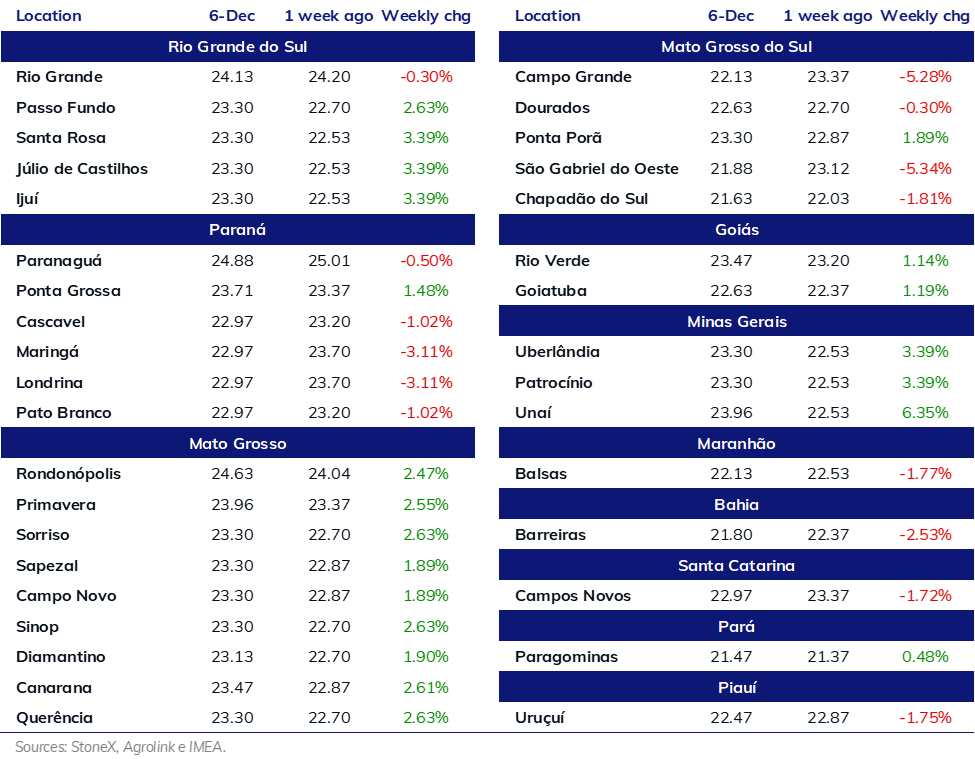
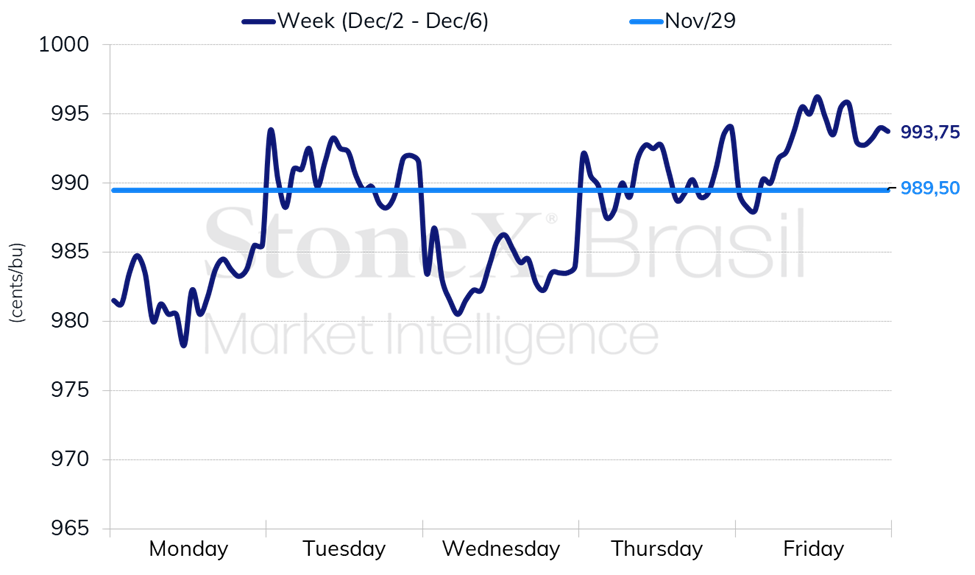
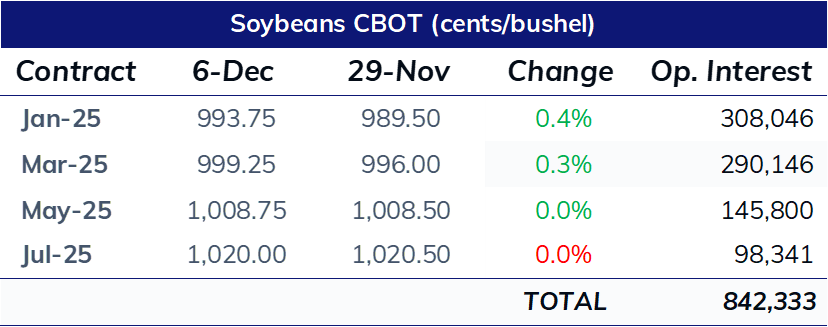
Soybean prices in Chicago fluctuated between gains and losses last week, ending the period slightly higher. January futures closed on Friday (6) at 993.75 cents per bushel, up 0.4% over the week.
In addition to the South American crop, which is progressing well with favorable prospects, the market is monitoring the US biofuel policy amid uncertainties that could hinder investments planned for the coming years.
The lack of clarity on whether biofuel credits starting in January will include foreign-origin raw materials, such as used cooking oil, which directly competes with US soybean oil and other domestic options, remains an issue. Speculation also surrounds the predictability of the credit program, as no announcement has been made regarding its extension beyond its current expiration at the end of 2027, making the sector cautious about long-term investments.
In Argentina, ethanol and biodiesel prices were raised, potentially boosting domestic consumption of feedstocks like soybean oil, thereby reducing exportable surpluses of both vegetable oil and biofuels.
The Indian vegetable oil import data for November boosted the market, showing a 20% monthly increase and reaching a three-month peak for soybean oil at 410,000 tonnes. Sunflower oil imports rose by 43% to 340,000 tonnes, while palm oil purchases also grew, reaching 850,000 tonnes, a 5% increase. India, the world’s largest vegetable oil importer, linked the strong demand to preparations for the festive season.
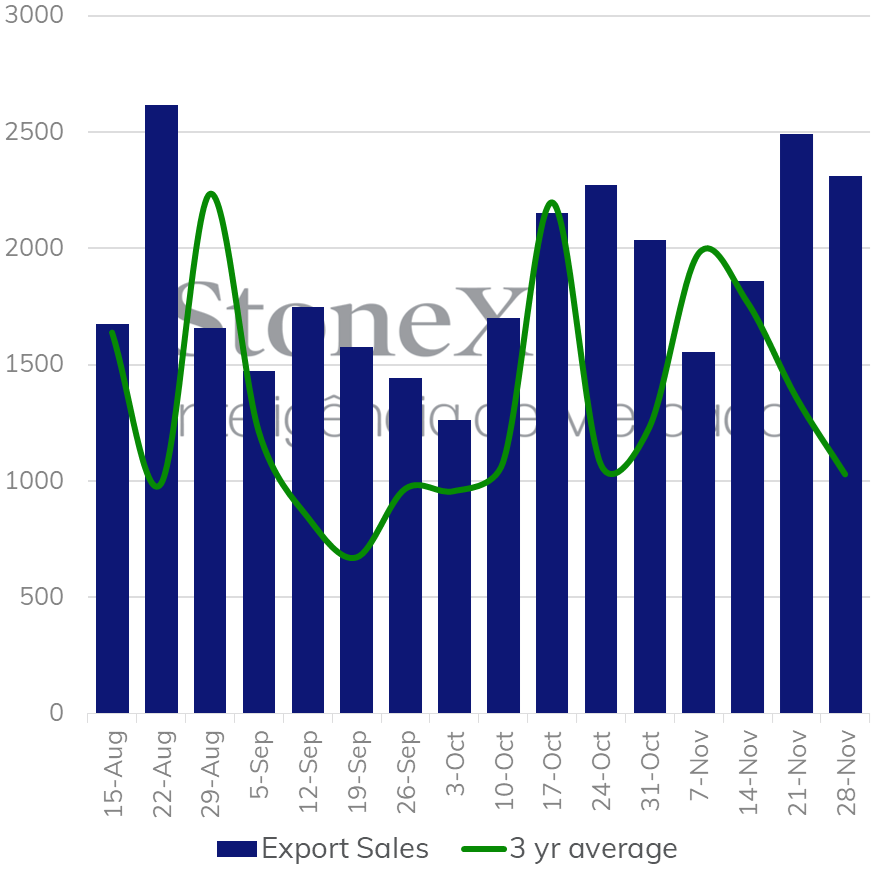
In the US, soybean export sales for the week ending November 28 reached 2.3 million tonnes for the 24/25 crop, closer to the higher end of estimates ranging from 1.1 to 2.5 million tonnes. Although China continues to purchase less US soybeans compared to last year, other countries are compensating with stronger buying activity, keeping total sales on track to meet the USDA’s export estimate of 49.67 million tonnes.
Positive prospects for the South American crop continue to limit the potential for sustained price gains. Weather in Brazil and Argentina’s production regions remains favorable overall, with significant rainfall recorded. Forecasts for the next 14 days indicate substantial precipitation for these key regions. South America, along with the US, dominates global soybean production, and favorable Southern Hemisphere estimates ensure production remains well above consumption, at least for now.
StoneX maintained its Brazilian soybean crop estimate at 166.2 million tonnes last week, reflecting positive prospects. Planting reached 95.7% of the total area last Friday (6), according to StoneX monitoring, with states like Mato Grosso and Paraná having completed planting. Weather remains critical, particularly during the grain-filling stage requiring good moisture levels, and excessive rainfall during the final stages of maturation and harvest could pose risks.
In Argentina, soybean planting reached 53.8% of the total area, advancing 9.4 percentage points over the week, according to the Buenos Aires Grain Exchange. Notably, 100% of the planted area is rated in normal or excellent condition, confirming the favorable crop progress so far.
This week, the main market focus will be on the USDA’s monthly supply and demand report, scheduled for tomorrow at 2 PM. Additionally, Conab will update its crop survey on Thursday (12th). Any climate updates and demand-side developments will also be closely monitored.