BEARISH DRIVERS
- World 2022/23 production estimated above consumption;
- Fight on inflation may generate recession;
- Possibility of record production in Brazil;
- Soy dollar in Argentina;
- Covid-19 on the rise in China.
BulliSH DRIVERS
- Concerns about the weather for 2022/23 in South America;
- Relaxed anti-COVID measures in China;
- Prospects of increase soybean crushing in the US in coming years;
- Increased mandatory biodiesel blend in Brazil in 2023.
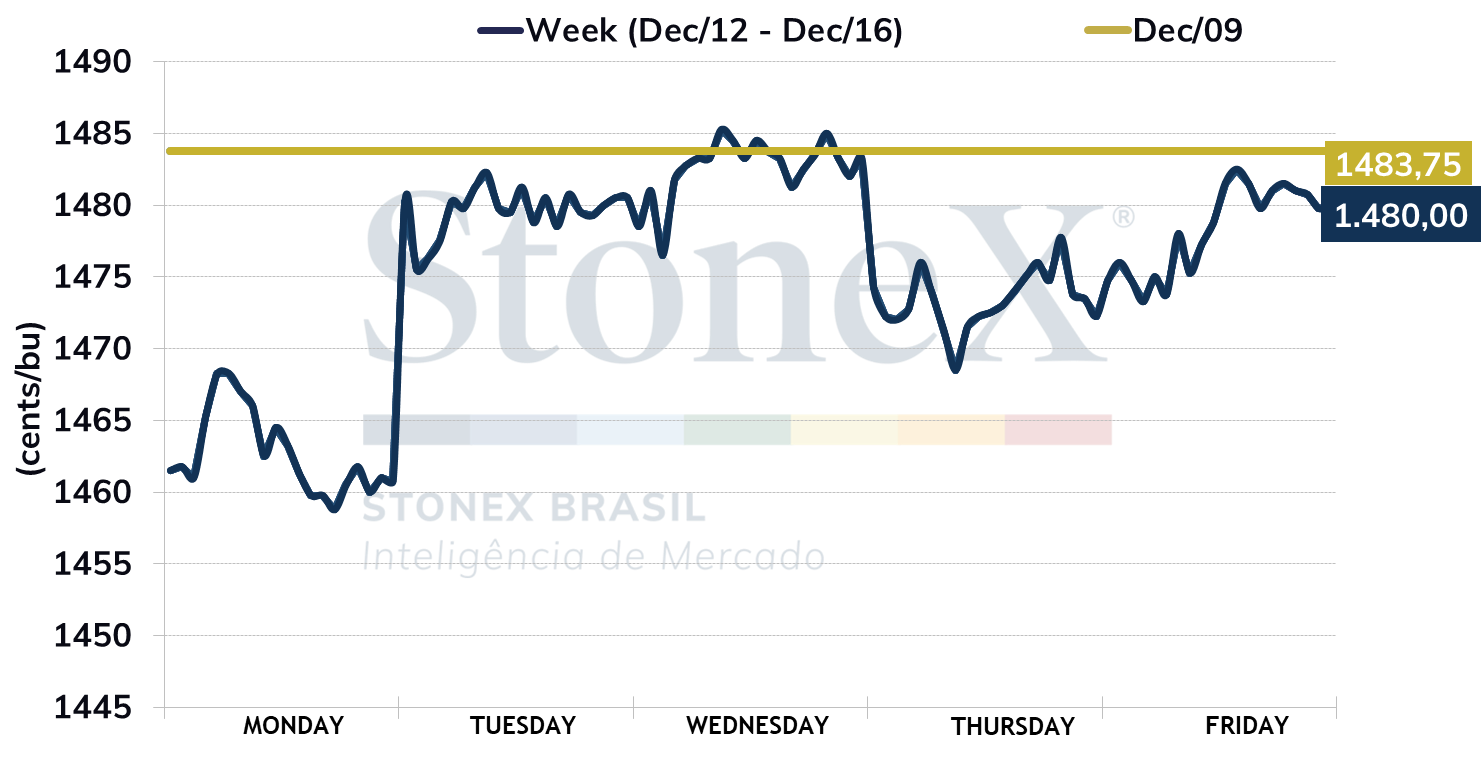
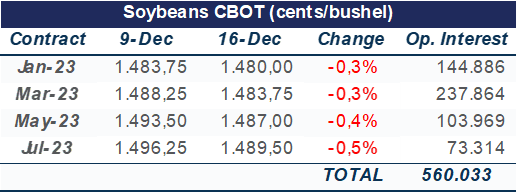
Last week, soybean prices fluctuated around stability in Chicago, with no major gains or losses in the period. The contract for January ended Friday (16) at 1480 cents per bushel.
Commodity markets were influenced by macroeconomic factors, with emphasis on export data from the US, in addition to the progress of the crop in South America.
On the upside, the dollar falls around the world, as this movement favors the competitiveness of US exports.
Still on US exports, in the week ended December 8, 1.8 million tonnes of soybeans were inspected for shipment, a level slightly below a week before, but above last year. In accumulated terms, shipments for the 2022/23 season reach 23.4 million tonnes, against 25.5 million in the same period of 2021.
Weekly Intraday - January/23 (CME)
Source: CME. Design: StoneX.
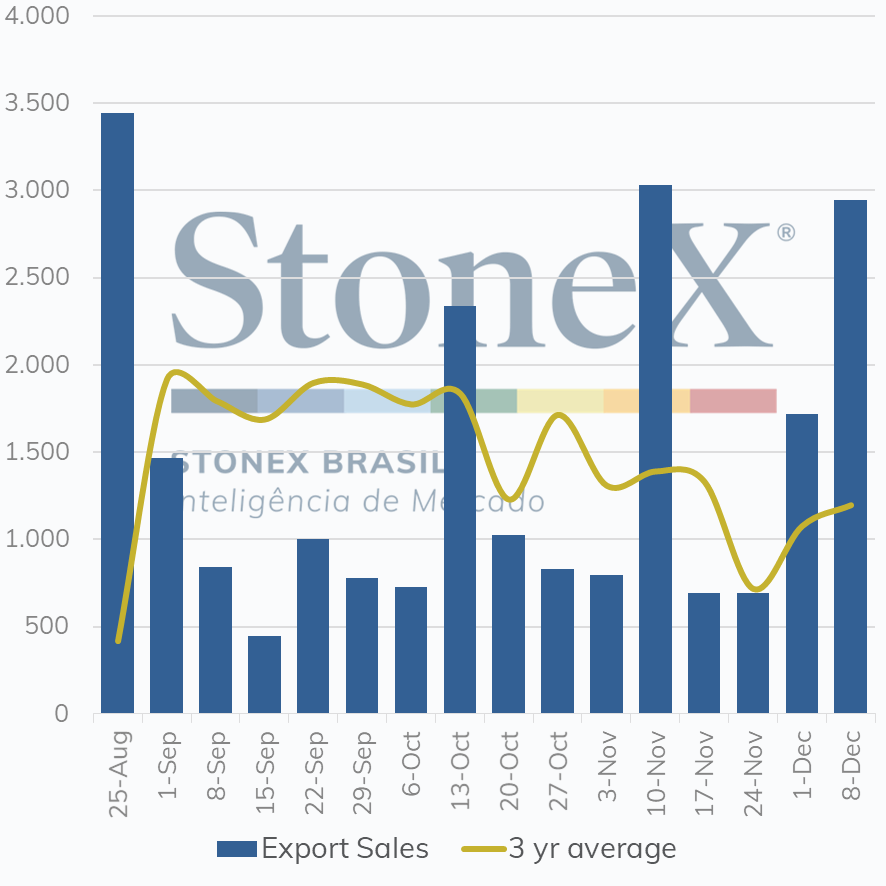
Regarding export sales in the same week ended December 8, 2.9 million tonnes of soybeans were traded, a volume considerably above the ceiling of estimates, which ranged from 1.5 to 2 million tonnes. In accumulated terms, 41.8 million tonnes of 2022/23 soybeans have already been sold, higher than in the same period last year, when sales for the 2021/22 crop were at 40 million tonnes.
US soybean sales have gained strength recently and the market follows Chinese purchases at a time when the country has eased its zero-tolerance policy against COVID-19.
Weekly US export sales (000 tonnes)
Source: USDA. Design: StoneX.
Still on the demand side, the National Oilseed Processors Association (NOPA) released US soybean crush in November, which stood at 4.88 million tonnes, a level below market expectations, which were 4.94 million, but in line with that recorded in November 2021, when it was also at 4.88 million. Even so, in general, soybean crushing in the country remains strong, with emphasis on the positive perspectives for production of renewable diesel.
In South America, the weather continues to be closely monitored. The Buenos Aires exchange reported that 50.6% of soybeans had been sown by December 14, with the rains recently recorded allowing good progress. Even so, compared to last year, the delay is 14.2 percentage points.
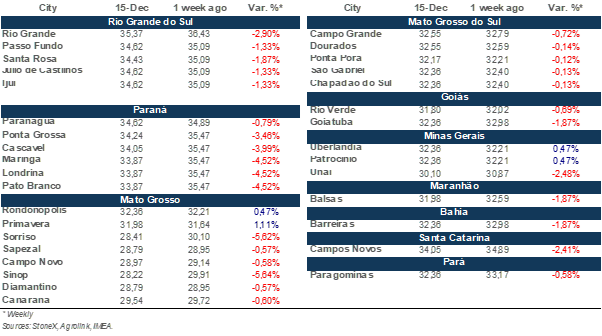
In Brazil, although in general the soybean and summer corn crops are going well even with weather irregularities in several regions, corn losses are already expected in Rio Grande do Sul, according to a StoneX survey. Irregular rainfall in the state during the second half of November and throughout the first weeks of December, a period considered to be crucial for productive potential of corn crops in many regions, ended up causing productivity losses. In the case of soybeans, it is still too early to talk concretely about losses, given that the weather throughout January and February will be essential to define the crop. However, it will be essential to monitor the scenario that is to develop in the region, noting that, in some of the last few seasons, the state has had significant crop failures for soybeans, as in the previous cycle (2021/22), under the influence of La Niña, which is also present in the current season.
Weather forecasts for the next few days indicate that rainfall in Rio Grande do Sul should remain limited, while more significant volumes of precipitation should return to Argentina later this week.