Bearish drivers
-
World 2022/23 production estimated above consumption;
-
Fighting inflation can generate recession;
-
Possibility of still record production in Brazil;
-
COVID-19 rising in China and signs of economic slowdown.
Bullish drivers
- Weather concerns for the 2022/23 crop in South America, already with production cuts in Brazil;
- Relaxation of anti-COVID measures in China;
- Crop failure in Argentina due to the weather;
- Possibility of increased mandatory biodiesel blend in Brazil, from April 2023.
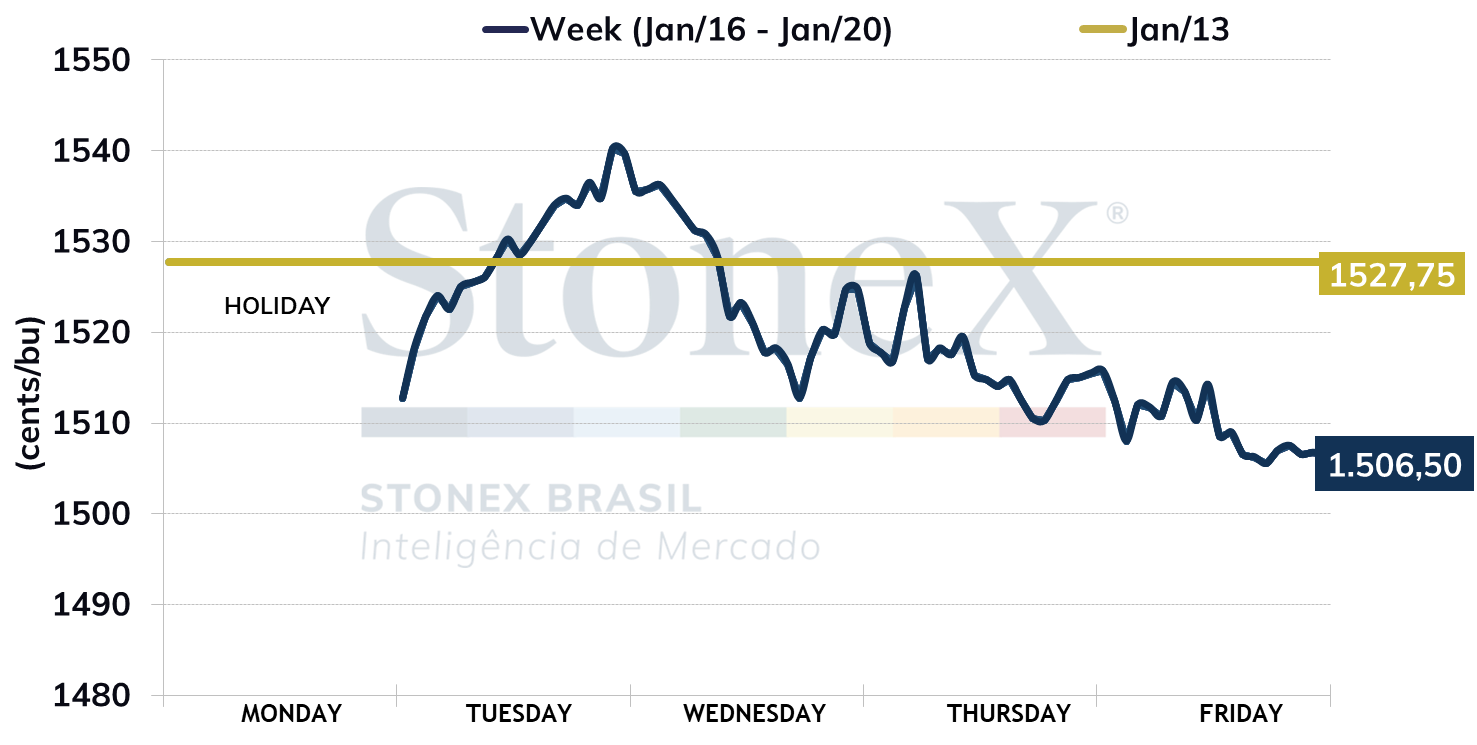
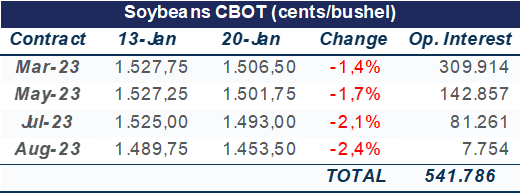
Last week, soybean quotes dropped lower in Chicago, given the prospect of rain for Argentina and south Brazil. The March/23 contract ended Friday (20) at 1506.5 cents per bushel. Even so, the potential for losses in Argentina continued to be the center of attention, as well as demand for soybeans.
Early in the week, the market saw rain forecasts for Argentina as insufficient to change the nation’s crop situation. However, as days went by, forecasts started to indicate the possibility of higher volumes, which ended up weighing on CBOT soybean futures.
Over the weekend, heavy precipitation was reported in the provinces of Córdoba, Santa Fé, Entre Rios, and Buenos Aires, and the showers were welcomed. However, moisture remained limited in the northern-most area of the producing region. 10-day forecasts point to good precipitation volumes in the central and northern parts of the country, while the south is expected to receive lighter rains.
Even with improved weather in Argentina, doubts about the positive impact over crops remains. The Buenos Aires exchange reported that the nation’s crop rating worsened further as of last Wednesday (18), with only 3% rated good/excellent.
Weekly intraday—March/23 (CME)
Source: CME. Design: StoneX.
Brazil also received rain over the weekend in most of the crops, with higher volumes in the central and northern regions. In any case, southern states also received precipitation, where the dry weather has already led to losses in the season. It is noted that forecasts point to lighter rains in the south over the next 10 days, particularly Rio Grande do Sul.
Nevertheless, prospects for Brazil’s 2022/23 crop remain positive, and the result may be above 150 million tonnes. Last Friday (20), StoneX released its harvest follow-up with a national average of 2.3%, which represents a delay compared to the same week of 2022, at 6.6%.
In terms of demand, US exports remain in the market’s radar, at a time when Brazil’s harvest is underway and the window of US soybean exports closes.
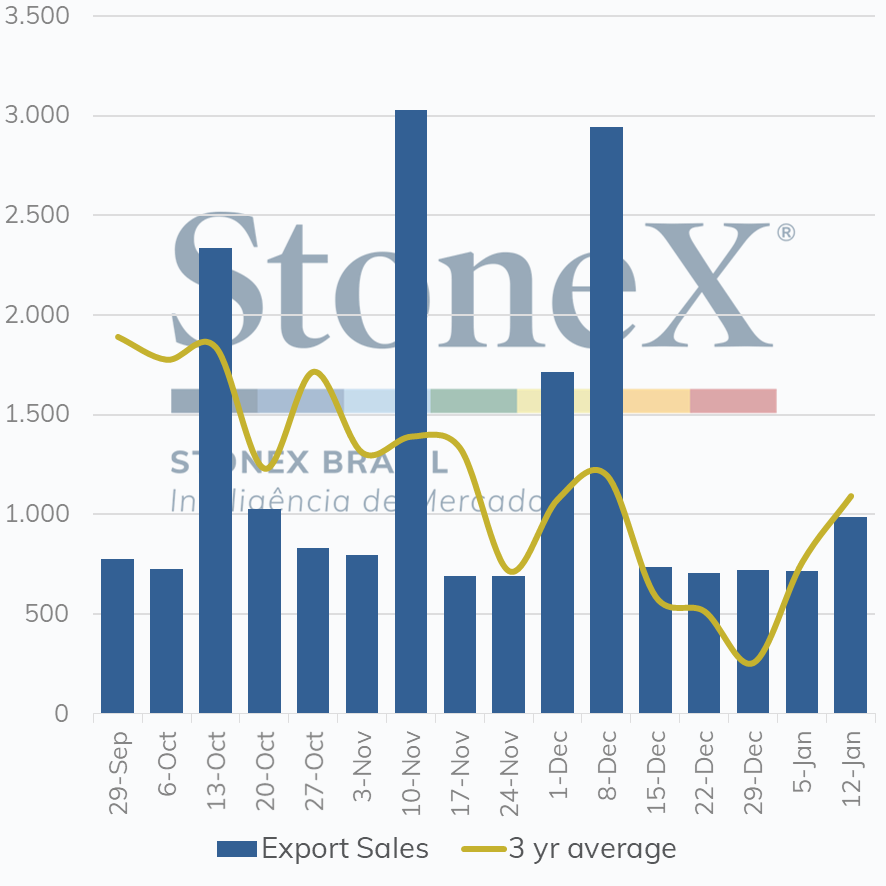
The country’s exports in the week ended January 12 reached 986,200 tonnes for the 2022/23 crop, which was within estimates, which ranged from 600,000 to 1.2 million tonnes. In the entire season, 45.4 million tonnes have been traded, over 2 million above the same period last year, which had reached 43.1 million tonnes. Of this total, 27.3 million were sold to China.
On the other hand, US shipping is still late compared to last year, with 31.7 million tonnes sent abroad, against 33 million in 2022.
Weekly US export sales (000 tonnes)
Source: USDA. Design: StoneX.
Regarding US domestic use, the NOPA reported that 4.83 million tonnes of soybean were crushed in December, a number below market expectations of 4.98 million. This pace, considering also the previous months, would indicate a total between 57.8 and 58 million tonnes in the 2022/23 crop-year, while the USDA estimate is at 61.1 million. Therefore, soybean processing will have to catch up in the upcoming months.
This week, the weather in South America, especially in Argentina, should continue to drive the market. On the demand side, given China’s New Lunar Year holiday, the soybean market is expected to be slow in the country.