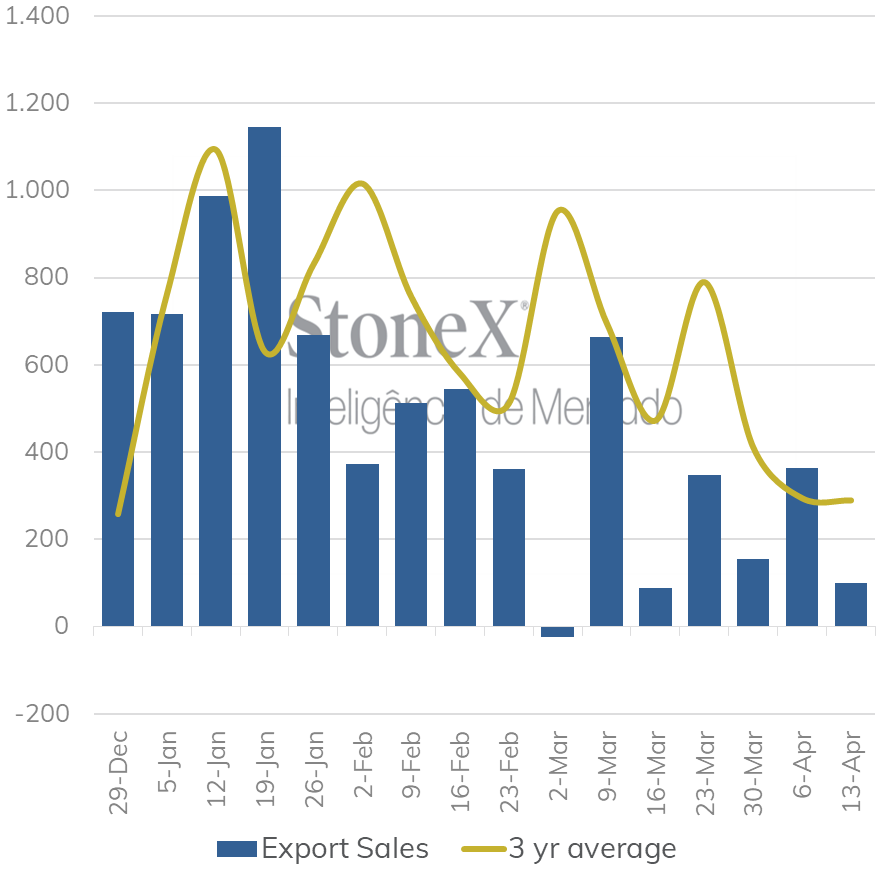
Still speaking of demand, the pace of Chinese purchases/imports is closely monitored, since even with weakened Brazilian soybean premiums, China's crushing margins have been in the red. In addition, major outbreaks of African swine fever were recorded this year in the country, with prospects that meat production may be impacted mainly in the second half.
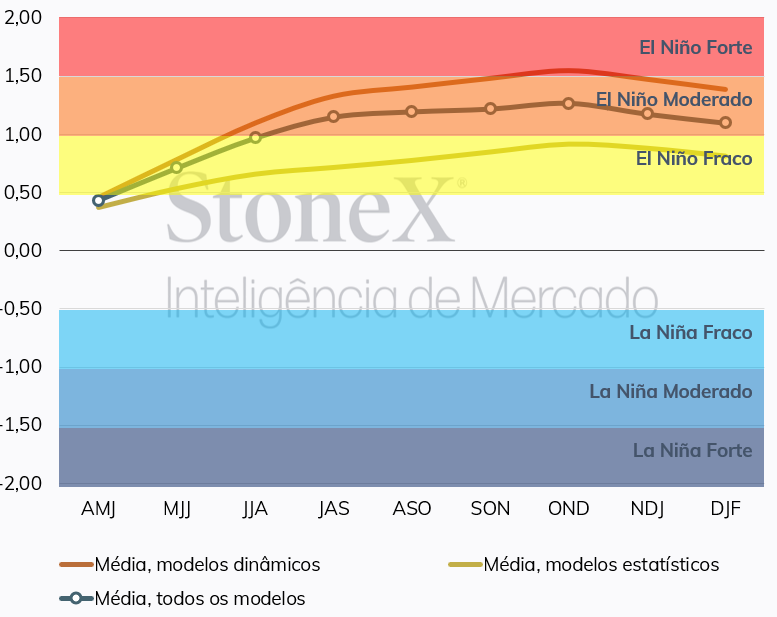
In addition to the oversupply in Brazil and the concerns on the demand side, there is the increasing possibility of El Niño occurrence, which increases the temperature of the Pacific waters, resulting in climate and atmospheric changes around the world.
The occurrence of El Niño during the summer in the Northern Hemisphere tends to favor the average productivity of soybeans in the US, with the potential to result in a large harvest, even with the initial perspectives of stability in planted area. This is because the weather phenomenon reduces the risk of prolonged droughts during the summer months in most of the grain belt, ensuring adequate rainfall for the development of the crop.
It should also be noted that towards the end of the year, El Niño tends to favor the Brazilian and Argentine crops. In general, the phenomenon results in more rainfall in the regions of Brazil that are the largest producers of soybean (in parts of the Center-West and in the South) throughout the summer cycle, ensuring sufficient moisture and avoiding localized droughts. However, depending on the intensity of the phenomenon, the rains may end up being excessive in Rio Grande do Sul, for example, and a point of attention is the lack of rain in the Northeast region.
In Argentina, the effects of El Niño are very similar to those in southern Brazil, with an abundance of rainfall during the development of the crop. As a result, the impacts on production tend to be very positive, leading to higher average productivity. On the other hand, it is also necessary to monitor the possibility of excessive rainfall, but, in general, the phenomenon tends to be beneficial for the soybean crop in the country.
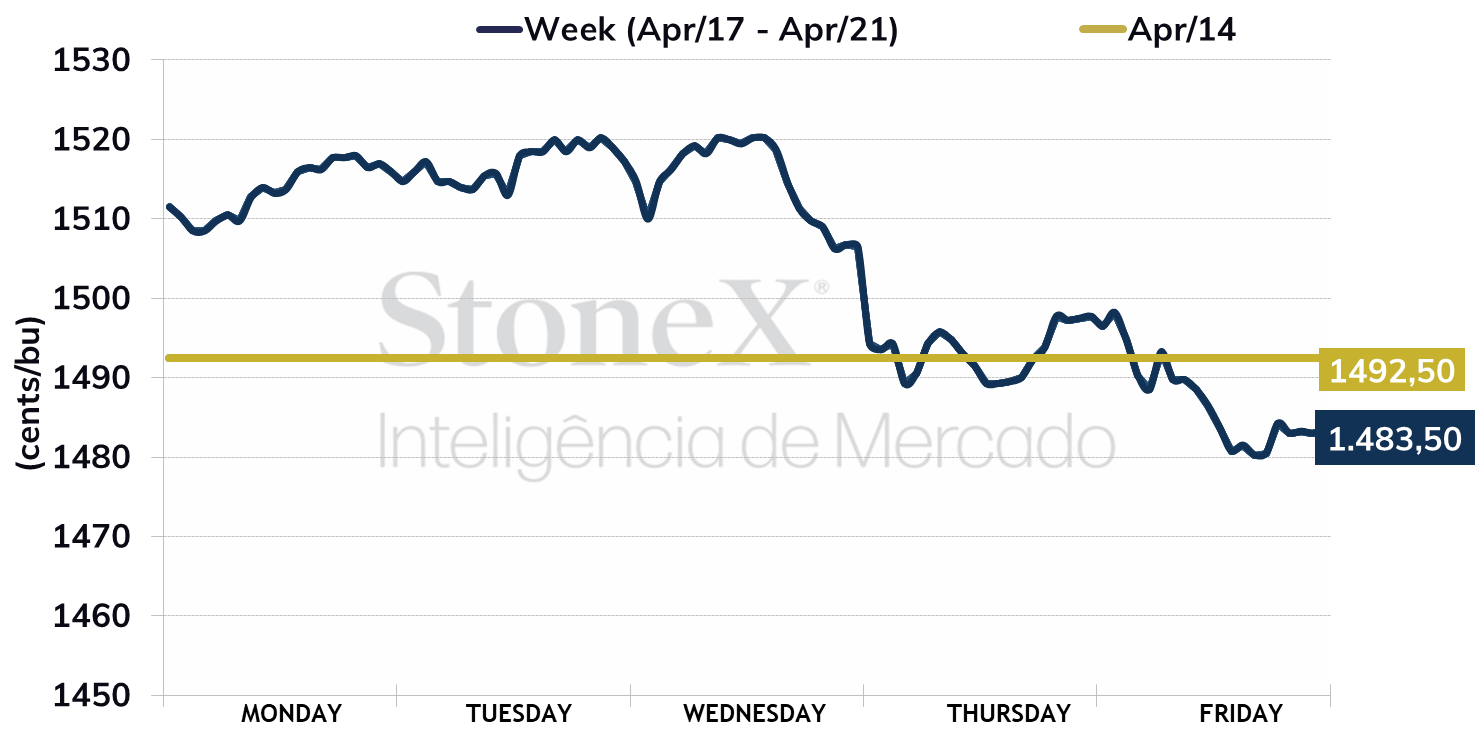
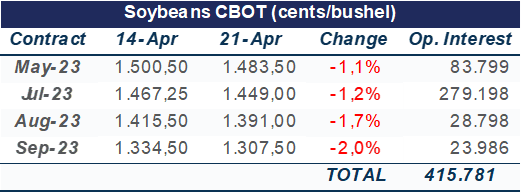
As such, the market considers that soybeans face lower threats on the supply side at this time, while there are doubts about the performance of demand, a scenario that has weighed on prices and/or limited more significant increases.
Projected surface temperature of the Pacific Ocean (°C)