- Global production for 2023/24 estimated much above consumption, according to USDA;
- Still weak economic indicators;
- Absolute production record in Brazil and lack of storage;
- Fast pace of US planting;
- Chances of El Niño increase from July.
- Relaxation of anti-Covid measures in China;
- Considerable crop losses in Argentina due to the weather;
- Chinese crush margins are more positive;
- Increase in mandatory biodiesel blending in Brazil;
- Drier US weather forecast until around June 10.
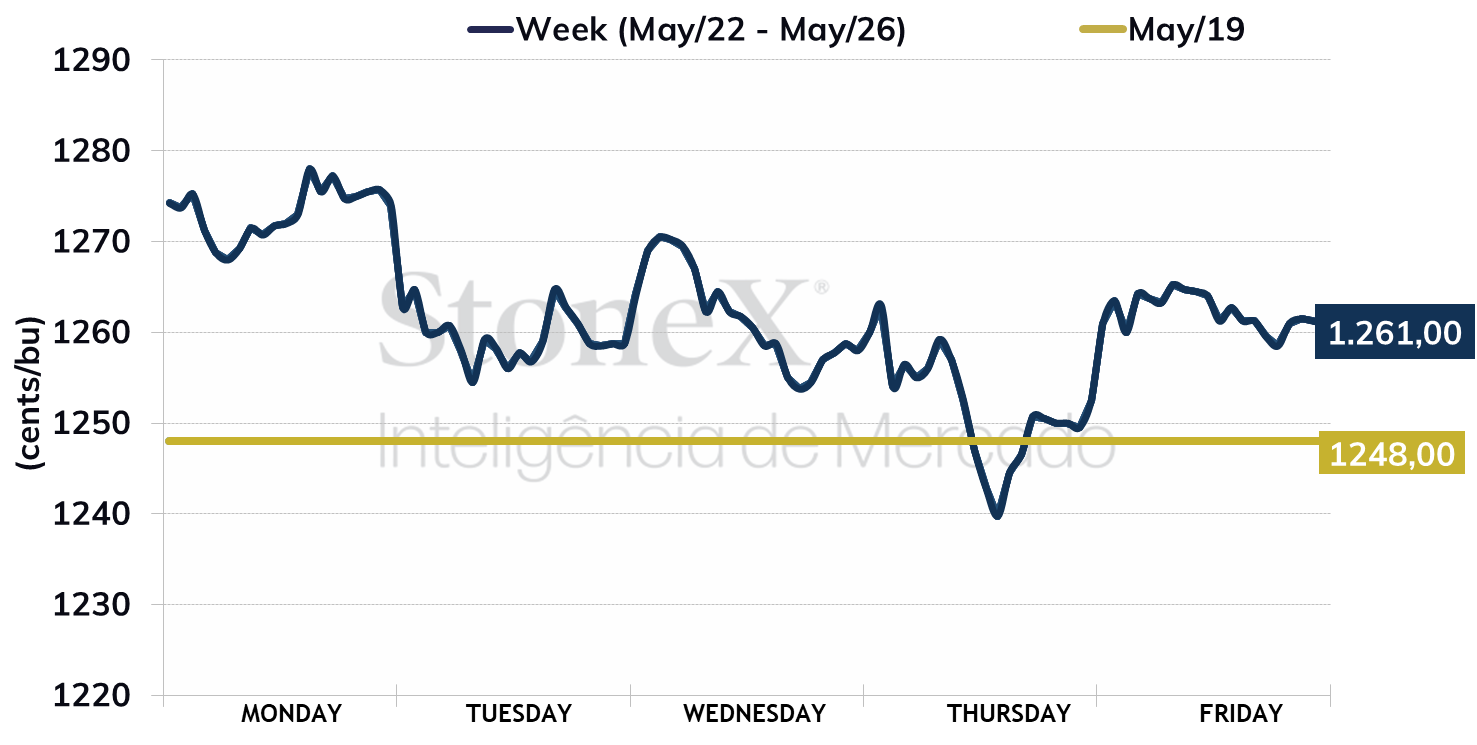
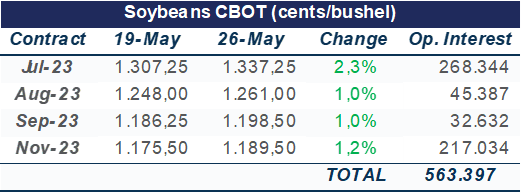
Last week, soybean quotes in Chicago accumulated gains, with the contract for August closing Friday at 1261 cents per bushel.
Monday (22) was a day of significant increases, amid low trading volume and after the previous week's losses. On Tuesday (23), CBOT prices fell again, due to concerns about demand and the good outlook for supply. However, the forecasts of a drier weather in the US in the coming weeks gave support to prices again, as the weather for the US crop will be in the spotlight in the coming months.
Forecasts indicate below-normal rainfall until around June 10 across much of the Midwest, and higher temperatures in the northern part of the US. Only the grain-producing regions near the Plains are expected to experience more significant moisture in the period.
In any case, it is still too early to say that the country's crops will suffer any damage. Besides the fact that rainfall volumes may vary a lot, being much or little below normal, this is not yet the most critical period for US crops. Lack of moisture can cause damage at any stage of development, but it is during the grain filling period, between July and August, that a drought tends to result in significant damage to the US crop.
The 2023/24 US season has started with great optimism, since the chances of an El Niño from July onwards are high. The phenomenon tends to reduce the chances of prolonged droughts during the country's summer and is overall favorable for soybean and corn yields. This positive outlook is one of the factors that has weighed on soybean prices in recent months.
US planting remains ahead of schedule on the national average, reaching 66% on Sunday, compared to a five-year average of 52%. Only North Dakota continues to lag behind, having registered 20%, while the average was 33%. However, the state has made significant progress recently and there is still time for a recovery.
Weekly intraday - August/23 (CME)