- World production in 2023/24 expected to be far above consumption, according to USDA;
- Still weak economic indicators;
Absolute record production in Brazil and lack of storage; - US biofuels mandates frustrate expectations;
- El Niño years can be beneficial for the US crop.
- Considerable crop losses in Argentina due to weather;
- Record soybean imports by China in May;
- Positive crushing margins in China;
- Increase of biodiesel blend mandate in Brazil
- Planted area much lower than expected in the USA.
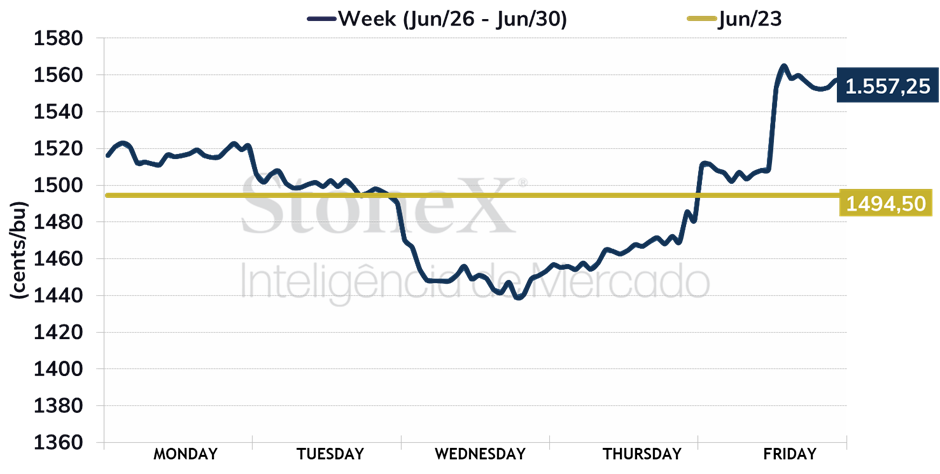
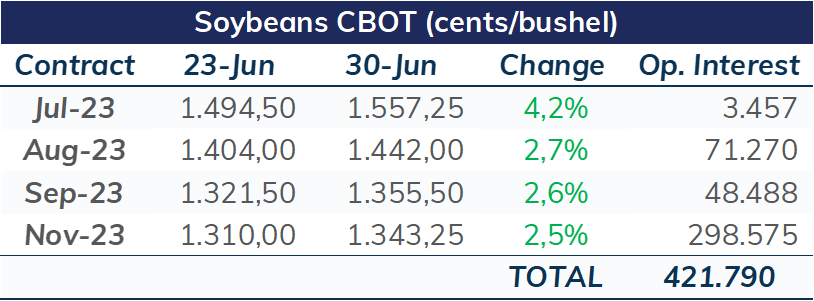
Soybean prices in Chicago increased strongly last week, reacting mainly to the surprising number of planted area in the US. The July contract ended Friday at 1557.25 cents per bushel, with weekly gains of 4.2%. On the other hand, the weather outlook for the country in the first weeks of July has improved.
On the bullish side, it should be noted that the previous week started with gains in soybean oil, in a correction after the falls due to the new mandates released by the US Environmental Protection Agency (EPA). Despite the frustrating outlook for the blending level, the volumes of renewable fuel added to gasoline and diesel are expected to be at record highs over the next three years.
In any case, the market remained very focused on the US weather, which opened space for price pullbacks, with forecasts indicating a very wet start to July in regions that have suffered from a lack of rain in recent weeks. For soybean, it should also be noted that the most important development phase, grain filling, when moisture is central, is concentrated only in August. With this, should the weather from here on out remain within expectations, the North American crop would still have good potential, with the drought resulting in only occasional crop damage.
With the occurrence of these rains, it is also expected that crop conditions will begin to improve in the USDA's weekly follow-ups. The latest release, referring to the week ending on June 25, still worsened the US crop conditions, with the percentage good/excellent at 51%, down three p.p. and below the five-year average, at 64%. Illinois had only 25% of crops in good/excellent condition at this date.
This past weekend, rainfall favored important areas of the Midwest, including important parts of Iowa, Missouri, Illinois, and Indiana, improving wet conditions. Forecasts indicate good precipitation volumes for the next ten days, alleviating concerns about potential crop losses.
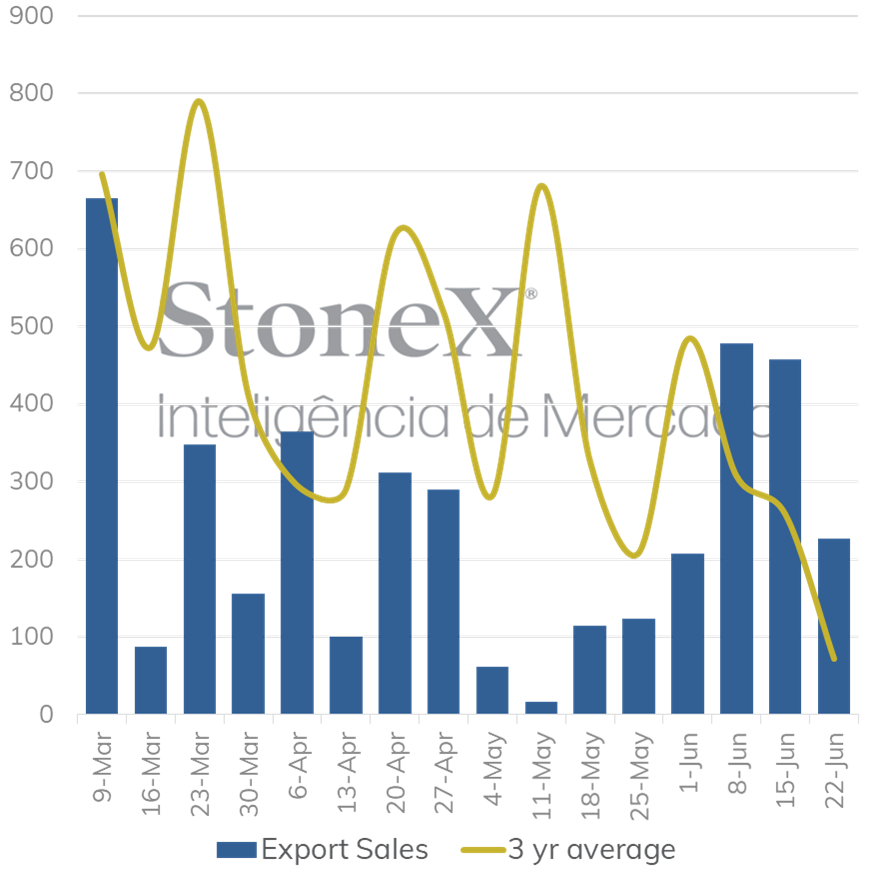
US export sales for the week ended 06/22 were at the low end of market estimates, at 227,400 tonnes for the 2022/23 crop and only 17,000 for the 2023/24 cycle. Cumulatively, 2022/23 sales stand at 52.3 million tonnes, compared to almost 60 million in this same period last year. The accumulated figure for the new crop is only 3.35 million, also lower than in previous years.
The big determinant of soybean gains in Chicago last week was the US planted area report, released on Friday (30).
The USDA released the updated figure, based on a survey with the country's producers, which surprised by bringing a significant drop in relation to the report at the end of March. According to the Department, 33.8 million hectares of soybeans were sown in the 2023/24 cycle, considerably below planting intentions in March and the average of market expectations, which bet on a small increase to 35.65 million hectares.
With an area almost 2 million hectares below expectations, growing concerns about the supply size may result in some rationing on the demand side. Although it is still early, and demand variables may also be adjusted in the future, this smaller soybean area leaves little or no room for yield losses in the North American crop in a year where weather issues have been a concern.
It is important to point out that this area can still be revised in the future, and it caused some surprise that the combined area of soybeans and corn fell, even in a year when planting was accelerated. In any case, this is the data the market must work with, with future adjustments only speculation.
The report on quarterly stocks position as of 06/01/2023 was also released, with the result standing at 21.65 million tonnes, slightly below average expectations, which signals a more heated consumption in the third quarter of the 2022/23 crop year. Even so, this result was overshadowed by the planted area data.
As the week begins, the surprise regarding the planted area in the US continues to influence the market. The releases of the North American crop follow-up and Brazilian exports in June this afternoon are also worth noting.