- World production in 2023/24 expected to be far above consumption, according to the USDA;
- Economic indicators still weak;
- StoneX estimates new record in 2023/24 crop for Brazil;
- Pressured margins of the hog sector in China;
- Weak US exports.
- China's heated soybean imports;
- Positive crush margins in China;
- US crop productivity and production cut;
- Positive prospects for the American crush;
- Drier weather, with high temperatures in the US and lower production estimates by Pro Farmer.
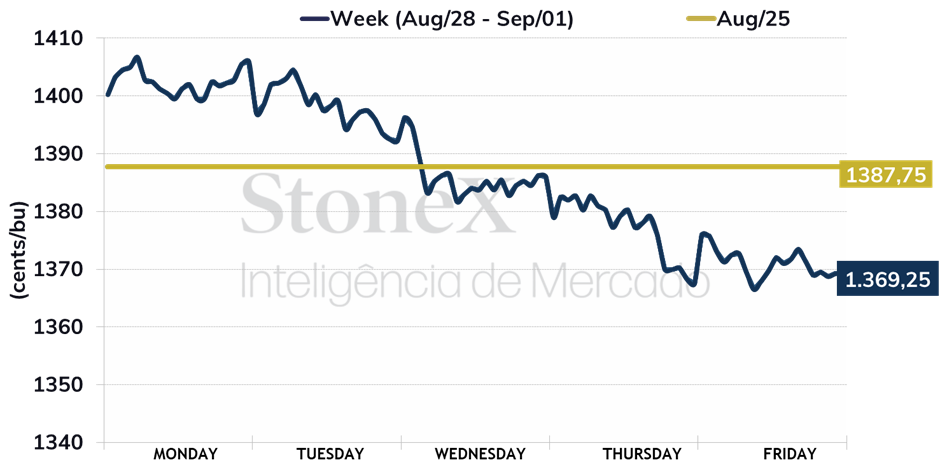
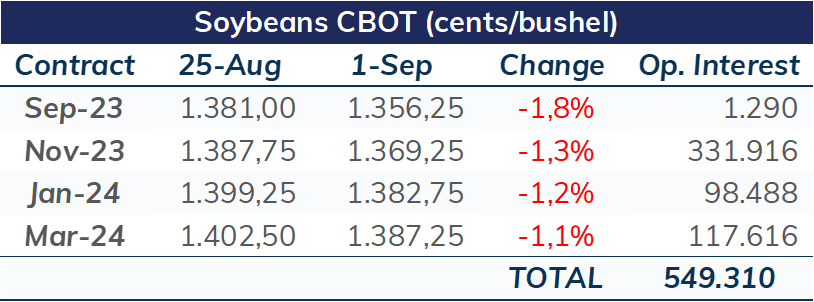
Last week, soybean prices in Chicago alternated between highs and lows, ending the period lower. The November contract ended Friday (01) at 1369.75 cents per bushel, down 1.3% weekly.
Although the progress of the North American crop, with the definition of productivity being a concern, there was a correction after the previous weekly highs, with the demand side also on the radar.
As already highlighted, the Pro Farmer's crop tour indicated a lower yield and production than the official number for the US in the 2023/24 crop. However, the USDA figures, which will be released on 9/12, are long-awaited to confirm whether or not the field assessment indicates lower productivity.
There are concerns about the hot, dry weather that has prevailed across most of the US grain belt since mid-August, as the month is central to defining soybean yields in the country. With this, the update of the crop tracking, which will take place tomorrow afternoon due to the Labor Day holiday in the US, is highly anticipated.
The last follow-up, referring to the week ended August 27, brought a drop in the good/excellent percentage from 59% to 58%, a smaller decline than the market expected, still below the five-year average, at 61%, but higher than that achieved in the same week of 2022, when it stood at 57%. In tomorrow's follow-up, a slightly greater reduction may occur as a reflection of the hotter and drier climate in the country.
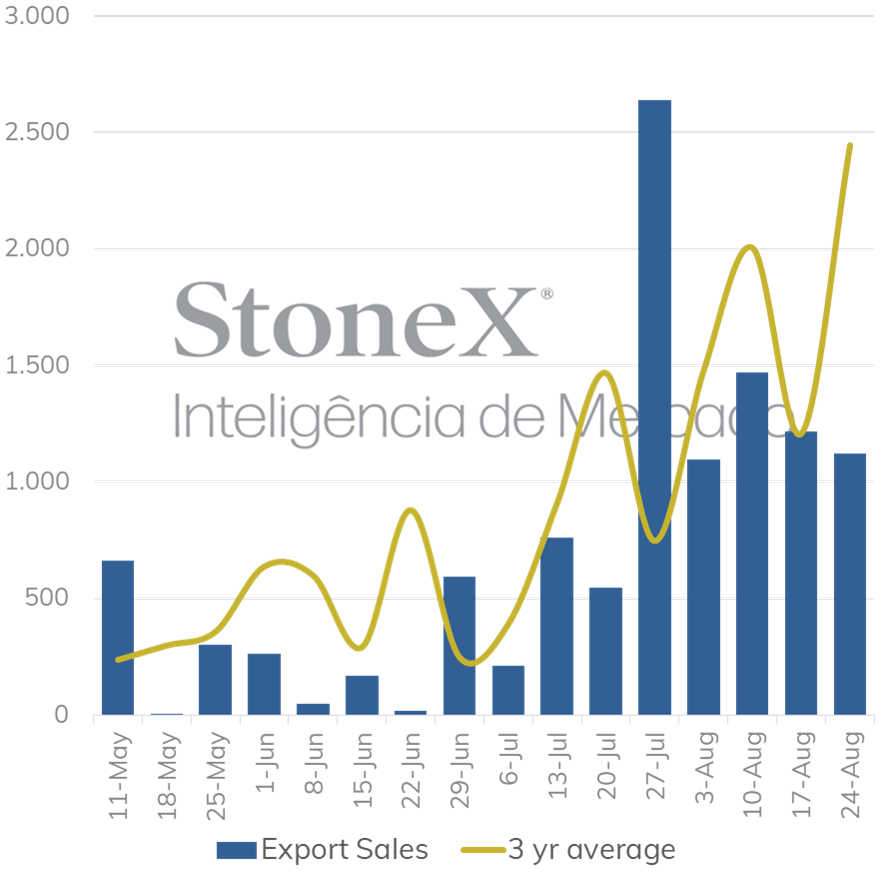
On the demand side, there is still a week of data to be released before the end of the US export season, and if there is no spike in volumes, the USDA's estimate of 53.89 million tonnes for the 2022/23 cycle is unlikely to be reached. As of August 24, 51.8 million tonnes were shipped.
Regarding the 2022/23 crop sales, the accumulated stood at 53.4 million tonnes, indicating that part of the volumes traded should be rolled over to the next cycle.
For the 2023/24 crop, sales in the week ended 08/24 reached 1.12 million tonnes, taking the cumulative to 12.9 million. In the same week last year, 20.5 million tonnes of the new crop had already been traded.
Notably, sales to China are 7.2 million tonnes weaker than a year ago. This will continue to be monitored since the Asian country bought a lot of Brazilian soybeans after record production in the 2022/23 crop. As a result, the purchase needs for US soybeans should be lower. It is worth remembering that, according to USDA estimates, Chinese soybean imports in the 2023/24 cycle are estimated at 99 million tonnes, which would represent an annual decrease.
In any case, considering the high volumes of soybeans imported by China in recent months, the country's stocks are being rebuilt, even with the crushing margins remaining positive. In addition, even if volumes are still low, China's soybean meal exports raise the alarm about domestic feed consumption, noting that the country's government has encouraged reducing the share of soybean meal in the feed composition.
StoneX updated Brazil's soybean production estimate for the 2023/24 cycle, bringing a small increase to 163.63 million tonnes, 156,000 more than the one released in August. This increase was due to the positive adjustment of the expectation of planted area in Minas Gerais, with no other state changes in this disclosure.
It is worth noting that the weather here in Brazil is already closely monitored, with the beginning of the planting period in September and in a year of El Niño influence.
This week, the market expectations should grow as the USDA report, released on 09/12, as doubts about productivity and the size of the US crop remain. In addition, demand data for the end of the US export crop year is expected. StoneX Brazil will also update the information on the marketing progress here.