One of the major problems in the coffee market is the significant difference between coffee production estimates in Brazil, which is not new. This difference affects the global coffee supply and demand balance projections, resulting in high price volatility. For the 2024/25 crop, the estimates released so far have a variation that exceeds 12 million bags, ranging from 58 million bags, according to CONAB, to values above 70 million bags, according to private organizations.
In this context, StoneX conducted the Crop Tour for the sixth consecutive year through the producing regions in Brazil. More than 100 municipalities were visited in the main producing regions of the country, in the states of Bahia, Espírito Santo, Minas Gerais, and São Paulo.
The Brazilian coffee industry faced challenging moments in recent years, reflecting several climate adversities during this period. La Niña, which occurred between July 2020 and February 2023, caused delays in rainfall in the second half of 2020 and 2021, leading to serious issues with flowering and impacting production in 2021 and 2022. In 2021, a frost event also caused significant losses in Arabica coffee production in the country's main regions. After La Niña, the temperature of the surface waters of the Equatorial Pacific Ocean did not let up, and soon El Niño began to impact the climate worldwide, with NOAA data indicating that the El Niño condition began in the April, May, and June 2023 quarter.
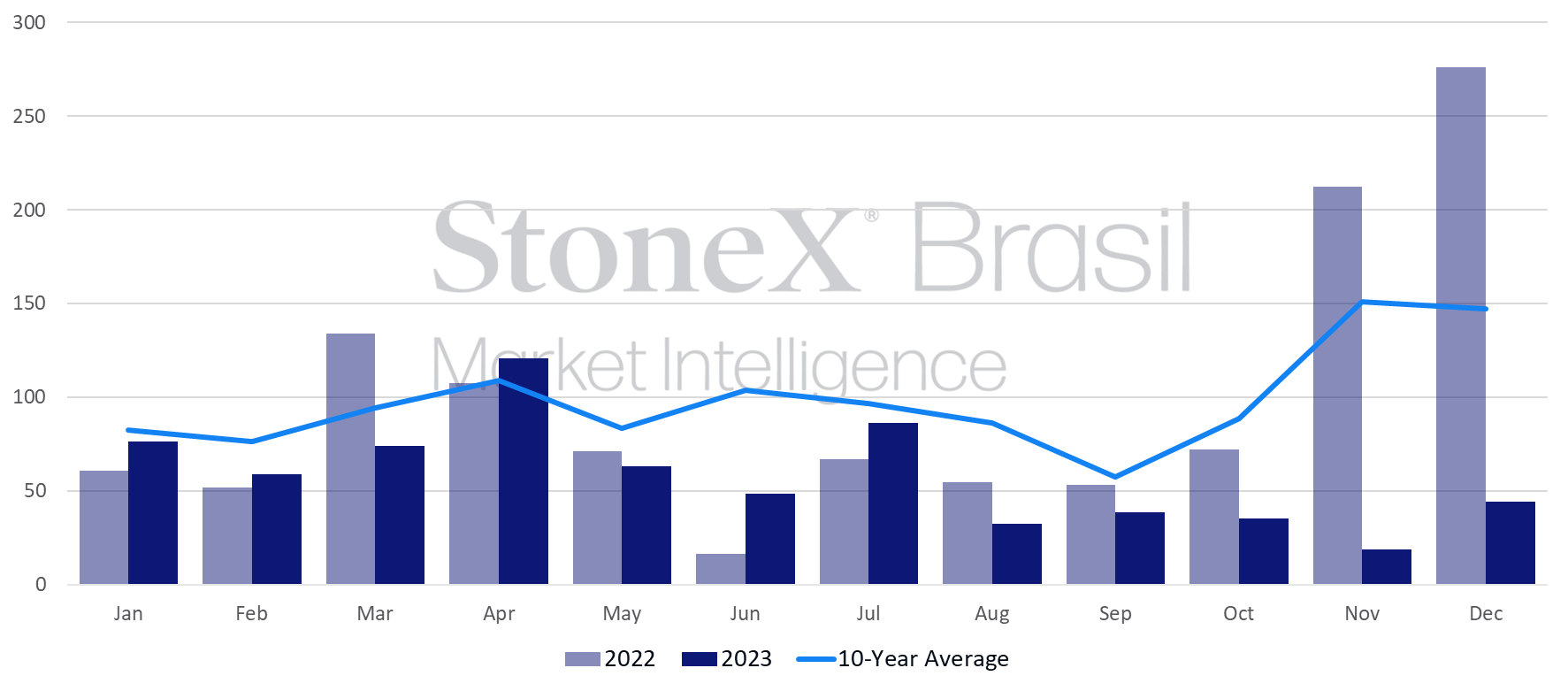
The effects of El Niño impacted coffee production in Brazil and other countries such as Vietnam, Indonesia, and Colombia. El Niño caused a sequence of heatwaves in Brazil that exceeded 40ºC in much of the coffee belt. Additionally, due to the phenomenon, a large part of the coffee belt had rainfall volumes well below average in September, October, November, and December 2023, a critical development period for production in 2024.
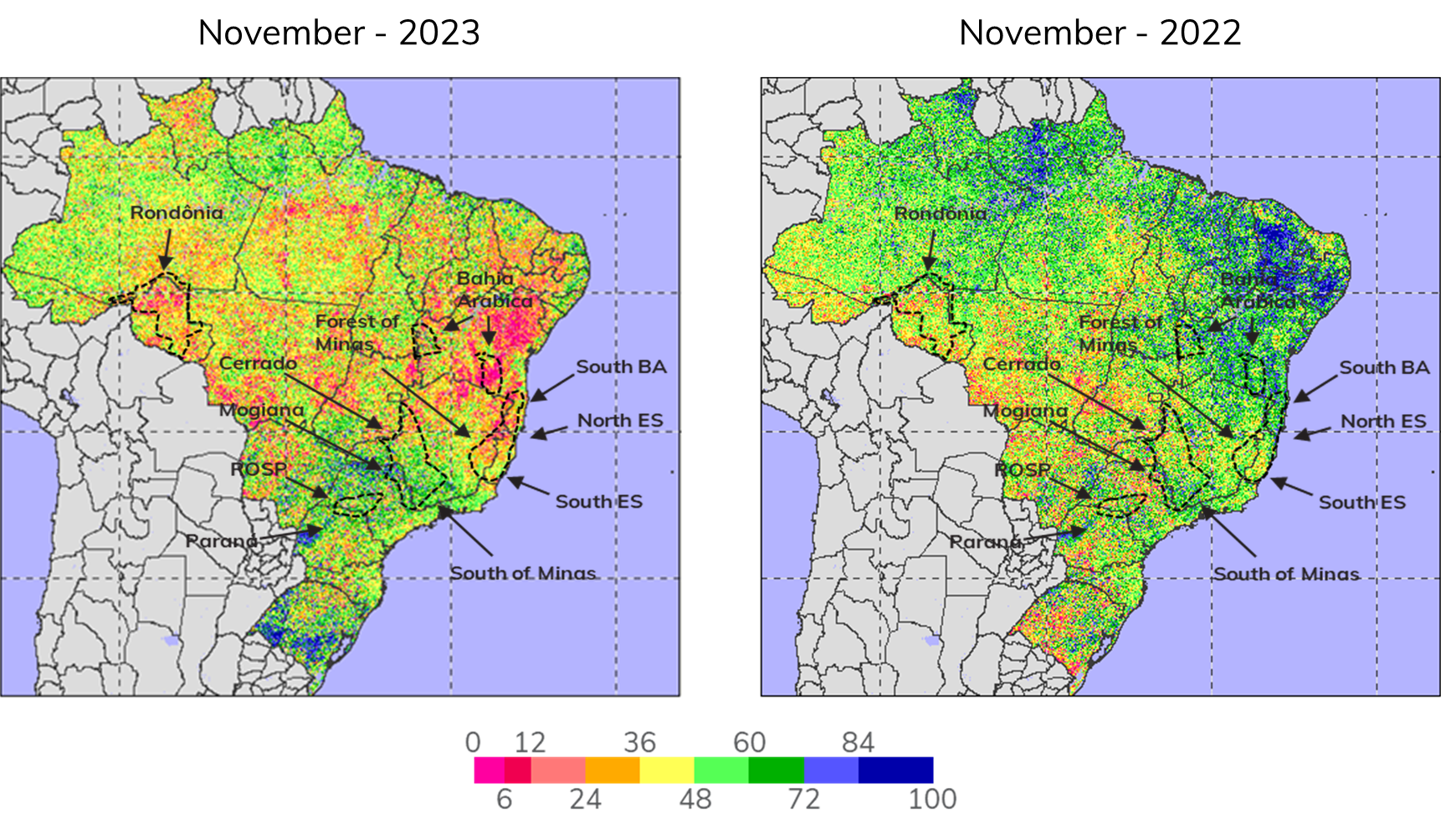
Overall, for coffee, maximum temperatures above 34ºC in some periods can cause losses in development and production. Furthermore, in this condition of high temperatures, even with the use of localized irrigation systems, such as drip irrigation, the pace at which the plant loses water to the atmosphere is greater than it can absorb from the soil, which impacts the development and productive potential of the plant. All regions faced below-average rainfall volumes, but the regions of South of Bahia, Northern Espírito Santo, and Cerrado Mineiro were the ones that suffered the most with the condition, as can be seen in the map of the VHI index in the annual comparison in mid-November. Accordingly, the productive potential of the 2024/25 crop was undoubtedly impacted by the climate conditions caused by El Niño.
VHI index in November 2023 and in November 2022
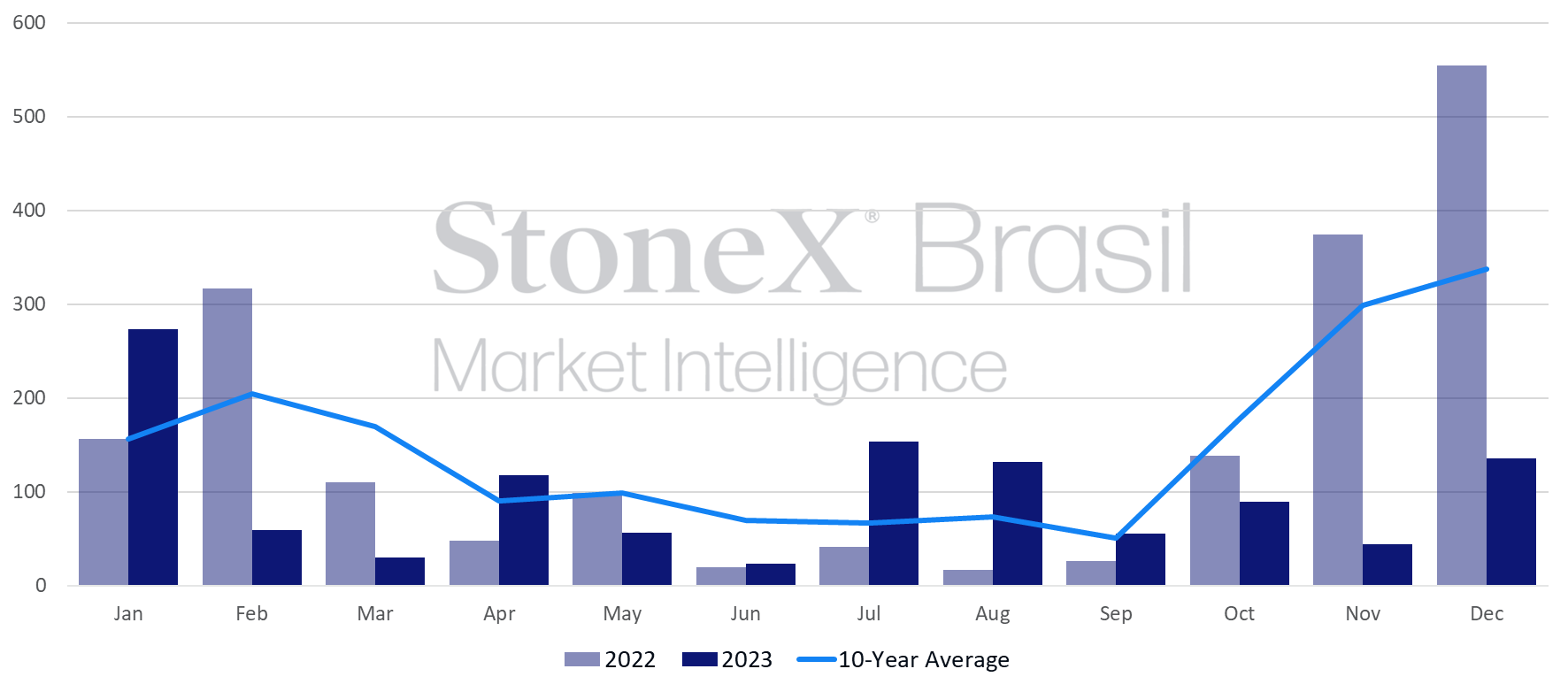
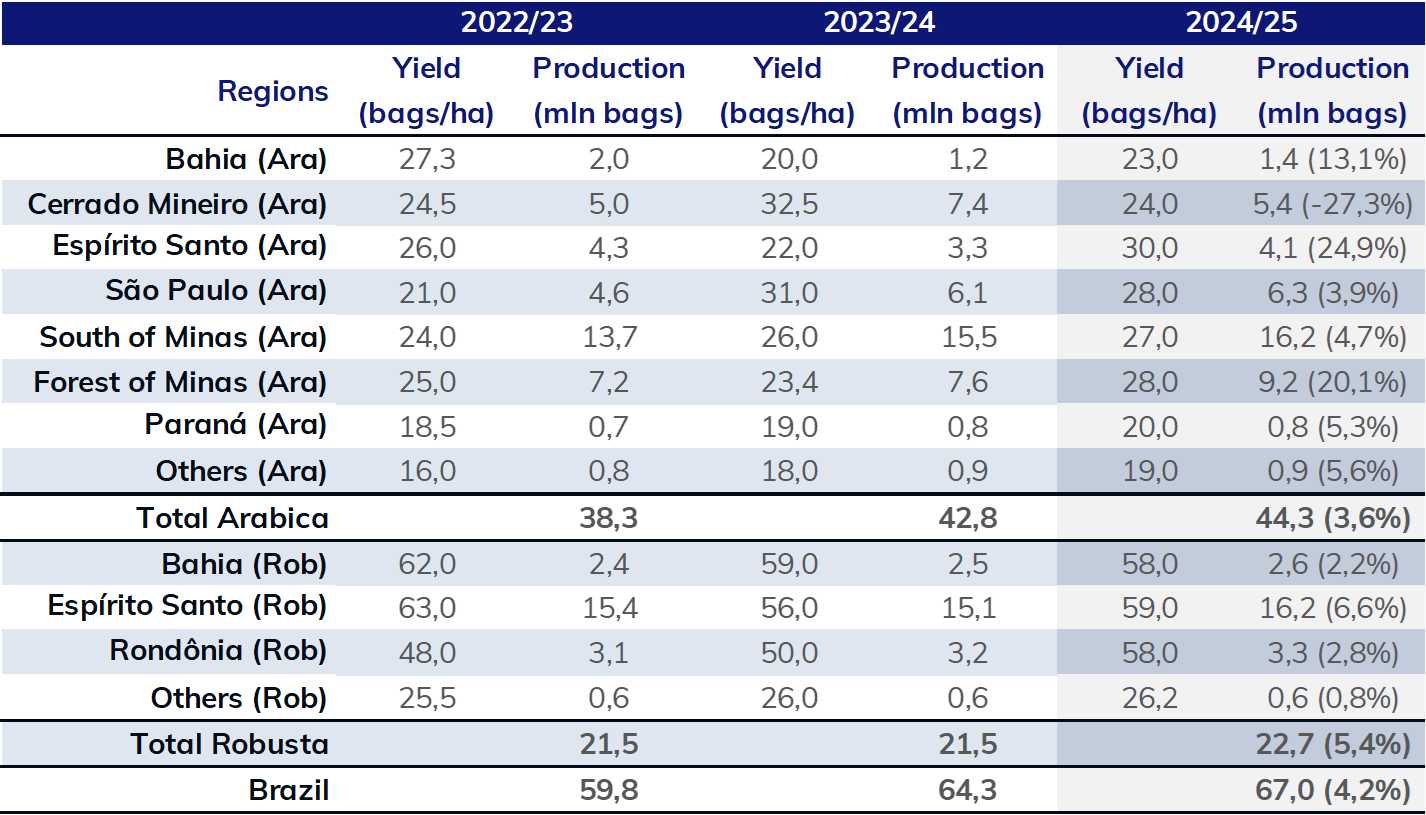
The crops in Matas de Minas showed good vegetative and productive conditions, without major pest attacks and diseases, and with satisfactory fruit volumes. Despite below-average rainfall in November and December, even with the heatwaves, the maximum temperature stayed below 30ºC for most of the period and did not exceed 34ºC, the critical limit. Additionally, the region continues in its positive year of the biennial cycle. Accordingly, coffee production in the region was estimated at 9.2 million bags, representing a 20% increase compared to the previous year's crop.
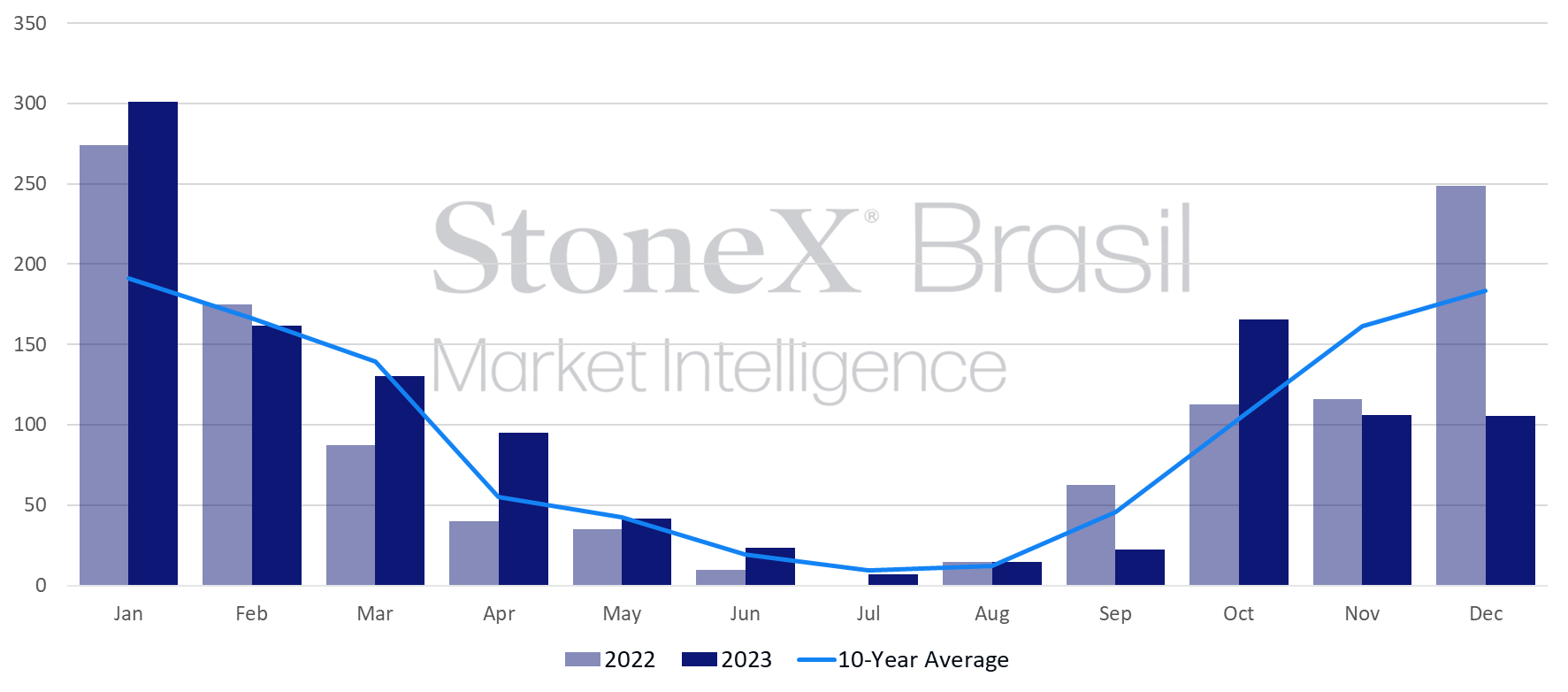
Precipitation compared to the average of the last 10 years
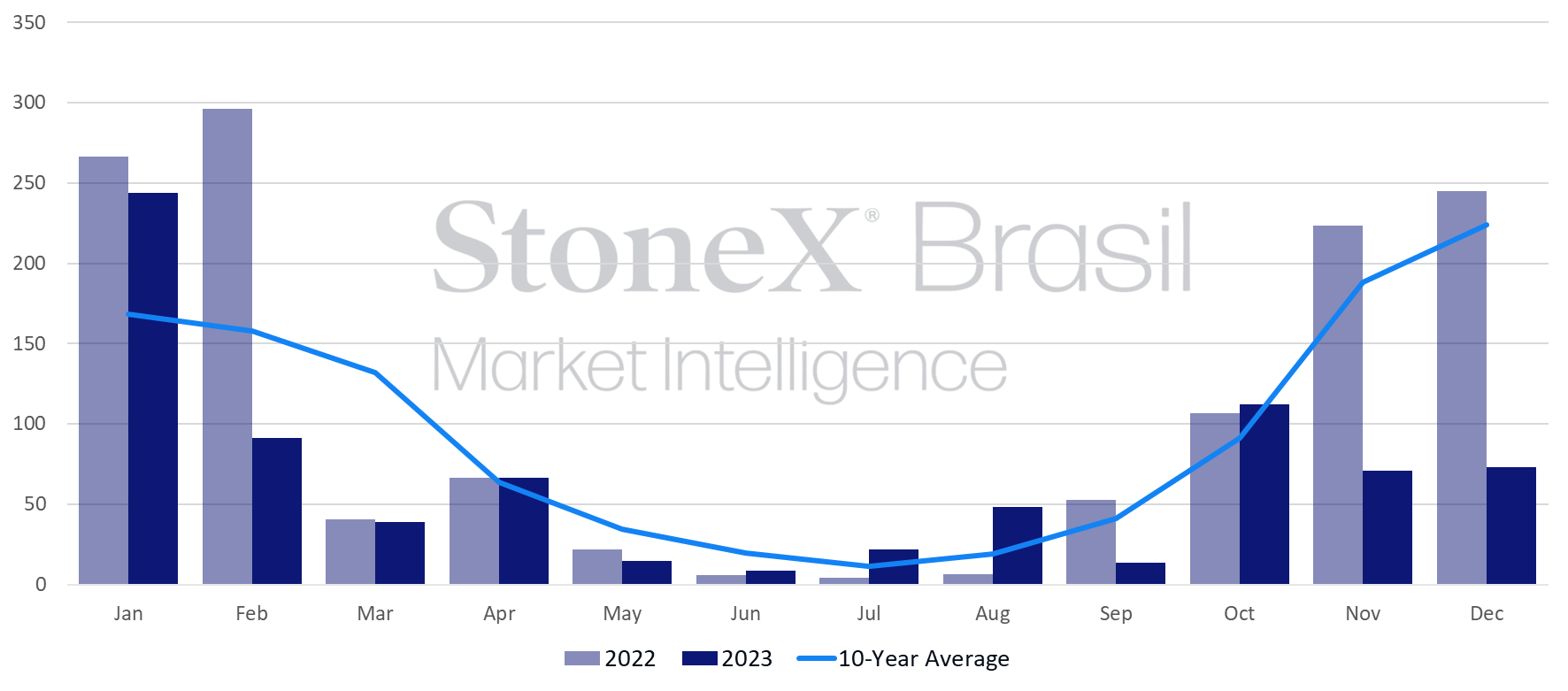
In the region of Cerrado Mineiro, the crops showed a great unevenness, with the crops further south showing clear signs of being impacted by the dry weather and excessive temperatures. Historical data shows that in addition to below-average rainfall, the region faced maximum temperatures above 34ºC for much of the last quarter of the past year, with temperatures reaching around 40ºC on several occasions. However, the crops in the northernmost areas of the region showed better phytotechnical conditions, with good growth and satisfactory fruit volumes.
Areas of renewal and areas that were converted for grain production were also observed. In addition, the region is in its off-biennial year, a trend that reflects the impacts of the frost in 2021; otherwise, the region would be in its “on year”. Thus, StoneX estimates the production of the Cerrado Mineiro at 5.4 million bags in 2024/25, a volume 27% lower than the previous year's production.
Precipitation compared to the average of the last 10 years
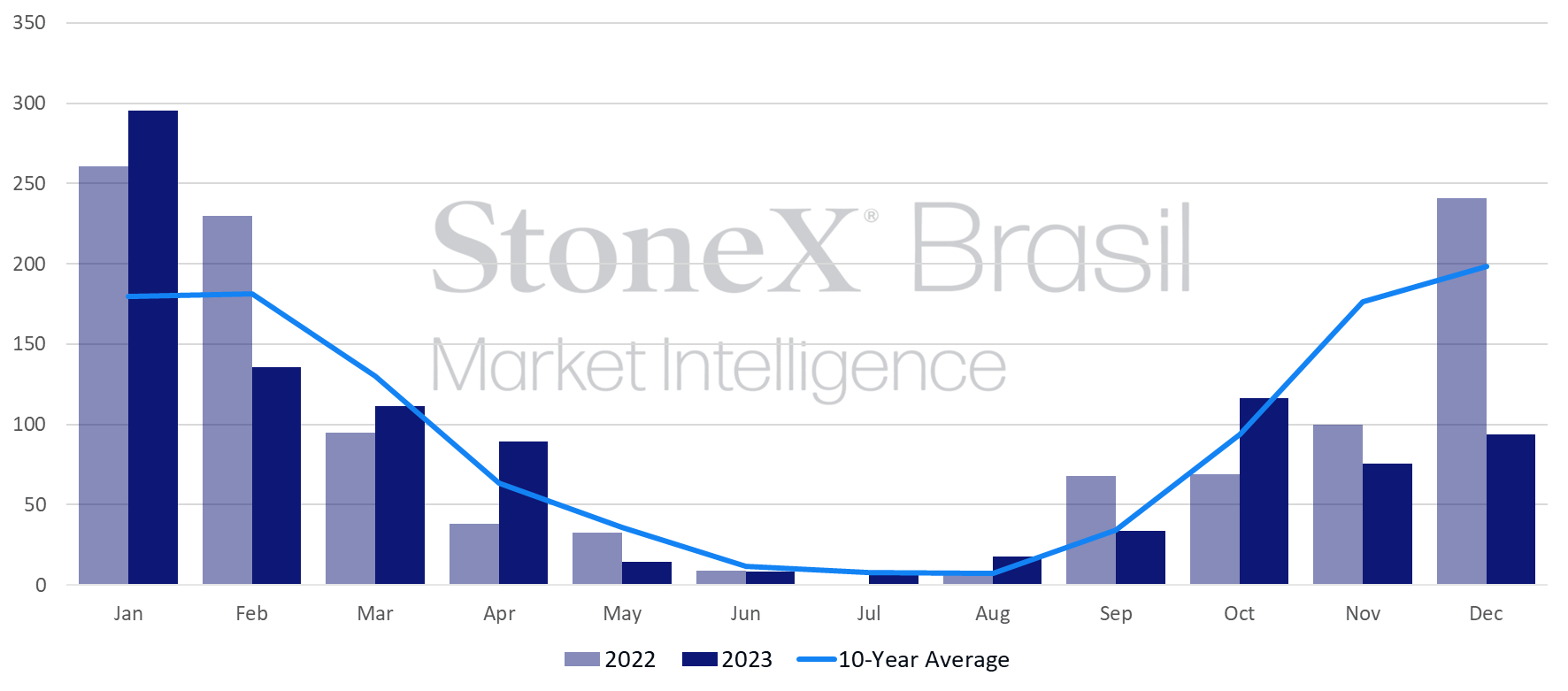
The crops in the South of Minas Gerais region can also be characterized by unevenness. Of course, as the region is very large, it is natural that the crops would show different conditions. However, the crops in the region bordering the Cerrado Mineiro and Alta Mogiana showed conditions similar to these regions, with lower fruit volumes and visible impacts of the climate. The crops in the other South of Minas microregions had satisfactory fruit development and volume conditions. No major phytosanitary problems were observed in the region. The average productivity of the South of Minas region was estimated at 27 bags/ha, and the total production in the region was estimated at 16.2 million bags, representing an increase of 4.7% compared to the previous year.
Precipitation compared to the average of the last 10 years
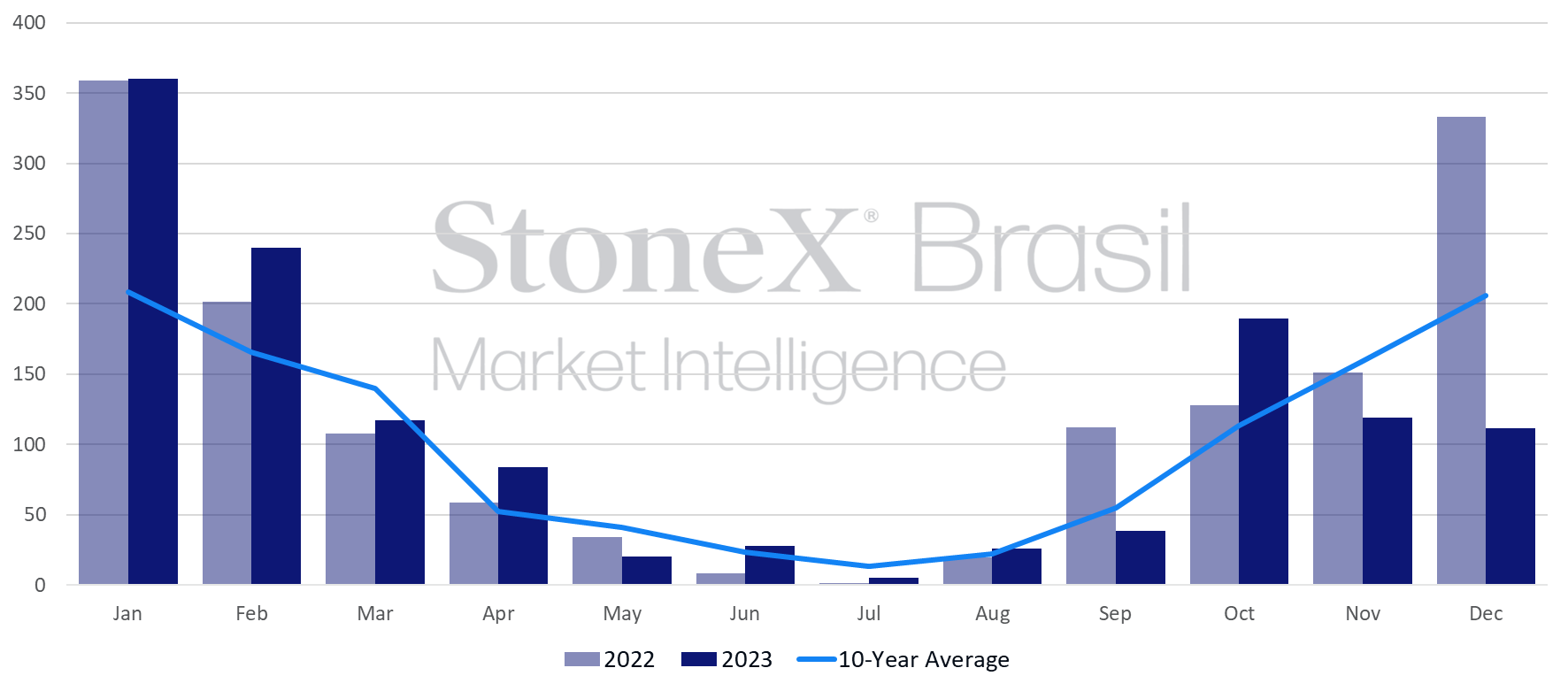
Precipitation compared to the average of the last 10 years
Regarding the production in 2023/24, a revision was made to the projection based on the results of the crop so far. There was a small adjustment for Robusta coffee, going from 21.6 to 21.5 million bags. However, the estimate for Arabica production was adjusted to 42.7 million bags, an increase of 5% compared to the previous projection, which was 40.7 million bags. Therefore, Brazilian production for 2023/24 was adjusted from 62.3 to 64.27 million bags (+3.2%).
For 2024/25, Brazilian coffee production was estimated at 67 million bags, indicating a 4.2% increase. Arabica coffee production was estimated at 44.3 million bags, an increase of 3.6%, and the production of Robusta coffee was at 22.7 million bags, an increase of 5.5%.