UPDATE: Colombia’s Right-Wing Candidate Abelardo de la Espriella Wins Presidency: Coffee, Cocoa Sectors to Benefit
(Adds comments from Alejandro Corrales, manager of De La Espriella’s campaign in the Risaralda department)
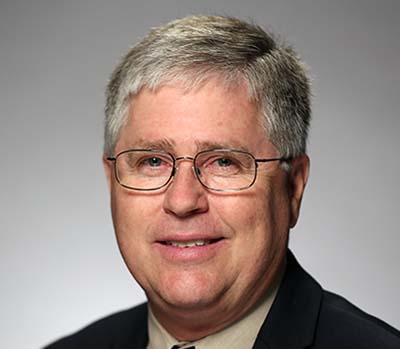
Bogota (Coffee Network) – Right-wing presidential candidate Abelardo de la Espriella secured victory in Colombia’s presidential run-off election on Sunday, defeating left-wing candidate Iván Cepeda. The triumph marks a significant national pivot away from incumbent President Gustavo Petro’s security and agrarian policies.
With 99.9% of ballots counted in the preliminary tally, de la Espriella secured 12.95 million votes (49.66%), edging out Cepeda, who received 12.7 million votes (48.7%)—a razor-thin margin of just 250,830 votes, according to the National Civil Registry.
De la Espriella will govern Colombia for the 2026–2030 term, taking the helm on August 7 when Petro’s mandate ends. His momentum surged after center-right candidate Paloma Valencia, who captured 6.9% of the vote in the first round, pledged her support on May 31. Valencia’s endorsement was backed by former President Álvaro Uribe and his Democratic Center party, mobilizing a crucial conservative voting bloc.
De la Espriella’s Coffee Agenda
Abelardo de la Espriella, the 47-year-old lawyer and businessman, stated that one of his primary goals is to implement a major coffee renovation program. The plan aims to renew 50% of the country's total coffee plantations—amounting to 400,000 hectares—within four years. Alejandro Corrales, a coffee grower and de la Espriella’s campaign manager in the coffee-producing department of Risaralda, told Coffee Network that the initiative will be funded with 500 billion Colombian pesos (approximately $147 million).
Second on his agenda is ensuring strict respect for the autonomy of the National Coffee Fund. This stands in sharp contrast to President Petro's threats to take over management of the fund. The National Coffee Fund finances a broad range of programs and services for coffee growers, including Colombia’s price guarantee policy, technical assistance, and scientific research conducted by Cenicafé—the federation’s renowned research center. Although these resources are contributed directly by producers through export levies, they are classified as parafiscal funds and therefore remain subject to government oversight.
Corrales added that de la Espriella will also prioritize security in coffee-growing municipalities.
De la Espriella’s Security Agenda: "Plan Colombia II"
De La Espriella has built his platform on restoring public order. He has vowed to aggressively strengthen the country's security forces and construct 10 large-scale mega-prisons modeled after the strict penal system implemented by Salvadoran President Nayib Bukele.
De la Espriella aims to reclaim territorial control in rural regions where violence, extortion, and illegal armed activity have surged under President Petro’s “Total Peace” policy.
"There will be no criminals above the Constitution and the law. To the drug traffickers, the terrorists, the kidnappers, the extortionists, and the corrupt who steal the people's resources, I announce tonight that Colombia has a government again," de la Espriella declared in an impassioned victory speech behind bulletproof glass. "All those bandits will be relentlessly pursued under the laws of the Republic."
The debate has become particularly relevant in agricultural regions such as Colombia’s coffee- and cocoa-producing departments, where growers report increasing pressure from dissident armed groups seeking territorial and financial control.
Corrales noted that insecurity has drastically worsened in coffee-producing regions, but emphasized that the new president is committed to restoring order. “Extortion is happening throughout the country. There are departments where it is isolated and sporadic, but it is a widespread issue,” Corrales told Coffee Network.
De la Espriella asserted that the authority of the state would be felt nationwide, promising that no territory would remain off-limits and that criminal impunity would end. "There will be no criminals above the Constitution and the law. To the criminals, the kidnappers, and the corrupt officials who steal the people's resources, I announce that Colombia once again has a government and a state. All will be relentlessly pursued within the framework of the law and held accountable for every crime,” he said.
To regain territorial control, De la Espriella has pledged to terminate all ongoing peace negotiations with illegal armed groups. Instead, he proposes a "Plan Colombia II" centered on aggressive military operations. “We have to retake the territories with the resources we currently have because I will inherit a demoralized and underfunded security force,” he stated. “We also need to renew our strategic alliances with the United States and Israel.” Through these measures, he has promised to reduce violence by 50% and restore full territorial control nationwide.
Violence in Coffee- and Cocoa-Producing Regions
Huila, Colombia’s largest coffee-producing department, is facing mounting extortion pressure from dissident factions of the former Farc guerrilla group, which are allegedly charging coffee growers fees based on the number of coffee trees planted on their farms, according to local reports and testimony from a grower who requested anonymity.
Several dissident groups, including factions linked to aliases Calarcá and Iván Mordisco, are reportedly demanding payments of up to COP300 ($0.07) per coffee tree, while other groups charge lower rates, the grower told Coffee Network.
According to the source, two brothers who sold coffee to the cooperative Coopcentral were killed after refusing to comply with extortion demands imposed by one of the armed groups.
Violence linked to extortion and territorial control has increasingly affected Colombia’s coffee sector in recent years. One of the most high-profile cases occurred in August 2023 in Algeciras, Huila, where brothers José Dilmer Toro Álvarez, 20, and Alexander Toro Álvarez, 17, were killed inside their home in the village of Las Brisas. Authorities attributed the attack to armed groups targeting residents who refused to pay extortion fees.
Another widely reported incident took place in April 2024 in La Plata, Huila, when siblings Luisa Fernanda and Sergio Trujillo Peña were killed after an explosive device detonated at a service station. Authorities linked the attack to reprisals by dissident groups associated with alias Iván Mordisco over the non-payment of so-called vacunas, or extortion payments.
More recently, dissident factions have reportedly summoned presidents of local community action boards (Juntas de Acción Comunal) and informed them that all coffee growers in their jurisdictions must pay fees per coffee tree, according to the grower.
“The situation is very serious,” the source said.
The alleged extortion schemes are affecting municipalities including Acevedo, Garzón, Algeciras, Hobo and La Plata, the grower added.
Elections and Armed Group Influence
The grower also alleged that illegal armed groups were “carnetizando” residents — issuing identification cards or permits allegedly required to move through certain areas. In Colombia, carnetizar generally refers to providing identification documents, but in conflict zones the term can also describe coercive systems of territorial and social control imposed by armed groups.
The source further claimed that dissident factions were pressuring residents to support left-wing presidential candidate Iván Cepeda ahead of the upcoming elections.
Strangely municipalities such as Anori, in Antioquia, Cepeda obtained 100% of the ballots, which proves illegal groups coerced the people to vote for Cepeda.
In the municipalities of Cauca—a department heavily impacted by illegal armed groups—Cepeda won an overwhelming majority of the votes. According to Corrales, this pattern clearly demonstrates how armed groups coerced locals into supporting Cepeda. For instance, in the municipality of Páez, Cepeda captured 84.99% of the 13,475 votes cast, while in Caldono, he secured 86.74% of the 17,364 votes. Furthermore, Cepeda obtained over 70% of the total vote share in the municipalities of El Tambo, Cajibío, and Morales.
A coffee grower in Antioquia — Colombia’s second-largest coffee-producing department — said he has also been forced to pay extortion fees to guerrilla groups operating near his farm close to the Ituango hydroelectric project in order to transport coffee beans to ports.
His strategy also includes resuming aerial bombings against armed groups. “We have to bomb narco-guerrilla camps,” he said, arguing such actions are necessary in regions including Cauca. To support these operations, he proposes reactivating and strengthening military intelligence capabilities.
As part of his broader security platform, De la Espriella also proposes creating a “first line of security” composed of retired military personnel and reservists working alongside citizens and law enforcement to combat crimes such as cellphone, bicycle and bag theft.
"To the drug traffickers, the terrorists, the kidnappers, the extortionists, the corrupt who steal the people's resources, I announce tonight that Colombia has a government again... all those bandits will be relentlessly pursued under the laws of the Republic," he stressed.
De la Espriella has also proposed reducing the size of the state by 40%.
De la Espriella also wants to reactivate Colombia’s oil and natural gas sectors, accelerate hydraulic fracturing, in a bid to accelerate production of gas as the country is currently importing 20% of the gas it consumes because of lack of exploration amid the ban to award exploration and production contracts with Petro and no recent discoveries.
De la Espriella has proposed building 10 large-scale prisons across Colombia, modeled after the prison system implemented by Salvadoran President Nayib Bukele. The proposed mega-prisons are intended to prevent criminals from being released because of prison overcrowding or failures in the judicial system, while also stopping criminal organizations from operating inside detention centers.
The candidate has linked the initiative to what he describes as a “temporary” legal framework that would allow authorities to arrest, prosecute and keep offenders in prison without release.
“We need a special temporary legal framework that allows us to attack this criminal pandemic in the best possible way,” De la Espriella said. “Colombia’s situation is not normal — it is completely abnormal. This is a criminal pandemic.”
The proposal mirrors security policies adopted by right-wing governments that De la Espriella has publicly praised, although similar measures have faced criticism from international organizations, including the Organization of American States (OAS), over alleged human rights violations.
Colombia’s Coffee Growers Welcome Outcome
The National Federation of Coffee Growers (FNC), representing over 560,000 families, congratulated de la Espriella and his running mate, José Manuel Restrepo, praising the civic responsibility of the electorate and the transparency of the National Civil Registry.
“Once again, Colombia has demonstrated the strength of its institutions and the maturity of its democracy," the FNC stated. "The Federation reaffirms its long-standing commitment to working constructively and in coordination with the National Government for the benefit of coffee-growing families, rural development, and the sector's competitiveness.”
The Federation reaffirms its long-standing commitment to working constructively and in coordination with the National Government for the benefit of coffee-growing families, rural development, the sector's competitiveness, and the well-being of the regions. With the same commitment that has characterized us for almost a century, we will continue contributing to building a more prosperous, more productive country with greater opportunities for all.
“Colombian democracy is strengthened when its institutions function properly, when citizens participate, and when the results are recognized with respect and a sense of responsibility. This is the spirit that inspires the Colombian coffee growers' association today,” it added.
Opponent questions elections
Despite the preliminary count, the left-wing coalition has refused to fully concede. Iván Cepeda announced legal challenges and a formal review of 33,000 voting tables, citing structural irregularities.
Outgoing President Petro echoed these concerns on X (formerly Twitter), alleging without immediate evidence that the registry uploaded forms lacking mandatory election juror signatures.
"No president can be declared yet. It is the scrutiny process that determines who the president is," Petro stated, noting the official verification process will take approximately two days.
In response, De la Espriella called for stability:
“Respect the will of the Colombian people. Today, Colombians have elected me under the same system that four years ago elected the current occupant of the Casa de Nariño... Petro and Cepeda, refrain from igniting social unrest. Accept the result, pack your bags, and prepare to lead the opposition.”
Security and “Total Peace” Under Scrutiny
Petro’s total peace policy has led security conditions to deteriorate. De la Espriella said he will regain control of territory thanks to the help of the Donald Trump administration.
Crime figures have reinforced concerns over public safety. Homicides totaled 6,642 cases between January and June 2025, up 3% from 6,442 during the same period a year earlier, according to Defense Ministry data cited by Insight Crime.
Kidnappings also increased, with authorities reporting 121 cases in the first half of 2025 compared with 108 in the same period of 2024. While the number of incidents rose 12%, the number of victims climbed 53%, from 129 to 198.
Insight Crime said the data reflect growing instability in rural regions and highlight the challenges facing Petro’s strategy in curbing violence and organized crime.
By Diana Delgado
Speeches of the winner, interview with former senator Alejandro Corrales, coffee grower and the national civil registry office.